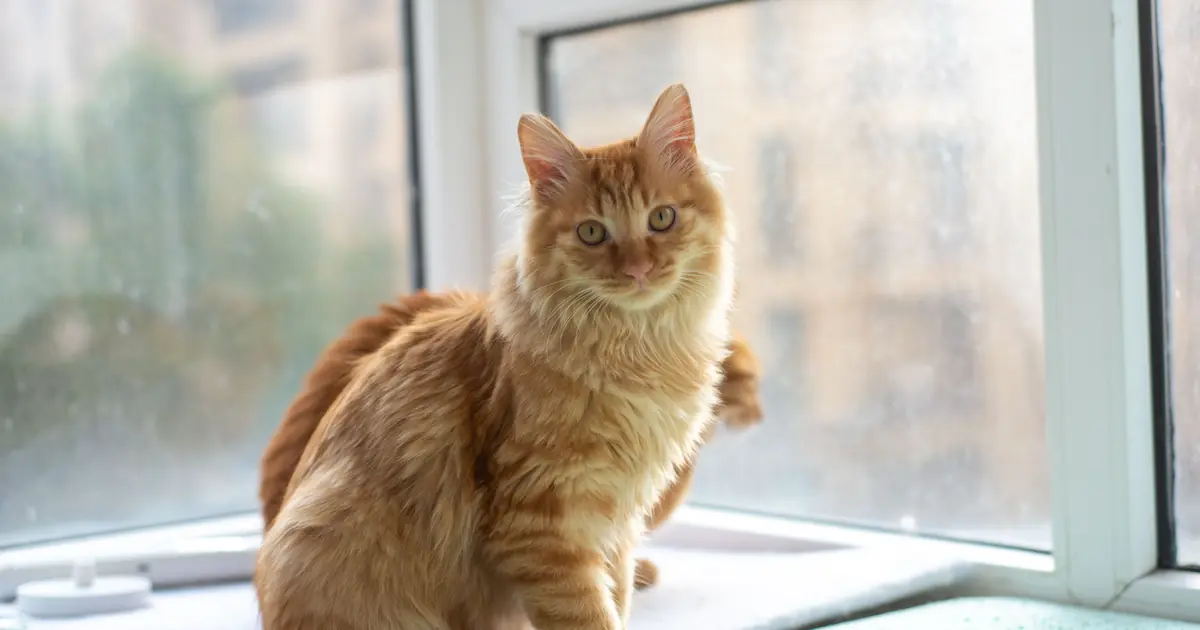
Picture the classic cat of the internet. Big round eyes, a permanent look of mild confusion, sprawled belly-up in a sunbeam like he pays rent. Odds are, you pictured an orange one.
Orange tabbies are everywhere in pop culture, from Garfield to the “orange cat behavior” memes. But here’s the fun part most people get wrong: “orange tabby” isn’t a breed at all. It’s a color and a pattern that can show up in dozens of breeds. Let’s untangle what these ginger cats actually are, why so many of them are boys, and whether that goofy-friendly reputation holds up.
- An orange tabby cat is a color plus a coat pattern, not a breed you can register.
- The orange color comes from a pigment called pheomelanin, controlled by a gene on the X chromosome.
- About 80% of orange tabby cats are male, because males need only one copy of the orange gene.
- Nearly every orange cat is a tabby, so almost all of them wear the famous “M” on the forehead.
- Coat color does not decide personality; a cat’s breed, upbringing, and individual nature do.
What is an orange tabby cat, exactly?
An orange tabby cat is any cat with a ginger-colored coat and a tabby pattern, regardless of its breed. “Orange” is the color (also called red, ginger, marmalade, or yellow), and “tabby” is the striped, swirled, spotted, or flecked pattern layered on top. Put them together and you get that warm, marmalade-striped look people adore.
So no, you can’t walk into a breeder and buy an “orange tabby” the way you’d buy a Siamese. No cat registry lists it as a breed. It’s a description of the coat, nothing more. If you want the full rundown on the pattern itself, our guide on what a tabby cat is goes deep on every marking.
The orange color comes down to a pigment called pheomelanin, the same reddish pigment behind red hair in people. In orange cats, a genetic switch dials down the dark brown-black pigment (eumelanin) and lets that warm ginger tone take over the coat. Still deciding what to call yours? We collected orange cat names that suit the coat.
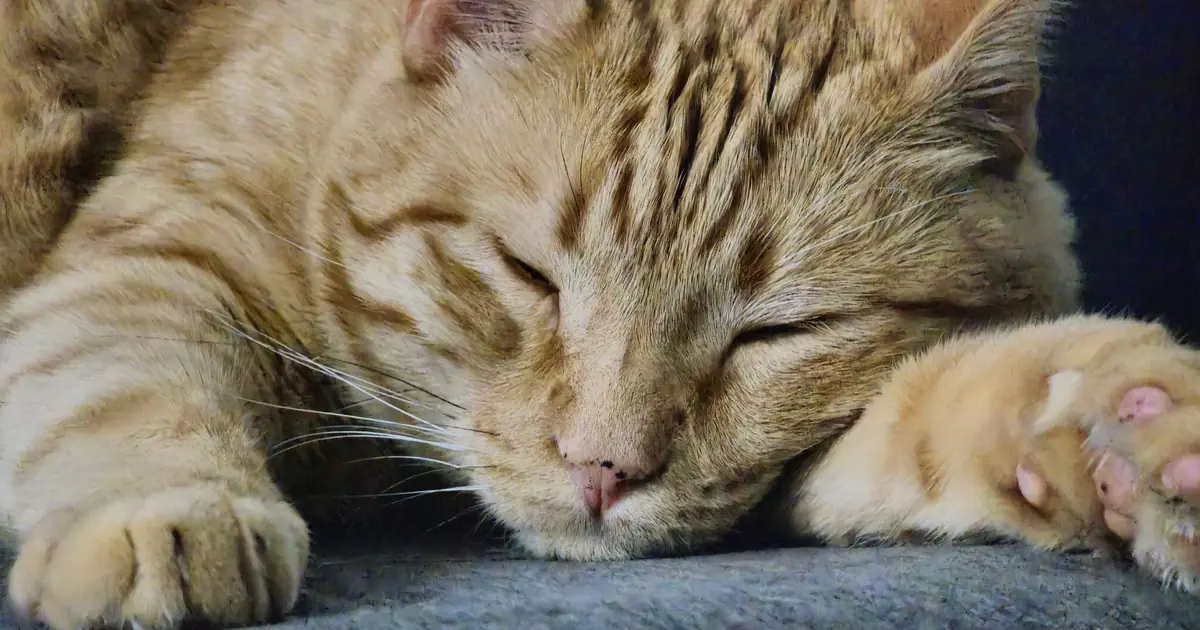
Is orange tabby a breed or a color?
Orange tabby is a color-and-pattern combination, not a breed. This trips people up constantly, so it’s worth saying plainly: there’s no such thing as an “orange tabby breed.” What you’re seeing is a coat that happens to appear across many different breeds and, most commonly of all, in ordinary mixed-breed house cats.
Think of it like hair color in people. “Redhead” describes a look, not a family tree. Same with orange tabbies. A ginger Maine Coon and a ginger Persian are two totally different breeds that just share a coat color.
Why are most orange tabby cats male?
About 80% of orange tabby cats are male because the orange gene sits on the X chromosome. This is genetics, not coincidence. The gene that turns a cat’s coat ginger is carried only on the X, and males and females carry those chromosomes differently.
Here’s the simple version. Male cats are XY, so they have just one X. If that single X carries the orange gene, the cat is orange. Done. Female cats are XX, so they have two X chromosomes, which means they need the orange gene on both X’s to come out fully orange. Getting two copies is far less likely than getting one, so orange females are much rarer.
When a female inherits just one orange X and one non-orange X, you usually don’t get a solid ginger cat at all. You get a tortoiseshell or calico, that patchy mix of orange and black. That’s the same X-linked genetics playing out in reverse, which is why almost all calico and tortie cats are female.
In 2025, two research teams finally pinned down the exact gene behind the ginger coat, a mutation near a gene called ARHGAP36 on the X chromosome. Scientists had suspected an X-linked orange gene for over a century, and the discovery, covered by Smithsonian Magazine, confirmed why the trait follows sex the way it does.
| Cat | Chromosomes | What it takes to be orange |
|---|---|---|
| Male | XY (one X) | One copy of the orange gene |
| Female | XX (two X’s) | Two copies, one on each X (rare) |
| Female with one copy | XX | Usually a calico or tortoiseshell, not solid orange |
What are the four tabby patterns?
There are four tabby patterns: mackerel, classic, spotted, and ticked. Every orange tabby wears one of them, and the difference is all in how the stripes are arranged. The whole tabby look is switched on by the agouti gene, which allows banded, patterned hairs instead of a single solid color.
Mackerel tabby
The mackerel tabby has thin, vertical stripes running down the sides like fish bones (hence the name). It’s the most common pattern and the one most people picture when they think “tabby cat.”
Classic tabby
The classic tabby, sometimes called blotched, swaps thin stripes for bold swirls and whorls. Look at the side of a classic tabby and you’ll often spot a bullseye or a marbled, cinnamon-roll pattern.
Spotted tabby
The spotted tabby breaks the stripes into spots scattered across the body. Some spots are large, some small, and the look can range from soft dots to the wild rosettes you see on a Bengal.
Ticked tabby
The ticked tabby is the sneaky one. Instead of clear stripes, each hair is banded with color, giving a speckled, salt-and-pepper coat. Abyssinians are the poster cats for ticked tabby, and at a glance they barely look striped at all (until you spot those faint markings on the face and legs).
| Pattern | What it looks like | Classic example |
|---|---|---|
| Mackerel | Thin vertical stripes like fish bones | Most common house cat |
| Classic | Bold swirls, whorls, or a bullseye | American Shorthair |
| Spotted | Stripes broken into spots | Bengal, Egyptian Mau |
| Ticked | Speckled, salt-and-pepper hairs | Abyssinian |
Do all orange tabbies have the “M” on their forehead?
Yes, nearly every orange tabby has the signature “M” marking on the forehead, because almost all orange cats are tabbies. The “M” is a hallmark of the tabby pattern, formed by the stripes above the eyes meeting in the middle. Since the orange gene tends to show its tabby stripes even in cats that would otherwise look solid, ginger cats almost always carry that little “M.”
Legends have grown up around it. One story says a tabby comforted baby Jesus, and Mary marked its forehead with an “M” for Mary. Another credits the prophet Muhammad and his love of cats. The truth is simpler and just as charming: it’s genetics, drawing the same tidy letter on foreheads for thousands of years. The International Cat Care charity notes that the tabby pattern is the ancestral wild-type coat, the look domestic cats inherited from their wildcat relatives.
What breeds can be orange tabbies?
Many cat breeds come in orange tabby, from fluffy giants to flat-faced lap cats. Since orange is a color and not a breed, it can appear anywhere the genetics allow. The most common orange cat of all, though, is the everyday domestic shorthair with no pedigree at all.
| Breed | Coat length | Known for |
|---|---|---|
| Domestic Shorthair | Short | The everyday ginger house cat |
| Maine Coon | Long | Huge, gentle, fluffy “gentle giant” |
| Persian | Long | Flat face, plush coat, mellow |
| Abyssinian | Short | Ticked coat, active and curious |
| Munchkin | Varies | Short legs, big personality |
| British Shorthair | Short | Round face, dense plush coat |
| Egyptian Mau | Short | Naturally spotted, fast runner |
If a big, ginger fluffball is your dream cat, the Maine Coon breed guide is worth a read. Orange Maine Coons are showstoppers, and some grow genuinely enormous, as our roundup of the largest Maine Coon on record shows. Prefer a calmer, plush lap cat? The Persian cat guide covers the ginger version of that flat-faced sweetheart. And yes, even the tailless Manx cat comes in orange tabby.
What is the personality of an orange tabby cat?
Orange tabby cats have a reputation for being friendly, laid-back, and a little goofy, but there’s no science proving coat color drives personality. The “orange cat behavior” meme paints them as lovable dorks running on a single brain cell. It’s adorable, and a lot of orange-cat owners swear by it. It’s also mostly folklore.
Coat color genes control pigment, not brain wiring, hormones, or temperament. What actually shapes your cat’s personality is breed, early socialization, and plain individual nature. A shy orange cat is just as normal as a bold one.
So why do so many orange cats seem friendly? A big reason is that most of them are male, and males are often (a little) more social and easygoing than females across many cat populations. There may also be a touch of confirmation bias: we expect orange cats to be sweethearts, so we notice when they are. Whatever the cause, if your ginger cat is a cuddly goofball, enjoy it. Just know the coat didn’t program it.
How long do orange tabby cats live?
Orange tabby cats typically live 12 to 16 years, and many well-cared-for indoor cats reach 18 to 20. Lifespan depends on the underlying breed, not the orange color. A ginger domestic shorthair and a brown one have the same life expectancy.
What really moves the needle is care: keeping your cat indoors or safely enclosed, feeding a quality diet, staying current on vet checkups, and managing weight. Orange tabbies have no color-linked health problems, though like all cats they benefit from routine wellness visits to catch issues early. The Cornell Feline Health Center is a solid, vet-backed resource for keeping any cat healthy through every life stage.
This article is educational and isn’t a substitute for veterinary care. For health questions about your specific cat, always check with your vet.
Who are the most famous orange tabby cats?
The most famous orange tabby cats include Garfield, Morris, Orangey, and Winston Churchill’s cat Jock. Ginger cats have owned pop culture for decades, which is a big reason the orange coat feels so iconic.
- Garfield: the lasagna-obsessed comic-strip cat who debuted in 1978 and became the most syndicated comic strip in the world.
- Morris: the finicky feline mascot of 9Lives cat food, a rescue cat turned advertising legend.
- Orangey: the movie star who played “Cat” in Breakfast at Tiffany’s and won two Patsy Awards, basically feline Oscars.
- Jock: Winston Churchill’s beloved ginger tabby. Churchill loved him so much he asked that an orange cat always live at his home, Chartwell, a wish still honored today.
- Puss in Boots: the sword-swinging, big-eyed hero of the Shrek films, an orange tabby who made “the eyes” a global meme.
Orange tabby cat FAQ
Q: Are orange tabby cats a breed?
No. Orange tabby is a coat color plus a pattern, not a breed. No cat registry recognizes “orange tabby” as a breed. The ginger tabby coat appears across many breeds, and most commonly in mixed-breed domestic cats.
Q: Are all orange cats male?
No, but most are. About 80% of orange tabby cats are male because the orange gene is carried on the X chromosome. Males need only one copy to be orange, while females need two, which is much rarer.
Q: Why is my orange cat a female?
Female orange cats do exist, they’re just less common. A female needs the orange gene on both of her X chromosomes to come out solid ginger. If she inherits only one copy, she usually becomes a calico or tortoiseshell instead.
Q: Do orange tabby cats have the “M” on their forehead?
Yes, almost always. Nearly every orange cat is a tabby, and the “M” marking above the eyes is a defining feature of the tabby pattern. It’s formed by the natural striping of the coat, not by any specific breed.
Q: Are orange tabby cats friendly and dumb?
They have that reputation, but it’s a meme, not science. Coat color doesn’t affect intelligence or temperament. Personality comes from breed, socialization, and individual nature. Plenty of orange cats are clever, and plenty are lovable goofballs.
Q: How long do orange tabby cats live?
Orange tabbies typically live 12 to 16 years, and many reach 18 to 20 with good care. Lifespan is tied to breed and care, not coat color. Keeping your cat indoors, well-fed, and current on vet visits helps the most.
Q: What is the difference between an orange tabby and a ginger cat?
There’s no difference. “Ginger,” “orange,” “red,” “marmalade,” and “yellow” are all common names for the same warm pheomelanin coat color. Almost every one of these cats is also a tabby, so the terms get used interchangeably.
Q: What breeds come in orange tabby?
Many, including the Maine Coon, Persian, Abyssinian, Munchkin, British Shorthair, Egyptian Mau, and Manx. The most common orange cat of all is simply the domestic shorthair, a ginger house cat with no particular pedigree.
Bottom line: your orange tabby is a coat color, not a category, wrapped around whatever wonderful cat lives underneath. Whether he’s a giant fluffy Maine Coon or a scrappy shelter ginger, that marmalade coat and forehead “M” tie him to a long, beloved line of orange cats, from ancient wildcats to Garfield himself.

Hello and welcome to The Ideal Cat!
We are some passionate cat owners from different professions. We love our cats and have a lot of experience in how to care for our pets. We are incredibly excited to share our knowledge, experience, and research with you. So you can take good care of your loving cat. We will answer most of the common questions about owning cats, taking care of them, etc. If you have any question contact with us. Thanks for visiting! Enjoy the content.
