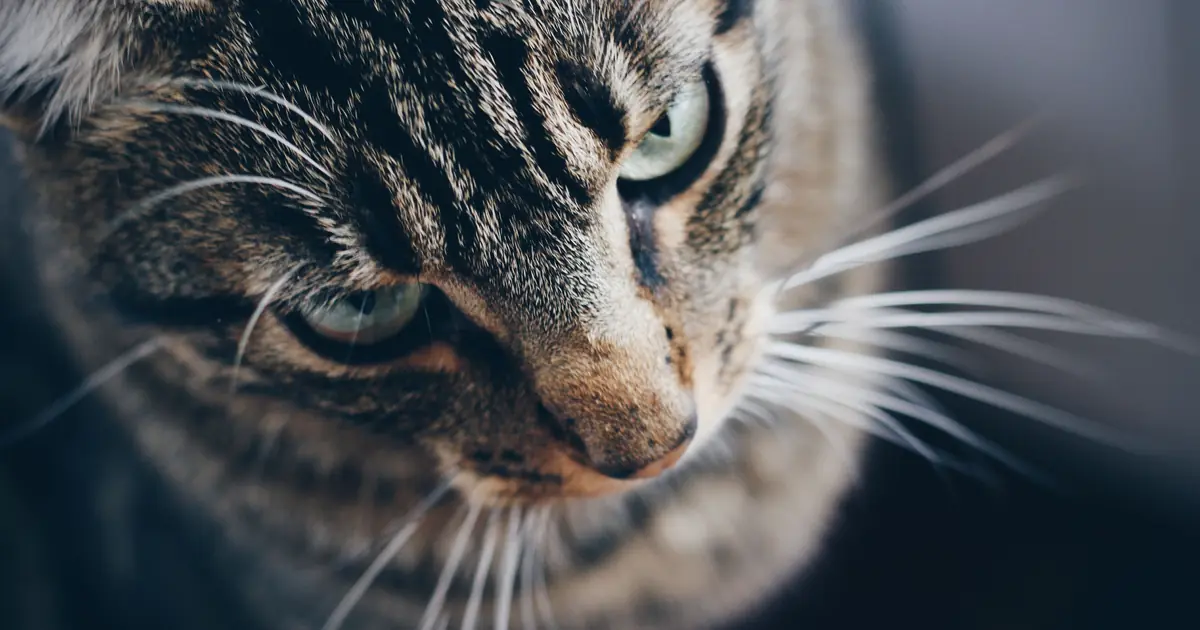
If you’ve ever looked at your striped cat and wondered, “Wait, is my cat actually a tabby breed?”, you’re in good company. It’s one of the most common mix-ups in the cat world. So what is a tabby cat? The short version: a tabby cat isn’t a breed at all. It’s a coat pattern, and an incredibly common one. Let’s clear it all up, from the famous “M” on the forehead to why so many orange tabbies turn out to be boys.
- “Tabby” describes a coat pattern, not a cat breed, so a tabby can be a purebred or a mixed cat.
- Every tabby cat carries the same telltale features: an “M” on the forehead and patterned fur on the body, legs, and tail.
- There are five recognized tabby patterns: mackerel (striped), classic (swirled), spotted, ticked (agouti), and patched.
- The agouti gene is the on-switch for the tabby pattern; without it, a cat looks solid-colored.
- Roughly 80% of orange tabby cats are male because the orange color gene sits on the X chromosome.
What Is a Tabby Cat, and Is It a Breed?
No, a tabby cat is not a breed. Tabby is a coat pattern, which means it describes the markings on a cat’s fur, not its lineage. Because of that, a tabby cat can be a fancy purebred or the friendly stray from down the street.
Here’s the thing that trips people up. When you adopt a “tabby” from a shelter, you’re learning what the cat looks like, not what breed it is. Plenty of recognized breeds show up in tabby, including the Maine Coon, American Shorthair, Abyssinian, Bengal, and the regular domestic shorthair that most house cats are. So “tabby” sits next to other pattern words like calico and tortoiseshell, not next to breed names like Siamese or Persian.
What Does a Tabby Cat Look Like?
A tabby cat looks like a cat wearing natural stripes, swirls, spots, or flecks, almost always with a bold “M” shape on the forehead. Beyond the “M,” tabby cats share a recognizable set of markings no matter which pattern they wear.
Once you know the signs, you’ll spot a tabby from across the room. Look for these classic features:
- An “M”-shaped marking right above the eyes on the forehead.
- Thin “pencil” lines fanning out from the corners of the eyes.
- Darker bands or rings around the legs and tail.
- A line of darker color running down the spine.
- Patterned fur on the sides, with a paler, often spotted belly.
One quick note on color. Tabby is about the pattern, so it shows up in many shades: brown, gray (often called silver or blue), orange (ginger), cream, and more. A cat can be a “brown mackerel tabby” or a “silver classic tabby,” because you’re naming the color and the pattern together.
What Are the 5 Tabby Cat Patterns?
The five tabby cat patterns are mackerel, classic, spotted, ticked, and patched. Each pattern lays out the stripes, swirls, or flecks differently, which is why no two tabbies look quite the same.
Here’s a side-by-side look at all five tabby patterns so you can match your cat:
| Tabby Pattern | What It Looks Like |
|---|---|
| Mackerel (striped) | Thin vertical stripes running down the sides like fish bones. The most common tabby pattern. |
| Classic (blotched) | Bold, swirling marbled bands, often with a bullseye or “oyster” shape on each side. |
| Spotted | Stripes broken up into spots of varying sizes across the body. Seen in breeds like the Bengal and Ocicat. |
| Ticked (agouti) | A salt-and-pepper, sandy look with little to no body stripes. The Abyssinian is the classic example. |
| Patched | A tabby pattern mixed with tortoiseshell or calico patches, nicknamed a “torbie” or “caliby.” |
The Mackerel Tabby
A mackerel tabby is the striped one, with narrow bands curving down the body like the skeleton of a fish. The mackerel tabby is the most common pattern, so it’s probably the look most people picture when they hear “tabby cat.”
The Classic Tabby
A classic tabby wears thick, swirling stripes that often form a target-like bullseye on each flank. The classic tabby pattern is sometimes called “blotched,” and it gives the coat a marbled, almost painted look.
The Spotted Tabby
A spotted tabby has spots instead of solid stripes, created when a modifier gene breaks the striped pattern apart. Spotted tabbies show up in wild-looking breeds like the Bengal, Ocicat, and Egyptian Mau.
The Ticked Tabby
A ticked tabby looks almost solid from a distance, with a sandy, salt-and-pepper coat and few or no body stripes. The ticked pattern is the Abyssinian’s signature look, and it still counts as tabby because the “M” and faint leg bands usually remain.
The Patched Tabby
A patched tabby combines tabby markings with the red-and-black patches of a tortoiseshell or calico cat. People often call a patched tabby a “torbie” (tabby plus tortoiseshell) or a “caliby” (tabby plus calico).
Why Do Tabby Cats Have an “M” on Their Forehead?
Tabby cats have an “M” on the forehead because of genetics: the tabby pattern creates fine lines on the face, and the limited space above the eyes naturally forms an “M” shape. The “M” is part of the same agouti-driven striping that runs over the rest of the body.
That’s the science. But the “M” has inspired some lovely legends too, and they’re worth knowing. In one Christian story, a tabby curled up to warm baby Jesus in the manger, and a grateful Mary stroked its head, leaving an “M” for her name. In an Islamic tradition, the Prophet Muhammad’s cat Muezza saved him from a snake, and the “M” marks where he petted her in thanks. Sweet stories, but the real reason is the camouflage striping cats have carried for thousands of years.
How Does the Agouti Gene Make a Cat a Tabby?
The agouti gene is the genetic switch that turns the tabby pattern on or off. When a cat carries the dominant agouti gene, its hairs grow with alternating light and dark bands that reveal stripes, swirls, or spots. Without it, the cat looks solid-colored instead.
Let me put that in plain terms. Every cat actually has an underlying tabby pattern written into its genes. The agouti gene decides whether you can see that pattern or not. Turn it on, and you get a tabby. Turn it off, and you get a solid black or gray cat, though you can sometimes spot faint “ghost stripes” in bright sunlight. Because the tabby-revealing genes are dominant, tabbies are one of the most common cats on the planet. The pattern traces back to wild ancestors like the African wildcat, whose striped coat helped it hide in tall grass.
Why Are Most Orange Tabby Cats Male?
Most orange tabby cats are male because the gene for orange fur sits on the X chromosome. Around 80% of orange (ginger) tabbies are boys, since a male needs only one copy of the orange gene to turn ginger, while a female needs two.
Here’s how that works. Male cats have one X and one Y chromosome, so a single orange gene on that one X makes the whole cat orange. Female cats have two X chromosomes, so they need the orange gene on both to be fully orange, which is less likely. In 2025, scientists pinpointed the actual gene behind ginger coats, a mutation near the ARHGAP36 gene on the X chromosome, solving a mystery that had puzzled researchers for over a century. And no, the orange itself isn’t a sixth pattern. Orange tabbies still come in mackerel, classic, spotted, or ticked.
What Is a Tabby Cat’s Personality Like?
A tabby cat’s personality depends on its breed and upbringing, not its stripes, because tabby is a coat pattern rather than a breed. A chatty Siamese tabby and a laid-back Maine Coon tabby can act completely differently even though both wear the same pattern.
That said, many cat parents lovingly describe their tabbies as friendly, curious, and playful, and orange tabbies in particular have a goofy, affectionate reputation. Just remember that’s personality folklore, not a rule. If you want a sense of how your tabby will act, look at its likely breed or ask the shelter about the individual cat’s temperament. Pattern tells you how a cat looks, not who it is.
How Long Do Tabby Cats Live?
Tabby cats usually live 12 to 18 years, and many indoor tabbies reach their late teens or even 20 with good care. Lifespan comes down to the cat’s breed, genetics, diet, and whether it lives indoors, not the tabby pattern itself.
Indoor cats tend to live several years longer than outdoor cats, who face cars, predators, and disease. To help your tabby live a long, healthy life, feed a quality diet, keep up with regular checkups, encourage daily play, and schedule a vet visit any time something seems off. This article is educational and isn’t a substitute for veterinary advice, so your vet is always the best source for your individual cat’s health.
Frequently Asked Questions About Tabby Cats
Q: Is a tabby cat a specific breed?
No, a tabby cat is not a breed. Tabby is a coat pattern marked by stripes, swirls, or spots and an “M” on the forehead. Many breeds and mixed-breed cats can be tabby, from the Maine Coon to the everyday domestic shorthair.
Q: What does the “M” on a tabby cat’s forehead mean?
The “M” on a tabby cat’s forehead is a natural part of the tabby pattern, formed by fine facial striping in the small space above the eyes. Folk legends tie it to the Virgin Mary or the Prophet Muhammad, but the real cause is genetics and camouflage.
Q: How many tabby cat patterns are there?
There are five tabby cat patterns: mackerel (striped), classic (swirled), spotted, ticked (agouti), and patched. Mackerel is the most common, and ticked is the look you see in Abyssinians. A patched tabby is also called a torbie or caliby.
Q: Are all orange cats tabbies?
Yes, essentially all orange cats are tabbies. The orange color gene always shows some tabby pattern, so a “solid” orange cat still has faint stripes, an “M,” and ringed tail markings if you look closely. Orange tabbies can be mackerel, classic, spotted, or ticked.
Q: Are tabby cats friendly?
Tabby cats are often described as friendly and playful, but personality comes from breed and upbringing, not the tabby pattern. A tabby’s stripes don’t determine temperament. To predict behavior, look at the cat’s likely breed or its individual history.
Q: Can a tabby cat be a girl?
Yes, tabby cats can absolutely be female. Tabby is a pattern found in both sexes. Orange tabbies skew male (about 80%), but brown, gray, and other tabby colors are split fairly evenly between males and females.
Q: What is the difference between a tabby and a calico cat?
A tabby cat shows stripes, swirls, or spots in one color family, while a calico cat shows three colors in distinct patches of white, black, and orange. The two can even combine into a “caliby,” a calico cat that also carries tabby striping in its colored patches.
Q: How long do tabby cats live?
Tabby cats typically live 12 to 18 years, and indoor cats often reach their late teens. Lifespan depends on breed, genetics, diet, and lifestyle rather than the tabby pattern. Good food, regular vet care, and an indoor life all help a tabby live longer.
So, what is a tabby cat? It’s any cat wearing one of nature’s oldest coat patterns: stripes, swirls, spots, or ticking, finished off with that signature “M.” A tabby cat isn’t a breed, which means your striped friend is one of a kind, no matter where they came from. Now that you know the patterns and the genetics behind them, take another look at your cat and see if you can name their tabby type.

Hello and welcome to The Ideal Cat!
We are some passionate cat owners from different professions. We love our cats and have a lot of experience in how to care for our pets. We are incredibly excited to share our knowledge, experience, and research with you. So you can take good care of your loving cat. We will answer most of the common questions about owning cats, taking care of them, etc. If you have any question contact with us. Thanks for visiting! Enjoy the content.
