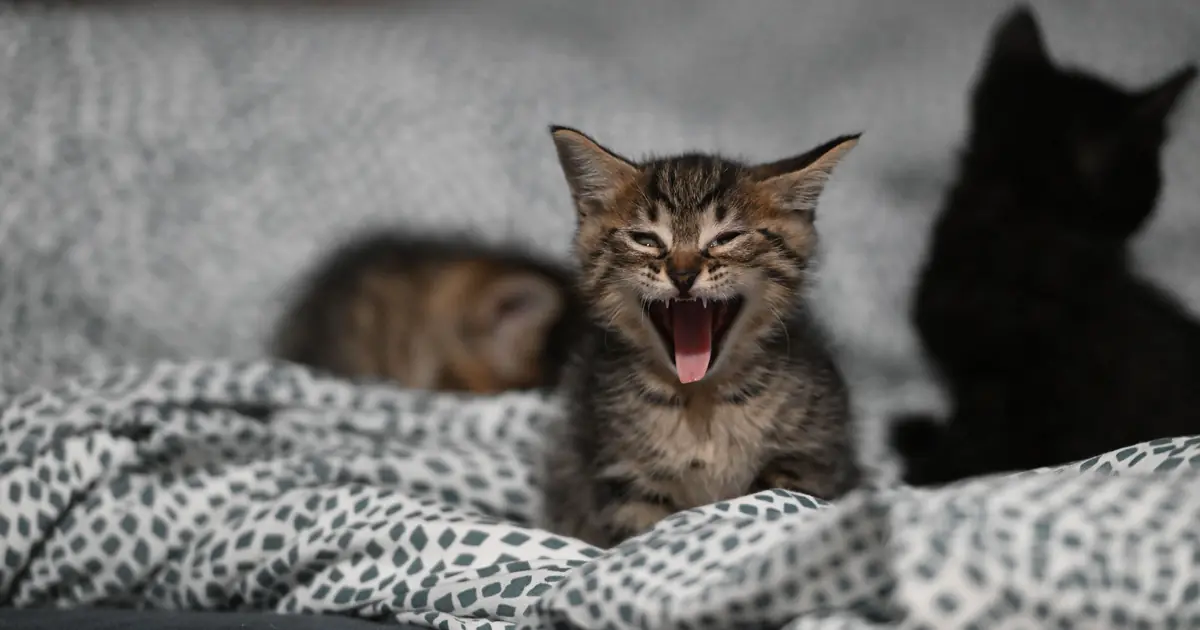
It’s 5am. You’re deep in the best part of your sleep. Then two small paws land square on your face, and a very determined cat is standing on your chest like it owns the place (it does).
If this sounds familiar, you’re not imagining things and you’re not being singled out for torture. Cats walk on their sleeping humans for a handful of very ordinary, very catlike reasons, and once you understand the “why,” it’s a lot easier to fix the “how do I make this stop.”
- Cats are crepuscular, meaning they’re naturally most active at dawn and dusk, which is often exactly when you’re deep asleep.
- Walking on you at night is usually a mix of wanting attention, chasing your body heat, and feeling safe next to you.
- Kneading, the rhythmic paw-pressing cats do before settling, is a leftover kitten nursing behavior that signals comfort and contentment.
- Cats often step on the face, chest, or stomach because that’s where your warmth, breath, and attention are concentrated.
- A sudden change in nighttime activity, especially in an older cat, is worth mentioning to a vet since it can point to a health issue.
Why Do Cats Walk on You While You Sleep?
Cats walk on you while you sleep because you’ve become their favorite combination of food source, heat lamp, and safe place to be. You’re warm, you’re still, and you’re the person most likely to fill the food bowl. Add in a body clock that runs on a completely different schedule than yours, and a 5am foot-to-the-face wake-up call starts to make a lot of sense.
None of this means your cat is being spiteful or “punishing” you for sleeping in. Cats don’t hold grudges the way people do. They’re just doing what comes naturally: checking on their favorite person, hunting for warmth, and testing whether breakfast is finally happening.
Why Do Cats Want to Wake You Up at Dawn?
Cats wake you up at dawn because that’s when their internal clock tells them it’s time to eat and be active. Cats are crepuscular animals, which means they’re built to be most alert and energetic at dawn and dusk, not in the middle of the day or the dead of night. According to International Cat Care, this dawn-and-dusk rhythm is rooted in how wild cats hunt, since that’s when small prey like rodents and birds tend to be most active too.
Your cat isn’t overriding this instinct just because you’d rather sleep until 8. So when the sun starts coming up, your cat’s brain says “go time,” and the fastest way to get you moving is to walk directly on top of you. If you’ve also noticed your cat getting extra cuddly the moment your alarm goes off, that’s part of the same pattern, and it’s covered in more detail in our guide to why cats get so affectionate in the morning.
Are Cats Drawn to Your Body Heat While You Sleep?
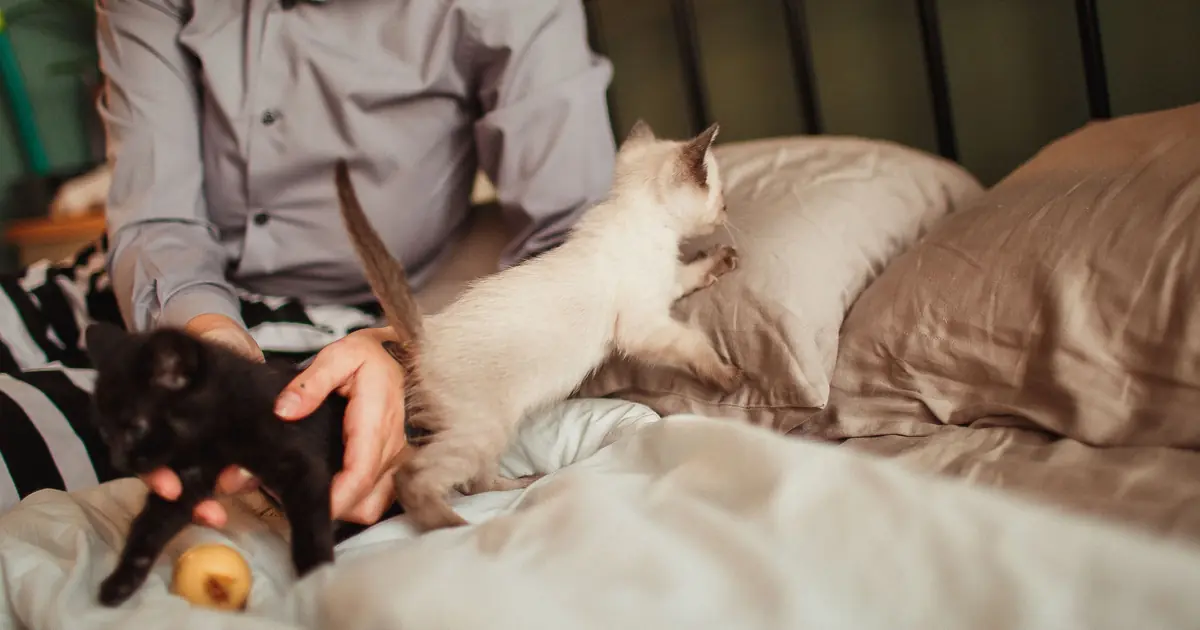
Yes, your body heat is a big part of the pull. A sleeping human is basically a warm, breathing heating pad, and cats are famous for seeking out the coziest spot in any room. Cats have a slightly higher normal body temperature than humans, typically somewhere in the 100 to 102.5°F range, and they’re drawn to warmth the same way they’re drawn to a sunny windowsill.
Walking across you at night often isn’t random wandering. It’s your cat scouting for the warmest, most comfortable landing spot, which tends to be your chest, your side, or the crook behind your knees. If your cat has a favorite napping spot on your bed, it’s worth reading where your cat sleeps on your bed and what it means, since the exact spot can reveal a lot about what your cat is after.
Is Walking on You a Sign of Bonding and Trust?
Yes, walking on you while you sleep is a genuine sign of bonding and trust, not just a warmth or food strategy. Cats are vulnerable when they’re resting close to another creature, so choosing to settle on you means your cat feels safe enough to lower its guard completely. It’s also a form of scent exchange. Cats have scent glands in their paws and cheeks, and rubbing against or walking on you mixes your scent with theirs, which reinforces the bond between you. The Cornell Feline Health Center notes that scent-based communication like this is a normal, healthy part of how cats bond with the people and animals they trust.
Sleeping close to their favorite human is a well documented cat behavior, and it’s one reason so many cat parents wake up pinned under 10 pounds of fur. We go deeper into this in why cats like to sleep with their owners, but the short version is that proximity at night is one of the clearest signs of feline affection there is.
Why Do Cats Knead and Settle on You Instead of Wandering Off?
Cats knead and settle on you because it’s a comfort behavior left over from kittenhood. Kittens knead their mother’s belly to stimulate milk flow, and most cats never fully outgrow the motion. As adults, they knead when they feel relaxed, safe, and content, and a warm, sleeping human is often the perfect target.
So that slow, deliberate paw-pressing before your cat flops down on your stomach isn’t random. It’s your cat saying, in cat language, that this spot (you) feels good and safe. For a full breakdown of the behavior, check out why cats knead and what it means. And if your cat has a habit of tucking in against your legs rather than kneading and moving on, our post on why cats sleep between your legs covers that closely related behavior too.
Why Do Cats Target Your Face, Chest, or Bladder Specifically?
Cats target the face, chest, or bladder because those spots offer the clearest signals a cat is looking for: warmth, breath, and a reaction. Your face and chest radiate heat and rise and fall with your breathing, which makes them easy for a cat to locate even in a dark room. Stepping near your bladder or stomach often gets an instant response too, a grunt, a shift, a hand pushing them away, and for a cat hunting for attention, any reaction at all counts as a win.
There’s also a simpler explanation some nights: your cat is just choosing the flattest, most stable landing spot on a moving, blanket-covered obstacle course. If you’re often woken up by paws on your face specifically, you might also enjoy our piece on why cats watch you sleep, since it covers the quieter version of this same nighttime attention.
Is It Affection or Manipulation, and How Do You Get a Good Night’s Sleep Anyway?
It’s honestly both, and that’s not a bad thing. Your cat walking on you is a real expression of affection, warmth-seeking, and trust. But cats are also sharp learners, and if walking on your face at 5am has ever gotten you up to fill the food bowl, your cat has clocked that as a strategy that works. Love and a learned habit can absolutely coexist in the same 10-pound package.
| Reason | What Your Cat Wants | How to Handle It |
|---|---|---|
| Attention or food | To be fed or acknowledged, especially at dawn | Feed at a consistent time and never feed immediately after being woken up |
| Warmth | A cozy, warm spot to settle | Offer a heated cat bed or blanket nearby as an alternative |
| Bonding | Closeness and reassurance from you | Give focused playtime and affection before bed so the need is already met |
| Routine or habit | To repeat a behavior that’s worked before | Stop rewarding nighttime walking with food, play, or attention |
The good news is you don’t have to just accept broken sleep forever. A few changes tend to make a real difference:
- Feed your cat a good-sized meal right before you go to bed so hunger doesn’t peak at 5am.
- Never reward 5am walking with food or attention, even sleepy attention. That teaches your cat it works.
- Consider a timed automatic feeder so breakfast shows up on schedule whether or not your cat wakes you first.
- Fit in 10 to 15 minutes of active play before bed to burn off that dawn-and-dusk energy earlier in the evening.
- Set up a warm, comfortable cat bed near your bed as a tempting alternative to your chest.
- If none of that works, it’s completely fine to close the bedroom door. Your cat will adjust.
When Is Nighttime Walking a Concern?
Occasional early wake-up calls are normal cat behavior, but a sudden change is worth paying attention to. If your cat starts pacing, vocalizing, or walking on you far more than usual, especially an older cat, it can signal something medical rather than just a hungry stomach. Conditions like hyperthyroidism, arthritis pain, or feline cognitive decline can all show up first as restless nights and new demands for attention.
This article is meant to help you understand normal cat behavior, not replace a vet visit. If the change is new, sudden, or paired with weight loss, increased appetite, yowling, or confusion, it’s worth getting your cat checked out. The VCA Animal Hospitals resource on feline hyperthyroidism is a helpful place to start if you’re seeing these signs alongside nighttime restlessness.
Frequently Asked Questions
Q: Why does my cat walk on me every night at the same time?
Cats are creatures of habit with an internal clock tied to dawn and dusk activity. If your cat wakes you at the same time each night, it’s likely linked to a consistent hunger cycle or an established routine that’s been accidentally reinforced by feeding or attention at that time.
Q: Why does my cat step directly on my bladder or stomach?
Your stomach and bladder area is often the warmest, flattest part of your body when you’re lying down, and pressing on it usually gets an instant reaction from you. For an attention-seeking cat, that reaction, even an annoyed one, confirms the spot works.
Q: Is it bad to let my cat sleep on me?
No, letting a healthy cat sleep on you isn’t harmful and is actually a sign of a strong bond. The main downside is disrupted sleep for you, so if it’s affecting your rest, setting boundaries like a closed door or a bed of their own is a reasonable fix.
Q: Why does my cat only walk on me and not other family members?
Cats often form a strongest bond with one particular person, sometimes based on who feeds them, who plays with them most, or simply personality match. That preferred person is usually the one who gets the 5am wake-up visit.
Q: Should I lock my cat out of the bedroom at night?
You can, and it’s a completely fair solution if nighttime walking is wrecking your sleep. Set your cat up with food, water, a litter box, and a comfortable bed outside the bedroom, and most cats adjust to the new routine within a week or two.
Q: Why does my cat knead me before lying down?
Kneading is a comfort behavior that starts in kittenhood, when kittens knead their mother to encourage milk flow. Adult cats keep doing it when they feel relaxed and safe, so kneading you before settling in is a clear sign of contentment.
Q: Can I train my cat to stop walking on me at night?
Yes, most cats can learn new nighttime habits within a few weeks. The key is consistency: feed at set times, never reward early wake-ups with food or attention, and offer a warm alternative sleeping spot nearby.
Q: Why is my senior cat suddenly walking around and meowing at night?
Sudden nighttime restlessness and yowling in an older cat can signal hyperthyroidism, arthritis pain, high blood pressure, or feline cognitive decline. This kind of new behavior in a senior cat is worth a vet visit rather than something to just wait out.

Hello and welcome to The Ideal Cat!
We are some passionate cat owners from different professions. We love our cats and have a lot of experience in how to care for our pets. We are incredibly excited to share our knowledge, experience, and research with you. So you can take good care of your loving cat. We will answer most of the common questions about owning cats, taking care of them, etc. If you have any question contact with us. Thanks for visiting! Enjoy the content.
