
Your cat used to greet you at the door. Now they’re tucked under the bed, barely lifting their head. The favorite toy sits untouched. Something feels off, and you’re wondering: can a cat actually get sad?
Yes, they can. Cats form deep bonds, and when their world shifts, their mood can shift too. But here’s the part that matters most: the signs of a depressed cat look almost identical to the signs of a sick cat. So before we talk feelings, we have to talk vet.
This article is educational and isn’t a substitute for veterinary care. A withdrawn cat should always be checked by a vet first.
- Cat depression shows up as hiding, sleeping more, appetite changes, less grooming, reduced play, and shifts in vocalizing or litter box use.
- These same signs are classic early symptoms of illness, so a vet exam to rule out a medical cause comes before any behavior label.
- Common triggers include losing a companion, moving, a new routine, boredom, or a new pet or baby in the home.
- Cats do grieve. In one ASPCA survey, most cats showed several behavior changes after losing a companion, and many returned to normal within about six months.
- Most low-mood cats improve with steady routine, daily play, enrichment, and patience, but sudden or severe changes need prompt veterinary care.
Can cats actually get depressed?
Cats can absolutely experience low mood and withdrawal, even if they don’t get clinical depression the exact way people do. Vets and behaviorists agree that cats show a real cluster of “sad” behaviors when something in their world changes or when they don’t feel well. Think of it less as a human diagnosis and more as a cat’s way of telling you they’re struggling.
Cats are creatures of habit and quiet routine. When that routine breaks, a bored, grieving, or stressed cat can pull back from everything they used to enjoy. The tricky part is that a cat in pain or fighting an illness does the exact same thing.
What are the symptoms of a depressed cat?
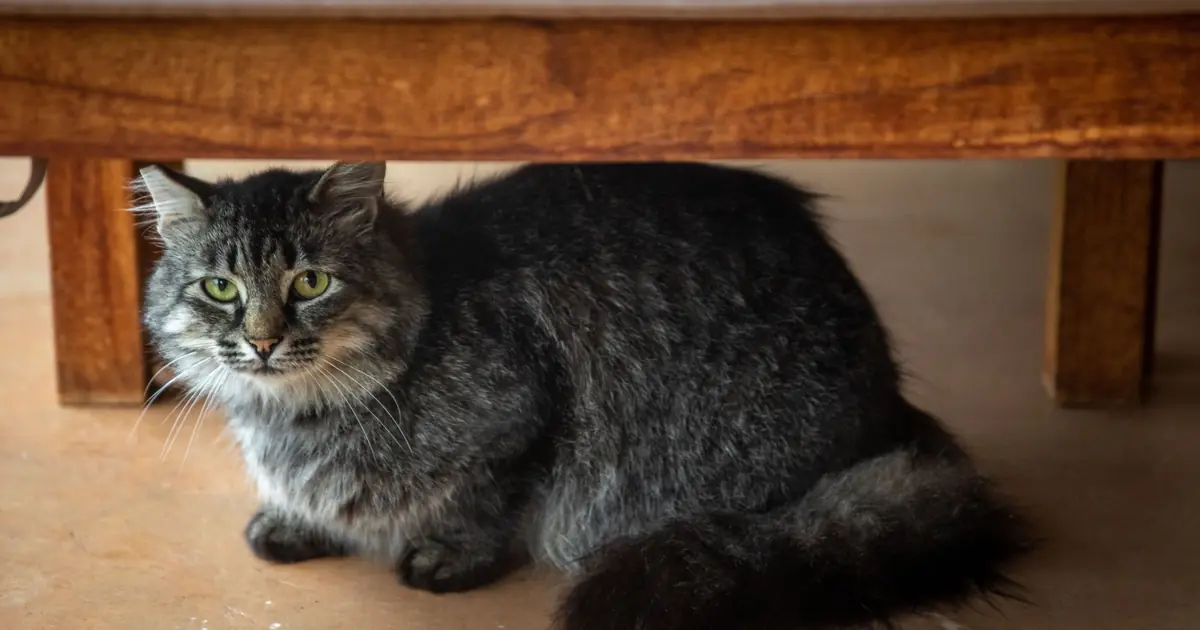
A depressed cat usually shows a handful of changes at once: hiding more, sleeping more, eating less, grooming poorly, playing less, and meowing differently. One small change on its own rarely means much. It’s the shift away from your cat’s normal self, especially several signs together, that’s worth paying attention to.
Here’s a closer look at each common sign, what it might mean, and what to do about it.
| Sign | What it may mean | What to do |
|---|---|---|
| Hiding more, or retreating to secluded spots | Stress, grief, or feeling unwell and wanting to be left alone | Don’t force interaction; book a vet check if it lasts beyond a few days |
| Sleeping more than usual, low energy | Low mood, boredom, or an underlying illness like arthritis or thyroid issues | Note how many hours; rule out pain and illness with a vet |
| Eating less or skipping meals | Sadness, stress, dental pain, nausea, or many medical conditions | Never let a cat go 24+ hours without eating; call your vet |
| Overeating or weight gain | Boredom or comfort eating in an under-stimulated cat | Add play and enrichment; discuss diet with your vet |
| Grooming less, dull or matted coat | Not feeling well, low mood, or pain that makes twisting hurt | Check for mats and skin issues; a vet visit if grooming drops off |
| Overgrooming or bald patches | Stress, anxiety, allergies, or skin problems | Vet visit to separate stress from a medical cause |
| Loss of interest in play or favorite people | Depression, boredom, or feeling unwell | Try short, gentle play sessions; watch for other signs |
| Meowing more, or going quiet | Grief, anxiety, confusion (in seniors), or discomfort | Low, mournful yowls or new silence both warrant a vet chat |
| Clinginess or, opposite, new aggression | Insecurity, stress, or pain making your cat irritable | Give calm reassurance; rule out pain with a vet |
| Litter box changes or accidents | Stress, or a medical issue like a urinary problem | Treat sudden litter box changes as a possible medical red flag |
Notice a theme? Nearly every “depression” sign has a medical twin. That’s not a coincidence, and it’s exactly why the next section matters so much.
Changes in grooming, clinginess, and vocalizing
Grooming is one of the clearest windows into a cat’s wellbeing. A cat who suddenly looks scruffy, greasy, or matted has often lost the motivation or the comfort to keep tidy. On the flip side, a stressed cat may overgroom one spot until the fur thins out. Some cats get needy and shadow you room to room, a lot like the way a kneading cat seeks comfort. Others withdraw or turn snappy. Both directions can signal that something’s wrong.
How do I tell cat depression from a real illness?
You often can’t tell them apart at home, and that’s the single most important thing to know. Because low mood and physical illness share so many symptoms, the safe move is always a veterinary exam first. Depression is what’s left on the table after your vet has ruled out medical causes, not a guess you make from the couch.
Conditions that frequently masquerade as “my cat seems depressed” include:
- Dental disease and mouth pain (a big reason cats stop eating)
- Arthritis and joint pain, which makes cats hide, sleep, and groom less
- Kidney disease, common in older cats
- Hyperthyroidism or other hormonal issues
- Infections, nausea, or anything causing ongoing pain
- Vision or hearing loss that leaves a cat unsure and withdrawn
According to the VCA Animal Hospitals, behavior changes that look like grief or sadness should still be checked by a vet, since illness can hide behind them. If your cat is also throwing up, our guide on when to worry about cat vomiting can help you gauge urgency. And weight loss or a poor coat can sometimes trace back to parasites, which is where cat parasite treatment comes in.
Bottom line: book the vet appointment first. If your cat gets a clean bill of health, then you can focus on mood, routine, and enrichment with real confidence.
What causes depression in cats?
Cat depression is usually triggered by a change the cat didn’t choose: a loss, a move, a new routine, or plain old boredom. Cats crave predictability, so disruptions that seem small to us can feel huge to them.
The most common causes include:
- Losing a companion. The death of a person or another pet is a leading trigger. Cats grieve, and a bonded cat can visibly mourn a lost friend.
- Moving or home changes. A new house, remodeling, rearranged furniture, or even a moved litter box can unsettle a sensitive cat.
- A change in routine. A new work schedule, a long vacation, or a household member leaving can leave a cat feeling adrift.
- Boredom and under-stimulation. An indoor cat with nothing to chase, climb, or watch can slide into a flat, listless mood.
- A new pet or baby. Added competition or noise can stress a cat who liked things quiet.
- Illness or pain. Feeling physically bad drags down mood, same as it does for us.
Do cats grieve when another pet dies?
Yes, cats do grieve the loss of a companion, and the change can be striking. Grieving cats often search the house, vocalize more, eat less, sleep more, and seek out (or avoid) their humans. In a well-known ASPCA Companion Animal Mourning survey, most cats showed several behavior changes after losing a fellow pet, and the majority eased back to normal within about six months. The behaviour team at International Cat Care notes there’s no fixed timeline: some cats bounce back in days, others take weeks. Keep routines steady and give extra quiet attention while your cat adjusts.
How can I help a depressed cat feel better?
Once your vet has ruled out illness, you help a low-mood cat with routine, play, enrichment, and patience. The goal is to rebuild a sense of safety and give your cat reasons to engage with the world again. Most cats respond well, though it can take time.
Here’s what actually helps:
- Keep the routine rock-steady. Feed, play, and wind down at the same times each day. Predictability is comforting to a cat.
- Play every single day. Short, daily sessions with a wand toy or feather teaser tap into your cat’s hunting drive and lift energy. Ten focused minutes beats a room full of ignored toys.
- Enrich the space. Add vertical spots like cat trees and window perches, rotate toys, and try puzzle feeders so mealtime becomes a game.
- Give calm, unforced attention. Sit near your cat, talk softly, and let them come to you. Don’t smother a cat who wants space.
- Make changes gradually. Introduce new pets, foods, or furniture slowly so your cat isn’t overwhelmed.
- Try pheromones or calming aids. Feline pheromone diffusers can ease anxiety, and some cats do well with vet-approved calming cat treats. Ask your vet before adding any supplement.
- Consider a companion carefully. If boredom or loneliness is the root, a second cat sometimes helps, but only after a slow, proper introduction and only if your cat is social.
If your cat’s mood doesn’t budge after a few weeks of this, or the signs are severe, loop back to your vet. For stubborn cases, a veterinary behaviorist can build a plan, and in some situations a vet may prescribe anti-anxiety or antidepressant medication. Never give your cat any human medication, since many are toxic to cats.
When should I see a vet about my cat’s mood?
See a vet promptly any time your cat’s behavior changes noticeably, because those changes are often the first sign of illness. You don’t need to wait and wonder. A quick exam gives you answers and peace of mind.
Call your vet, or go sooner, if you notice:
- Not eating for 24 hours or more, or a steady drop in appetite
- Noticeable weight loss or gain
- Hiding, lethargy, or low energy that lasts more than a couple of days
- Litter box changes, straining, or accidents (a possible medical emergency, especially in male cats)
- New aggression, disorientation, or crying that seems like pain
- A coat that’s suddenly matted, greasy, or has bald patches
- Any grief-linked withdrawal that isn’t easing after a few weeks
Sudden appetite loss and lethargy in a cat are never something to sit on. The Cornell Feline Health Center stresses that behavior shifts often point to a physical problem, so a vet check is the responsible first step. If your cat is also showing respiratory signs, our guide on a cat that won’t stop sneezing covers when that becomes urgent.
Cat depression FAQ
Q: What are the first signs a cat is depressed?
The earliest signs are usually hiding more, sleeping more, and eating less, along with a drop in play and grooming. Because these overlap with illness, a vet exam should come first to rule out a medical cause.
Q: How long does cat depression last?
It varies a lot. Grief or a stressful change may lift in a few days to a few weeks, and most grieving cats return to normal within about six months. If low mood lasts beyond a few weeks or worsens, see your vet.
Q: Can a cat be depressed after another pet dies?
Yes. Cats grieve lost companions and may search the house, vocalize more, eat less, and withdraw. Keep routines steady, offer quiet attention, and check with your vet if your cat stops eating or the sadness drags on.
Q: How do I tell if my cat is depressed or sick?
You usually can’t tell at home, because depression and illness share nearly identical signs. Conditions like dental pain, arthritis, and kidney disease all mimic sadness. The safe answer is a vet exam first to rule out a medical cause.
Q: Will getting another cat help a depressed cat?
Sometimes, if boredom or loneliness is the cause and your cat is social. But a new cat can also add stress. Introduce any new pet slowly, and only after a vet has ruled out illness as the reason for the low mood.
Q: Do indoor cats get depressed more easily?
Indoor cats can get bored and under-stimulated, which drags down mood. The fix is enrichment: daily play, vertical space, window perches, puzzle feeders, and rotating toys to keep their hunting instincts busy.
Q: Can I give my cat antidepressants?
Only if a veterinarian prescribes them. Some cats with severe or lasting depression benefit from vet-prescribed medication, but you should never give human antidepressants or any human medication, as many are toxic to cats.
Q: Does my cat sleeping all day mean it’s depressed?
Not on its own. Healthy cats sleep 12 to 16 hours a day. It’s a meaningful change from your cat’s normal pattern, paired with other signs like hiding or not eating, that suggests low mood or illness worth a vet visit.
Watching your cat pull away from the life they used to love is genuinely hard, and it’s a sign you’re paying attention. Start with the vet, rule out the physical stuff, then rebuild your cat’s world with routine, play, and calm patience. Most cats find their spark again, and yours has the best possible advocate already: you.

Hello and welcome to The Ideal Cat!
We are some passionate cat owners from different professions. We love our cats and have a lot of experience in how to care for our pets. We are incredibly excited to share our knowledge, experience, and research with you. So you can take good care of your loving cat. We will answer most of the common questions about owning cats, taking care of them, etc. If you have any question contact with us. Thanks for visiting! Enjoy the content.
