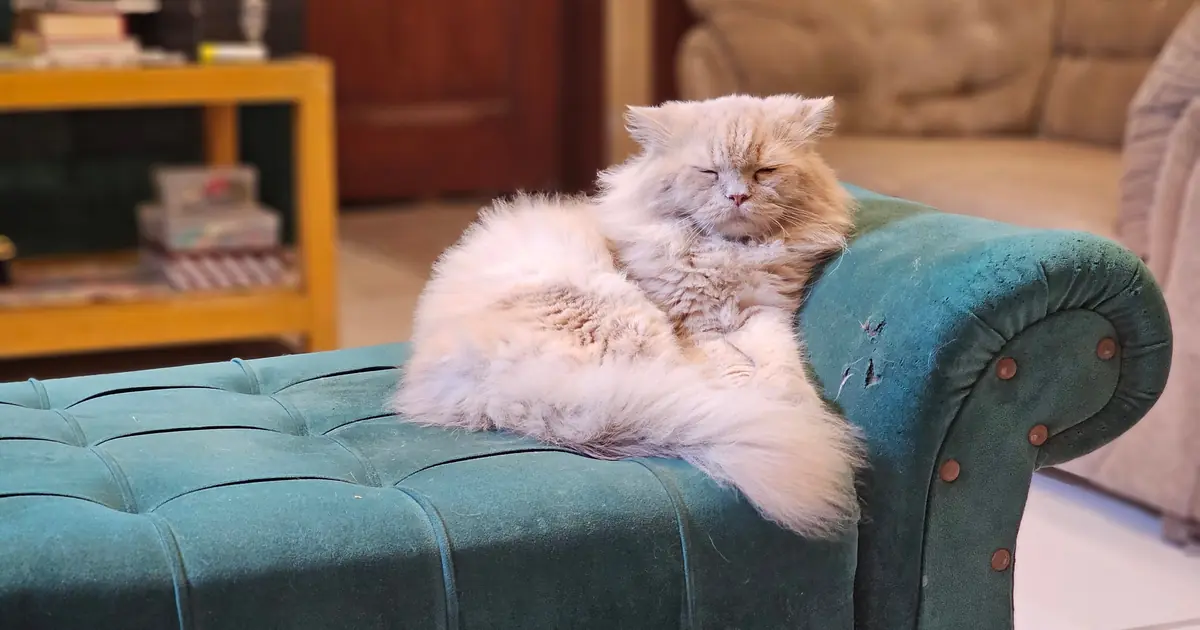
If you’ve ever fallen for a Persian cat’s flat, sweet face at a cat show and then gasped at the price tag, you’re not alone. These cats look like they were designed by a plush toy company, and breeders charge like it too.
Here’s the thing: that price isn’t just a markup on a pretty face. Persians are genuinely expensive to produce responsibly, and they stay a little pricey to own for the rest of their lives. Let’s break down exactly where the money goes, and where you can save some of it. (If you want the full picture on the breed first, our Persian cat guide covers temperament and care basics too.)
- Persian kittens typically cost $1,000 to $3,000 from a breeder, with show-quality cats often running $2,500 to $5,000 or more.
- Persians frequently need C-sections to give birth safely, because their large heads don’t move easily through the birth canal.
- Responsible breeders screen breeding cats for polycystic kidney disease (PKD) and hypertrophic cardiomyopathy (HCM), and that testing adds real cost to every litter.
- Persians are a brachycephalic (flat-faced) breed, which means more vet visits over a lifetime for breathing, eye, and dental issues.
- Adopting a Persian or Persian mix from a shelter or breed rescue usually costs $50 to $200, a fraction of the breeder price.
Why are Persian cats so expensive?
Persian cats are expensive because demand for the breed stays high while responsible, ethical breeding stays genuinely hard and costly to do right. Persians need special pregnancy care, frequent vet screening, and skilled, patient breeding programs to avoid passing on painful genetic conditions. Add in registration paperwork, show lines, and the breed’s celebrity status (thanks in part to famous Persian cats on social media), and you get a price that reflects real overhead, not just hype.
| Source / Quality | Typical Price | Notes |
|---|---|---|
| Shelter or rescue | $50 to $200 | Adoption fee usually covers spay/neuter, vaccines, and a basic vet check |
| Pet-quality breeder | $1,000 to $2,000 | Healthy, well-socialized kitten, not intended for showing or breeding |
| Show-quality breeder | $2,500 to $5,000+ | Meets the breed standard closely, comes from titled parents, sold with registration papers |
What actually drives the price of a Persian cat?
Several factors stack on top of each other to push Persian prices up, and it rarely comes down to just one thing. Here’s what a breeder is actually charging you for:
- Demand and popularity: Persians are consistently one of the most requested cat breeds in the US, and popular breeds command higher prices simply because more people want one than there are kittens available.
- Pedigree and registration: A kitten registered with a group like The Cat Fanciers’ Association (CFA) comes with documented lineage, which costs the breeder time and fees to maintain.
- Show quality versus pet quality: A kitten that closely matches the official breed standard, the ideal face shape, coat, and body type, costs more than a kitten with a minor cosmetic flaw that makes it unsuitable for showing but perfectly fine as a pet.
- Coat color and pattern rarity: Some colors and patterns, like certain chinchilla silvers or particolors, are rarer and take longer for a breeding program to produce, which raises the price.
- Breeder reputation: An established breeder with years of health-tested lines, championship cats, and a waiting list charges more than a backyard breeder, and honestly, that premium is usually worth paying for a healthier kitten.
This isn’t unique to Persians. Other high-demand purebreds follow the same pattern. Bengal cats carry a similar price premium for related reasons: rarity, coat genetics, and careful breeding. The closely related Himalayan, essentially a Persian with Siamese coloring, tracks a comparable price range too, as our guide to how much a Himalayan cat costs explains.
Why is it so expensive to breed Persian cats responsibly?
Breeding Persian cats responsibly costs a lot because their body shape makes pregnancy and birth genuinely risky, and skipping the necessary vet care to cut costs just produces sicker cats. A queen (a female breeding cat) carrying Persian kittens often needs closer monitoring than an average cat, and many births end up needing surgical help.
- Difficult pregnancies: Persian kittens tend to have proportionally large heads, which can make natural birth harder and slower.
- Frequent C-sections: Because of that head size and the breed’s flat face, many Persian litters are delivered by cesarean section rather than natural birth, and a C-section from a vet is not cheap.
- Small litters: Persians tend to have smaller litters than many other breeds, so a breeder’s costs get spread across fewer kittens.
- Health and genetic testing: Responsible breeders test breeding cats for polycystic kidney disease (PKD), a condition where fluid-filled cysts form in the kidneys, and hypertrophic cardiomyopathy (HCM), a thickening of the heart muscle. Both tests, plus ongoing vet checkups for the breeding cats, add up fast.
- Stud fees: If a breeder doesn’t own a male Persian with the right pedigree, they pay a stud fee to breed with one, which can run into the hundreds of dollars per litter.
The Cat Fanciers’ Association maintains the official Persian breed standard, and it’s worth a look if you want to understand exactly what show breeders are aiming for.
Does the flat face make Persian cats more expensive to breed and own?
Yes, the flat face adds cost on both ends, breeding and ongoing ownership. Persians are a brachycephalic breed, meaning they have a shortened skull and flattened face, and that structure comes with predictable health tradeoffs. Breeders need extra vet screening before breeding a flat-faced cat, and owners deal with more frequent vet visits over the cat’s life.
Brachycephalic cats commonly deal with narrowed nostrils, tear duct issues that cause staining under the eyes, and sometimes breathing noise during exercise or in the heat. None of this means a Persian can’t live a full, happy life. It just means budgeting for a bit more vet care than you would for, say, a domestic shorthair.
What ongoing costs make Persians expensive to own after adoption?
Owning a Persian stays pricier than owning most cats because of daily grooming needs and breed-specific health monitoring, not just the upfront purchase price. Here’s what to expect once the kitten is home:
- Daily coat grooming: That famous long coat mats easily and needs brushing every single day, or you’ll end up paying a groomer to shave out painful mats. (Curious how much a Persian actually sheds? We cover it in detail in do Persian cats shed.)
- Professional grooming: Many Persian owners book a professional groomer every 4 to 8 weeks for a bath, blow-out, and trim, which typically runs $50 to $100 a visit.
- Eye cleaning: Persians need their tear stains wiped daily or every couple of days to prevent skin irritation around the eyes.
- Dental care: The flattened jaw can crowd teeth, so Persians often need more frequent dental checkups and cleanings than average.
- Brachycephalic-related vet care: Ongoing monitoring for breathing and eye issues adds regular vet visits to the yearly budget.
- PKD monitoring: Even with a health-tested breeder, many vets recommend periodic kidney ultrasounds or bloodwork for Persians as they age, since PKD is one of the more common inherited conditions in the breed.
If you’re curious how these ongoing costs compare across breeds, our monthly cost breakdown for owning a cat is a good next stop.
Is adopting a Persian cheaper than buying from a breeder?
Yes, adopting is almost always cheaper, usually $50 to $200 compared to $1,000 or more from a breeder. Purebred cats, Persians included, show up in shelters and rescues more often than people expect. Owners sometimes surrender a Persian because they underestimated the grooming commitment, not because anything is wrong with the cat.
Breed-specific rescues also exist just for Persians and Persian mixes, and they’ll usually tell you upfront about any health quirks the cat has. The ASPCA’s adoption resources are a solid place to start searching, and many local shelters can flag you when a Persian or Persian mix comes in.
How do you buy a Persian responsibly without overpaying or supporting a kitten mill?
Buy a Persian responsibly by choosing a breeder who health tests, lets you meet the kitten in person, and hands over full paperwork, not just the cat. Follow these steps:
- Ask for proof of PKD and HCM testing on both parent cats, not just a verbal promise.
- Visit in person if you can, and make sure the kitten is raised inside the home, not in a cage or an outdoor shed.
- Meet the mother cat and check that she looks healthy, alert, and not overbred (avoid breeders who always seem to have multiple litters going at once).
- Get registration papers, a health record, and a written contract that covers a health guarantee.
- Be wary of any price that seems too low for a “purebred Persian with papers.” That’s a common kitten mill red flag.
- Ask how many litters the breeder produces per year. A responsible small breeder usually has a waiting list, not kittens ready to ship immediately.
The University of California, Davis Veterinary Genetics Laboratory runs the standard PKD genetic test for cats, and any breeder worth the price should be able to show you results from it.
A quick, honest note: Persians are a high-maintenance, flat-faced breed prone to polycystic kidney disease, breathing difficulties, and eye issues. Buy from a breeder who screens for PKD and HCM, budget for regular grooming and vet visits, and seriously consider adoption if the upfront cost is a stretch. This article is educational and not a substitute for advice from your own veterinarian.
Frequently Asked Questions
Q: How much does a Persian cat cost on average?
A Persian kitten from a breeder typically costs $1,000 to $3,000, while show-quality lines can run $2,500 to $5,000 or more. Adopting a Persian from a shelter or rescue usually costs $50 to $200.
Q: Why do Persian cats need C-sections?
Persian kittens tend to have large heads relative to the birth canal, which makes natural delivery harder. Many breeders and vets choose a cesarean section to keep both the queen and her kittens safe.
Q: What health problems make Persian cats expensive to own?
Persians are prone to polycystic kidney disease (PKD), hypertrophic cardiomyopathy (HCM), breathing issues from their flat face, and dental crowding. These conditions mean more frequent vet visits and screening over the cat’s lifetime.
Q: Are white Persian cats more expensive than other colors?
Not always. Price depends more on show quality, pedigree, and breeder reputation than on color alone, though certain rare colors and patterns can push the price higher due to limited availability.
Q: Can you find a cheaper Persian cat through adoption?
Yes. Purebred cats, including Persians, do turn up in shelters and breed-specific rescues, usually for $50 to $200. That’s often less than 10% of what a breeder charges for a kitten.
Q: How much does Persian cat grooming cost per month?
Professional grooming every 4 to 8 weeks typically runs $50 to $100 a visit, on top of the daily at-home brushing owners need to do themselves to prevent matting.
Q: Are Persian cats worth the money?
For people who love the breed’s calm, affectionate personality and don’t mind daily grooming, most owners say yes. The upfront and ongoing costs are real, so it helps to budget honestly before bringing one home.
Q: How do I avoid buying from a Persian kitten mill?
Ask for proof of PKD and HCM testing, meet the kitten and its mother in person, and get full registration papers and a health guarantee in writing. Be suspicious of unusually low prices or breeders who always have kittens ready immediately.

Hello and welcome to The Ideal Cat!
We are some passionate cat owners from different professions. We love our cats and have a lot of experience in how to care for our pets. We are incredibly excited to share our knowledge, experience, and research with you. So you can take good care of your loving cat. We will answer most of the common questions about owning cats, taking care of them, etc. If you have any question contact with us. Thanks for visiting! Enjoy the content.
