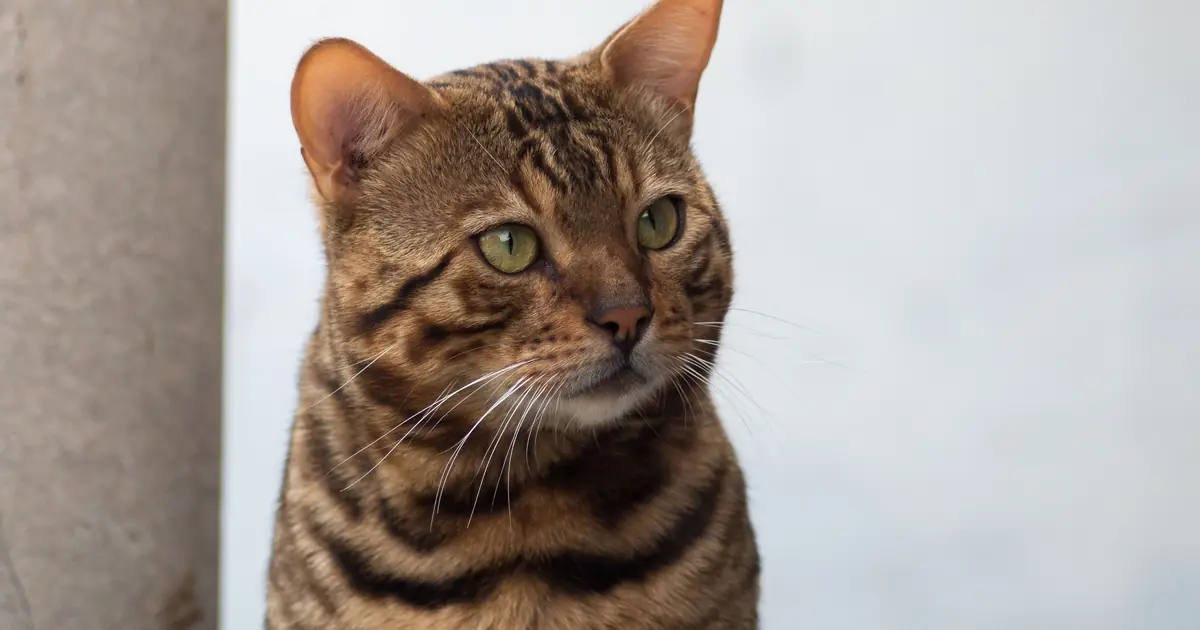
You saw a Bengal cat photo online, those glittery rosettes and that leopard-print swagger, and now you’re wondering why the listing price looks more like a used car than a house pet. Fair question. A random search turns up Bengal kittens anywhere from $1,000 to $5,000.
Here’s the thing: Bengals aren’t just a “fancy tabby.” They carry actual wild cat DNA a few generations back, and that changes how they’re bred, raised, and priced. Let’s get into exactly where your money goes.
- Pet-quality Bengal kittens typically cost $1,500 to $3,000 from a reputable breeder, while show-quality kittens can run $3,000 to $10,000 or more.
- Bengals descend from crossing a domestic cat with an Asian leopard cat (Prionailurus bengalensis), a small wild feline native to Asia.
- Early-generation Bengals (F1 and F2) are the priciest and rarest because early hybrid males are typically infertile, making breeding slow and expensive.
- Responsible breeders test for hereditary heart disease (HCM) and eye and blood conditions before breeding, which adds real cost that gets passed to buyers.
- Bengal ownership costs don’t stop at the kitten price. They’re high-energy cats that need daily enrichment, puzzle feeders, and vertical space to stay happy.
Why are Bengal cats so expensive?
Bengal cats cost more than most breeds because they’re genuinely hard to produce, not just because breeders charge a premium for looks. A pet-quality Bengal kitten from a screened, reputable breeder typically runs $1,500 to $3,000. Show-quality kittens with exceptional markings and pedigree can sell for $3,000 to $10,000, and early-generation hybrids sometimes go even higher. Compare that to a standard domestic shorthair, often free or under $200 from a shelter, and the gap makes sense once you know what’s behind it.
Three things drive the price: the wild ancestry that makes breeding slow and unpredictable, the health testing and vet care responsible breeders build into every litter, and sheer demand for a cat that looks like a tiny leopard but lives on your couch. Add in registration fees with a cat registry like The International Cat Association (TICA), which maintains the official Bengal breed standard, and the cost stacks up fast.
| Bengal type | Typical price range | Notes |
|---|---|---|
| Pet-quality (SBT, later generation) | $1,500 to $3,000 | Most common, spayed/neutered before or at sale, sold as a companion, not for breeding or showing |
| Show-quality | $3,000 to $10,000+ | Exceptional rosettes, glitter, and structure; often sold with breeding rights, which raises the price further |
| Early-generation (F1 to F3) | $5,000 to $25,000+ | Closest to the Asian leopard cat ancestor, rare, hard to breed, and restricted or banned in some states and countries |
| Rescue or rehoming | $50 to $500 | Adoption fee only; Bengal-specific rescues and shelters occasionally have adults or mixes available |
Why does the Bengal’s wild ancestry make it hard to breed?
Bengal cats are hard to breed because the breed started as a direct cross between a domestic cat and the Asian leopard cat, a small wild feline found across South and Southeast Asia. That’s the actual foundation of the breed, developed starting in the 1960s and 70s to bring wild markings into a domestic temperament.
Early-generation offspring, labeled F1 (first generation), F2, and F3, are only one to three generations removed from that wild ancestor. Here’s the catch: male hybrids in these early generations are typically infertile. Only female F1s can be bred forward, and it takes several more generations before a litter produces fertile males with a temperament suited to home life. Breeding that far back is slow and produces far fewer kittens than a standard breeding program, which is why early-generation Bengals command the highest prices on our table above.
What costs do responsible breeders carry that get passed to you?
Responsible Bengal breeders spend thousands of dollars per litter on health testing, vet care, and registration long before a kitten ever goes home, and that cost shows up in the sale price. It’s not a markup for fun, it’s the bill for doing this right.
A serious breeder typically covers:
- Genetic and health screening: testing breeding cats for hypertrophic cardiomyopathy (HCM), a heart condition seen in Bengals and several other breeds, along with progressive retinal atrophy (PRA) and pyruvate kinase (PK) deficiency, a genetic blood disorder that shows up in the breed’s lineage.
- Veterinary care: prenatal checkups, a safe delivery, kitten vaccinations, and often an early spay or neuter before the kitten leaves.
- Nutrition: high-quality food for the queen during pregnancy and nursing, and for a growing litter.
- Registration: paperwork and fees through a cat registry such as TICA, plus pedigree documentation.
- Socialization: weeks of hands-on handling so kittens are confident and litter-trained before they go to new homes.
According to VCA Hospitals, HCM is one of the most common heart conditions in cats and can be inherited, which is exactly why reputable breeders screen for it before pairing cats. Skip this testing and you save money upfront, but you risk a kitten with expensive, heartbreaking health problems down the road.
Why do rosettes and coat patterns add to the price?
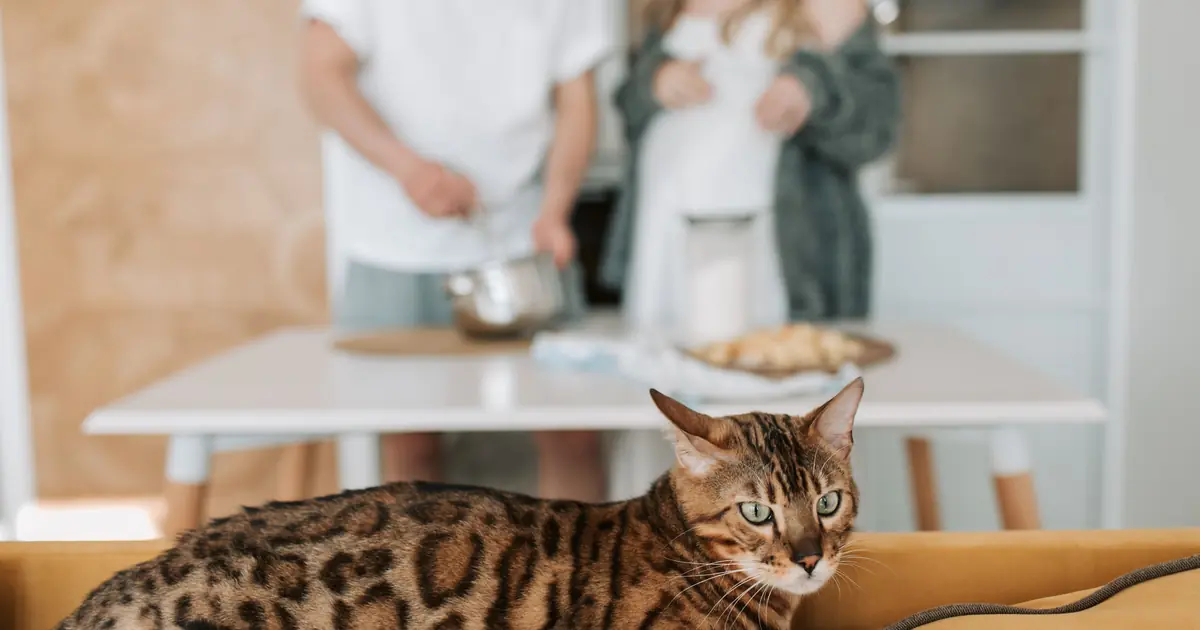
A Bengal’s coat is the whole point for a lot of buyers, and cats with the boldest, most contrasted markings sell for noticeably more. Bengals come in two main coat patterns: spotted, with distinct rosettes (two-toned spots that look almost painted on), and marbled, with swirling horizontal patterns. Some Bengals also carry “glitter,” an iridescent sheen on individual hairs that makes the coat look dusted with gold.
Breeders work for generations to refine coat quality, chasing high contrast, clear rosettes, and that wild, leopard-like look the breed is famous for. A kitten with sharp, well-defined rosettes and glitter is rarer than one with a muddier or less defined pattern, so it commands a higher price. It’s basically the same logic as any breed with a show standard: better example of the ideal, higher price tag.
How does generation affect a Bengal cat’s price?
Generation, shown as an F-number, directly affects price because it tells you how close a cat is to its wild Asian leopard cat ancestor. F1 cats (first generation) are the closest and the most expensive and hardest to find. As breeders cross F1s forward to F2, F3, and beyond, the wild blood percentage drops with each generation until a cat reaches SBT status (Stud Book Traditional), meaning it’s at least four generations removed from the wild ancestor and considered fully domestic in temperament.
Most pet Bengals you’ll see for sale are SBT, generation four or later. They keep the wild look without the unpredictable temperament and legal complications of early-generation cats. If you see a Bengal advertised far above the $3,000 range, ask directly what generation it is. Early-generation Bengals also come with legal strings attached, since International Cat Care notes that hybrid cats close to their wild ancestor are restricted or outright banned in some states and countries.
What else affects an individual Bengal cat’s price?
Beyond generation and coat quality, a Bengal’s price shifts based on the breeder’s reputation, the kitten’s lineage, and where you live. A breeder with a long track record, health guarantees, and champion bloodlines in the pedigree can charge more, and buyers are often happy to pay it for the peace of mind.
Other factors that move the price up or down:
- Region: Bengals in major cities and areas with high demand and few local breeders often cost more than the same kitten in a region with more breeders to choose from.
- Color: standard brown/black spotted Bengals are most common; snow, silver, and blue Bengals are rarer color variations and typically priced higher.
- Sex: some breeders price males and females slightly differently based on demand.
- Breeding rights: a kitten sold with the right to breed and show costs significantly more than one sold as a spayed or neutered pet-only companion.
If you want the full rundown on the breed’s personality, coat colors, and care needs before you commit, our Bengal cat guide covers what daily life with one actually looks like.
What does it cost to own a Bengal cat after you bring one home?
The kitten price is just the entry fee. Bengals are a genuinely high-energy breed, and their ongoing costs reflect that. Budget for interactive toys, cat trees or wall shelving (Bengals love to climb and survey their territory), and puzzle feeders, since a bored Bengal will find its own entertainment, and you probably won’t love the results.
Routine costs look similar to any cat: food, litter, annual checkups, and vaccinations. But because Bengals can carry a genetic predisposition to HCM and PK deficiency, many owners choose to budget for periodic cardiac screening, especially if the breeder didn’t test the parent cats. Our guide to how much a cat costs per month breaks down food, litter, and routine vet costs you can expect regardless of breed, and our cat vet costs guide walks through what checkups, emergencies, and screening typically run.
Is a Bengal cat worth the cost?
Honestly, it depends on what you’re looking for. If you want an intelligent, athletic, dog-like cat that will actively engage with you, fetch toys, and probably open a few doors you thought were closed, a Bengal is worth every dollar to the right owner. If you want a calm lap cat that naps most of the day, a Bengal is going to frustrate you, and no price tag changes that mismatch. Breeds like the Ragdoll or the gentle giant Maine Coon tend to suit a mellower household better.
If the price tag is the sticking point rather than the temperament, Bengal-specific rescues and breed-specific shelters occasionally have adult Bengals or Bengal mixes available for a fraction of breeder prices, often $50 to $300 in adoption fees. You’ll skip the kitten stage, but you’ll also skip years of guesswork on temperament, since a rescue’s foster family can usually tell you exactly what you’re getting.
One more thing worth saying plainly: buy only from a responsible, health-testing breeder. Avoid backyard breeders and online sellers offering suspiciously cheap “Bengal kittens” with no health testing, no TICA registration, and no willingness to let you meet the parent cats. And check your local and state laws before buying an early-generation Bengal, since F1 through F3 hybrids are restricted or banned in a number of areas. This article is educational and not a substitute for advice from a licensed veterinarian or your local exotic pet regulations office.
Frequently Asked Questions
Q: How much do Bengal kittens cost on average?
Pet-quality Bengal kittens from a reputable breeder typically cost $1,500 to $3,000. Show-quality kittens with exceptional rosettes or marbling can run $3,000 to $10,000 or more, and early-generation (F1 to F3) Bengals can exceed $5,000 to $25,000.
Q: Why are F1 Bengal cats so much more expensive than other generations?
F1 Bengals are the first generation crossed directly with an Asian leopard cat, so they’re the rarest and hardest to breed. Early-generation male hybrids are typically infertile, which slows breeding programs and limits how many F1 kittens exist in a given year.
Q: Are Bengal cats legal to own everywhere?
No. Some states, cities, and countries restrict or ban early-generation Bengals (F1 through F3, sometimes F4) because of their close wild ancestry, while later-generation SBT Bengals are legal almost everywhere. Always check your local laws before buying, especially for an early-generation cat.
Q: What’s the cheapest way to get a Bengal cat?
Adopting through a Bengal-specific rescue or breed shelter is usually the cheapest route, with adoption fees often between $50 and $300. You’ll typically get an adult cat rather than a kitten, but rescues can usually tell you the cat’s real temperament upfront.
Q: Do Bengal cats cost more to maintain than other cat breeds?
Bengals don’t need special food or grooming beyond a typical cat, but their high energy means more spending on toys, cat trees, and puzzle feeders to keep them from getting bored and destructive. Some owners also budget for periodic cardiac screening given the breed’s predisposition to HCM.
Q: Why do Bengal cats have rosettes?
Rosettes are two-toned spotted markings inherited from the Bengal’s wild ancestor, the Asian leopard cat. Breeders have spent decades refining the pattern for high contrast and clarity, and cats with the boldest, most defined rosettes typically sell for more.
Q: Is a Bengal cat a good investment?
A Bengal is a good choice for an active household that wants an engaged, athletic cat, but it’s a poor fit for anyone wanting a low-maintenance lap cat. The value comes from matching the breed’s energy and intelligence to your lifestyle, not from resale or breeding potential.
Q: How can I tell if a Bengal breeder is reputable?
A reputable Bengal breeder will show proof of health testing for HCM, PRA, and PK deficiency in the parent cats, register kittens with an organization like TICA, let you meet the mother cat, and provide a health guarantee in writing. Walk away from any seller who can’t or won’t provide these.

Hello and welcome to The Ideal Cat!
We are some passionate cat owners from different professions. We love our cats and have a lot of experience in how to care for our pets. We are incredibly excited to share our knowledge, experience, and research with you. So you can take good care of your loving cat. We will answer most of the common questions about owning cats, taking care of them, etc. If you have any question contact with us. Thanks for visiting! Enjoy the content.
