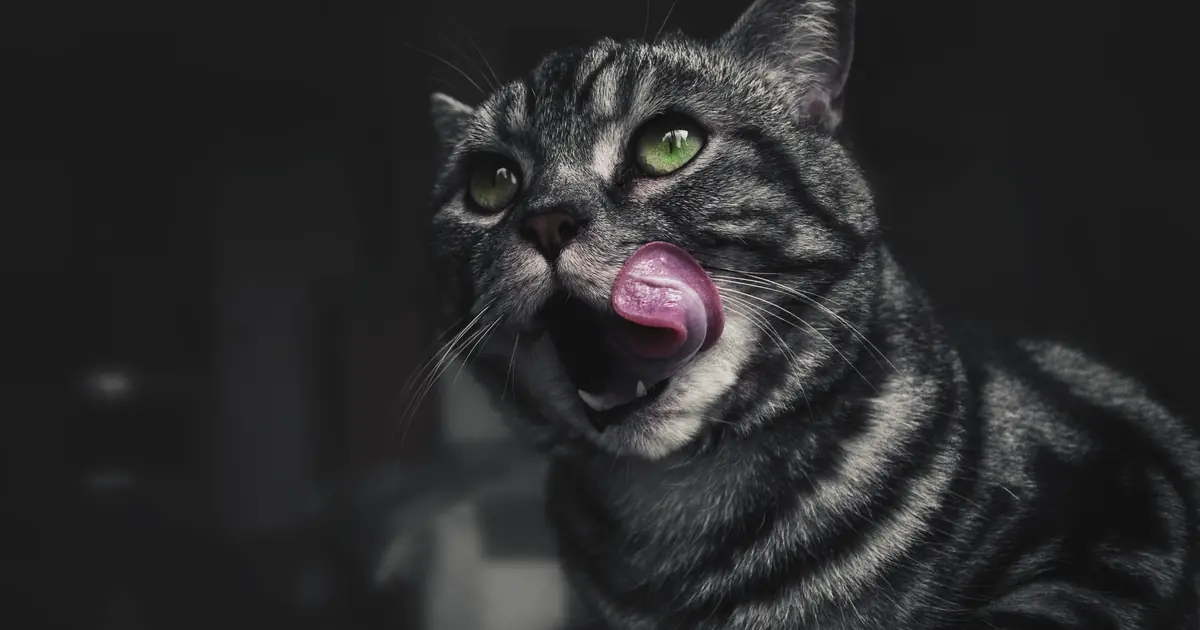
You’re sitting on the couch and your cat wanders over, not to your hand or your face, but to the plastic bag on the floor. Lick, lick, lick. Then it’s the wall. Then the shower curtain. It’s a little baffling, and if you’ve caught yourself wondering “why does my cat lick everything except me,” you’re not imagining things.
Most of the time this is just a cat being a cat: exploring the world mouth-first. But when the licking turns into a habit aimed at plastic, plaster, metal, or fabric, it’s worth understanding what’s actually going on, because a few of the causes need more than a shrug.
- Cats have around 290 taste buds compared to a human’s roughly 9,000, so they often rely on scent and texture, not just taste, when they investigate objects with their tongue.
- Licking non-food items like plastic, wool, or cardboard is called pica, a behavior linked to stress, early weaning, boredom, or an underlying medical issue.
- Occasional licking of walls, plastic bags, or condensation is usually normal curiosity and not a reason to worry.
- Constant licking of objects paired with vomiting, weight loss, or appetite changes can point to nausea, dental pain, or a thyroid problem, and needs a vet visit.
- Siamese and other Oriental breeds are reported more often with wool-sucking and pica behaviors, according to veterinary behavior sources.
Why Does My Cat Lick Everything?
Cats lick objects for a handful of overlapping reasons: curiosity, self-soothing, boredom, and sometimes a medical or nutritional problem hiding underneath the habit. There isn’t one single answer, because a cat licking a plastic bag out of curiosity looks identical to a cat licking the same bag because it’s anxious.
Think of licking as one of your cat’s main tools for gathering information. A cat’s tongue and the roof of its mouth, via a small organ called the vomeronasal organ, pick up chemical information a quick sniff can’t fully capture, so a lick is often just a deeper sniff. But when licking becomes repetitive, focused on the same object every day, or starts including chewing and swallowing, it moves from “quirky habit” into something worth a closer look.
Is My Cat Just Exploring Taste and Texture?
Yes, in many cases your cat is simply exploring taste, texture, and smell the way cats have always investigated new things. Kittens especially go through a phase where everything, from your shoelaces to the corner of a cardboard box, gets a lick test.
Cats are far more nose-and-tongue oriented than we are. They have roughly 290 taste buds, compared to about 9,000 in a human mouth, so a lot of their “tasting” is really about texture and scent. This kind of licking is usually short, varies from object to object, and doesn’t come back to the same spot obsessively. If your cat gives the new welcome mat one curious lick and moves on, that’s just a cat being a cat.
Could My Cat Be Licking Things to Self-Soothe?
Yes, cats sometimes lick objects, blankets, or furniture as a way to calm themselves down, similar to how grooming itself releases feel-good endorphins. Licking is rhythmic and repetitive, and that rhythm can be genuinely soothing for a stressed or under-stimulated cat.
A bored indoor cat with no scratching posts, no window perch, and nothing to chase can turn to licking the couch arm, the window, or the bathroom tile out of sheer lack of anything better to do. A new pet, a move, or rearranged furniture can push an anxious cat toward the same repetitive licking as a coping mechanism.
Watch for a pattern to tell curious licking apart from soothing licking. If your cat always heads to the same blanket or wall spot whenever the doorbell rings or the vacuum comes out, that’s stress, not curiosity. Learning the broader signs of stress in cats can help you catch this early. If your cat directs this soothing behavior at you instead of objects, that’s a related habit covered in our guide to why cats lick their owners.
What Is Pica, and Could That Explain the Licking?
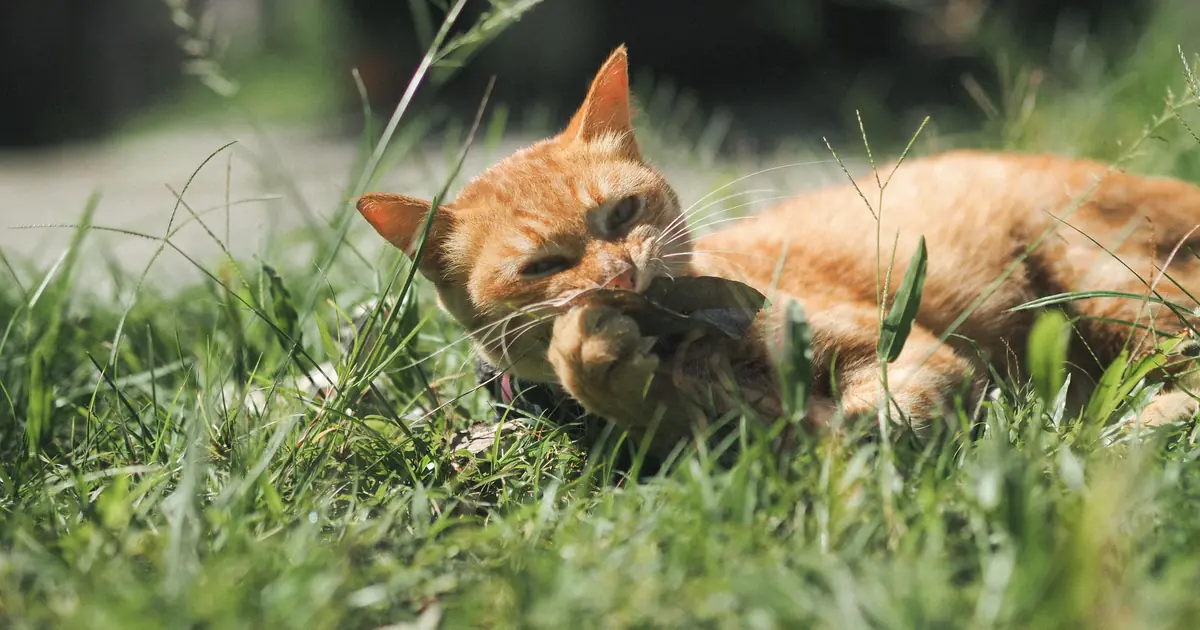
Pica is the veterinary term for a cat licking, chewing, or eating non-food items like plastic, wool, cardboard, or fabric. It’s more than a passing lick: a cat with pica returns to the same material repeatedly and often tries to chew or swallow it.
Vets and behaviorists point to several possible causes behind pica, according to VCA Hospitals:
- Genetics and breed: Siamese and other Oriental breeds are reported more often with wool-sucking and fabric-chewing.
- Early weaning: kittens separated from their mother too young sometimes redirect nursing behavior onto blankets later on.
- Stress or boredom: an understimulated or anxious cat may fixate on chewing specific materials.
- Nutritional gaps: in rare cases, a diet missing certain nutrients drives odd licking or chewing choices.
- Medical issues: dental pain or gastrointestinal disease can trigger pica as a secondary symptom.
Wool and fabric are classic pica targets, but plastic, rubber bands, string, and even litter show up too. If your cat has been eyeing the litter box, our guide on why cats eat litter covers that version of the habit. And if blankets are the main target, see our deep dive on why cats lick blankets or why cats suck on blankets.
Could Nausea or a Medical Condition Be Behind the Licking?
Yes, excessive licking of non-food objects can be a symptom of nausea, dental pain, or an underlying illness rather than a plain behavior quirk. Cats can’t tell you their stomach feels off, so some show it by licking floors, walls, or fabric instead of eating.
Conditions linked to excessive object licking include:
- Dental disease or mouth pain, which can make a cat lick surfaces to soothe sore gums or teeth.
- Gastrointestinal problems like inflammatory bowel disease, which can cause nausea and unusual licking.
- Anemia, which sometimes drives cats toward licking unusual surfaces or materials.
- Hyperthyroidism, which can change appetite and behavior, including increased licking, in older cats.
According to the Cornell Feline Health Center, sudden changes in a cat’s grooming and licking habits are often the first visible clue something medical is going on. If your cat’s lip-licking specifically has increased, our related piece on why cats lick their lips covers that as its own signal of nausea.
Why Does My Cat Lick Specific Things Like Plastic, Walls, or Condensation?
Cats target specific surfaces because of the smell, taste, or texture each material carries. Here’s what’s usually behind the most common targets.
| What Your Cat Licks | Likely Reason | Concern Level |
|---|---|---|
| Plastic bags or wrap | Scent of food residue, plus a texture cats find interesting; can also signal pica | Low, unless chewing and swallowing occurs |
| Walls or plaster | Curiosity, boredom, or in rare cases a mineral deficiency | Low to moderate if constant |
| Fabric or wool | Self-soothing, early weaning, or breed-linked pica (common in Siamese cats) | Moderate, watch for chewing and swallowing |
| Floors or tile | Cool, smooth texture, residual food or cleaning product scent | Low |
| Condensation or windows | Thirst, curiosity about moisture, or interest in the cool surface | Low, check water intake if frequent |
A genuine mineral deficiency behind wall-licking is uncommon in cats eating a complete commercial diet, so boredom or curiosity is the more likely culprit there.
When Is Licking Objects Normal, and When Should I See a Vet?
Occasional licking of a new object or a brief soothing lick on the couch is normal and nothing to worry about. Constant licking of the same non-food object, especially with chewing or swallowing, is where it crosses into a habit that deserves attention.
Call your vet if you notice:
- Licking that happens daily and targets the same object or material every time
- Chewing and swallowing pieces of plastic, fabric, or other non-food items
- Vomiting, especially if it happens repeatedly or includes non-food material
- Weight loss or a sudden change in appetite alongside the licking
- Visible mouth discomfort, drooling, or reluctance to eat hard food
This article is educational and isn’t a substitute for veterinary care. If your cat is swallowing non-food items or showing any of the red flags above, book a vet visit so they can rule out dental disease, GI issues, or other medical causes.
How Can I Get My Cat to Stop Licking Everything?
The most effective way to reduce object licking is to add more enrichment, remove the specific tempting items, and rule out stress or a medical cause with your vet.
- Add daily play sessions with a wand toy to burn off energy that might otherwise go into licking.
- Put away plastic bags, rubber bands, and loose fabric your cat keeps targeting, since removing the object removes the temptation.
- Offer a cat tree, window perch, or puzzle feeder to cut down on boredom-driven licking.
- Keep your cat’s routine steady, since sudden changes in the home are a common stress trigger behind repetitive licking.
- Book a vet visit if the licking is frequent, targeted, or paired with any of the red-flag symptoms above, so a medical cause can be ruled out first.
International Cat Care notes that identifying and reducing a cat’s specific stressors is often the single most useful step in resolving pica-linked behaviors, alongside a full medical check.
Frequently Asked Questions
Q: Why does my cat lick plastic bags so much?
Plastic bags hold onto food smells and have a crinkly texture that cats find satisfying to lick and chew. It’s usually harmless, but keep bags out of reach if your cat starts chewing and swallowing pieces, since that can cause a blockage.
Q: Is it normal for a cat to lick the wall?
An occasional lick at the wall is usually just curiosity about a new smell or texture. Daily, repeated wall-licking is more often linked to boredom or stress and is worth mentioning at your cat’s next vet visit.
Q: What is pica in cats?
Pica is a veterinary term for repeatedly licking, chewing, or eating non-food items like fabric, plastic, or wool. It can stem from stress, early weaning, boredom, or an underlying medical condition, according to VCA Hospitals.
Q: Can licking everything mean my cat is sick?
Yes, in some cases. Excessive licking of non-food objects can be linked to nausea, dental pain, anemia, or hyperthyroidism. If the licking comes with vomiting, weight loss, or appetite changes, see a vet to rule out a medical cause.
Q: Why does my cat lick the shower or condensation on windows?
This is usually simple thirst or curiosity about a cool, damp surface. If it happens often, check that the water bowl is full, clean, and somewhere your cat likes to drink from.
Q: Is licking everything different from a cat licking its own fur too much?
Yes. Licking objects and over-grooming its own fur can share root causes like stress or medical issues, but they look different. Over-grooming often leaves bald patches or irritated skin, while object licking targets things outside your cat’s own body.

Hello and welcome to The Ideal Cat!
We are some passionate cat owners from different professions. We love our cats and have a lot of experience in how to care for our pets. We are incredibly excited to share our knowledge, experience, and research with you. So you can take good care of your loving cat. We will answer most of the common questions about owning cats, taking care of them, etc. If you have any question contact with us. Thanks for visiting! Enjoy the content.
