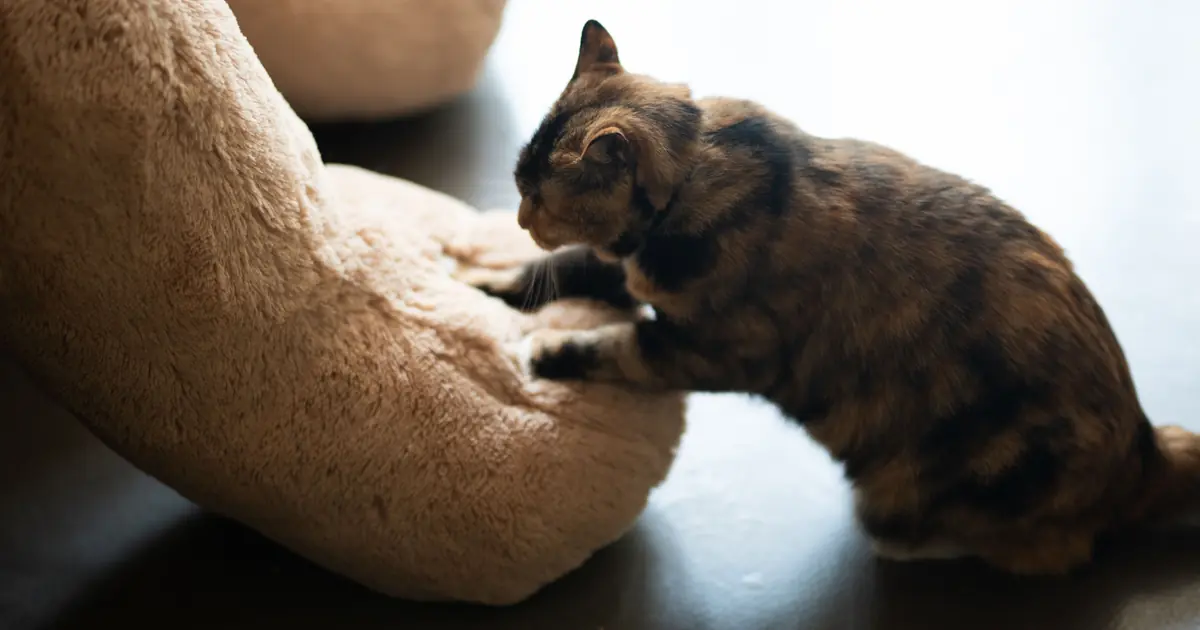
You’re settling in for the night, and there’s your cat, kneading the blanket with both front paws, eyes half closed. Then she pulls a corner of the fabric into her mouth and starts sucking on it, slow and rhythmic, almost like a baby with a pacifier. Strange to watch the first time, with a soft purr rumbling underneath it all.
Is your cat regressing? Stressed? Just weird? Mostly, no. This is a real, documented cat behavior with a name, a cause, and a line where “cute quirk” turns into “call the vet.” Let’s get into it.
- Blanket sucking is called wool-sucking, and it’s rooted in the sucking reflex kittens use to nurse from their mother.
- Kittens weaned before 8 to 12 weeks of age are more likely to develop wool-sucking as adults.
- Siamese, Birman, and other Oriental breed cats show this behavior more often than other cats, which points to a genetic component.
- Wool-sucking alone is usually harmless, but it crosses into pica (eating non-food items) when a cat actually swallows fabric, which can cause a dangerous intestinal blockage.
- You should never punish a cat for wool-sucking, since stress and anxiety tend to make the behavior worse, not better.
Why Does My Cat Suck on My Blanket?
Cats suck on blankets because the motion taps into the same nursing reflex they used as kittens to feed from their mother. Vets and behaviorists call this wool-sucking, one of the most common repetitive fabric behaviors seen in domestic cats. The rhythmic sucking, sometimes paired with kneading, releases feel-good chemicals in the brain and can genuinely calm a cat down.
Think of it as a comfort behavior that never quite got switched off. Most kittens outgrow the urge to suckle once fully weaned and eating solid food. Some cats keep the habit into adulthood, and blankets, sweaters, and stuffed toys become a stand-in for their mother.
Is Wool-Sucking Linked to Being Weaned Too Early?
Yes. Cats separated from their mother before 8 to 12 weeks of age are significantly more likely to suck on fabric as adults. The nursing period isn’t just about nutrition. It’s when kittens learn to self-soothe and slowly separate from their mother at their own pace. Cut that process short, and the sucking instinct can stick around long after weaning should have ended.
This is one of the reasons responsible breeders and shelters wait until kittens are fully weaned before rehoming them. If you’re curious about the right timeline, our guide on when kittens can safely leave their mother breaks down exactly why that window matters so much.
Why Does My Cat Knead and Purr While Sucking on the Blanket?
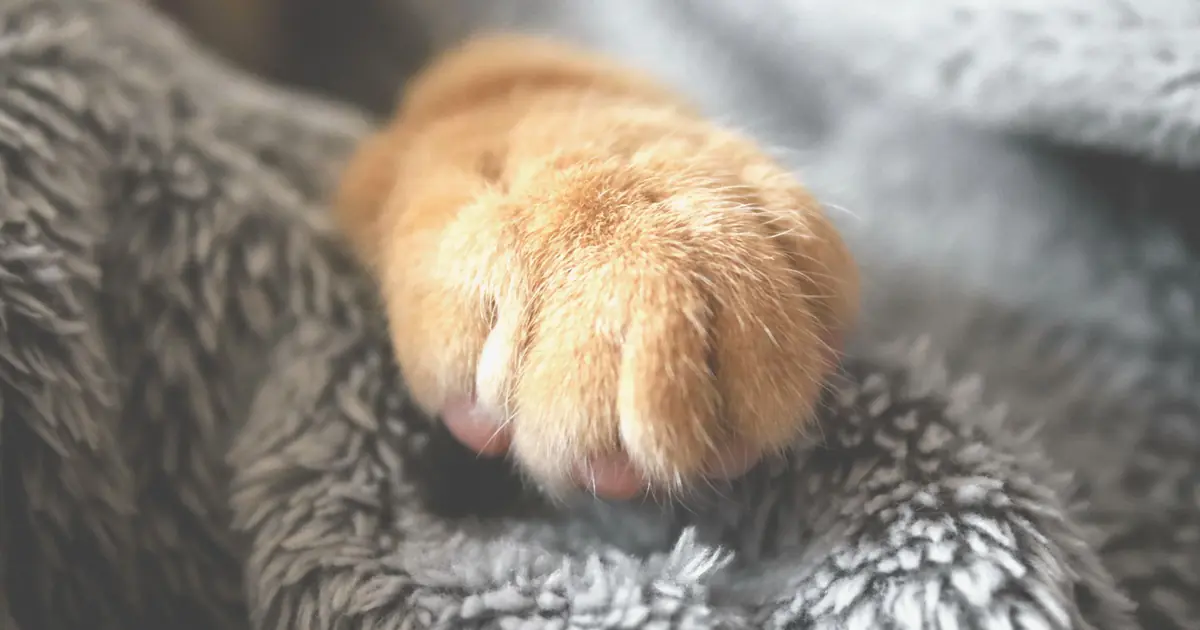
Kneading and purring show up alongside wool-sucking because all three behaviors trace back to nursing and comfort. Kittens knead their mother’s belly to encourage milk flow, and that paw-pumping motion sticks around in adult cats as a sign of contentment. Purring, meanwhile, is a cat’s way of self-soothing and signaling that it feels safe.
Put them together, and you get a cat that’s fully relaxed, working through an old instinct in the coziest way it knows how. If kneading on its own is what brought you here, our article on why cats knead blankets covers that behavior in more depth.
Which Cats Suck on Blankets the Most?
Siamese cats and other Oriental breeds, including Birman, Balinese, and Burmese cats, show wool-sucking far more often than mixed-breed or Western cats. This pattern is strong enough that vets consider genetics a real factor, not just early weaning or stress. Still, any cat of any breed can pick up the habit, especially if it was weaned early, is anxious, or was orphaned as a kitten.
Cats that are naturally more anxious or under-stimulated also seem to reach for fabric-sucking more than confident, well-exercised cats. If your cat’s been showing other signs of unease lately, it’s worth checking our piece on signs of stress in cats to see if there’s a bigger pattern.
Is Sucking on Blankets Normal, or Is It a Problem?
Wool-sucking on its own is usually a normal, harmless comfort behavior, not a disorder. Most cats that suck on blankets, sweaters, or plush toys just mouth and suck the fabric without swallowing any of it, the same way a person might chew on a pen cap while thinking. It doesn’t need to be cured or stopped as long as your cat isn’t ingesting material.
Where it stops being “just a quirk” is when your cat moves from sucking to chewing and swallowing chunks of fabric. That shift has a name: pica, the tendency to eat non-food items. Pica is the actual medical concern, not the sucking itself.
When Does Blanket Sucking Become Pica, and Why Is That Dangerous?
Blanket sucking becomes pica when your cat starts biting off, chewing, and swallowing pieces of fabric instead of just sucking on it. This matters because swallowed fabric doesn’t digest. It can bunch up in the stomach or get stuck in the intestines, causing a blockage that requires emergency surgery. According to Cornell Feline Health Center, pica in cats can involve wool, plastic, string, and other household materials, and it sometimes points to an underlying medical or nutritional issue that’s worth ruling out with your vet.
A cat that swallows string or long strands of fabric is at particular risk. As the material moves through the digestive tract, it can act like a saw against the intestinal wall, a condition called a linear foreign body. This is a genuine emergency, not a “wait and see” situation.
| Harmless Wool-Sucking | Concerning Pica |
|---|---|
| Cat mouths, licks, and sucks on blanket corners without biting off pieces | Cat chews off and swallows chunks of fabric, string, or plastic |
| Fabric stays intact after your cat is done with it | You find holes, missing pieces, or shredded fabric |
| Low risk, mostly a comfort or stress-relief habit | High risk of choking or intestinal blockage requiring emergency surgery |
| Manage with redirection, enrichment, and stress reduction | Needs prompt veterinary attention, especially with vomiting or appetite loss |
How Do I Stop My Cat from Sucking on My Blanket?
You manage blanket-sucking by reducing your cat’s stress, offering appropriate outlets, and never punishing the behavior itself. Since wool-sucking is rooted in comfort and instinct, yelling or spraying your cat with water for it usually backfires and adds more anxiety to the mix, which can make the habit worse.
- Rule out swallowing first. Watch closely to confirm your cat is only sucking, not biting off and eating fabric.
- Offer a safe substitute, like a fleece toy or a cat-safe fabric item that’s just for sucking and chewing.
- Increase enrichment. More play, climbing space, and interactive toys can lower the anxiety that fuels the habit. If your cat also seems drawn to cozy blankets in general, giving her a designated one of her own can help.
- Keep to a predictable routine for feeding, play, and attention, since cats often self-soothe more when their day feels unpredictable.
- Remove or put away fabrics your cat has started actually eating pieces of, especially wool sweaters, shoelaces, and anything with loose string.
- Talk to your vet if the behavior is intense, sudden, or paired with other changes, since anxiety, gastrointestinal disease, and even dental pain can sometimes drive fabric-directed behaviors.
If the blanket habit shows up alongside a lot of licking rather than sucking, that’s a related but different behavior. Check out our article on why cats lick blankets to see how the two compare.
Should I See a Vet About My Cat Sucking on Blankets?
You should see a vet if your cat is swallowing fabric, or if you notice vomiting, straining to defecate, a swollen belly, or a sudden loss of appetite. These are red-flag signs of a possible intestinal blockage, and that’s a same-day emergency, not something to monitor at home. The VCA Animal Hospitals guide on pica notes that vets will often want to rule out nutritional deficiencies or gastrointestinal disease when the behavior appears suddenly in an adult cat.
This article is meant to help you understand the behavior, not replace a real exam. If anything about your cat’s sucking or chewing feels off, a licensed veterinarian is always the safest next call.
Frequently Asked Questions
Q: Why does my cat suck on blankets specifically?
Blankets are soft, warm, and easy to gather into a small bunch, which makes them the perfect stand-in for a mother cat’s fur or belly. Cats often gravitate toward fleece and wool blends since the texture feels closest to their own coat.
Q: Is wool-sucking the same as pica?
No. Wool-sucking is mouthing and sucking on fabric without eating it, while pica means actually swallowing non-food items like fabric, plastic, or string. Wool-sucking can turn into pica over time, but the two aren’t automatically the same thing.
Q: Do kittens grow out of blanket sucking?
Many do, especially once they’re fully weaned and settled with their new family, usually somewhere between 8 and 12 weeks old. Kittens weaned too early are more likely to carry the habit into adulthood.
Q: Are certain cat breeds more likely to suck on fabric?
Yes. Siamese cats and other Oriental breeds, including Birman and Burmese, show wool-sucking more often than other cats, which suggests a genetic link on top of any early weaning or stress factors.
Q: Can stress or anxiety cause a cat to suck on blankets?
Stress and boredom are common triggers, especially in cats that don’t get much play, enrichment, or attention during the day. Increasing interactive playtime and climbing space often reduces how often the behavior shows up.
Q: Should I take a blanket away from my cat if she sucks on it?
Only if she’s actually chewing off and swallowing pieces of it. If she’s just mouthing and sucking without damaging the fabric, taking it away can add stress without solving anything, since the comfort behavior itself isn’t the danger.
Q: What are the signs my cat swallowed fabric and needs a vet?
Watch for vomiting, not eating, straining in the litter box, lethargy, or a visibly swollen belly. These can signal an intestinal blockage, which needs same-day veterinary care rather than a wait-and-see approach.
Q: Can I train my cat to stop sucking on blankets?
You can redirect the habit with safe fabric toys and more enrichment, but punishment tends to backfire since the behavior is instinct-driven, not misbehavior. Most cat parents find the goal isn’t to eliminate the habit completely, just to keep it safe.

Hello and welcome to The Ideal Cat!
We are some passionate cat owners from different professions. We love our cats and have a lot of experience in how to care for our pets. We are incredibly excited to share our knowledge, experience, and research with you. So you can take good care of your loving cat. We will answer most of the common questions about owning cats, taking care of them, etc. If you have any question contact with us. Thanks for visiting! Enjoy the content.
