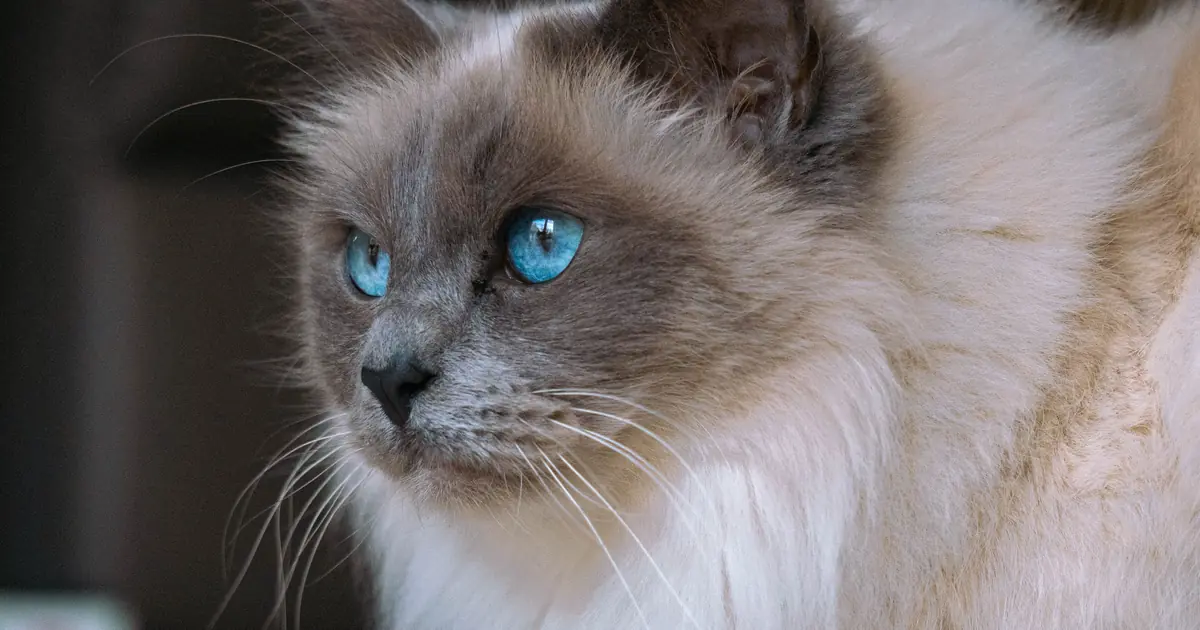
If you’ve ever watched a Ragdoll flop into someone’s arms like a warm sack of flour, you already get the appeal. This is a cat breed built on charm, and honestly, most of what people think they know about Ragdolls only scratches the surface.
We already wrote the full Ragdoll cat guide if you want everything on feeding, grooming, and daily care. This one’s just for fun: the weird history, the surprising body facts, and a few myths we’re happy to bust. Grab a coffee.
- Ragdolls were developed in the early 1960s by California breeder Ann Baker, starting with a white longhaired cat named Josephine.
- Every purebred Ragdoll has blue eyes, no matter what color its coat is.
- Ragdoll kittens are born completely white and don’t develop their full color and pattern until around 3 to 4 years old.
- Males typically weigh 12 to 20 pounds, making Ragdolls one of the largest domestic cat breeds.
- Ragdolls can carry a genetic mutation (MYBPC3 R820W) linked to hypertrophic cardiomyopathy, a serious heart condition, so they do not have any special resistance to pain or illness.
Where Do Ragdoll Cats Come From?
Ragdolls trace back to one breeder’s cattery in Riverside, California, in the early 1960s. Ann Baker started the breed using a white, longhaired domestic cat named Josephine, who had an unusually relaxed, affectionate temperament even for a cat that mostly lived outdoors.
- Josephine was bred with a few other cats, including a seal-mitted male called Daddy Warbucks and a solid black cat named Blackie, and their kittens became the foundation of the Ragdoll breed.
- Ann Baker trademarked the name “Ragdoll” and started her own registry, the International Ragdoll Cat Association, in 1971, requiring breeders to sign strict contracts to use the name.
- That control eventually pushed other breeders to split off and register the cats under different names and associations, which is part of why the Ragdoll’s early paperwork is such a tangled story.
- The Cat Fanciers’ Association didn’t accept Ragdolls at first, turning the breed down in 1981, and only granted full championship status in 2000.
Why Are They Called “Ragdoll” Cats?
Ragdolls get their name from the way many of them go limp and floppy when someone scoops them up, just like a soft ragdoll toy. It’s one of the most talked-about traits in the breed, and it’s a big reason people fall for them so fast.
Not every Ragdoll flops the exact same way, and plenty of cats relax when held regardless of breed (we cover that more broadly in our piece on whether cats actually like being picked up). But Ragdolls, as a breed, tend to have looser muscle tone and a famously chill attitude about handling. That’s a personality trait, not a physical quirk, and it’s not the same as being unable to feel anything, which we’ll get to below.
How Big Do Ragdoll Cats Get?
Ragdolls are one of the largest domestic cat breeds, with males usually weighing 15 to 20 pounds and females running a bit smaller at 8 to 15 pounds. That’s noticeably heavier than an average housecat, which typically tops out around 10 pounds.
- Ragdolls are slow to grow up. Most don’t reach their full adult size, coat length, and color until they’re 3 to 4 years old.
- They’re not the tallest breed on the block, either. That title tends to go to leggier giants like the Maine Coon, which is longer and rangier where the Ragdoll is dense and substantial.
- Despite their size, Ragdolls have a soft, floppy build rather than a muscular one, which adds to that “flop into your arms” feeling.
What Do Ragdoll Cats Look Like?
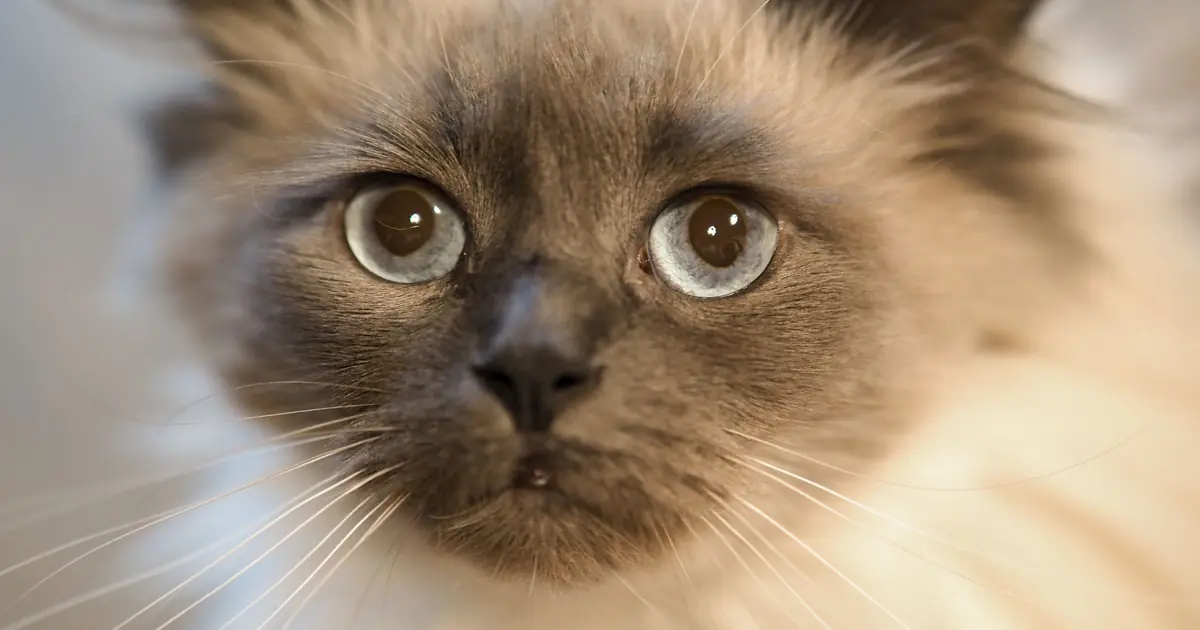
Ragdolls always have blue eyes and a soft, semi-long coat with color concentrated on the ears, face, legs, and tail, a pattern breeders call colorpoint. It’s the same basic pattern you’d recognize on a Siamese cat, just with a much plusher coat underneath.
- Every Ragdoll kitten is born pure white. Their real color starts showing up around one to two weeks old and keeps deepening for years.
- According to the The International Cat Association breed standard, Ragdolls come in three patterns: colorpoint (no white anywhere), mitted (white “mittens” on the front paws and white boots on the back legs), and bicolor (more white, including an inverted V on the face).
- Color options include seal, blue, chocolate, lilac, red, and cream, plus tortie and lynx (tabby-point) variations.
- Their eyes stay a deep, striking blue for life. It’s actually part of the official breed standard, not just a common trait.
What’s a Ragdoll’s Personality Really Like?
Ragdolls are often called “puppy cats” because they tend to follow their favorite person from room to room, greet them at the door, and settle in close instead of hiding on top of the fridge. Docile is the word breeders use most, and it fits.
- They’re generally easygoing with kids and other pets, including dogs, which makes them a popular pick for busy households.
- Ragdolls are considered a “floor cat” breed. They’d rather stretch out on the couch than climb the curtains, though they still enjoy the occasional supervised perch.
- Many Ragdolls are famously vocal in a quiet way, using soft chirps and trills more than loud meows to get your attention.
Are Ragdolls Hypoallergenic or Big Shedders?
No, Ragdolls are not hypoallergenic, and yes, they do shed, even though their coat feels lower-maintenance than a lot of other longhaired breeds. Their semi-long fur lacks a thick undercoat, so it tends to mat less and shed a little less dramatically than a Persian‘s, but it still needs regular brushing.
We’ve gone deep on both of these questions elsewhere, so we won’t repeat it all here. If allergies are a concern in your house, read our full breakdown of whether Ragdoll cats are hypoallergenic. And if you’re wondering how much fur to expect on your couch, check out do Ragdoll cats shed.
Do Ragdolls Have Any Health Quirks to Know About?
Ragdolls are a generally healthy breed, but they do carry a higher risk of hypertrophic cardiomyopathy, a thickening of the heart muscle that’s the most common heart disease in cats. Most well-cared-for Ragdolls live around 12 to 17 years, with plenty reaching their high teens.
- Researchers have linked a specific gene mutation, called MYBPC3 R820W, to hypertrophic cardiomyopathy in Ragdolls, according to the Cornell Feline Health Center. Reputable breeders test for it.
- Cats with two copies of the mutation tend to develop serious symptoms early, sometimes by 15 months old, while cats with just one copy often show no signs at all.
- Their semi-long coat still needs brushing a couple of times a week to stay mat-free, even though it’s more manageable than some other longhaired breeds.
- Full details on feeding, grooming schedules, and daily care live in our complete Ragdoll cat guide.
This section is educational, not a substitute for veterinary care. If your Ragdoll seems lethargic, is breathing heavily, or loses interest in food, get them checked out by a vet as soon as you can.
Is It True Ragdolls Don’t Feel Pain?
No, that’s a myth, and an old one. Ragdolls feel pain and stress exactly like any other cat. The “they don’t feel pain” idea seems to have grown out of Ann Baker’s own marketing decades ago, and it’s simply not accurate.
What’s true is that Ragdolls tend to have a calm temperament and go limp when relaxed and held correctly. That’s a personality trait built through selective breeding, not a physical difference in how their nervous system works. Treat a Ragdoll’s comfort and pain just as seriously as any other cat’s, because that’s exactly what it is.
Ragdoll Cat: At a Glance
| Trait | Detail |
|---|---|
| Size | Males 15 to 20 lbs, females 8 to 15 lbs; one of the largest domestic breeds |
| Coat | Semi-long, silky, colorpoint pattern with minimal undercoat |
| Eye color | Always blue |
| Temperament | Docile, affectionate, follows people, good with kids and dogs |
| Lifespan | Around 12 to 17 years with good care |
| Origin | Riverside, California, early 1960s |
More Fun Ragdoll Facts Worth Knowing
- Ragdolls consistently rank among the most popular cat breeds in the United States, right alongside the Persian and Maine Coon.
- Their name is trademarked history: for years, only cats bred under Ann Baker’s own rules could officially be called “Ragdolls,” which is unusual in the cat breeding world.
- Because they mature so slowly, a two-year-old Ragdoll can still look like a large kitten. Patience pays off with this breed.
- Many Ragdolls can learn to walk on a harness and leash, thanks to their easygoing, food-motivated personalities.
Frequently Asked Questions About Ragdoll Cats
Q: Why do Ragdoll cats go limp when you pick them up?
Ragdolls tend to have relaxed muscle tone and an easygoing temperament, so many of them go floppy when held securely and calmly. It’s a personality trait bred into the line, not a medical condition, and it’s how the breed got its name in the 1960s.
Q: How big do Ragdoll cats get?
Male Ragdolls typically weigh 15 to 20 pounds, and females usually weigh 8 to 15 pounds, making Ragdolls one of the largest cat breeds. They’re also slow to mature, often not reaching full size until 3 to 4 years old.
Q: Are Ragdoll cats hypoallergenic?
No, Ragdolls are not hypoallergenic. No cat breed truly is, since allergies are triggered by a protein in saliva and skin, not fur length. See our full guide on whether Ragdoll cats are hypoallergenic for what actually helps allergy sufferers.
Q: Do Ragdoll cats shed a lot?
Ragdolls do shed, though their semi-long coat lacks a thick undercoat, so it tends to be more manageable than a Persian’s or Maine Coon’s. Regular brushing a couple of times a week keeps loose fur under control; our Ragdoll shedding guide covers the seasonal details.
Q: What is the rarest Ragdoll color?
Lilac and chocolate point Ragdolls are generally considered the rarest colors, since both recessive genes need to line up for the coloring to show. Seal point and blue point are by far the most common colors in the breed.
Q: How long do Ragdoll cats live?
Most Ragdolls live around 12 to 17 years when they get good nutrition, regular vet checkups, and are kept as indoor cats. Genetics play a role too, especially around heart health, so screening for hypertrophic cardiomyopathy matters for long-term wellness.
Q: Are Ragdoll cats good with kids and dogs?
Yes, Ragdolls are known for being tolerant and easygoing, which makes them a popular choice for households with children and dog-friendly cats. Early, gentle introductions still matter, but the breed’s docile nature gives most families a smooth start.
Q: Is it true Ragdolls don’t feel pain?
No, this is a myth left over from the breed’s early marketing decades ago. Ragdolls feel pain and stress the same as any other cat, and treating that idea as fact can lead to missed signs of illness or injury.

Hello and welcome to The Ideal Cat!
We are some passionate cat owners from different professions. We love our cats and have a lot of experience in how to care for our pets. We are incredibly excited to share our knowledge, experience, and research with you. So you can take good care of your loving cat. We will answer most of the common questions about owning cats, taking care of them, etc. If you have any question contact with us. Thanks for visiting! Enjoy the content.
