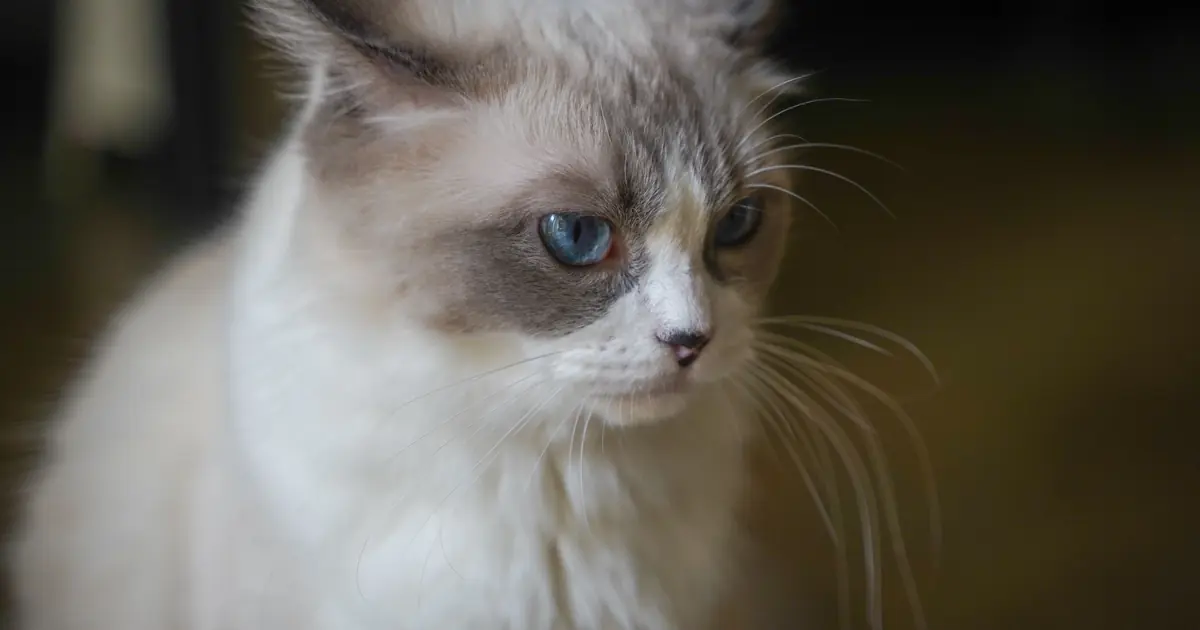
If you’ve fallen for those big blue eyes and that floppy, go-limp-in-your-arms personality, you already know Ragdolls are hard to resist. But before you bring one home, you’re probably picturing tumbleweeds of fur rolling across your floor. Fair question. Let’s settle it.
Ragdoll cats do shed, but not the way you might expect from a cat with that much fur. Their coat works in their favor here. It’s soft, plush, and surprisingly low-fuss compared to other long-haired breeds. Here’s exactly what to expect, why it happens, and how to keep it manageable without losing your mind (or your black pants).
- Ragdoll cats shed year-round with moderate volume, and shedding increases noticeably in spring and fall as the coat turns over.
- Ragdolls have a single-layer coat with very little undercoat, which is why they shed and mat less than double-coated long-haired breeds like Persians or Maine Coons.
- No cat breed is truly hypoallergenic, including Ragdolls; allergic reactions come from the Fel d 1 protein in a cat’s saliva and skin, not the fur itself.
- Brushing a Ragdoll two to three times a week, and daily during heavy shedding season, keeps loose hair, mats, and hairballs to a minimum.
- Sudden bald patches, thinning fur, or shedding well beyond the usual seasonal spike can point to a health issue and are worth a vet visit.
Do Ragdoll Cats Shed?
Yes, Ragdoll cats shed, and it happens all year long. That’s simply how fur works on any cat with hair. But Ragdolls shed at a moderate rate compared to other long-haired breeds, not the heavy, constant shedding you’d get from something like a Norwegian Forest Cat or a Maine Coon.
You’ll notice fur on furniture, clothing, and in the air of your home, especially if you run your hand along your cat’s back and see what comes away. That’s normal. What surprises a lot of new Ragdoll parents is how little effort it takes to keep it in check, once you understand why.
Why Do Ragdoll Cats Shed Less Than Other Long-Haired Cats?
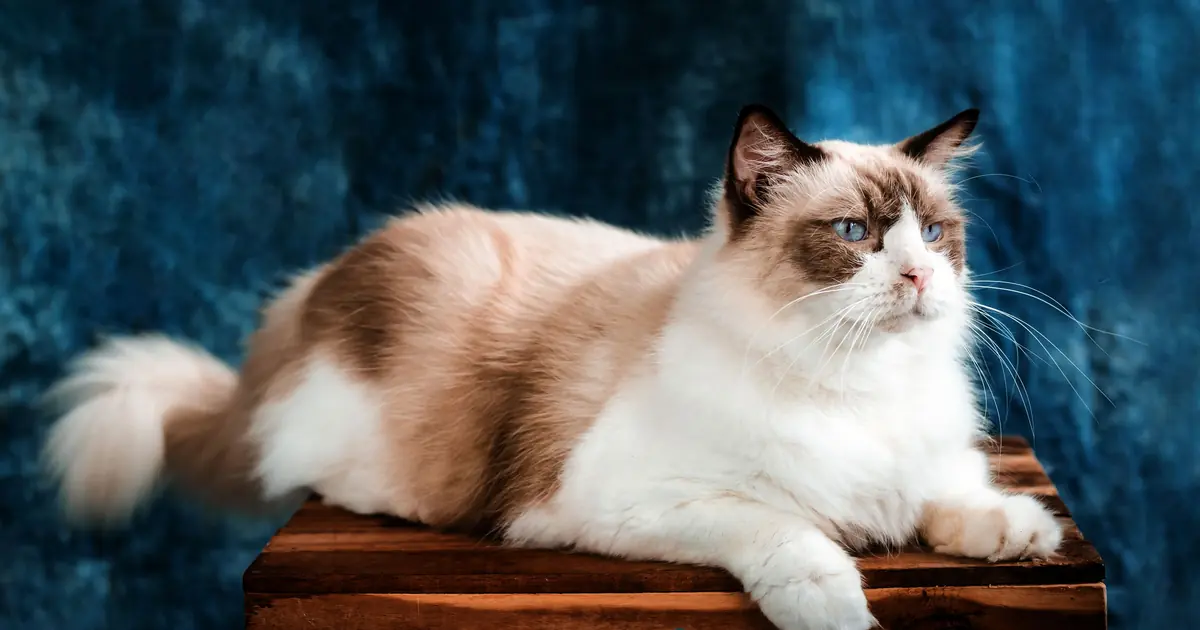
Ragdolls shed less than most long-haired breeds because their coat is a single layer with almost no undercoat. Most long-haired cats grow a dense, woolly undercoat underneath their topcoat, and that undercoat is what causes the thick mats and heavy “shedding season” most people dread.
A Ragdoll’s fur is silky and plush, closer to rabbit fur in texture, and it lies flatter against the body. Without a thick undercoat trapping loose hair against the skin, dead hairs fall out and away more easily instead of tangling into knots. This is also why Ragdolls are far less prone to matting than breeds like Persians, and why a quick brush usually does the job instead of a battle with a comb. If you want the full picture on the breed’s coat, temperament, and care needs, our Ragdoll cat guide covers it in one place.
Do Ragdolls Shed More in Certain Seasons?
Yes, Ragdolls shed more heavily during spring and fall as their coat adjusts to changing daylight and temperature. This seasonal shift is often called “blowing coat,” and it’s when you’ll see the biggest jump in loose fur around the house.
In spring, Ragdolls shed out their denser winter coat to prepare for warmer months. In fall, they shed a lighter summer coat to grow in a fuller one for winter. Indoor cats living under consistent artificial light and heating or air conditioning tend to shed a bit more evenly year-round than outdoor cats, but the spring and fall spikes are still usually noticeable.
| Season | Shedding Level | What You’ll Notice | Grooming Needed |
|---|---|---|---|
| Spring | High | Heavy loose fur, coat feels thinner | Brush every day or every other day |
| Summer | Low to moderate | Lighter, sleeker coat | Brush 2 to 3 times a week |
| Fall | High | Fur thickening back up, more loose hair | Brush every day or every other day |
| Winter | Low to moderate | Full, dense coat, less fur falling out | Brush 2 to 3 times a week |
If your cat’s shedding seems way beyond this normal seasonal pattern, it’s worth reading up on why your cat might be shedding so much so you know what’s typical and what isn’t.
Are Ragdoll Cats Hypoallergenic?
No, Ragdoll cats are not hypoallergenic, and no cat breed truly is. This is one of the most persistent myths in the cat world, and it’s worth busting properly. Allergic reactions to cats aren’t caused by fur itself. They’re triggered by a protein called Fel d 1, which cats produce in their saliva and skin, according to International Cat Care.
Here’s how it works: cats groom themselves constantly, coating their fur in saliva. As that saliva dries, the Fel d 1 protein becomes airborne dander that spreads through your home and settles on furniture, clothing, and in the air. Since Ragdolls shed less loose fur than a heavily double-coated breed, some allergy sufferers find them a little easier to live with, but “easier” is not the same as “hypoallergenic.” If allergies are a real concern for your household, our guide on whether Ragdoll cats are hypoallergenic digs into what actually helps.
How Much Grooming Does a Ragdoll Cat Need?
A Ragdoll needs brushing two to three times a week during normal shedding, and closer to daily during the spring and fall coat blow. That’s genuinely low-maintenance for a long-haired cat. A stainless-steel comb or a soft slicker brush works well, and focusing on the belly, behind the legs, and around the chest catches the spots most likely to tangle first.
Regular brushing does more than keep your floors cleaner. According to VCA Animal Hospitals, brushing removes loose hair and dead skin cells, redistributes natural skin oils, and cuts down on how much hair your cat swallows while grooming itself. Fewer swallowed hairs means fewer hairballs. If you’re shopping for the right tool, our roundup of the best cat shedding brushes can save you some trial and error.
How Do You Manage Ragdoll Shedding and Prevent Mats or Hairballs?
You manage Ragdoll shedding best with consistent brushing, a good diet, and plenty of fresh water. None of this is complicated, but consistency matters more than intensity here.
- Brush on a schedule, not just when you notice fur everywhere. A few minutes, a few times a week, beats one long wrestling session with a matted cat.
- Feed a high-quality diet with real animal protein and adequate omega-3 fatty acids, which support healthy skin and a stronger coat.
- Keep fresh water available at all times. A well-hydrated cat tends to have a healthier coat and skin barrier.
- Check paw pads, armpits, and behind the ears for early mats, since these spots tangle first and are easiest to fix while small.
- Talk to your vet about a hairball remedy or a specialized diet if brushing alone isn’t cutting it. According to the ASPCA, regular brushing reduces both shedding and the frequency of hairballs.
And honestly, a lot of Ragdolls love the attention. Their famously easygoing, floppy nature means most of them go limp and enjoy a good brushing session rather than fighting it, which makes this whole routine easier than it sounds.
When Does Ragdoll Shedding Signal a Health Problem?
Heavy shedding almost always stays within the normal range for a Ragdoll, but sudden bald patches, thinning fur, scabby or flaky skin, or shedding way past the usual spring and fall spike can point to something else going on. Stress, allergies, parasites, thyroid issues, and skin infections can all show up as unusual hair loss.
This article is meant to help you understand normal shedding, not diagnose a medical issue. If your cat is losing fur in patches, over-grooming to the point of bald spots, or scratching more than usual, it’s worth a trip to your veterinarian to rule out an underlying cause.
Frequently Asked Questions
Q: Do Ragdoll cats shed a lot?
Ragdoll cats shed a moderate amount for a long-haired breed, not a heavy amount. Their single-layer coat with little undercoat means loose hair falls out more easily instead of building up into thick mats, so shedding feels much lighter than breeds like Persians or Maine Coons.
Q: Why does my Ragdoll shed so much in spring?
Your Ragdoll sheds more in spring because it’s “blowing” its denser winter coat as daylight hours increase and temperatures rise. This seasonal coat turnover typically lasts a few weeks and is followed by a lighter, sleeker summer coat.
Q: Are Ragdoll cats good for people with allergies?
Ragdoll cats are not truly hypoallergenic, since all cats produce the Fel d 1 protein that triggers allergic reactions. Because they shed less loose fur than heavily double-coated breeds, some allergy sufferers find them slightly easier to tolerate, but there’s no guarantee.
Q: How often should I brush my Ragdoll cat?
Brush a Ragdoll two to three times a week under normal conditions, and increase to daily brushing during the heavier spring and fall shedding seasons. This keeps mats from forming and cuts down on loose fur around your home.
Q: Do Ragdoll cats have an undercoat?
Ragdoll cats have little to no undercoat, which is a defining feature of the breed’s single-layer coat. This is the main reason Ragdolls shed and mat less than double-coated long-haired breeds despite having a full, plush coat.
Q: Why is my Ragdoll losing fur in patches?
Patchy fur loss in a Ragdoll is not normal shedding and can signal stress, allergies, parasites, a thyroid problem, or a skin infection. If you notice bald spots or thinning fur outside the usual seasonal shed, schedule a vet visit to find the cause.
Q: Do Ragdoll cats shed more than Siamese cats?
Ragdolls generally shed more visible fur than Siamese cats simply because they have long hair and Siamese cats have a short, close-lying coat. Siamese cats still shed year-round despite their short fur; you can read more in our guide on whether Siamese cats shed.
Q: What is the best way to reduce Ragdoll shedding at home?
The best way to reduce Ragdoll shedding at home is consistent brushing two to three times a week, a high-quality diet with adequate protein and omega-3 fatty acids, and plenty of fresh water to support healthy skin. A stainless-steel comb or slicker brush handles most of the work.

Hello and welcome to The Ideal Cat!
We are some passionate cat owners from different professions. We love our cats and have a lot of experience in how to care for our pets. We are incredibly excited to share our knowledge, experience, and research with you. So you can take good care of your loving cat. We will answer most of the common questions about owning cats, taking care of them, etc. If you have any question contact with us. Thanks for visiting! Enjoy the content.
)