Why Is My Cat Shedding So Much? 7 Causes & Fixes

This post contains affiliate links and I will be compensated if you make a purchase after clicking on my links.

🐱 Quick Answer: Most of the time, heavy shedding is normal. Cats shed year-round and more in spring and fall as their coat changes. Shedding becomes a concern when you notice bald patches, thinning, scabs, or hair that pulls out in clumps. That pattern can point to stress, allergies, parasites, or illness, so see your vet.

You pull on a black hoodie, glance in the mirror, and there it is: a fresh layer of cat fur you swear wasn’t there 10 minutes ago. If you’ve been staring at the tufts on your couch wondering why your cat is shedding so much, take a breath. For most cats, this is completely normal.

Here’s the thing though. Sometimes shedding is your cat’s body telling you something’s off. The trick is knowing which kind you’re looking at. This guide walks you through both, gives you a simple test to tell them apart, and shows you how to keep the fur tornado under control.

Key Takeaways

  • Shedding is normal and happens all year, peaking in spring and fall when cats swap their seasonal coats.
  • Normal shedding leaves the coat looking full and even; bald spots, patchy thinning, or clumps that pull out easily are signs of a medical problem.
  • Common causes of excessive shedding include stress, poor diet, allergies, fleas, mites, ringworm, and hormonal conditions like hyperthyroidism.
  • A simple bath, dry, and thorough brush at home helps you tell seasonal shedding from true hair loss, called alopecia.
  • Daily brushing, a protein-rich diet with omega-3s, and year-round parasite control all reduce how much your cat sheds.

Why is my cat shedding so much?

Your cat is shedding so much because shedding is the normal way cats clear out old, dead hair and make room for new growth. Cats shed all year, and they shed even more in spring and fall when they trade a heavier coat for a lighter one or the other way around. Long-haired and double-coated breeds shed the most.

So a steady supply of loose fur is usually nothing to worry about. The amount can still be a shock, especially with indoor cats, but volume alone doesn’t mean something is wrong.

What changes the picture is the pattern. Normal shedding leaves your cat looking full and healthy. When shedding comes with bald spots, thinning patches, irritated skin, or a sudden spike that doesn’t match the season, that’s when excessive shedding can signal stress, allergies, parasites, or a health condition worth checking.

Is my cat’s shedding normal or a problem?

Normal shedding keeps your cat’s coat looking full and even, while problem shedding shows up as bald patches, clumps, or skin changes. The quickest way to triage your cat is to compare what you’re seeing against the two columns below.

Normal sheddingWhen to worry
Coat still looks full and evenBald patches or visible skin
Steady trickle of loose hairHair comes out in clumps when gently pulled
More fur in spring and fallSudden spike at any time of year
Skin looks healthyRed, flaky, scabby, or irritated skin
Cat grooms normallyConstant licking, biting, or scratching one spot
Cat acts like its usual selfWeight loss, low energy, or appetite and thirst changes

If everything you’re seeing lives in the left column, your cat is almost certainly just a champion shedder. If you’re checking boxes on the right, it’s worth a closer look and likely a vet visit.

The simple bath test to tell shedding from hair loss

A bath, dry, and thorough brush is an easy at-home way to tell seasonal shedding from real hair loss. The idea is simple: remove all the loose, ready-to-fall hair at once, then see what the coat looks like underneath.

  1. Wet your cat and massage a cat-safe shampoo all the way down to the skin.
  2. Rinse very thoroughly so no residue is left behind.
  3. Dry your cat fully with a towel.
  4. Brush the whole coat well to pull out the loosened dead hair.
  5. Look at the result. A full, even coat means you were dealing with normal seasonal shedding. A patchy, thin, or moth-eaten coat, or fur that keeps falling after all that, points to alopecia and a trip to the vet.

Not every cat will tolerate a bath, and that’s okay. If yours turns into a wet, furious gremlin at the sight of water, skip it and do a deep brush-out instead with a deshedding tool. A good brushing removes most of the loose hair too, so you can still judge how the coat looks afterward.

What causes excessive shedding in cats?

Excessive shedding in cats is usually caused by stress, poor diet, allergies, parasites, skin infections, hormonal conditions, or age. Often more than one of these overlaps. Here are the seven most common culprits.

  • Stress and overgrooming. Stressed cats often lick and pull at their fur, a behavior vets call psychogenic alopecia or barbering. Moving house, a new pet, or a broken routine can all trigger it, leaving thin spots usually on the belly or legs.
  • Poor or unbalanced diet. Cats need plenty of animal protein and healthy fats for a strong coat. A low-quality or imbalanced diet leaves the fur dull and shedding faster than it should.
  • Allergies. Food, pollen, dust, and even scented cleaning products can inflame a cat’s skin. Flea allergy dermatitis, a reaction to flea saliva, is one of the most common and makes cats itch and shed heavily.
  • Parasites. Fleas, mites, and ticks irritate the skin and drive scratching that pulls hair out. Ringworm, which is a fungus rather than a worm, leaves telltale round bald patches.
  • Skin infections. Bacterial or fungal infections damage the skin and coat, causing redness, crusting, and patchy hair loss.
  • Hormonal and internal illness. Conditions like hyperthyroidism (an overactive thyroid) speed up metabolism and can cause shedding alongside weight loss and increased appetite. Kidney disease and, less often, cancer can also affect the coat.
  • Age. Senior cats may grow thinner coats and groom less if arthritis makes it painful to reach certain spots. Gradual thinning can be normal, but bald patches never are.

What is feline alopecia?

Feline alopecia is the medical term for abnormal hair loss in cats, meaning hair loss beyond normal shedding. The clearest sign is that the coat itself looks thinner or has bare areas, rather than just leaving extra fur around the house. Veterinary experts note that with normal shedding the coat stays full and dense, while alopecia shows up as visible thinning or bald skin. Any time you can see your cat’s skin through the coat, that’s alopecia, not shedding, and it deserves a vet’s eye.

Why is my indoor cat shedding all year?

Indoor cats shed year-round because artificial light and climate control scramble the natural shedding cycle. Outdoor cats take cues from changing daylight and temperature, so they shed in clear seasonal waves. Indoor cats live under steady lighting and heating or air conditioning, so their bodies never get a strong “it’s spring now” signal and shed at a low, constant level instead.

That’s why your indoor-only cat can leave fur everywhere in January just as much as in July. It’s frustrating, but it’s normal. Regular brushing is your best friend here, since it catches the loose hair before it lands on your sofa.

Which cat breeds shed the most?

Long-haired and double-coated breeds shed the most, while short-haired and hairless breeds shed the least. Coat type matters more than length alone, since a thick undercoat is what produces those big seasonal blowouts.

BreedCoat typeShedding level
Maine CoonLong, double coatHigh
PersianLong, denseHigh
SiberianLong, triple coatHigh, very seasonal
RagdollLong, semi-longhairModerate to high
Domestic ShorthairShortModerate
BengalShort, single coatLow
SphynxHairlessMinimal

If you own a Maine Coon or Persian, expect to find fur on every surface you love. That’s the deal you signed up for, and it’s not a health problem on its own.

How do I stop my cat from shedding so much?

You can’t stop shedding completely, but you can reduce it a lot with regular brushing, a better diet, parasite control, and a calmer environment. Here’s where to start.

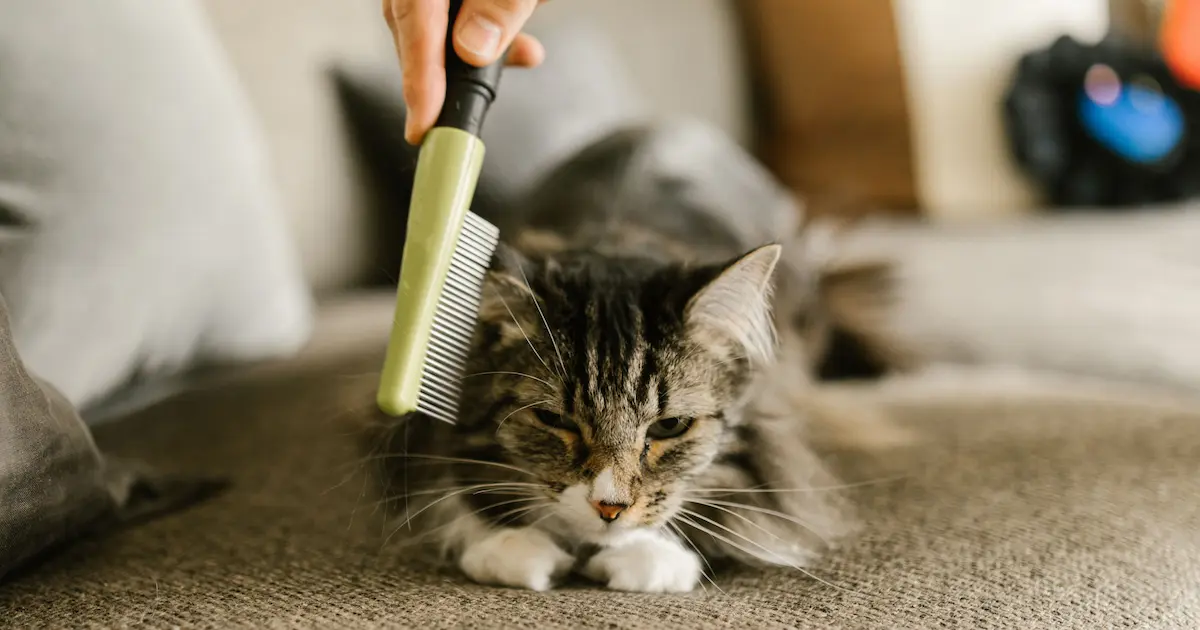
  1. Brush every day. Just a few minutes a day removes loose hair before it ends up on your clothes or in your cat’s stomach as hairballs. Use a tool that matches the coat: shallow-tooth brushes for short hair, longer teeth or a deshedding tool for long hair.
  2. Feed a high-quality, protein-rich diet. A complete and balanced food with good animal protein and fats supports healthy skin and a fuller coat that sheds less.
  3. Add omega-3 fatty acids. Omega-3 and omega-6 fats can improve skin and coat health. Ask your vet before adding any supplement.
  4. Stay on top of parasite prevention. Year-round flea, tick, and mite control prevents the itching and scratching that tears fur out.
  5. Lower your cat’s stress. Keep routines steady, give your cat quiet safe spaces, and minimize sudden changes. Less stress means less stress-shedding and overgrooming.
  6. Keep your cat hydrated and seen by a vet. Fresh water supports skin health, and regular checkups catch coat-affecting conditions early.

A daily deshedding session does the heavy lifting here. A simple deshedding brush reaches into the coat and pulls the loose undercoat hair that a normal brush misses, which is exactly the fur that would otherwise end up everywhere.

Frisco Deshedding Cat & Dog Brush
This is an affordable deshedding tool that grabs loose undercoat hair in a few quick strokes. It works best for cats during heavy spring and fall shedding, and for any moderate-to-long-haired cat that leaves clumps around the house.

🛒 Check Price on Chewy

If your vet agrees that diet could be playing a role, an omega-3 supplement is an easy way to support skin and coat from the inside.

Nutramax Welactin Omega-3 Fish Oil for Cats
This is a liquid omega-3 supplement you add to food to support skin and coat health. It’s a good fit for cats with dull coats or diet-related shedding, once your vet has ruled out a medical cause.

🛒 Check Price on Chewy

When should I take my cat to the vet for shedding?

Take your cat to the vet when shedding comes with bald patches, skin changes, constant scratching, or signs of feeling unwell. Shedding by itself is rarely an emergency, but these red flags mean it’s time for a professional look:

  • Bald spots, thinning patches, or a coat you can see skin through
  • Hair that comes out in clumps when you gently pull it
  • Red, flaky, scabby, or swollen skin
  • Nonstop licking, biting, or scratching at one area
  • A noticeable jump in hairballs
  • Weight loss, low energy, or changes in appetite or thirst alongside the shedding

Call your vet promptly, rather than waiting, if the hair loss is spreading fast, the skin looks infected, or your cat seems sick in other ways. Those signs together can point to conditions like hyperthyroidism or a skin infection that respond best to early treatment.

This article is educational and isn’t a substitute for veterinary advice. If you’re worried about your cat’s coat or skin, your vet is the right person to make the call.

Frequently Asked Questions

Q: Do cats shed more in summer?

Yes. Most cats shed their heavier winter coat as the weather warms, so you’ll often see a spike in spring and into summer. They shed again in fall to make way for a thicker winter coat. Indoor cats shed at a steadier rate all year.

Q: Can stress make my cat shed more?

Yes. Stress can trigger increased shedding and overgrooming, where a cat licks or pulls fur until thin spots appear. Common triggers include moving, a new pet, or a change in routine. Keeping life calm and predictable usually helps.

Q: Is it normal for kittens to shed?

Yes. Kittens shed as their soft baby coat is replaced by an adult coat, often noticeable around 6 to 12 months of age. As long as the coat stays full with no bald patches or skin irritation, it’s normal.

Q: Does a better diet reduce shedding?

Often, yes. A complete, protein-rich diet with healthy fats supports stronger skin and a fuller coat, which can reduce shedding for some cats. Omega-3 fatty acids may help too. Talk to your vet before changing food or adding supplements.

Q: Why is my cat shedding so much in winter?

Indoor heating and steady artificial light can keep a cat’s shedding cycle running year-round, including winter. Some cats also lose summer fur in early fall that lingers into colder months. Constant indoor shedding is normal, but bald patches are not.

Q: Should I shave my cat to stop shedding?

Usually no. Shaving doesn’t stop shedding and can interfere with how a cat regulates temperature and protects its skin. Regular brushing is safer and more effective. Shaving is best reserved for severe matting and is ideally done by a professional.

Q: How much shedding is too much?

Shedding is too much when your cat’s coat starts looking thin or patchy, when hair pulls out in clumps, or when you see irritated skin. A lot of loose fur with a full, healthy-looking coat is normal. Visible skin or bald spots is not.

Q: Can indoor cats shed less than outdoor cats?

Not necessarily. Indoor cats often shed at a constant level all year because artificial light and climate control blunt the seasonal cycle. Outdoor cats shed in bigger seasonal waves but less in between. Total fur volume can be similar.

So if you’ve been asking why your cat is shedding so much, the honest answer is that it’s usually just your cat being a cat. Keep an eye on the coat, brush regularly, and watch for the red flags above. When the shedding stays full and even, you can relax and grab the lint roller. When it turns patchy or comes with skin or behavior changes, let your vet take it from there.

Why Is My Cat Shedding So Much? 7 Causes & Fixes

🐱 Quick Answer: Most of the time, heavy shedding is normal. Cats shed year-round and more in spring and fall as their coat changes. Shedding becomes a concern when you notice bald patches, thinning, scabs, or hair that pulls out in clumps. That pattern can point to stress, allergies, parasites, or illness, so see your vet.

You pull on a black hoodie, glance in the mirror, and there it is: a fresh layer of cat fur you swear wasn’t there 10 minutes ago. If you’ve been staring at the tufts on your couch wondering why your cat is shedding so much, take a breath. For most cats, this is completely normal.

Here’s the thing though. Sometimes shedding is your cat’s body telling you something’s off. The trick is knowing which kind you’re looking at. This guide walks you through both, gives you a simple test to tell them apart, and shows you how to keep the fur tornado under control.

Key Takeaways

  • Shedding is normal and happens all year, peaking in spring and fall when cats swap their seasonal coats.
  • Normal shedding leaves the coat looking full and even; bald spots, patchy thinning, or clumps that pull out easily are signs of a medical problem.
  • Common causes of excessive shedding include stress, poor diet, allergies, fleas, mites, ringworm, and hormonal conditions like hyperthyroidism.
  • A simple bath, dry, and thorough brush at home helps you tell seasonal shedding from true hair loss, called alopecia.
  • Daily brushing, a protein-rich diet with omega-3s, and year-round parasite control all reduce how much your cat sheds.

Why is my cat shedding so much?

Your cat is shedding so much because shedding is the normal way cats clear out old, dead hair and make room for new growth. Cats shed all year, and they shed even more in spring and fall when they trade a heavier coat for a lighter one or the other way around. Long-haired and double-coated breeds shed the most.

So a steady supply of loose fur is usually nothing to worry about. The amount can still be a shock, especially with indoor cats, but volume alone doesn’t mean something is wrong.

What changes the picture is the pattern. Normal shedding leaves your cat looking full and healthy. When shedding comes with bald spots, thinning patches, irritated skin, or a sudden spike that doesn’t match the season, that’s when excessive shedding can signal stress, allergies, parasites, or a health condition worth checking.

Is my cat’s shedding normal or a problem?

Normal shedding keeps your cat’s coat looking full and even, while problem shedding shows up as bald patches, clumps, or skin changes. The quickest way to triage your cat is to compare what you’re seeing against the two columns below.

Normal sheddingWhen to worry
Coat still looks full and evenBald patches or visible skin
Steady trickle of loose hairHair comes out in clumps when gently pulled
More fur in spring and fallSudden spike at any time of year
Skin looks healthyRed, flaky, scabby, or irritated skin
Cat grooms normallyConstant licking, biting, or scratching one spot
Cat acts like its usual selfWeight loss, low energy, or appetite and thirst changes

If everything you’re seeing lives in the left column, your cat is almost certainly just a champion shedder. If you’re checking boxes on the right, it’s worth a closer look and likely a vet visit.

The simple bath test to tell shedding from hair loss

A bath, dry, and thorough brush is an easy at-home way to tell seasonal shedding from real hair loss. The idea is simple: remove all the loose, ready-to-fall hair at once, then see what the coat looks like underneath.

  1. Wet your cat and massage a cat-safe shampoo all the way down to the skin.
  2. Rinse very thoroughly so no residue is left behind.
  3. Dry your cat fully with a towel.
  4. Brush the whole coat well to pull out the loosened dead hair.
  5. Look at the result. A full, even coat means you were dealing with normal seasonal shedding. A patchy, thin, or moth-eaten coat, or fur that keeps falling after all that, points to alopecia and a trip to the vet.

Not every cat will tolerate a bath, and that’s okay. If yours turns into a wet, furious gremlin at the sight of water, skip it and do a deep brush-out instead with a deshedding tool. A good brushing removes most of the loose hair too, so you can still judge how the coat looks afterward.

What causes excessive shedding in cats?

Excessive shedding in cats is usually caused by stress, poor diet, allergies, parasites, skin infections, hormonal conditions, or age. Often more than one of these overlaps. Here are the seven most common culprits.

  • Stress and overgrooming. Stressed cats often lick and pull at their fur, a behavior vets call psychogenic alopecia or barbering. Moving house, a new pet, or a broken routine can all trigger it, leaving thin spots usually on the belly or legs.
  • Poor or unbalanced diet. Cats need plenty of animal protein and healthy fats for a strong coat. A low-quality or imbalanced diet leaves the fur dull and shedding faster than it should.
  • Allergies. Food, pollen, dust, and even scented cleaning products can inflame a cat’s skin. Flea allergy dermatitis, a reaction to flea saliva, is one of the most common and makes cats itch and shed heavily.
  • Parasites. Fleas, mites, and ticks irritate the skin and drive scratching that pulls hair out. Ringworm, which is a fungus rather than a worm, leaves telltale round bald patches.
  • Skin infections. Bacterial or fungal infections damage the skin and coat, causing redness, crusting, and patchy hair loss.
  • Hormonal and internal illness. Conditions like hyperthyroidism (an overactive thyroid) speed up metabolism and can cause shedding alongside weight loss and increased appetite. Kidney disease and, less often, cancer can also affect the coat.
  • Age. Senior cats may grow thinner coats and groom less if arthritis makes it painful to reach certain spots. Gradual thinning can be normal, but bald patches never are.

What is feline alopecia?

Feline alopecia is the medical term for abnormal hair loss in cats, meaning hair loss beyond normal shedding. The clearest sign is that the coat itself looks thinner or has bare areas, rather than just leaving extra fur around the house. Veterinary experts note that with normal shedding the coat stays full and dense, while alopecia shows up as visible thinning or bald skin. Any time you can see your cat’s skin through the coat, that’s alopecia, not shedding, and it deserves a vet’s eye.

Why is my indoor cat shedding all year?

Indoor cats shed year-round because artificial light and climate control scramble the natural shedding cycle. Outdoor cats take cues from changing daylight and temperature, so they shed in clear seasonal waves. Indoor cats live under steady lighting and heating or air conditioning, so their bodies never get a strong “it’s spring now” signal and shed at a low, constant level instead.

That’s why your indoor-only cat can leave fur everywhere in January just as much as in July. It’s frustrating, but it’s normal. Regular brushing is your best friend here, since it catches the loose hair before it lands on your sofa.

Which cat breeds shed the most?

Long-haired and double-coated breeds shed the most, while short-haired and hairless breeds shed the least. Coat type matters more than length alone, since a thick undercoat is what produces those big seasonal blowouts.

BreedCoat typeShedding level
Maine CoonLong, double coatHigh
PersianLong, denseHigh
SiberianLong, triple coatHigh, very seasonal
RagdollLong, semi-longhairModerate to high
Domestic ShorthairShortModerate
BengalShort, single coatLow
SphynxHairlessMinimal

If you own a Maine Coon or Persian, expect to find fur on every surface you love. That’s the deal you signed up for, and it’s not a health problem on its own.

How do I stop my cat from shedding so much?

You can’t stop shedding completely, but you can reduce it a lot with regular brushing, a better diet, parasite control, and a calmer environment. Here’s where to start.

  1. Brush every day. Just a few minutes a day removes loose hair before it ends up on your clothes or in your cat’s stomach as hairballs. Use a tool that matches the coat: shallow-tooth brushes for short hair, longer teeth or a deshedding tool for long hair.
  2. Feed a high-quality, protein-rich diet. A complete and balanced food with good animal protein and fats supports healthy skin and a fuller coat that sheds less.
  3. Add omega-3 fatty acids. Omega-3 and omega-6 fats can improve skin and coat health. Ask your vet before adding any supplement.
  4. Stay on top of parasite prevention. Year-round flea, tick, and mite control prevents the itching and scratching that tears fur out.
  5. Lower your cat’s stress. Keep routines steady, give your cat quiet safe spaces, and minimize sudden changes. Less stress means less stress-shedding and overgrooming.
  6. Keep your cat hydrated and seen by a vet. Fresh water supports skin health, and regular checkups catch coat-affecting conditions early.

A daily deshedding session does the heavy lifting here. A simple deshedding brush reaches into the coat and pulls the loose undercoat hair that a normal brush misses, which is exactly the fur that would otherwise end up everywhere.

Frisco Deshedding Cat & Dog Brush
This is an affordable deshedding tool that grabs loose undercoat hair in a few quick strokes. It works best for cats during heavy spring and fall shedding, and for any moderate-to-long-haired cat that leaves clumps around the house.

🛒 Check Price on Chewy

If your vet agrees that diet could be playing a role, an omega-3 supplement is an easy way to support skin and coat from the inside.

Nutramax Welactin Omega-3 Fish Oil for Cats
This is a liquid omega-3 supplement you add to food to support skin and coat health. It’s a good fit for cats with dull coats or diet-related shedding, once your vet has ruled out a medical cause.

🛒 Check Price on Chewy

When should I take my cat to the vet for shedding?

Take your cat to the vet when shedding comes with bald patches, skin changes, constant scratching, or signs of feeling unwell. Shedding by itself is rarely an emergency, but these red flags mean it’s time for a professional look:

  • Bald spots, thinning patches, or a coat you can see skin through
  • Hair that comes out in clumps when you gently pull it
  • Red, flaky, scabby, or swollen skin
  • Nonstop licking, biting, or scratching at one area
  • A noticeable jump in hairballs
  • Weight loss, low energy, or changes in appetite or thirst alongside the shedding

Call your vet promptly, rather than waiting, if the hair loss is spreading fast, the skin looks infected, or your cat seems sick in other ways. Those signs together can point to conditions like hyperthyroidism or a skin infection that respond best to early treatment.

This article is educational and isn’t a substitute for veterinary advice. If you’re worried about your cat’s coat or skin, your vet is the right person to make the call.

Frequently Asked Questions

Q: Do cats shed more in summer?

Yes. Most cats shed their heavier winter coat as the weather warms, so you’ll often see a spike in spring and into summer. They shed again in fall to make way for a thicker winter coat. Indoor cats shed at a steadier rate all year.

Q: Can stress make my cat shed more?

Yes. Stress can trigger increased shedding and overgrooming, where a cat licks or pulls fur until thin spots appear. Common triggers include moving, a new pet, or a change in routine. Keeping life calm and predictable usually helps.

Q: Is it normal for kittens to shed?

Yes. Kittens shed as their soft baby coat is replaced by an adult coat, often noticeable around 6 to 12 months of age. As long as the coat stays full with no bald patches or skin irritation, it’s normal.

Q: Does a better diet reduce shedding?

Often, yes. A complete, protein-rich diet with healthy fats supports stronger skin and a fuller coat, which can reduce shedding for some cats. Omega-3 fatty acids may help too. Talk to your vet before changing food or adding supplements.

Q: Why is my cat shedding so much in winter?

Indoor heating and steady artificial light can keep a cat’s shedding cycle running year-round, including winter. Some cats also lose summer fur in early fall that lingers into colder months. Constant indoor shedding is normal, but bald patches are not.

Q: Should I shave my cat to stop shedding?

Usually no. Shaving doesn’t stop shedding and can interfere with how a cat regulates temperature and protects its skin. Regular brushing is safer and more effective. Shaving is best reserved for severe matting and is ideally done by a professional.

Q: How much shedding is too much?

Shedding is too much when your cat’s coat starts looking thin or patchy, when hair pulls out in clumps, or when you see irritated skin. A lot of loose fur with a full, healthy-looking coat is normal. Visible skin or bald spots is not.

Q: Can indoor cats shed less than outdoor cats?

Not necessarily. Indoor cats often shed at a constant level all year because artificial light and climate control blunt the seasonal cycle. Outdoor cats shed in bigger seasonal waves but less in between. Total fur volume can be similar.

So if you’ve been asking why your cat is shedding so much, the honest answer is that it’s usually just your cat being a cat. Keep an eye on the coat, brush regularly, and watch for the red flags above. When the shedding stays full and even, you can relax and grab the lint roller. When it turns patchy or comes with skin or behavior changes, let your vet take it from there.

Please be aware that if you click on our links and make a purchase, we may receive a commission. Nevertheless, our reviews and comparisons remain unaffected by this. Our utmost priority is to maintain fairness and balance, to assist you in making the most suitable choice for your needs.

As a Chewy affiliate, I earn commissions for qualifying purchases.