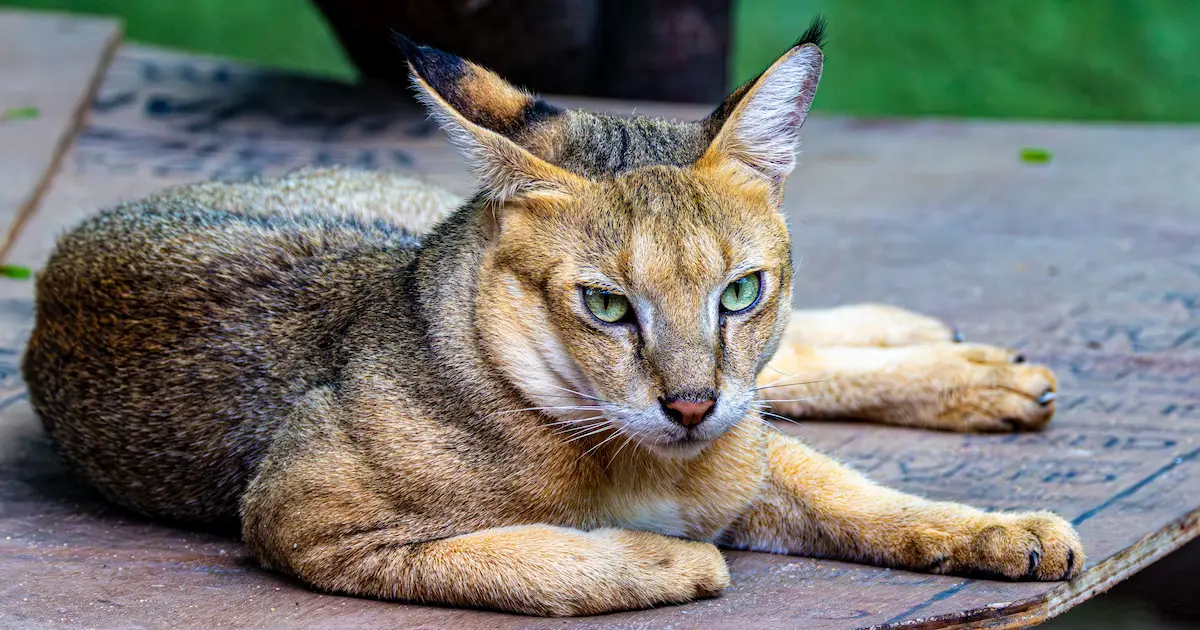
Imagine a cat that clears your kitchen counter in one fluid leap, fetches a crumpled receipt like a retriever, and then stares at you with eyes that look borrowed from a small leopard. That’s a Chausie. And honestly, the photos do not prepare you.
This is a hybrid built from a wild jungle cat and a domestic one, so it carries a bit of the wild in how it moves, plays, and demands your time. People fall hard for the look. The reality of living with one is a different conversation, and it’s the conversation most breed pages skip.
So let’s have it properly. By the end, you’ll know whether a Chausie cat belongs in your home, which generation fits your life, and what nobody warns you about before you fall in love.
| Origin | United States, 20th century |
| Weight (Male) | 15 to 25 lbs |
| Weight (Female) | 12 to 20 lbs (about 15% smaller) |
| Lifespan | 12 to 15 years |
| Coat | Short, dense, double-layered, ticked |
| Colors | Solid black, black grizzled tabby, brown ticked tabby |
| Energy Level | High |
| Grooming Needs | Low |
| Good With Kids | Yes, with socialization |
| Good With Other Pets | Yes, with proper introductions |
| Average Price | $1,500 to $10,000+ (varies by generation) |
What Is a Chausie, Really?
A Chausie is a hybrid cat. That means it comes from crossing a wild species, the jungle cat (Felis chaus), with a domestic one. The domestic side is usually an Abyssinian, which is why a Chausie can look like an Aby that hit the gym and never stopped growing.
The jungle cat isn’t some fearsome predator, by the way. It’s a medium wild cat found across parts of Asia, the Middle East, and Africa, often near water and reed beds. People sometimes call it the reed cat or swamp cat. Its history with humans goes way back, with evidence that jungle cats lived near people in ancient Egypt.
The modern Chausie story is more recent. Breeders began experimenting with these crosses in the United States during the mid-1900s, partly to give people a safer, friendlier alternative to keeping an actual wild cat. The breed earned registration with The International Cat Association (TICA) in 1995. A few years later, TICA limited the show ring to cats at least four generations removed from their wild ancestor, which tells you a lot about how different an early-generation hybrid can be.
What a Chausie Cat Looks Like
Tall is the first word that comes to mind. Chausies have long legs, a deep chest, and a lean, muscular frame that makes them look like they’re always mid-stride. They can reach around 14 to 18 inches at the shoulder, and a big male can tip the scale toward 25 pounds. Females run smaller, usually about 15% less.
Their ears sit high and large, sometimes with little tufts at the tips that add to the wildcat look. The face is wedge-shaped with a long muzzle and high cheekbones. Eyes tend to be gold or yellow, occasionally leaning green, and they carry that alert, slightly intense expression that makes people do a double take.
The coat is short and dense with two layers, soft underneath and a bit coarser on top. TICA recognizes three coat colors: solid black, black grizzled tabby, and brown ticked tabby. That middle one is special. The grizzled pattern, where each hair is banded so the coat looks salt-and-peppered, comes straight from the jungle cat. No fully domestic breed has it.
Here’s a fun quirk: kittens can change. A Chausie kitten that looks tabby might grow into a solid coat, and a young grizzled cat might show barely any markings at birth. So the kitten you bring home may surprise you a little as it matures.
The F1 to F5 Generations Explained (The Part Everyone Gets Wrong)
This is the most important section in the whole guide, so slow down here. If you understand generations, you’ll avoid the biggest mistake new Chausie buyers make.
The “F” stands for filial generation, which is just a fancy way of counting how far a cat is from its wild ancestor. Each step away makes the cat more domestic in size, temperament, and behavior.
| F1 | One jungle cat parent (about 50% wild). Largest, most demanding, strongest instincts. Males are usually sterile. |
| F2 | Grandparent is the jungle cat (roughly 25% wild). Still very active and intense, slightly more predictable. |
| F3 | Further removed. More house-cat behavior while keeping the look and energy. Males often still sterile. |
| F4 | Considered the show-eligible, more settled generation. A good balance for committed owners. |
| F5+ | Treated as fully domestic in temperament. The easiest entry point for most homes. |
Here’s the honest truth nobody puts up front. An F1 or F2 Chausie is a big commitment that behaves more like a wild animal than a pet. They can be wonderful, but they’re sensitive, easily stressed by routine changes, and they do not forgive feeding or handling mistakes. They need an owner who already understands cat psychology deeply.
For most people reading this, the right answer is an F4 or F5. You still get the stunning looks and the playful brain, but with a temperament suited to normal family life. If a breeder pushes an F1 on a first-time owner, that’s a red flag, not a flex.
Living With a Chausie: Personality and Temperament
Chausies are clever, busy, and bonded to their people in a way that feels almost dog-like. They follow you room to room. They learn tricks. Many will play fetch on repeat until your arm gives out before they do.
They’re talkative too, though not in the relentless way a Siamese can be. Expect chirps, trills, and the occasional opinionated comment when dinner is late. Once a Chausie decides you’re its person, you have a shadow for life.
The flip side is intensity. This is not a cat that naps gracefully on a sunbeam for nine hours. A Chausie wants a job, a game, a puzzle, a thing to climb. When bored, they invent their own entertainment, and you usually won’t love their choices. Think shredded furniture, emptied cabinets, and zoomies at 2 a.m.
They also hate being alone. Long stretches of solitude can tip them into stress behaviors like overgrooming, yowling, or destruction. A Chausie left to entertain itself all day is a recipe for an unhappy cat and a wrecked apartment.
Is a Chausie Right for You?
Let’s be real with each other. The Chausie is a spectacular cat, but it is not for everyone, and pretending otherwise leads to heartbreak and rehoming.
A Chausie might be right for you if: you’re home often or work from home, you’ve owned active cats before, you have vertical space and don’t mind cat-proofing, and you genuinely enjoy interactive play every single day.
A Chausie is probably wrong for you if: you’re out of the house ten hours a day, you want a calm lap cat, you live somewhere with strict hybrid laws, this is your first cat ever, or your budget is tight (the food and vet costs add up fast).
The good news is that honesty here protects everyone. A Chausie placed with the right owner is one of the most rewarding cats you’ll ever share a home with. Placed wrong, it’s miserable for both of you.
Are Chausies Even Legal Where You Live?
This question trips up a shocking number of buyers, so check before you fall in love with a kitten photo. Because the Chausie descends from a wild cat, some places regulate it like other hybrid breeds.
Laws vary a lot by state, county, and even city. Some areas allow all Chausies freely. Others restrict early generations (F1 through F3) or require permits. A handful of places ban hybrid cats outright, and city rules can be stricter than state rules.
The safest move is simple: call your state’s wildlife or agriculture department and your local animal control before you buy. Get the answer in writing if you can. A responsible breeder will also know the rules for common regions and won’t sell into an area where the cat would be illegal. Never try to slip a restricted cat into a place that bans it, because the cat is the one who pays if it gets confiscated.
Chausie Health and That Shortened Gut
Here’s the thing about Chausies: thanks to their diverse breeding pool, they tend to be fairly hardy cats overall. But they have one quirk you have to take seriously, and it’s the part competitors gloss over.
Many Chausies inherit a shorter intestinal tract from their wild side. In plain terms, their gut is built for a pure-meat diet and struggles with plant material. Feed a Chausie a lot of grains, fillers, or veggie-heavy food over time, and you raise the risk of inflammatory bowel disease, or IBD.
IBD is chronic inflammation in the digestive tract. The signs to watch for are ongoing vomiting, loose or frequent stools, weight loss despite a normal appetite, and a dull coat. If you spot a pattern like that, see your vet. IBD is manageable, often with diet changes and sometimes medication, but it needs a real diagnosis rather than guesswork.
Beyond the gut, give your Chausie the same baseline every cat deserves: yearly vet checks, dental care, parasite prevention, and full vaccinations. Catching small issues early is how these cats reach the upper end of their lifespan.
Feeding a Chausie
The diet rules for a Chausie are stricter than for an average house cat, and now you know why. Their gut wants meat, not grains.
Aim for high-protein, meat-first food with little or no grain and no veggie fillers. Whole animal proteins like chicken, turkey, rabbit, or fish should lead the ingredient list. Many owners do well with a quality canned diet, raw under vet guidance, or a premium grain-free dry food, often a mix.
Watch portions even though these cats are active. A bored or under-exercised Chausie can still gain weight, and extra pounds strain those long joints. Fresh water matters too, and a fountain can tempt picky drinkers. When in doubt, your vet can fine-tune the plan for your individual cat.
Grooming and Care
Good news on this front: Chausies are about as low-maintenance as cats get for grooming. That short, dense coat mostly takes care of itself.
A quick brush once a week removes loose hair and keeps shedding down, which is modest to begin with. Add the usual basics: nail trims every couple of weeks, regular ear checks, and tooth brushing if your cat tolerates it. That’s pretty much the whole routine.
One small note for allergy sufferers. Chausies are not hypoallergenic (no cat truly is), but their light shedding means less dander floating around than with many breeds. If your allergies are mild, you may cope better with a Chausie than expected, though it’s never a guarantee.
Exercise and Enrichment
This is where a Chausie sinks or swims in your home. They need to move, climb, hunt, and think every day, or they’ll find an outlet you won’t like.
Go vertical. Tall cat trees, sturdy shelves, and high perches let them survey their territory and burn energy. Rotate interactive toys so nothing gets stale. Wand toys, puzzle feeders, and games of fetch are all winners. Many Chausies happily learn to walk on a harness and leash, which is a great way to give them safe outdoor stimulation.
A tall, stable cat tree is one of the few pieces of gear genuinely worth investing in for this breed.
Frisco 72-Inch Tall Cat Tree
A floor-to-near-ceiling tower with wide perches and posts sized for a big, leaping cat. It gives a Chausie the height and climbing it craves without taking over a whole room.
Chausies With Kids, Dogs, and Other Cats
A well-socialized Chausie can be a great family member, but the keyword is socialized. Kittens raised around children, dogs, and other cats usually grow into confident, friendly adults.
With kids, they’re playful and tolerant, especially if the children are old enough to handle a strong, fast cat gently. Supervise the early days and teach little ones to respect the cat’s space.
With dogs and other cats, Chausies often thrive, particularly if raised together. In fact, a feline or canine companion can be a lifesaver if you ever have to leave the house for a few hours, since these cats dislike being alone. Just do introductions slowly and let everyone set the pace.
Lifespan and Aging
A healthy Chausie typically lives 12 to 15 years, and well-cared-for cats sometimes push past that. To get there, the formula is steady: the right meat-based diet, daily activity, routine vet care, and lots of engagement.
As your Chausie ages, expect the wild zoomies to mellow a touch, though many stay playful into their senior years. Watch for the usual older-cat issues like dental disease, kidney changes, and stiffening joints, and keep up twice-yearly vet visits once your cat hits about seven. Their gut sensitivity doesn’t fade with age, so stay loyal to the diet that works.
How Much Does a Chausie Cost?
Brace yourself, because this is an expensive cat. Chausies are rare, hard to breed, and that shows up in the price.
Pet-quality kittens from a reputable breeder usually run $1,500 to $3,500. Early-generation or show-quality cats climb much higher, often $4,000 to $10,000 or more, with F1s sitting at the top. On the rare occasion a Chausie or Chausie mix turns up in rescue, adoption fees are far lower, around $300 to $600.
Then come the ongoing costs. Quality meat-based food isn’t cheap, vet care for a large active cat adds up, and you’ll want pet insurance given the IBD risk. Budget realistically before you commit, not after.
One red flag worth repeating: a “Chausie” advertised cheap with no paperwork is almost certainly not a real one. Legitimate Chausies come with registration documents from TICA or another recognized body.
Where to Find a Chausie Ethically
Because the breed is rare and the early generations are delicate, your choice of breeder matters more than usual. A bad source can mean a sick, poorly socialized, or even illegal cat.
Look for a breeder who has their own website (not just listings on classified sites), who registers kittens through TICA or another body that recognizes the breed, and who gives you a written sale contract and a vaccination record. Good breeders ask you plenty of questions too, because they care where their kittens land.
Walk away if you see kittens sold through pet stores or markets, suspiciously low prices, no health guarantees, or pressure to take an early-generation cat without proper screening. Rescue is uncommon for this breed, but breed-specific rescues do exist, so it’s worth a look if you’re open to an adult.
Chausie vs Abyssinian and Other Big Cats
A lot of people land here wondering, “Wait, is my big tall cat actually a Chausie?” Usually the answer is no, since true Chausies are rare and come with papers. But the confusion is fair, because they share traits with several breeds. Here are close cousins worth knowing:
- Abyssinian: The Chausie’s main domestic ancestor. Smaller and fully domestic, but with the same ticked coat and busy, social nature. Easier to own.
- Savannah: Another tall, wild-looking hybrid, this one crossed with a serval. Even more striking and often pricier, with similar energy demands.
- Bengal: A spotted hybrid with leopard-cat ancestry. Athletic and clever, more widely available, often a more practical “wild look” choice.
- Maine Coon: Not a hybrid at all, but if you mainly want a large, friendly cat without the special diet and legal questions, this gentle giant is worth a look.
Common Myths and Misconceptions
This breed attracts a lot of half-truths. Let’s clear up the big ones.
Myth: A Chausie is basically a wild animal. Later generations (F4 and F5) are domestic in temperament. The wildness lives mostly in the early generations and the looks.
Myth: They’re impossible to care for. They’re demanding, not impossible. With the right home, daily play, and a proper diet, they’re devoted companions.
Myth: The wild look means they’re aggressive. A well-socialized Chausie is affectionate and people-focused. Aggression usually traces back to boredom, stress, or poor early handling.
Myth: Any tall ticked cat is a Chausie. True Chausies are rare and documented. Your large rescue tabby is far more likely a mixed-breed domestic, and that’s wonderful too.
Frequently Asked Questions
Q: Are Chausie cats good for first-time owners?
Generally no, especially early generations. They need an owner who understands feline behavior and can commit to daily play. If you’re set on one as a first cat, choose an F4 or F5 and lean on your breeder for support.
Q: How big does a Chausie get?
Big. Males often reach 15 to 25 pounds and stand 14 to 18 inches at the shoulder, with females about 15% smaller. They’re lean and muscular, so the weight is mostly athleticism, not fluff.
Q: Are Chausie cats legal to own?
It depends on where you live. Some areas allow all Chausies, others restrict early generations or require permits, and a few ban hybrid cats. Always check your state and local laws before buying.
Q: Do Chausies need a special diet?
Yes. Many have a shortened gut that struggles with grains and plant fillers, raising the risk of IBD. Feed a high-protein, meat-first, low-grain diet and ask your vet to tailor it.
Q: How much does a Chausie cost?
Pet-quality kittens usually run $1,500 to $3,500, while early-generation or show cats can hit $4,000 to $10,000 or more. Rare rescue cats cost far less, around $300 to $600.
Q: Are Chausie cats affectionate?
Very. They bond intensely with their people, follow them around, and often play fetch and learn tricks. They dislike being alone and thrive on interaction.
Q: Do Chausies get along with dogs and other cats?
Usually yes, especially when raised together. A companion animal can actually help, since Chausies hate solitude. Introduce everyone slowly and supervise early on.
Q: How long do Chausie cats live?
Typically 12 to 15 years, and sometimes longer with great care. The right diet, regular vet visits, and plenty of exercise all help them reach the upper end.
Final Verdict: Should You Get a Chausie?
A Chausie cat is a genuine showstopper, a long-legged, gold-eyed athlete with the brain of a problem-solver and the loyalty of a dog. For the right person, there’s nothing quite like it.
But “the right person” really matters here. This is a high-energy, deeply social cat with a sensitive gut, a steep price tag, and legal questions to sort out first. Give it your time, your vertical space, and a proper meat-based diet, and you’ll have a once-in-a-lifetime companion. Try to fit it into a busy, away-all-day life, and you’ll both struggle.
If you’ve read all this and you’re nodding, picturing where the cat tree goes and how you’ll structure playtime, the Chausie might just be your perfect match. If parts of it gave you pause, that pause is worth listening to. Either way, you now know exactly what living with this remarkable jungle-cat hybrid really takes.

Hello and welcome to The Ideal Cat!
We are some passionate cat owners from different professions. We love our cats and have a lot of experience in how to care for our pets. We are incredibly excited to share our knowledge, experience, and research with you. So you can take good care of your loving cat. We will answer most of the common questions about owning cats, taking care of them, etc. If you have any question contact with us. Thanks for visiting! Enjoy the content.
