If you’ve ever been jolted awake by that unmistakable hack-hack-hack at 3am, then found a damp little cigar of fur on the rug, you already know the hairball drill. It’s gross, it’s a little alarming, and you just want to help your cat feel better. The good news is that learning how to help a cat with hairballs is mostly about a few simple habits, and most hairballs are nothing to panic about.
Let’s walk through what actually works, what’s a myth, and the warning signs that mean it’s time to call your vet.
- A cat bringing up a hairball once every week or two is considered normal and usually harmless.
- Regular brushing is the single most effective way to reduce hairballs, since it removes loose fur before your cat swallows it.
- A hairball-control diet works through added fiber, mainly insoluble fiber, which helps swallowed hair move through the gut instead of coming back up.
- Long-haired breeds like Persians and Maine Coons get hairballs more often than short-haired cats.
- Repeated unproductive retching, refusing food, lethargy, or constipation can signal a dangerous blockage and needs a vet right away.
What is a hairball, and why does my cat get them?
A hairball is a wad of swallowed fur, moistened by digestive fluids, that your cat brings back up. Vets call it a trichobezoar. Despite the name, hairballs are usually slim and cylindrical, more like a sausage or cigar than a ball, because they take the shape of the food pipe on the way up. Extra moisture helps them pass, which is one reason a wet food made for indoor cats is worth considering for frequent hairballers.
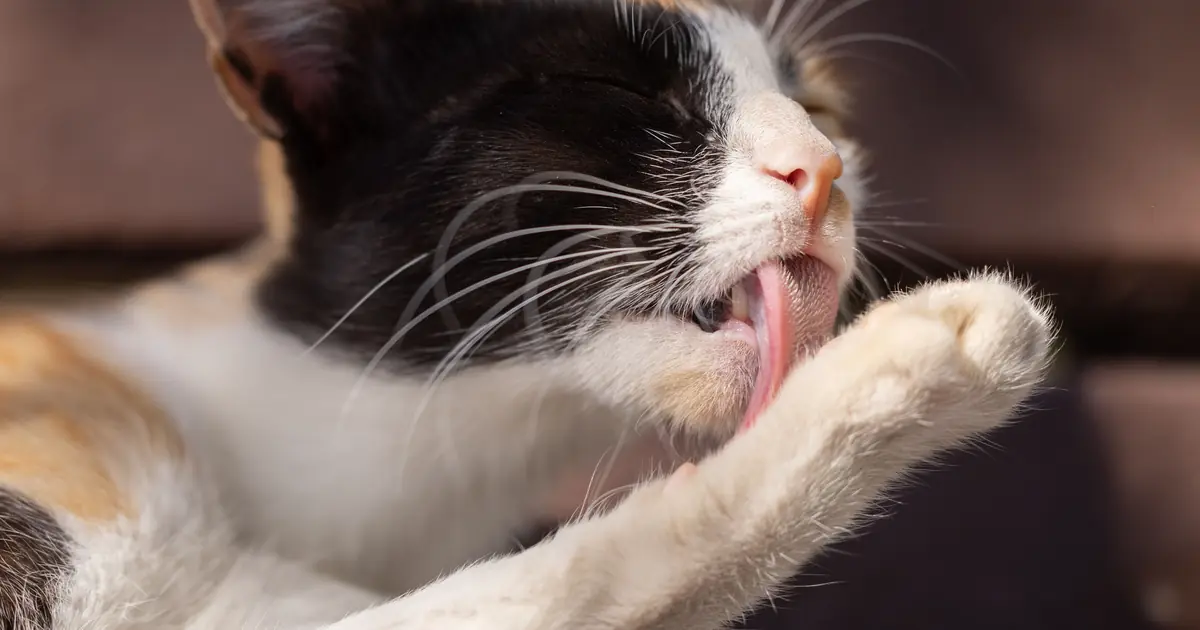
Cats get hairballs because grooming is part of who they are. Those tiny backward-facing barbs on a cat’s tongue catch loose and dead hair, and most of that fur gets swallowed. Normally it passes right through and out in the litter box. But when too much hair collects in the stomach, your cat coughs it back up instead.
Some cats are simply more prone to hairballs than others:
- Long-haired breeds like Persians and Maine Coons swallow more hair and face a higher risk.
- Dedicated groomers, often older cats, ingest more fur than wriggly kittens do.
- Shedding seasons (spring and fall for many cats) mean more loose hair and more hairballs.
- Over-grooming cats, often from stress, allergies, or itchy skin, swallow extra fur, which can hint at a separate problem worth a vet chat.
How often is a hairball normal, and when is it too much?
A cat coughing up a hairball once every week or two is normal and rarely a cause for worry. Occasional hairballs are just part of life with a cat, especially a fluffy one. What’s not normal is frequent hairballs, like several a week, or hairballs paired with other symptoms.
Here’s a simple way to tell the difference between a routine hairball and one worth a vet visit.
| Usually normal | Call your vet |
|---|---|
| A hairball once every week or two | Hairballs several times a week or more |
| Cat eats, drinks, and acts normal afterward | Loss of appetite, weight loss, or low energy |
| A quick hack, then the hairball comes up | Repeated retching with nothing coming up |
| Normal, regular poops | Constipation, diarrhea, or a swollen belly |
| No coughing between hairballs | Frequent dry coughing or wheezing |
If your cat’s hairballs are landing in the “call your vet” column, don’t wait it out. Frequent hairballs can point to an underlying issue with the skin, gut, or grooming behavior.
How do I help my cat with hairballs at home? (9 tips)
You help a cat with hairballs by reducing how much loose hair gets swallowed and helping the rest pass through the gut smoothly. The most effective steps are regular brushing, a hairball-control diet, better hydration, and, when your vet agrees, a hairball gel. Here’s the full game plan, step by step.
1. Brush your cat regularly
Brushing is the number one way to cut down on hairballs, because every bit of fur you catch in the brush is fur your cat won’t swallow. Brush short-haired cats two to three times a week, and long-haired cats daily. A deshedding tool or fine comb pulls out the loose undercoat that a basic brush misses.
2. Switch to a hairball-control or higher-fiber food
A hairball-control diet helps because it’s higher in fiber, mainly insoluble fiber, which keeps things moving so swallowed hair passes through the gut instead of backing up into a hairball. Most of these diets use a blend: insoluble fiber adds bulk and nudges everything along the intestines, while soluble fiber draws in water and binds the non-hair portion. Make any food change slowly over 7 to 10 days to avoid upsetting your cat’s stomach.
3. Add a little pumpkin for extra fiber
Plain canned pumpkin (not pie filling) is a gentle, cat-safe fiber boost that helps keep the digestive tract moving. Many cats happily eat a teaspoon mixed into wet food. Start small, since too much can cause loose stools, and skip it if your cat has a medical diet from your vet.
4. Boost your cat’s hydration
Good hydration helps hair slide through the gut, so a well-watered cat tends to have fewer hairball troubles. Cats are famously bad drinkers, so make water more appealing: add a pet water fountain, keep bowls away from the food, and refresh the water daily.
5. Feed more wet food
Wet food adds water to your cat’s diet, which supports digestion and helps hairballs pass smoothly. Even swapping one dry meal a day for canned food can raise your cat’s total water intake. Wet food is an easy win for cats who ignore their water bowl.
6. Ask your vet about a hairball gel
A hairball gel is a mild lubricant laxative that helps swallowed hair slide through the digestive tract instead of coming back up. Popular gels like Laxatone are made mostly from white petrolatum and mineral oil, often flavored with malt or molasses so cats lick them up. Many vets suggest giving a gel two to three times a week, but check with yours first for the right amount.
Tomlyn Laxatone Hairball Control Gel for Cats
This is a flavored lubricant gel that helps swallowed hair pass through the gut instead of coming back up as a hairball. Most cats lick the mild maple-flavored gel right off a paw or their nose, which makes it easy to give. Best for cats with frequent hairballs, used at the amount your vet recommends.
7. Support a healthy coat with omega-3s
Omega-3 fatty acids support skin and coat health, which can mean less shedding and less loose fur to swallow. You’ll find omega-3s (like fish oil) in many quality cat foods and supplements. Ask your vet before adding any supplement, especially if your cat has health conditions.
8. Tackle stress and over-grooming
A cat who over-grooms swallows extra fur, so easing stress can quietly cut down on hairballs. Boredom, anxiety, fleas, or itchy skin can all drive over-grooming. Add play sessions, scratching posts, and cozy hideaways, and have your vet rule out skin issues if the licking seems excessive.
9. Keep up the routine, especially during shedding season
Hairball prevention works best as a steady habit, not a one-time fix during shedding season. Spring and fall usually bring the heaviest shedding, so lean into daily brushing and plenty of water during those months. A little consistency beats a frantic scramble after the third hairball of the week.
Can home remedies like butter or olive oil help a cat with hairballs?
Butter and olive oil are popular hairball home remedies, but they mostly don’t work and butter can cause an upset stomach. Edible fats and oils get digested and absorbed high up in the small intestine, long before they ever reach the hair lower in the gut. So the lubricating effect people hope for usually never happens.
This is the big difference between kitchen oils and proper hairball gels. Petroleum-based gels aren’t digested; their molecules are too large to be absorbed, so they pass through and stay slippery the whole way. That’s why vets recommend a real hairball gel over a spoonful of butter.
One more caution: don’t overuse petroleum or mineral-oil laxatives. Used too often, they can interfere with how your cat absorbs certain vitamins, so stick to the schedule your vet gives you rather than dosing daily.
My cat keeps coughing but nothing comes up. Is it a hairball?
If your cat coughs over and over but never brings up a hairball, it may not be a hairball at all. A dry, repetitive cough with nothing produced is a classic sign of feline asthma or another airway problem, not a hairball. This is one of the most common mix-ups cat parents make.
Here’s how the two tend to look different:
- Hairball: your cat hunches, makes a wet hacking or gagging sound, and a hairball (or food, or foam) comes up.
- Asthma or airway issue: your cat often crouches low with the neck stretched out, coughs dry and repeatedly, and nothing comes up. You may also hear wheezing.
A cat who coughs often without producing a hairball, or who wheezes or breathes with effort, needs a vet visit to check for asthma, allergies, or heart and lung issues. Open-mouth breathing or blue-tinged gums is an emergency: go to a vet right away.
When should I worry that a hairball is a blockage?
A hairball becomes an emergency when it causes a blockage in the stomach or intestines, which can be life-threatening. Instead of coming back up, the hairball gets stuck, and your cat can’t move food or stool past it. Hairball blockages are uncommon, but they’re serious, and a few even need surgery to remove.
Call your vet right away, or head to an emergency clinic, if your cat shows any of these red flags:
- Repeated retching or gagging with nothing coming up
- Refusing to eat for more than a day
- Lethargy, hiding, or acting clearly unwell
- Constipation, straining in the litter box, or no stool
- Vomiting (not hairballs), diarrhea, or a swollen, painful belly
- Ongoing dry coughing or labored breathing
Workups for a suspected blockage often involve exams, imaging, fluids, and sometimes surgery, and care can run into the hundreds of dollars, so catching the warning signs early helps your cat and your wallet. When in doubt, a quick call to your vet is always the safe move.
This article is educational and isn’t a substitute for veterinary care. If your cat seems unwell, or you’re unsure whether something is a hairball or an emergency, please contact your licensed veterinarian.
Frequently Asked Questions
Q: How often is too often for cat hairballs?
A hairball once every week or two is normal for most cats. More than that, like several hairballs a week, is too often and worth a vet visit. Frequent hairballs can point to over-grooming, skin allergies, or a digestive issue that needs treatment.
Q: How long does it take a cat to pass a hairball?
Most swallowed hair passes naturally through the digestive tract and out in the stool within a day or two. When a cat can’t pass it that way, the hair builds up and gets coughed back up as a hairball instead. If your cat keeps retching without producing anything for more than a day, contact your vet.
Q: What is the best food to help with hairballs?
A hairball-control or higher-fiber cat food is the best choice for hairball-prone cats. These diets use added fiber, mainly insoluble fiber, to help swallowed hair move through the gut instead of forming a hairball. Wet food also helps by adding hydration. Ask your vet which formula fits your cat’s age and health.
Q: Can I give my cat olive oil for hairballs?
Olive oil usually doesn’t help hairballs, because edible oils are digested and absorbed before they reach the hair lower in the gut. A vet-recommended petroleum-based hairball gel works better, since it isn’t absorbed and stays slippery all the way through. Talk to your vet before trying any home remedy.
Q: Are hairball gels safe for cats?
Vet-recommended hairball gels are generally safe when used as directed, usually two to three times a week. The petroleum and mineral oil in them pass through the body without being absorbed. Avoid overusing them, though, since frequent use can interfere with vitamin absorption. Check the amount with your vet.
Q: Can a hairball kill a cat?
Yes, in rare cases a hairball can be fatal if it causes a blockage in the stomach or intestines. A trapped hairball stops food and stool from passing and is a medical emergency. Warning signs include repeated unproductive retching, not eating, lethargy, and constipation. Get veterinary help right away if you see these.
Q: Why is my cat trying to cough up a hairball but can’t?
A cat retching repeatedly without producing a hairball may have a blockage, nausea, or an airway condition like asthma rather than a stuck hairball. Repeated unproductive retching is a red flag, especially with lethargy or no appetite. Don’t wait it out; call your veterinarian the same day.
Q: Do indoor cats get more hairballs?
Indoor cats can get hairballs year-round because steady indoor heating and lighting blur the natural shedding seasons, so they shed and groom consistently. Regular brushing and good hydration help indoor cats just as much as outdoor cats. Long-haired indoor cats especially benefit from daily grooming.
Helping your cat with hairballs really comes down to consistency: brush often, feed a hairball-friendly diet, keep the water flowing, and use a vet-approved gel when needed. Do that, and the occasional hairball stays exactly that, occasional. And now that you know how to help a cat with hairballs, you’ll also know the red flags that mean it’s time to call your vet instead of just reaching for the paper towels.

Hello and welcome to The Ideal Cat!
We are some passionate cat owners from different professions. We love our cats and have a lot of experience in how to care for our pets. We are incredibly excited to share our knowledge, experience, and research with you. So you can take good care of your loving cat. We will answer most of the common questions about owning cats, taking care of them, etc. If you have any question contact with us. Thanks for visiting! Enjoy the content.
