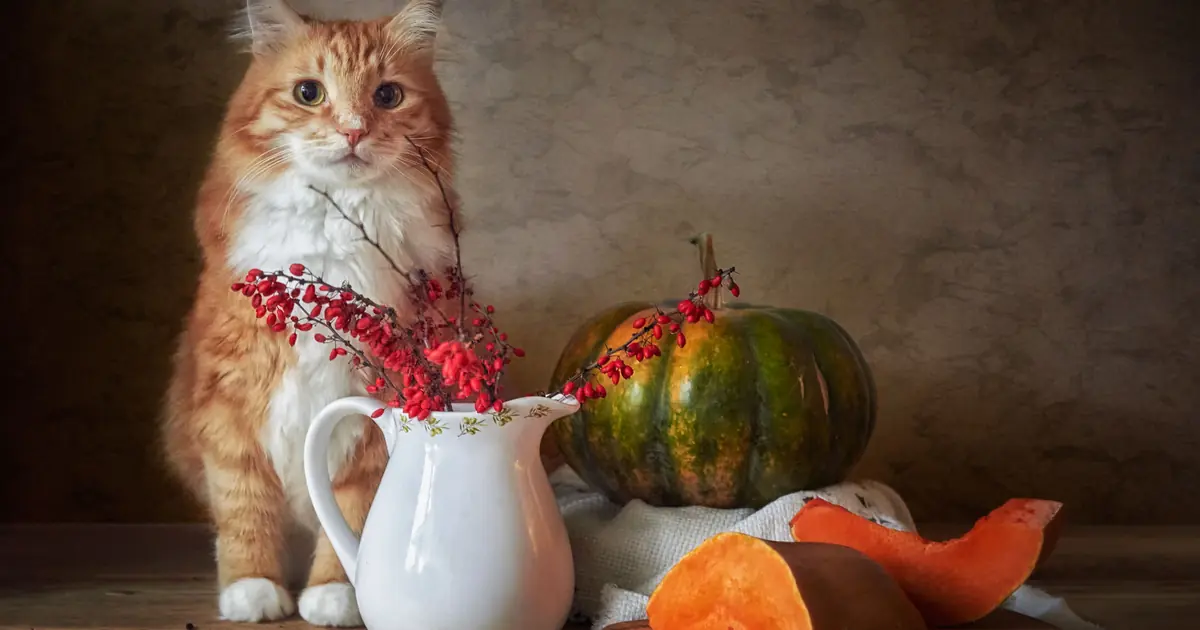
Your cat has been in and out of the litter box all morning, and you’re standing in the kitchen wondering if that can of pumpkin in the back of the pantry could actually help. You’ve heard people swear by it. You’ve also heard the words “pumpkin pie” and gotten nervous. Totally fair.
So can cats have pumpkin? Yes, they can, and plain pumpkin is one of the gentlest tummy helpers you can keep on hand. The trick is knowing which kind is safe, how much to give, and when pumpkin is the wrong tool for the job. Let’s sort it out over coffee.
- Plain 100% pumpkin (canned or cooked) is safe for cats; pumpkin pie filling is not, because it can contain nutmeg, cinnamon, and sugar.
- Start with about 1 teaspoon of plain canned pumpkin once or twice a day, mixed into your cat’s regular food.
- Pumpkin’s soluble fiber can firm up mild diarrhea and ease mild constipation, since fiber both absorbs water and helps stool move.
- Most cats tolerate up to roughly 1 to 2 tablespoons of pumpkin a day; more than that can cause loose stool.
- Pumpkin is a short-term supplement, not a diagnosis. Digestive problems lasting more than a day or two need a vet.
Is pumpkin safe for cats?
Plain pumpkin is safe for cats, as long as it’s 100% pure pumpkin with nothing added. That means canned pumpkin puree or fresh pumpkin you’ve cooked yourself, with no sugar, no salt, no spices, and no butter. Pumpkin is not toxic to cats, and vets often reach for it as a food-based way to nudge digestion in the right direction.
The one you have to watch out for is pumpkin pie filling. It looks almost identical on the shelf, but pie filling is loaded with sugar and warm spices like nutmeg, cinnamon, ginger, and allspice. Nutmeg in particular is considered mildly toxic to cats, and the rest can trigger stomach upset. The ASPCA keeps a running list of people foods to avoid feeding your pets, and heavily spiced or sugary foods land on it for good reason.
Read the label before you scoop. If the can says “pumpkin pie mix” or lists sugar and spices, put it back. If it says “pumpkin” and nothing else, you’re good.
What are the benefits of pumpkin for cats?
The main benefit of pumpkin for cats is its fiber, which helps regulate the gut from both directions. Pumpkin is rich in soluble fiber, and it also holds a lot of water. That combination is why the same spoonful can help a cat with loose stool and a cat who’s a bit backed up.
Here’s the short version of what pumpkin can do:
- Firms up mild diarrhea. Soluble fiber absorbs excess water in the gut and adds bulk to stool. If your cat has ongoing loose stool, our guide on cat diarrhea walks through the bigger picture.
- Eases mild constipation. The same fiber plus moisture helps things move along again, which is handy for the cat who strains. There’s more in our piece on how to help a constipated cat.
- Adds a little hydration. Canned pumpkin is mostly water, and many cats run a touch dry, especially kibble eaters.
- Supports weight management. A spoonful of pumpkin adds bulk and fiber for very few calories, so a chunky cat can feel fuller without a calorie blowout.
- May help with hairballs. The extra fiber can help move swallowed fur through the gut instead of coming back up. If your cat throws up after eating, pumpkin is worth a mention to your vet.
Now, pumpkin is not a nutritional powerhouse for cats. Cats are obligate carnivores, so their real nutrition comes from meat-based, complete food. Think of pumpkin as a fiber add-on, not a food group.
How much pumpkin can I give my cat?
For most adult cats, start with about 1 teaspoon of plain canned pumpkin once or twice a day, mixed into their food. Small cats and kittens should start even lower, around half a teaspoon. Go slow, watch the litter box, and only increase if your cat needs it and tolerates it well.
More is not better here. Most cats top out around 1 to 2 tablespoons of pumpkin per day, and pushing past that can flip the script and cause the very loose stool you were trying to fix. Introduce pumpkin gradually over a few days so your cat’s gut can adjust.
| Cat size | Suggested starting amount | General daily ceiling |
|---|---|---|
| Kitten or small cat (under 8 lb) | 1/2 teaspoon, once or twice daily | About 1 tablespoon |
| Average adult cat (8 to 12 lb) | 1 teaspoon, once or twice daily | About 1 to 2 tablespoons |
| Large cat (over 12 lb) | 1 teaspoon, twice daily | About 2 tablespoons |
These are gentle starting points, not medical doses. For a specific problem, especially in a kitten, senior, or a cat with a health condition, your vet can fine-tune the amount. You can read more general feline nutrition guidance from PetMD’s nutrition library.
Which forms of pumpkin are safe, and which aren’t?
The safest form of pumpkin for cats is plain canned 100% pumpkin puree, because it’s soft, consistent, and easy to portion. Fresh cooked pumpkin works too. The forms to skip are pie filling, raw pumpkin, and anything sweetened, salted, or spiced.
| Pumpkin form | Safe? | Notes |
|---|---|---|
| Plain canned 100% pumpkin | Yes | Easiest and most reliable; check the label says only “pumpkin.” |
| Fresh cooked, plain pumpkin | Yes | Steam or bake, remove skin, mash. No butter, salt, or seasoning. |
| Pumpkin pie filling / pie mix | No | Contains sugar and spices like nutmeg and cinnamon that can harm cats. |
| Raw pumpkin | Not ideal | Hard to digest and a choking risk; cooking makes it gut-friendly. |
| Pumpkin seeds | In moderation | Plain, unsalted, ground; offer only tiny amounts, and skip if unsure. |
| Spiced / sweetened pumpkin treats | No | Added sugar, salt, and spices aren’t safe for cats. |
One handy tip: canned pumpkin freezes beautifully. Spoon leftovers into an ice cube tray, freeze, and thaw one small cube as you need it. That way one can doesn’t go to waste after you’ve used a couple of teaspoons.
How do I actually feed pumpkin to my cat?
The easiest way to feed pumpkin is to stir a small amount straight into your cat’s regular wet food so it disappears into a meal. M ost cats won’t notice a teaspoon of puree blended in. Some will eat it off a spoon like it’s a treat. Others will give you the deeply offended stare and walk away. All normal.
A few ways to make it work:
- Start with half the amount you plan to use, so your cat gets used to the new texture and taste.
- Mix it thoroughly into wet food rather than plopping a blob on top.
- If your cat eats dry food, moisten a little kibble with warm water first, then blend the pumpkin in.
- Warm the food slightly to boost the aroma for picky eaters.
- Watch the next day or two of litter box results, and adjust up or down slowly.
Pumpkin works best alongside a solid, complete diet, since a balanced meal is what actually keeps your cat’s gut steady day to day. If you’re rethinking the base diet, start with the best cat food options, and for cats with recurring tummy trouble, a sensitive stomach cat food may do more long-term good than any topper.
If you’d rather not open a whole can for a teaspoon at a time, a plain pumpkin or fiber supplement made for cats can be a tidy option.
Diggin’ Your Dog Firm Up! Pumpkin Supplement
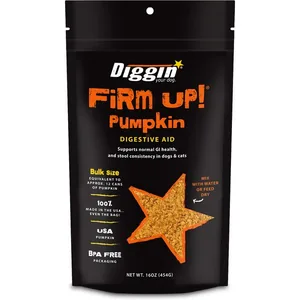
If you’d rather not open a can of pumpkin that mostly ends up in the trash, this powdered pumpkin and apple-fiber supplement is the tidy way to do it. A small scoop mixed into your cat’s food adds the same digestion-supporting fiber, and it stores for months instead of days. It’s made for both dogs and cats, and it’s a favorite for firming up loose stool and easing mild constipation. Best for cats who need a fiber boost more than the occasional spoonful.
When should I skip pumpkin and call the vet?
Skip the pumpkin and call your vet when your cat’s symptoms are severe, sudden, or lasting more than a day or two, because pumpkin only helps mild, short-term digestive hiccups. Pumpkin is a gentle fiber helper, not a treatment for anything serious, and reaching for it too long can delay care your cat actually needs.
Get in touch with your vet promptly if you notice any of these:
- Diarrhea or constipation lasting more than 24 to 48 hours, or that keeps coming back
- Vomiting alongside the digestive trouble
- Blood in the stool, or straining with little or nothing produced
- A hard, painful belly, or crying in the litter box
- Loss of appetite, lethargy, hiding, or weight loss
- Any of this in a kitten, senior cat, or a cat with a known health condition
Straining to poop can signal a serious blockage, and in male cats especially, straining to urinate is a genuine emergency. When in doubt, a quick call to your vet beats guessing. The Cornell Feline Health Center is a solid resource for understanding feline digestive health.
This article is educational and isn’t a substitute for veterinary advice. Pumpkin is a safe, handy thing to keep on the shelf, but ongoing digestive problems always deserve a real diagnosis from your vet.
Frequently asked questions about pumpkin for cats
Q: Can cats eat pumpkin every day?
Yes, most cats can have a small amount of plain pumpkin daily, usually around 1 teaspoon once or twice a day. Keep it as a fiber supplement, not a meal replacement. If your cat needs pumpkin every day long-term, check with your vet to make sure you’re treating the right issue.
Q: How much pumpkin should I give a cat for diarrhea?
Start with about 1 teaspoon of plain canned pumpkin once or twice a day for an average adult cat, and half a teaspoon for a small cat or kitten. The soluble fiber helps absorb excess water and firm up stool. If diarrhea lasts more than 24 to 48 hours, contact your vet.
Q: Can pumpkin help a constipated cat?
Yes, the fiber and moisture in plain pumpkin can help ease mild constipation by adding bulk and helping stool move along. Start small, around 1 teaspoon, and make sure your cat is drinking water too. If your cat is straining with nothing produced, that’s a vet visit, not a pumpkin fix.
Q: Is canned pumpkin or fresh pumpkin better for cats?
Plain canned 100% pumpkin is usually easier and more consistent, so most people reach for it first. Fresh cooked pumpkin is equally safe as long as it’s plain, peeled, and mashed with no butter, salt, or spices. Just avoid raw pumpkin and anything labeled pumpkin pie filling.
Q: Can cats eat pumpkin seeds?
Cats can have plain, unsalted pumpkin seeds in tiny amounts, ideally ground up to avoid a choking hazard. Never give seasoned or salted seeds. Because the benefit is small and the risk of upset is real, many cat parents skip seeds and stick to plain pumpkin puree instead.
Q: Why can’t cats have pumpkin pie filling?
Pumpkin pie filling contains added sugar and spices like nutmeg, cinnamon, ginger, and allspice, which aren’t safe for cats. Nutmeg in particular is considered mildly toxic to cats, and the sugar and spices can cause stomach upset. Always choose plain 100% pumpkin instead.
Q: How long does pumpkin take to work for a cat?
Pumpkin often shows results within a day for mild digestive issues, since fiber acts fairly quickly in the gut. If you don’t see improvement within about 24 to 48 hours, stop guessing and call your vet. Lingering diarrhea or constipation usually points to something pumpkin alone can’t fix.
Q: Can kittens have pumpkin?
Kittens can have a very small amount of plain pumpkin, around half a teaspoon, but their tiny systems are more fragile than an adult cat’s. Because diarrhea can dehydrate a kitten quickly, it’s safest to check with your vet before offering pumpkin to a young kitten.

Hello and welcome to The Ideal Cat!
We are some passionate cat owners from different professions. We love our cats and have a lot of experience in how to care for our pets. We are incredibly excited to share our knowledge, experience, and research with you. So you can take good care of your loving cat. We will answer most of the common questions about owning cats, taking care of them, etc. If you have any question contact with us. Thanks for visiting! Enjoy the content.
