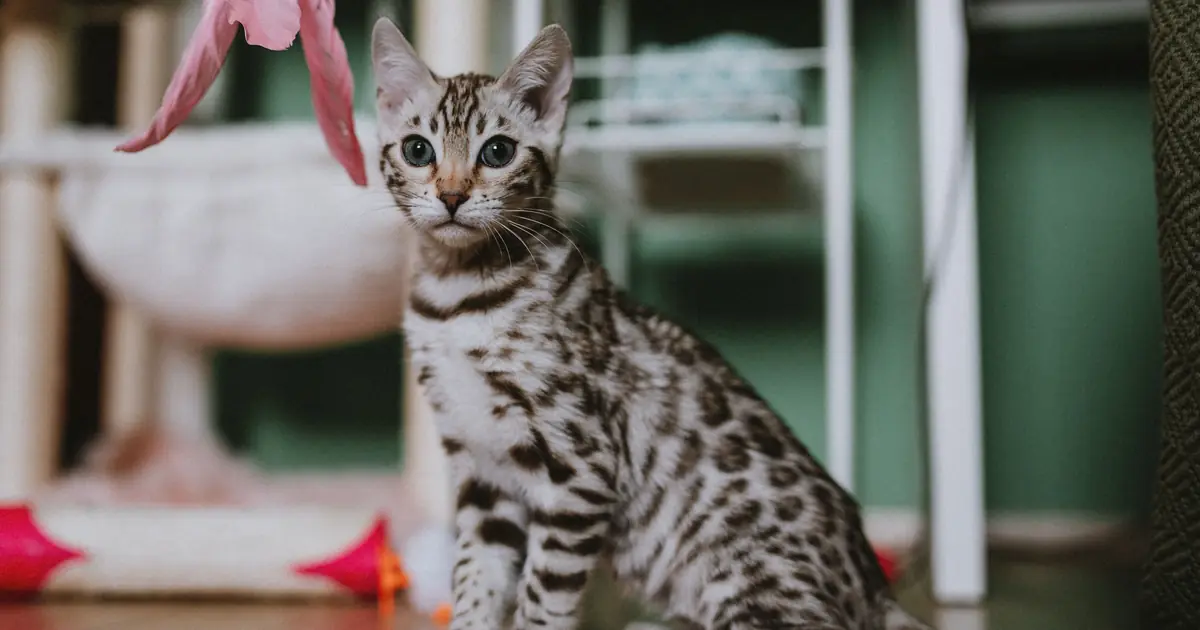
You spent good money on that fancy feathered gadget. Your cat sniffed it once, then curled up inside the cardboard box it shipped in. Sound familiar? If your cat would rather chase a bottle cap across the kitchen floor than touch anything from the pet store, you’re not alone, and honestly, your cat is onto something.
The best cat toys aren’t expensive. They’re the ones that make your cat feel like a tiny lion on the hunt. And you can make most of them tonight with stuff already sitting in your recycling bin.
- DIY cat toys work because they mimic prey: things that move, crinkle, dart, and can be caught satisfy a cat’s built-in hunting drive.
- Household items like socks, toilet paper rolls, sticks, ribbon, and cardboard boxes make great homemade toys for almost no money.
- String, ribbon, and small parts are a swallowing hazard, so cats should only play with them under supervision and never be left alone with them.
- Rotating a small set of toys every few days keeps them feeling new, so your cat stays interested instead of bored.
- Skip rubber bands, aluminum foil balls, hair ties, and anything held together with toxic glue or paint.
Why do homemade cat toys work so well?
Homemade cat toys work because they tap into a cat’s hunting instinct, which is strong even in a well-fed indoor cat. Cats are natural predators, and their bodies are wired to stalk, pounce, and catch small moving things. A toy that darts, flutters, or crinkles like prey feels far more exciting than a static plastic gadget.
Here’s the thing: a cat doesn’t care what a toy costs. It cares whether the toy behaves like a mouse or a bird. That’s why a scrunched-up receipt or a wand you made from a stick can outperform a pricey battery-powered toy. International Cat Care notes that cats prefer toys that move unpredictably, because anything motionless quickly becomes predictable and boring (International Cat Care).
Play isn’t just fun, either. For an indoor cat, a good hunting-style play session burns energy, eases stress, and cuts down on the 3am zoomies. If you want the full picture on which store options are worth it too, our guide to the best cat toys pairs nicely with the homemade ideas below.
What are the best DIY cat toys you can make at home?
The best DIY cat toys are the ones that move like prey or reward your cat for “hunting.” Below are seven easy homemade cat toys, each with a short materials list and simple steps. Most take under ten minutes to make.
1. Sock catnip mouse
A sock catnip mouse is one of the easiest homemade cat toys, and cats go wild for the soft, batting-friendly shape. You just need an old clean sock, some stuffing, and a pinch of catnip.
You’ll need: one clean sock, cotton balls or fabric scraps, dried catnip, strong thread or a tight knot.
- Stuff the toe of the sock with cotton balls or soft fabric scraps.
- Sprinkle in a pinch of dried catnip as you fill it.
- Pack it firm but not rock hard, so it’s easy to bat around.
- Tie the open end in a very tight knot, or sew it shut with strong thread.
- Trim any long dangling tail so your cat can’t chew loose threads.
New to catnip? Read what catnip does to a cat before you load up the mouse, since a small pinch is plenty.
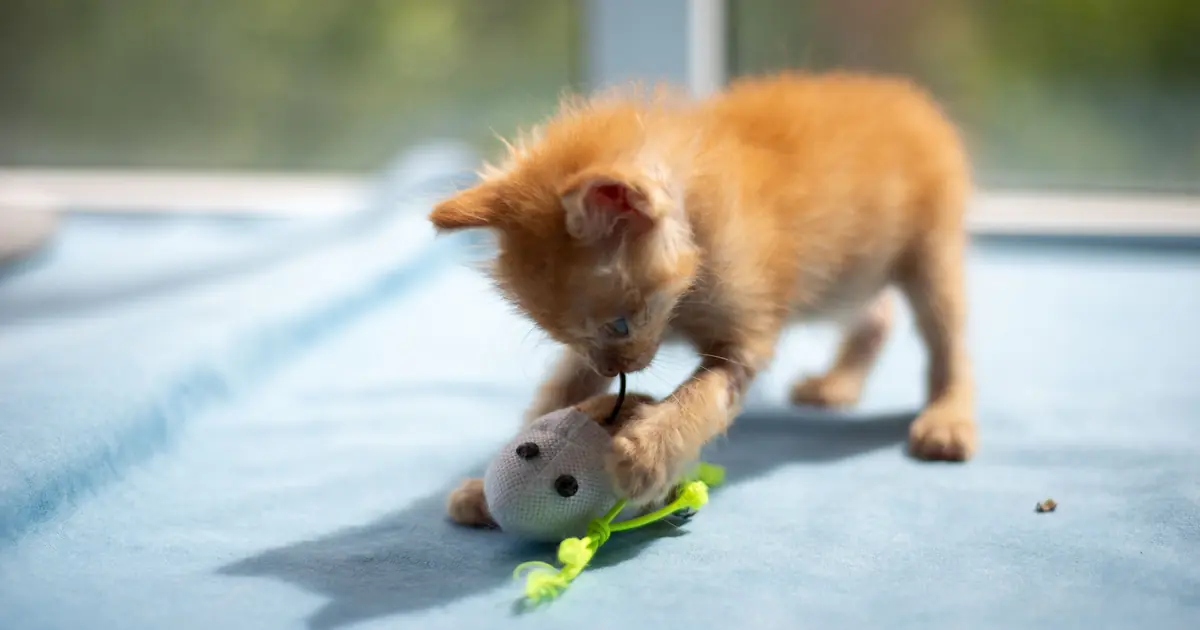
2. Toilet roll treat puzzle
A toilet roll treat puzzle turns snack time into a mini hunt and gives your cat’s brain a workout. It uses one empty cardboard tube and a few pieces of kibble.
You’ll need: one empty toilet paper or paper towel tube, a handful of dry treats or kibble, scissors.
- Cut a few small holes around the middle of the cardboard tube.
- Fold and pinch one end of the tube closed.
- Drop a few treats or pieces of kibble inside.
- Fold and pinch the other end closed.
- Give it to your cat and let them roll and bat it so treats fall out one at a time.
Puzzle feeders like this encourage natural foraging and slow down fast eaters. The Ohio State Indoor Pet Initiative recommends food puzzles as an easy way to add mental enrichment for indoor cats (OSU Indoor Pet Initiative).
3. Wand teaser from a stick and ribbon
A homemade wand teaser is the closest thing to real prey, because you control how it darts and flutters. This is the toy that gets even lazy cats off the couch.
You’ll need: a chopstick, dowel, or clean stick, a length of ribbon or shoelace, a feather or fabric strip, tape or strong knot.
- Tie one end of the ribbon firmly to the tip of the stick.
- Attach a feather or a small strip of fabric to the loose end of the ribbon.
- Secure every knot tightly and tape it down so nothing slips off.
- Drag and flick it along the floor like a mouse or bird, not just above your cat’s head.
- Let your cat “catch” it at the end of the game so the hunt feels complete.
Always put a wand teaser away in a drawer after play. Loose ribbon left out is a swallowing risk, which we cover in the safety section below.
4. Cardboard box maze
A cardboard box maze gives your cat a place to hide, ambush, and pounce, which are core hunting moves. It’s perfect if you have spare boxes and a bit of tape.
You’ll need: two or more cardboard boxes, packing tape, scissors or a box cutter.
- Cut cat-sized holes in the sides of each box.
- Line the boxes up and tape them together so the holes connect into tunnels.
- Remove any staples, plastic tape strips, or shipping labels first.
- Toss a crinkle ball or treat inside to lure your cat through.
- Rearrange the layout every week so it feels like a fresh space.
Boxes are a favorite for a reason. Hiding spots help cats feel safe and give them somewhere to watch the world from cover.
5. Frozen treat puzzle
A frozen treat puzzle keeps your cat busy on a hot day and rewards patience. It works best with a lickable treat or a bit of wet food, not dry kibble.
You’ll need: an ice cube tray or small bowl, water or low-sodium plain broth, a few cat-safe treats.
- Drop a treat or a small piece of wet food into each tray slot.
- Cover with water or plain, onion-and-garlic-free broth.
- Freeze until solid.
- Pop one cube out onto a plate or tile floor for your cat to lick and paw at.
- Supervise so your cat licks the treat free rather than trying to swallow a whole cube.
Only use cat-safe ingredients here. Onion, garlic, and heavily salted broths are toxic to cats, so plain water is the safest base.
6. Crinkle ball
A crinkle ball is the fastest DIY cat toy on this list, and the sound alone drives a lot of cats a little bit feral (in a good way). You can make one in about five seconds.
You’ll need: a sheet of parchment paper or clean packing paper.
- Tear off a small sheet of parchment or packing paper.
- Scrunch it into a tight ball roughly the size of a ping-pong ball.
- Make sure it’s firm enough not to shred apart in one bite.
- Roll it across a hard floor so it skitters and crinkles.
Skip aluminum foil for this one. Foil balls can tear into sharp little pieces, and a cat that swallows foil can end up with a stomach problem.
7. T-shirt braid tug toy
A T-shirt braid toy repurposes an old shirt into something soft to bat, carry, and wrestle. It’s washable, which is a nice bonus.
You’ll need: an old cotton T-shirt, scissors.
- Cut the shirt into three long strips about one inch wide.
- Knot the strips together at one end.
- Braid them tightly down the length.
- Tie a firm knot at the other end and trim loose threads.
- Toss it for your cat to chase, or drag it slowly like prey.
Which DIY cat toy is right for your cat?
The right DIY cat toy depends on your cat’s energy, age, and what kind of play they love. A young cat may want a fast wand chase, while a senior cat might prefer a gentle sock mouse or a treat puzzle. Here’s a quick comparison to help you pick.
| DIY Toy | Materials | Skill Needed | Best For |
|---|---|---|---|
| Sock catnip mouse | Sock, stuffing, catnip | Easy | Cats who love to bat and carry toys |
| Toilet roll treat puzzle | Cardboard tube, kibble | Easy | Food-motivated cats and fast eaters |
| Wand teaser | Stick, ribbon, feather | Easy | High-energy cats who need to run |
| Cardboard box maze | Boxes, tape | Medium | Shy cats and multi-cat homes |
| Frozen treat puzzle | Ice tray, water, treats | Easy | Bored cats on hot days |
| Crinkle ball | Parchment paper | Very easy | Solo players who self-entertain |
| T-shirt braid toy | Old T-shirt | Medium | Cats who like to wrestle and chew softly |
Not sure what your cat is telling you mid-game? Learning to read cat body language helps you spot when they’re locked in versus when they’re done. And if your cat naps through every toy you offer, our roundup for bored cats has more ideas.
How do you keep DIY cat toys safe?
You keep DIY cat toys safe by supervising anything with string or small parts and skipping materials that can hurt your cat if swallowed. Homemade toys are wonderful, but a cat’s curiosity means a few rules matter more than the craft itself.
Here are the safety basics for every homemade cat toy:
- Supervise string and ribbon play. Cats can swallow loose string, which can bunch up in the intestines and sometimes needs surgery. Put wand toys away when playtime ends.
- Avoid small parts that can come loose. Googly eyes, bells, beads, and buttons can be chewed off and swallowed. Sew and knot everything tightly.
- Skip rubber bands, hair ties, and foil. Cats love to bat these, but they’re a common swallowing hazard.
- No toxic glue, paint, or markers. Use only pet-safe or fully dried, non-toxic materials.
- Check for wear. Toss any toy once it starts shredding or coming apart.
The ASPCA recommends offering toys that satisfy a cat’s need to hunt while keeping small, swallowable parts out of reach (ASPCA). This article is for general guidance, so if your cat swallows string or a toy part, call your vet right away rather than waiting to see what happens.
How do you keep your cat interested in toys?
You keep your cat interested by rotating toys instead of leaving them all out at once. A toy that’s always available quickly becomes background furniture, but the same toy feels brand new after a week in the closet.
Try this simple rotation routine:
- Split your cat’s toys into two or three small groups.
- Leave one group out and store the rest in a drawer or bin.
- Every three to five days, swap the active group for a stored one.
- Store catnip toys in a sealed bag so they keep their scent.
- Retire any toy your cat has clearly outgrown or destroyed.
Short, frequent play sessions beat one long marathon. Two or three ten-minute hunts a day, ending with a “catch” and a small treat, keep most cats happy. International Cat Care suggests rotating toys and using interactive wand play to keep games feeling fresh (International Cat Care). If you also want a few store-bought backups, see our picks for the best cat toys for indoor cats.
The bottom line on DIY cat toys
DIY cat toys prove that your cat’s happiness doesn’t come with a price tag. A sock, a stick, a cardboard box, and ten minutes can give your cat the hunt it craves. Make a few, rotate them often, keep string and small parts supervised, and watch your cat rediscover why play is the best part of the day.
Frequently asked questions about DIY cat toys
Q: What household items make good cat toys?
Common household items make excellent cat toys, including empty toilet paper rolls, clean socks, cardboard boxes, ribbon or shoelaces on a stick, parchment paper crinkle balls, and ice-tray treat puzzles. The best ones move like prey or reward your cat with a treat. Always remove small parts that could be swallowed.
Q: Are homemade cat toys safe?
Homemade cat toys are safe when you supervise string and small parts and skip toxic materials. Never leave your cat alone with ribbon, rubber bands, or foil, since swallowed string can require surgery. Use pet-safe, non-toxic materials, knot everything tightly, and throw away any toy that starts to shred.
Q: Why does my cat prefer boxes over expensive toys?
Cats prefer boxes because a box offers a safe hiding and ambush spot that suits their hunting and security instincts. An enclosed space helps a cat feel protected while watching for “prey.” The toy’s price means nothing to a cat, so a free box often wins over an expensive gadget.
Q: How do I make a cat toy with catnip?
To make a catnip toy, stuff a clean sock with cotton or fabric scraps, sprinkle in a pinch of dried catnip, and tie or sew the end shut tightly. Store it in a sealed bag between play sessions so it keeps its scent. Use only a small amount, since a little catnip goes a long way.
Q: What materials should I never use for DIY cat toys?
Never use rubber bands, hair ties, aluminum foil balls, plastic bag pieces, or anything with toxic glue, paint, or loose small parts. These are common swallowing hazards that can cause choking or intestinal blockages. Stick to soft fabric, cardboard, and pet-safe materials, and always supervise string-based toys.
Q: How often should I rotate my cat’s toys?
Rotate your cat’s toys every three to five days to keep them feeling new. Leave out one small group of toys and store the rest, then swap them out. Toys that stay out all the time quickly become boring, while a stored toy feels exciting again after a short break.
Q: Do DIY toys work as well as store-bought ones?
DIY toys often work as well as or better than store-bought ones because cats respond to how a toy moves, not how much it costs. A homemade wand teaser or crinkle ball that mimics prey can outperform a pricey gadget. Store-bought toys are handy backups, but they aren’t required.
Q: How long should I play with my cat each day?
Aim for at least two or three short play sessions of about 10 minutes each day. Short, frequent hunts suit a cat’s natural bursts of energy better than one long session. End each game by letting your cat “catch” the toy, then offer a small treat to finish the hunt.

Hello and welcome to The Ideal Cat!
We are some passionate cat owners from different professions. We love our cats and have a lot of experience in how to care for our pets. We are incredibly excited to share our knowledge, experience, and research with you. So you can take good care of your loving cat. We will answer most of the common questions about owning cats, taking care of them, etc. If you have any question contact with us. Thanks for visiting! Enjoy the content.
