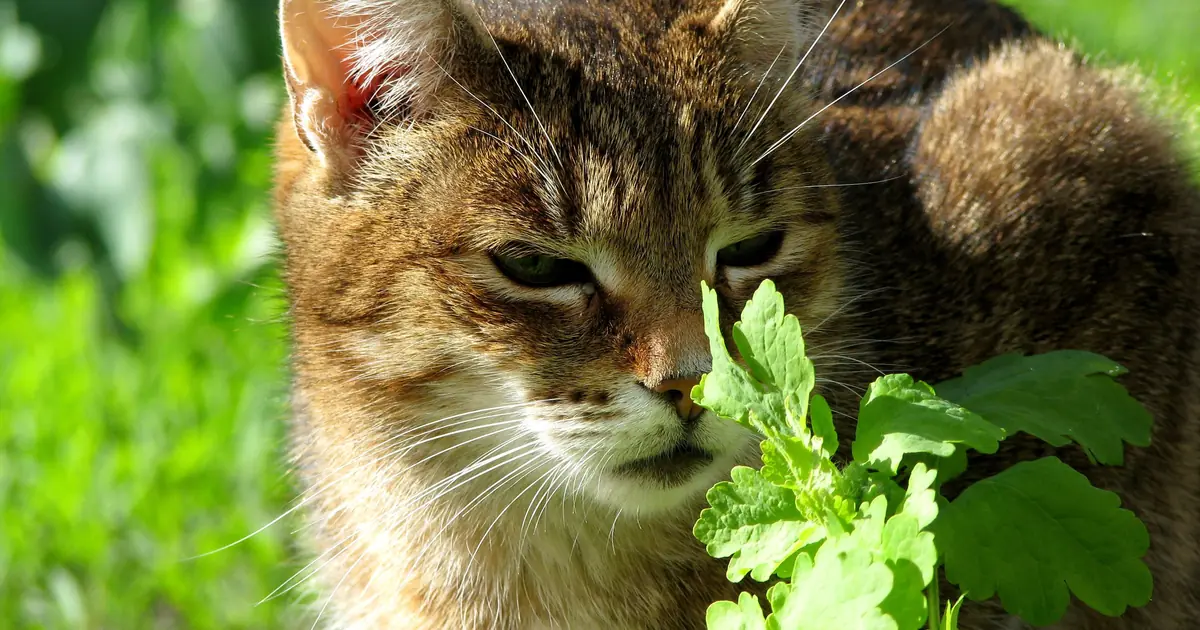
You sprinkle a pinch of dried herb on the floor, and suddenly your calm cat is rolling, drooling, and bunny-kicking the air like a furry little tornado. If you’ve ever watched this and wondered what does catnip do to a cat, you’re not alone. It looks wild, but it’s harmless, and there’s real science behind it.
- Catnip works because nepetalactone, an oil in the plant, binds to receptors in a cat’s nose and stimulates brain areas tied to emotion and reward.
- Roughly 50 to 70 percent of cats respond to catnip, and the trait is inherited, so a cat either has the gene or does not.
- The catnip high lasts about 10 minutes, then a cat needs a refractory period of around 1 to 2 hours before catnip works again.
- Kittens under about 3 to 6 months and many senior cats show little or no reaction to catnip.
- Catnip is non-toxic and not addictive, though eating a large amount can cause mild, short-lived stomach upset.
What does catnip actually do to a cat?
Catnip gives responsive cats a short, harmless “high” that makes them sniff, lick, roll, rub their faces, drool, and sometimes race around the room. Catnip (its plant name is Nepeta cataria) is a leafy herb in the mint family. The reaction is driven by a single compound and usually winds down on its own within 15 minutes.
Here’s the thing about the catnip response: no two cats do it exactly the same way. Some get playful and goofy. Some get cuddly and sleepy. A few get overstimulated and swat if you reach in too soon. All of these are normal versions of the same reaction.
How does catnip work on a cat’s brain?
Catnip works because of nepetalactone, an aromatic oil stored in the plant’s leaves and stems. When a cat sniffs catnip, nepetalactone molecules bind to scent receptors in the nose. Those receptors send a signal to the olfactory bulb and on to brain regions that handle emotion, reward, and behavior, including the amygdala and hypothalamus.
Scientists think the result mimics a happy, slightly intoxicated state. Some research even links the catnip response to the brain’s natural opioid (feel-good) system, which helps explain the blissed-out look. The cat isn’t impaired or in danger. It’s simply enjoying a strong, pleasant scent reaction.
One detail surprises a lot of cat parents: the effect comes from smelling catnip, not eating it. A cat that nibbles catnip tends to get calmer, while a cat that sniffs it tends to get excited.
What does a cat look like on catnip?
A cat on catnip typically sniffs the herb, then licks or chews it, rubs its cheeks and body against it, rolls on the floor, and may drool, vocalize, or burst into the zoomies. After a few minutes the energy fades and many cats settle into a relaxed, mellow state.
The whole show usually runs about 10 minutes and rarely more than 15. These are the most common catnip behaviors:
- Sniffing and head-shaking as the scent hits
- Licking and chewing the leaves or toy
- Cheek and body rubbing against the catnip
- Rolling and flipping on the floor
- Drooling from the strong scent
- Zoomies, with sudden sprinting or pouncing
- Soft growling or meowing in some cats
- Mellowing out and resting once it wears off
Does smelling catnip differ from eating it?
Yes. Smelling catnip usually excites a cat, while eating catnip usually calms one down. The reason is that nepetalactone reaches the scent receptors strongly through the nose, which drives the active, euphoric reaction. Eaten catnip works through the digestive system instead and tends to have a gentler, sedative effect.
| How your cat takes it | Typical reaction |
|---|---|
| Smelling / sniffing | Excited, playful, rolling, rubbing, zoomies |
| Eating / chewing | Calmer, mellow, often sleepy and relaxed |
Both are fine in normal amounts. If you want a calm cat before a vet trip, a little catnip to nibble can help. If you want to spark a play session, let your cat sniff it instead.
Why doesn’t my cat react to catnip?
Many cats don’t react to catnip because the response is genetic, and a cat either inherits the trait or it doesn’t. Roughly 50 to 70 percent of cats respond, which means a large share of perfectly normal cats feel nothing at all. In a peer-reviewed study of 100 domestic cats, about 68 percent responded to catnip, and the rest showed no reaction.
Your cat isn’t broken or boring. Catnip sensitivity is simply an inherited trait, like a tongue-curl in people. If a kitten’s parents both lacked the gene, the kitten will likely lack it too.
| Group | How they respond to catnip |
|---|---|
| Responders (about 50 to 70%) | Show the full sniff, roll, rub, and zoom reaction |
| Non-responders (about 30 to 50%) | Sniff and walk away, with no behavior change |
| Kittens under 3 to 6 months | Usually no reaction yet, since sensitivity emerges with age |
| Many senior cats | Often weaker or fading reactions over time |
At what age do cats respond to catnip?
Cats usually start responding to catnip between 3 and 6 months of age, once the inherited sensitivity kicks in. Kittens younger than that almost never react, so a blank stare from a tiny kitten tells you nothing about whether it will love catnip later.
At the other end of life, many senior cats respond less strongly than they did as younger adults. The catnip gene doesn’t disappear, but the intensity of the reaction often softens with age. If your old cat shrugs at catnip now, that’s a normal change.
How long does catnip last, and how often can I give it?
The catnip high lasts about 10 minutes, then your cat enters a refractory period of roughly 1 to 2 hours when catnip won’t work again. Offering more during that window does nothing, because the brain has briefly “reset” to the scent. This built-in cooldown is one reason cats can’t overdo catnip on their own.
For most cats, a catnip session a few times a week keeps the reaction fresh and fun. Daily heavy use can dull the novelty for some cats, so spacing it out tends to work best. There’s no strict rule, just watch your own cat and ease off if the response gets weaker.
Is catnip safe? Can a cat have too much?
Catnip is safe, non-toxic, and not addictive for cats, according to veterinary and animal-welfare sources like the ASPCA and Humane World for Animals. Your cat cannot get truly “hooked” on it, and the refractory period naturally limits how much effect any session can have.
The one mild caution is overeating. A cat that gulps down a big pile of catnip may get a short bout of vomiting or loose stool, usually from the plant fiber rather than any poison. This is uncommon and clears up on its own. To keep things easy, offer a small pinch, about a teaspoon or so, rather than a whole handful.
This article is educational and not a substitute for veterinary advice. Catnip itself is low-risk, but if your cat seems unwell after eating any plant, or vomiting and diarrhea last more than a day, call your veterinarian.
What can I use if catnip doesn’t work?
If catnip does nothing for your cat, silver vine is the best alternative to try, since it reaches many cats that catnip misses. In the same 100-cat study, 79 percent of cats responded to silver vine, and importantly, about 75 percent of the cats that ignored catnip still reacted to silver vine. That makes it a genuine second chance for non-responders.
Two other plant options can also help, working through similar feel-good scent pathways. Here’s how the main catnip alternatives compare, based on that research:
| Plant | Share of cats that responded |
|---|---|
| Silver vine (Actinidia polygama) | About 79% |
| Catnip (Nepeta cataria) | About 68% |
| Tatarian honeysuckle (Lonicera tatarica) | About 53% |
| Valerian root (Valeriana officinalis) | About 47% |
Silver vine usually comes as a powder, dried fruit “gall,” or sticks your cat can chew. Tatarian honeysuckle often comes as wood blocks, and valerian shows up in many stuffed toys. Trying these is a simple way to give a non-responder the same kind of joy other cats get from catnip.
A simple catnip toy that helps
If your cat is a catnip responder, a refillable catnip toy keeps play fresh without scattering loose herb around the house. Refillable kicker toys let you top up the catnip when the scent fades, so the toy keeps earning those happy zoomies. They’re a good pick for solo play and for cats who like to bunny-kick.
One classic that catnip lovers go wild for:
Yeowww! Catnip Banana Cat Toy
This is a banana-shaped kicker stuffed entirely with potent US-grown catnip and nothing else. It is sized for cats to grab, wrestle, and bunny-kick, which makes it great for solo play and burning off energy. Best for confirmed catnip responders who like a toy they can really get their paws around.
How do I use catnip safely with my cat?
To use catnip safely, offer a small pinch, let your cat sniff and play, and store the rest in a sealed container so the scent stays strong. Catnip is forgiving, so the main goal is keeping sessions fun and low-key. Follow these steps:
- Start small. Sprinkle about a teaspoon of dried catnip on a mat, scratcher, or toy.
- Give space. Let your cat react on its own and avoid grabbing an overstimulated cat.
- Watch the clock. Expect about 10 minutes of action, then a 1 to 2 hour cooldown.
- Limit frequency. A few sessions a week keeps the reaction strong and exciting.
- Store it sealed. Keep catnip in an airtight container, away from heat and light, to protect the nepetalactone.
Frequently Asked Questions
Q: Does catnip get cats high?
Catnip gives responsive cats a brief, euphoric state that resembles a mild, harmless high. Nepetalactone in the plant stimulates feel-good areas of the brain through scent receptors in the nose. The effect lasts about 10 minutes and the cat is never impaired or in danger.
Q: Is catnip bad or harmful for cats?
Catnip is not bad for cats. It is non-toxic and not addictive, and the brief refractory period stops cats from overdoing it. The only minor risk is mild, temporary stomach upset if a cat eats a very large amount at once.
Q: How long does catnip last for a cat?
The catnip reaction lasts about 10 minutes, and rarely longer than 15. After that, a cat needs a refractory period of roughly 1 to 2 hours before catnip will trigger a response again.
Q: Why doesn’t my cat like catnip?
Your cat may not react to catnip because the response is inherited, and only about 50 to 70 percent of cats carry the trait. Kittens under 3 to 6 months and some senior cats also respond weakly. A non-responder is completely normal and healthy.
Q: Can kittens have catnip?
Catnip is safe for kittens, but most kittens don’t react until they are 3 to 6 months old. Before that age, the inherited catnip sensitivity hasn’t switched on yet, so younger kittens usually ignore it.
Q: What is a good alternative to catnip?
Silver vine is the best alternative to catnip, with about 79 percent of cats responding to it in research. Roughly three out of four cats that ignore catnip still react to silver vine. Tatarian honeysuckle and valerian root are two other options worth trying.
Q: Can cats eat catnip, or just smell it?
Cats can both eat and smell catnip safely. Smelling catnip usually excites a cat, while eating it tends to calm one down. Eating a small amount is fine, though a very large helping can cause brief stomach upset.
Q: How often can I give my cat catnip?
A few catnip sessions per week works well for most cats. Giving it too often can dull the novelty, and the natural 1 to 2 hour refractory period means back-to-back doses won’t add any effect.
So, what does catnip do to a cat? For the roughly 50 to 70 percent of cats with the gene, catnip turns an ordinary afternoon into 10 minutes of pure, harmless bliss, and for everyone else, silver vine is waiting to fill the gap. Either way, your cat is perfectly normal, and now you know exactly what’s happening behind those blissed-out eyes.

Hello and welcome to The Ideal Cat!
We are some passionate cat owners from different professions. We love our cats and have a lot of experience in how to care for our pets. We are incredibly excited to share our knowledge, experience, and research with you. So you can take good care of your loving cat. We will answer most of the common questions about owning cats, taking care of them, etc. If you have any question contact with us. Thanks for visiting! Enjoy the content.
