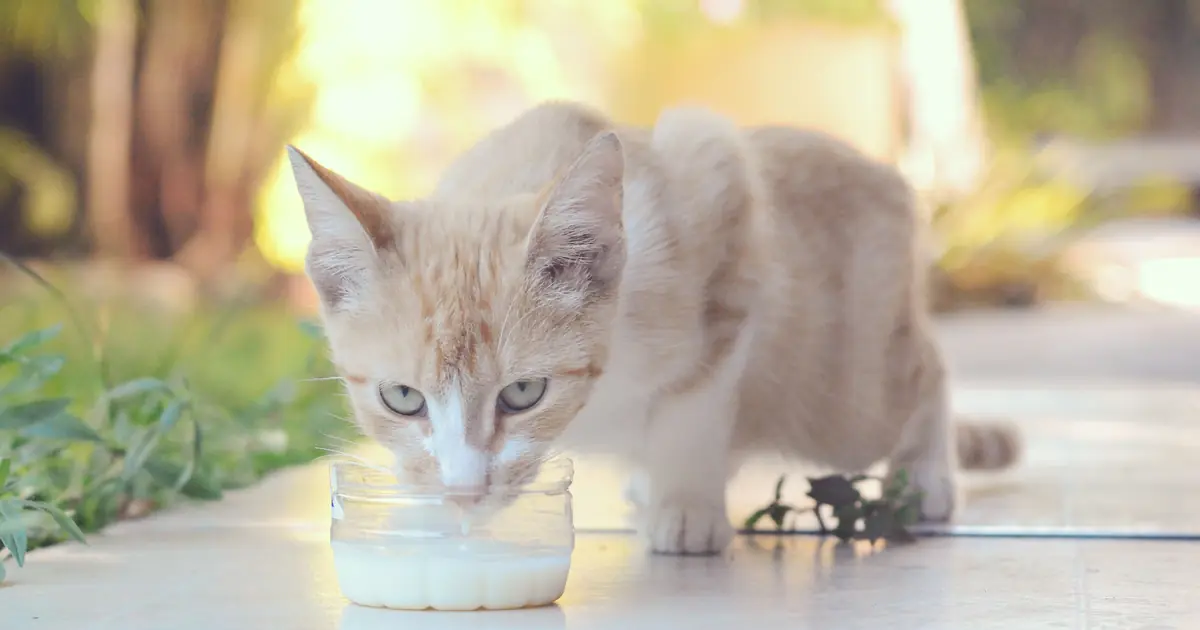
Picture the classic scene: a saucer of milk, a happy cat, a cozy kitchen. It’s on old greeting cards and cartoons everywhere. And it’s completely wrong.
Here’s the thing. That cute image has convinced generations of cat parents that milk is a treat. For most cats, it’s more like a fast pass to the litter box. Let’s clear up the myth, explain the science in plain English, and cover what to do if your cat already lapped some up.
This article is educational and isn’t a substitute for veterinary care. If your cat’s symptoms don’t settle, call your vet.
- Most adult cats are lactose intolerant and cannot properly digest the lactose in cow’s milk.
- Kittens make the enzyme lactase to digest their mother’s milk, but production drops sharply around 6 to 8 weeks of age.
- Undigested lactose ferments in the gut and causes gas, cramping, vomiting, and diarrhea, usually 8 to 12 hours after drinking.
- A small accidental lick of milk usually causes nothing worse than a temporary upset stomach.
- Orphaned kittens need kitten milk replacer (KMR), never plain cow’s milk, which lacks the fat and protein they need.
- Fresh, clean water is the only drink an adult cat needs to stay hydrated.
Can cats drink milk?
No, cats should not drink cow’s milk. Most adult cats are lactose intolerant, meaning they can’t break down the sugar (lactose) found in dairy. When a lactose-intolerant cat drinks milk, the undigested sugar draws water into the intestines and ferments in the colon, which leads to gas, bloating, and diarrhea.
Cats also don’t need milk. They’re obligate carnivores, built to get their nutrition from meat, not dairy. Milk offers no essential nutrient a balanced cat food doesn’t already provide. So even the cats that seem to tolerate a splash are getting empty calories they don’t need.
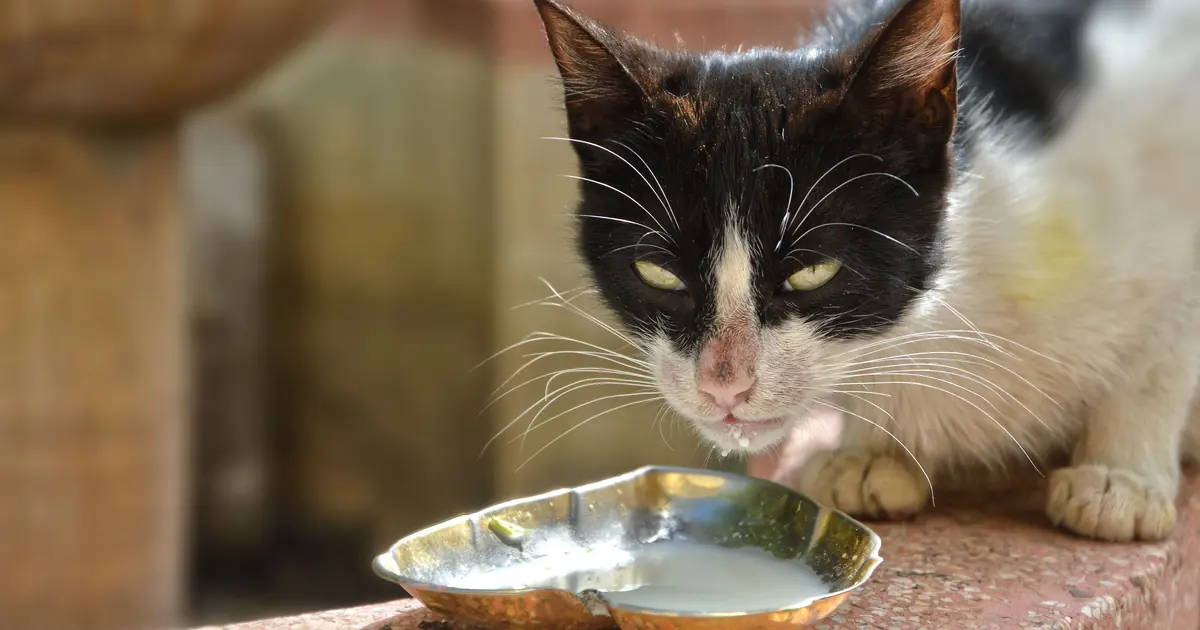
Why do people think cats love milk?
Cats do love milk, and that’s exactly the problem. The milk myth stuck around because cats genuinely enjoy the taste and fat of dairy, so they’ll happily lap it up. Loving something and being able to digest it are two very different things.
Old farm life didn’t help. For centuries, barn cats got the leftover milk from the day’s milking, and people saw cats drinking it and assumed it was good for them. What they didn’t see was the tummy trouble that often followed a few hours later, out in the barn, out of sight. The pretty saucer-of-milk picture got passed down. The stomachaches didn’t.
Why are cats lactose intolerant?
Cats are lactose intolerant because they stop making enough lactase, the enzyme that digests milk sugar, once they’re weaned. Lactase breaks lactose down into simpler sugars the body can absorb. Without enough of it, lactose passes through the gut undigested and causes problems.
Kittens are the exception, and only for a while. A nursing kitten produces plenty of lactase because it needs to digest its mother’s milk. As kittens move onto solid food, usually starting around 6 to 8 weeks of age, lactase production falls off. By adulthood, most cats make very little of it. According to PetMD, this drop after weaning is exactly why grown cats react so poorly to dairy.
What happens if a cat drinks milk?
If a lactose-intolerant cat drinks milk, it usually develops digestive upset within about 8 to 12 hours. The undigested lactose ferments in the intestines, pulls in water, and irritates the gut. The result is a very unhappy stomach.
Common signs after a cat drinks milk include:
- Diarrhea or loose, watery stool
- Vomiting
- Gas and bloating
- Stomach cramps and abdominal discomfort
- Loud gut noises or restlessness
The upside: these signs usually pass on their own once the milk clears their system. If your cat does end up with loose stool, our guide on cat diarrhea and what causes it walks through when it’s fine to watch at home and when it isn’t.
Is a small lick of milk dangerous?
No, a small lick of milk is not dangerous for most cats. Milk isn’t toxic to cats the way chocolate or onions are. If your cat sneaks a few laps from your cereal bowl, the worst you’ll likely see is some gas or a soft stool a few hours later.
Keep an eye on the litter box for a day, keep fresh water available, and don’t offer any more. Call your vet if the diarrhea or vomiting is severe, keeps going past a day or two, or if your cat seems lethargic, especially in a kitten or senior cat, who can dehydrate quickly.
What kinds of milk can cats drink? (comparison)
No milk is a genuinely good drink for a cat, but some are worse than others. Here’s how the common types stack up, from cow’s milk to the plant-based ones people ask about.
| Type of milk | OK for cats? | Why |
|---|---|---|
| Cow’s milk (whole, 2%, skim) | No | High in lactose most adult cats can’t digest; a classic cause of diarrhea and gas. |
| Cat milk / lactose-free “cat milk” | Occasional treat at most | Easier on the gut, but still adds calories and offers nutrients your cat doesn’t need. |
| Lactose-free cow’s milk | Rarely, in tiny amounts | Gentler than regular milk, but still has fats and sugars with no benefit for cats. |
| Goat milk | Small amounts only | Has 20 to 30% less lactose than cow’s milk, but can still upset a sensitive cat. |
| Almond milk | Not recommended | No lactose, but added sugars and flavorings can upset the stomach; keep it away. |
| Soy milk | No | Cats digest plant carbs poorly, and soy can interfere with nutrient absorption. |
| Kitten milk replacer (KMR) | Yes, for kittens only | Formulated to match a mother cat’s milk; the right choice for orphaned kittens. Canned options are not a substitute, so check before offering evaporated milk. |
| Fresh water | Yes, always | The only drink an adult cat actually needs for healthy hydration. |
Lactose-free and “cat milk” products
Lactose-free milk and specialty “cat milk” are easier on a cat’s stomach, but they’re still a treat, not a need. These products remove or reduce the lactose, so they’re less likely to trigger diarrhea. What they don’t do is add anything useful to a cat’s diet.
If you really want to offer a splash as an occasional treat, a lactose-reduced cat milk is the safest pick, and just a teaspoon or two is plenty. Honestly, though? Your cat won’t miss it if you skip it entirely. Save the calories for a bit of cooked chicken.
Goat milk, almond milk, and soy milk
Goat milk is the least problematic of the alternatives, but it isn’t lactose-free. It contains roughly 20 to 30% less lactose than cow’s milk, so a small amount upsets some cats less. Start tiny and watch for loose stool. Almond milk skips the lactose but often carries added sugars, and some flavored versions aren’t cat-friendly, so it’s best left off the menu. Soy milk is a clearer no, since cats struggle to digest plant carbohydrates and soy can interfere with how they absorb certain nutrients.
Curious about other people foods and what’s actually safe to share? Our roundup of what cats can and can’t eat is a handy reference, and if you like sharing dairy specifically, see whether cats can eat cheese before you hand over a bite.
What about kittens and milk?
Kittens should not drink cow’s milk either. While young kittens can digest milk sugar better than adults, cow’s milk is too low in the fat and protein a growing kitten needs, and it can still cause diarrhea, which is dangerous for a tiny animal.
Orphaned or bottle-fed kittens need a kitten milk replacer (KMR), a formula designed to mimic a mother cat’s milk. You’ll find it as a powder or ready-to-use liquid at pet stores and vet clinics. Never substitute cow’s milk, human baby formula, or plant milk for KMR. If you’re caring for a newborn without a mother, call your vet right away for feeding amounts and a schedule, since very young kittens feed every few hours around the clock.
What should cats drink instead of milk?
Cats should drink fresh, clean water, and that’s really the whole list. Water supports kidney function, digestion, and healthy organs, and it’s the only drink an adult cat needs. The ASPCA recommends keeping clean water available at all times and swapping it out daily.
Many cats are naturally light drinkers, which is a holdover from their desert-dwelling ancestors. A few easy tricks help:
- Offer a wide, shallow bowl so their whiskers don’t touch the sides.
- Try a cat water fountain, since a lot of cats prefer moving water.
- Place water bowls away from the food and litter box.
- Feed some wet food, which adds moisture to their diet.
Not sure how much your cat should be drinking? Our guide on how much water a cat needs each day breaks it down by weight and diet. And if you want a hydrating snack instead of milk, a little watermelon in moderation is a safer treat than dairy for most cats.
Cats and milk FAQ
Q: Can cats drink milk at all?
No, cats should not drink cow’s milk. Most adult cats are lactose intolerant, so milk commonly causes gas, vomiting, and diarrhea within about 8 to 12 hours. Cats also gain no nutritional benefit from milk, and fresh water is all they need.
Q: Will a little bit of milk hurt my cat?
A small lick of milk usually won’t seriously harm a healthy cat, since milk isn’t toxic like chocolate or onions. The most likely outcome is temporary gas or a soft stool a few hours later. Watch the litter box, offer water, and don’t give any more.
Q: Why do cats like milk if they can’t digest it?
Cats are drawn to the fat and richness in milk, which tastes appealing to them. Liking the taste has nothing to do with digesting it well. Most adult cats simply lack enough lactase to break down milk sugar, so the milk they crave often upsets their stomach.
Q: Can kittens drink cow’s milk?
No, kittens should not drink cow’s milk. It lacks the fat and protein a growing kitten needs and can cause diarrhea, which is dangerous for such a small animal. Orphaned kittens should be fed kitten milk replacer (KMR), never cow’s milk or plant milk.
Q: Is lactose-free milk safe for cats?
Lactose-free milk and specialty cat milk are gentler on the stomach because the lactose is reduced or removed. They’re still just an occasional treat, not a need, and they add calories with no real benefit. A teaspoon or two at most, and plain water is always the better choice.
Q: Can cats drink goat milk or almond milk?
Goat milk has 20 to 30% less lactose than cow’s milk, so a tiny amount upsets some cats less, but it can still cause loose stool. Almond milk avoids lactose but often has added sugars and flavorings, so it’s best avoided. Neither is necessary, and water is safer.
Q: How long after drinking milk will a cat get sick?
Signs of lactose intolerance usually appear within about 8 to 12 hours of drinking milk. You may notice diarrhea, vomiting, gas, or a bloated, uncomfortable belly. Symptoms typically clear on their own once the milk works through the system, but call your vet if they’re severe or last more than a day.
Q: My cat drank milk and has diarrhea. What should I do?
Remove any remaining milk, keep fresh water available, and let the upset run its course over a day or so. Most cases resolve on their own. Contact your vet if the diarrhea is severe or bloody, lasts more than 48 hours, or your cat becomes lethargic, and act sooner for kittens and senior cats.
Bottom line: that saucer of milk is a myth worth retiring. Most cats can’t digest it, none of them need it, and plenty pay for it with a rough night. Keep the water bowl fresh, save the dairy for your own coffee, and your cat’s stomach will thank you.

Hello and welcome to The Ideal Cat!
We are some passionate cat owners from different professions. We love our cats and have a lot of experience in how to care for our pets. We are incredibly excited to share our knowledge, experience, and research with you. So you can take good care of your loving cat. We will answer most of the common questions about owning cats, taking care of them, etc. If you have any question contact with us. Thanks for visiting! Enjoy the content.
