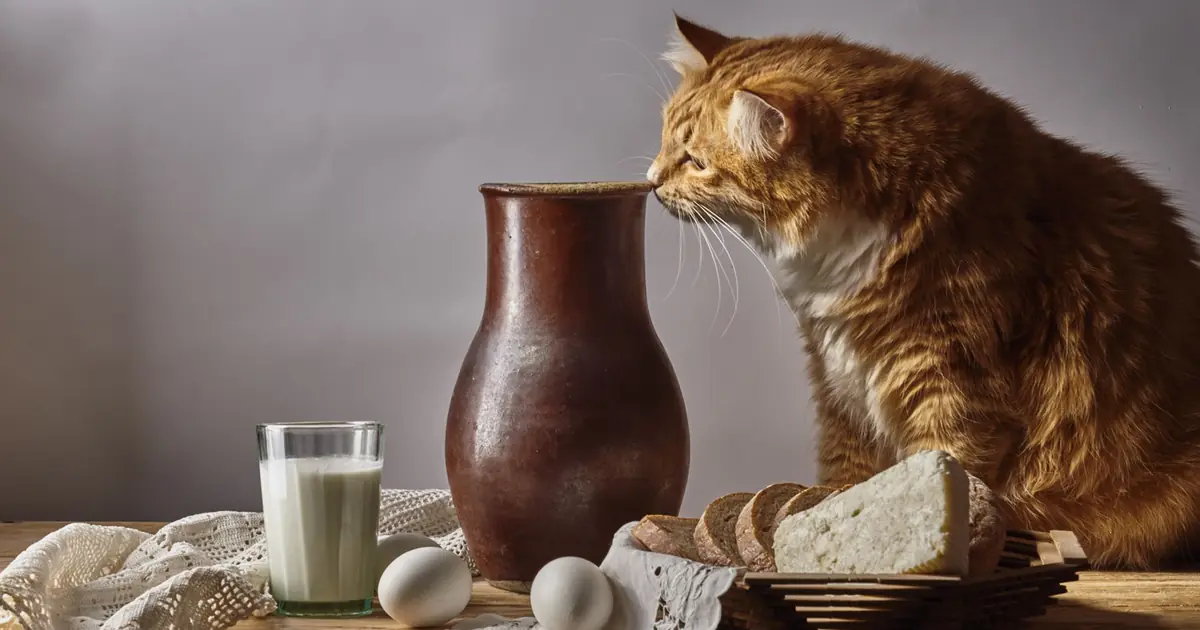
Picture this. You’re stirring evaporated milk into your coffee, and there’s your cat, front paws on the counter, staring like you’ve been holding out on them. It smells rich and creamy. Surely a little splash won’t hurt? So you wonder: can cats have evaporated milk, or is this another cat-and-milk myth that needs to die?
Here’s the honest answer. Evaporated milk is a bad idea for cats. It’s not toxic, so a stolen lick won’t send you racing to the vet. But it’s concentrated cow’s milk, which means concentrated tummy trouble. That cute saucer-of-milk image we grew up with has caused a lot of upset stomachs.
- Evaporated milk is cow’s milk with about 60% of the water boiled off, so its lactose and fat are roughly twice as concentrated as regular milk.
- Most adult cats are lactose intolerant because they stop making the enzyme lactase after kittenhood, so concentrated milk hits harder.
- Evaporated milk is not toxic to cats, but it commonly triggers diarrhea, gas, vomiting, and stomach cramps within a few hours.
- Evaporated milk is not a safe kitten formula. Orphaned kittens need a proper kitten milk replacer (KMR), never canned milk.
- Better treats include plain water, a splash of cat-specific lactose-free “cat milk,” or a small piece of cooked meat.
Can cats have evaporated milk safely?
No, cats should not have evaporated milk as a regular treat. Evaporated milk is shelf-stable cow’s milk that has had roughly 60% of its water removed by heating. Taking the water out doesn’t take the lactose out. It just packs the same milk sugar and fat into a smaller amount of liquid, so a single teaspoon delivers a bigger lactose hit than a teaspoon of ordinary milk.
The good news is that evaporated milk isn’t poisonous. A healthy adult cat who licks a few drops off the floor will almost certainly be fine. The problem is a real serving: bloating, gurgling, gas, and often diarrhea. If you already have a cat with a sensitive stomach, this is not the treat to reach for. Plain water beats milk every single time.
Why is evaporated milk worse than regular milk for cats?

Evaporated milk is worse than regular milk for cats because it’s more concentrated. During processing, about 60% of the water is boiled away, which roughly doubles the lactose, fat, and calories per spoonful. Regular cow’s milk already contains around 4.7% lactose, and most cats struggle with that. Evaporated milk simply hands them more of the exact thing their gut can’t handle.
Think of it like a shot of espresso versus a mug of drip coffee. Same source, much more punch in a smaller sip. So the “it’s just a little bit” logic backfires: a little evaporated milk carries the lactose load of a much larger serving of regular milk. The extra fat matters too, since rich foods can trigger loose stool on their own and pile on empty calories.
Are cats lactose intolerant?
Yes, most adult cats are lactose intolerant. Kittens are born making an enzyme called lactase, which breaks down the lactose in their mother’s milk. After weaning, most cats produce far less lactase, so their bodies lose the tools to digest milk sugar. That’s the whole reason dairy causes trouble.
When a lactose-intolerant cat drinks milk, the undigested lactose ferments in the gut and pulls water into the intestines. The result is gas, cramping, and often diarrhea and loose stool, usually within about 8 to 12 hours. Some cats tolerate a tiny taste, some don’t tolerate any. Since evaporated milk concentrates the lactose, it’s the version most likely to push a borderline cat over the edge.
| Milk type | Lactose per serving | Safe for cats? |
|---|---|---|
| Regular cow’s milk | Moderate (about 4.7% lactose) | Not recommended; often causes upset |
| Evaporated milk | High (concentrated, water removed) | No; more lactose and fat per spoonful |
| Sweetened condensed milk | High lactose plus added sugar | No; sugar makes it worse |
| Cat-specific lactose-free “cat milk” | Very low (lactose reduced) | Yes, as an occasional treat |
| Plain water | None | Yes, always the best choice |
Can kittens drink evaporated milk instead of formula?
No, kittens should never drink evaporated milk instead of proper formula. This is one of the most stubborn old myths out there, and it’s a dangerous one. Orphaned kittens need a kitten milk replacer (KMR), which is a commercial formula designed to match a mother cat’s milk. Evaporated milk doesn’t come close.
A mother cat’s milk is very high in protein and fat and low in lactose, which is backwards from cow’s milk. Cow’s milk, including the evaporated kind, is too high in lactose and too low in the protein and fat a growing kitten needs. Feeding it can cause diarrhea, dehydration, and poor growth in babies who can’t afford any of that. Sweetened condensed milk is even worse, thanks to the added sugar.
If you’re hand-raising a kitten, pick up KMR from a pet store or your vet, and ask about feeding amounts and schedule. In a middle-of-the-night emergency with no KMR on hand, call an emergency vet rather than reaching for the can.
What happens if a cat drinks evaporated milk?
If a cat drinks a small amount of evaporated milk, the most likely outcome is nothing serious, maybe some gas or a soft stool over the next day. Evaporated milk isn’t toxic, so a quick lick from a spill rarely causes real harm in a healthy adult cat. Keep an eye on the litter box and offer plenty of fresh water.
If a cat drinks a larger amount, expect a rougher ride. Common signs show up within a few hours to about half a day:
- Diarrhea or very soft stool
- Vomiting
- Bloating, gurgling, or obvious gas
- Abdominal discomfort or restlessness
Most cases clear up on their own once the milk works through. But call your vet if the diarrhea or vomiting is severe, lasts more than a day, includes blood, or if your cat seems weak, won’t drink, or is a kitten or senior. Those groups dehydrate fast, and dehydration is the real risk with any prolonged tummy upset.
What can cats drink instead of evaporated milk?
The best thing a cat can drink instead of evaporated milk is plain, fresh water. Cats aren’t big drinkers, so clean water in a wide bowl (or a pet fountain, since many cats prefer moving water) does more for their health than any dairy could. A balanced diet of quality cat food covers everything else, no milk required.
Want the treat experience? Reach for cat-specific lactose-free “cat milk,” sold at most pet stores. It’s cow’s milk with the lactose broken down, made for feline stomachs, and it’s fine as an occasional small treat. A lick of tuna water or a few bites of plain cooked chicken usually thrills a cat more than milk anyway. For everyday snacking, look at proper cat treat options and make sure the foundation is a complete, balanced diet.
This article is educational and isn’t a substitute for veterinary advice. If your cat has ongoing vomiting, diarrhea, or seems unwell after any food, call your veterinarian.
Frequently asked questions
Q: Is evaporated milk toxic to cats?
No, evaporated milk is not toxic to cats. A small lick won’t poison a healthy adult cat. The concern is digestive, not poisonous: the concentrated lactose and fat commonly cause diarrhea, gas, and stomach upset rather than an emergency.
Q: Can cats drink condensed milk?
No, cats should not drink sweetened condensed milk. It carries the same concentrated lactose problem as evaporated milk, plus a heavy dose of added sugar. That sugar offers zero nutritional value for cats and only raises the odds of stomach upset and unwanted calories.
Q: Can I use evaporated milk to feed an orphaned kitten?
No, never feed evaporated milk to an orphaned kitten. Kittens need a commercial kitten milk replacer (KMR) that matches the high protein and fat of a mother cat’s milk. Evaporated milk is too high in lactose and can cause diarrhea, dehydration, and poor growth.
Q: How much evaporated milk is safe for a cat?
There’s no truly safe serving of evaporated milk for cats, so it’s best to give none. A stray lick from a spill usually passes without trouble, but anything beyond a taste risks diarrhea and gas. For a milky treat, use lactose-free cat milk instead.
Q: My cat drank evaporated milk. What should I do?
If your cat drank a small amount, offer fresh water and watch for diarrhea or vomiting over the next 12 to 24 hours. Most cats recover on their own. Call your vet if symptoms are severe, last more than a day, include blood, or if a kitten or senior is involved.
Q: Why do cats love milk if it upsets their stomach?
Cats love milk for its fat and protein, not because it’s good for them. The rich, creamy smell appeals to a cat’s carnivore instincts. That attraction has nothing to do with whether their gut can digest the lactose, which most adult cats can’t.
Q: Is lactose-free “cat milk” safe?
Yes, cat-specific lactose-free milk is safe as an occasional treat. These products have the lactose broken down so cats can digest them without the usual upset. Keep servings small and treat it as a snack, not a daily drink.
Q: Can kittens have any cow’s milk at all?
Kittens should not drink cow’s milk of any kind, including evaporated milk. Their needs are very different from what cow’s milk provides. Nursing kittens should get their mother’s milk or a proper kitten milk replacer, and weaned kittens should eat kitten food.
Bottom line: can cats have evaporated milk? They can lick a little without harm, but they really shouldn’t drink it. Concentrated milk means concentrated tummy trouble, with no upside for your cat. For more on safe feeding, see the ASPCA’s cat nutrition tips, PetMD’s feline nutrition guides, and the Cornell Feline Health Center. Keep the can for your coffee, and keep the water bowl full for your cat.

Hello and welcome to The Ideal Cat!
We are some passionate cat owners from different professions. We love our cats and have a lot of experience in how to care for our pets. We are incredibly excited to share our knowledge, experience, and research with you. So you can take good care of your loving cat. We will answer most of the common questions about owning cats, taking care of them, etc. If you have any question contact with us. Thanks for visiting! Enjoy the content.
