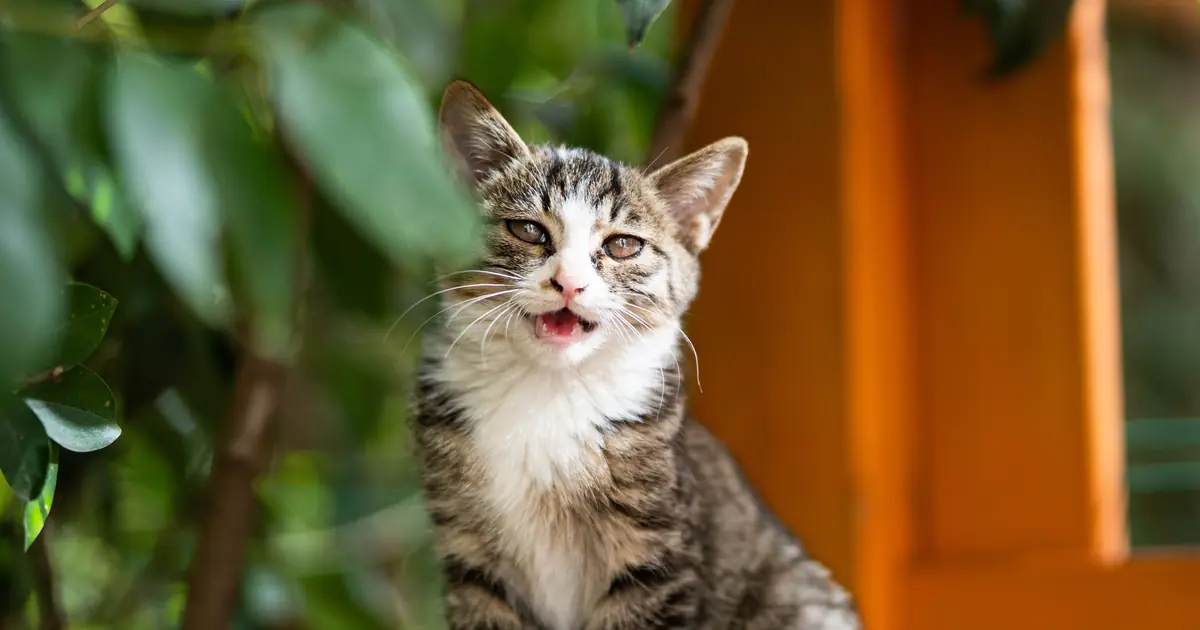
Picture this. You feel a sneeze building, you let one rip, and before the tissue box even leaves the table, your cat pipes up with a loud “mrrp?” from across the room. Every single time. Like clockwork. And you find yourself half-laughing, half-wondering: does my cat think I said something?
So why do cats meow when you sneeze? The short version is that your cat is reacting to the sudden noise, not to you. A sneeze is exactly the kind of sharp, unexpected sound a cat is wired to notice, and a little vocal reply is one of the ways they process it. Sometimes it is a startle. Sometimes it is curiosity. And sometimes, honestly, your cat has just learned that this weird human noise gets a fun reaction out of you.
- Cats meow at your sneeze because it is a sudden, loud, sharp sound, not because they understand what a sneeze is.
- The four most common reasons are a startle reflex, curiosity, a reflexive vocal “answer,” and learned attention-seeking.
- Cats hear far better than we do, detecting sounds up to roughly 64,000 Hz versus about 20,000 Hz for humans, so sneezes register as a big event.
- Meowing at a sneeze is harmless and says nothing about your health; your cat is not diagnosing you.
- Only extreme, repeated fear reactions to everyday sounds are worth mentioning to your vet.
Why do cats meow when you sneeze?
Cats meow when you sneeze because a sneeze is a sudden, loud, high-energy sound, and your cat’s ears are built to react to exactly that. A quick meow, chirp, or trill is just your cat acknowledging the noise. It is a reflex and a comment rolled into one, not a sign that anything is wrong.
Here is the thing about feline hearing. Cats can detect frequencies up to around 64,000 Hz, while people top out near 20,000 Hz. Those ears evolved to catch the faint rustle of a mouse behind a wall. So a full-volume human sneeze lands like a small explosion in their world. A vocal reply is a totally normal way to process something that grabs their attention. If you want to go deeper on how cats read and respond to the sounds around them, our guide to reading your cat’s body language pairs nicely with this.
What are the most common reasons cats react to a sneeze?
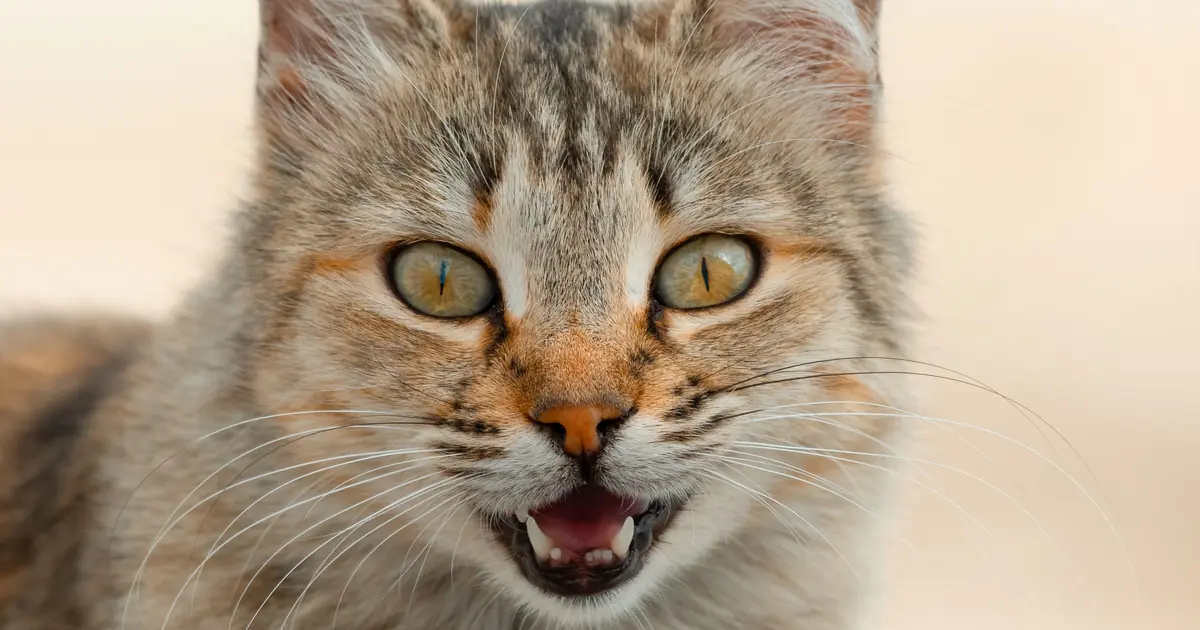
Cats react to a sneeze for a handful of harmless reasons, and most cats are doing one or two of them at once. The four big ones are a startle reflex, curiosity, a reflexive vocal answer, and learned behavior. None of them are anything to fret over.
- Startle reflex. A sneeze is abrupt and loud, and cats have a genuine acoustic startle response to sudden noise. A quick meow is your cat going, “Whoa, what was that?”
- Curiosity. Cats are nosy little scientists. An odd, one-off human noise begs to be investigated, and a chirp or meow is often how they poke at something new.
- A reflexive vocal answer. Some cats simply “talk back” to interesting sounds. Your sneeze is a cue, and their meow is the reply, the same way they might answer a doorbell or a bird chirp.
- Learned attention behavior. This is the sneaky one. If you laugh, look over, or say “bless you” after your cat meows, you have rewarded the meow. Cats repeat what works. Do that a few dozen times and you have trained a little “bless you” machine without meaning to.
That last reason is why so many cats seem to do it on cue. Your reaction is the reward, and cats are shameless about repeating anything that earns your attention. The same wiring drives a lot of other habits, like the way some cats treat you as their favorite person and follow you from room to room.
Why do some cats meow at sneezes and others ignore them?
Some cats meow at every sneeze and others never flinch because personality, upbringing, and past experiences all shape how vocal a cat is. Chatty breeds and confident, people-focused cats are far more likely to answer a sneeze than shy or quiet ones.
Talkative breeds like Siamese, Oriental Shorthairs, and Tonkinese narrate a lot of daily life, so a sneeze is just one more thing to comment on. A mellow or naturally quiet cat may glance up and go right back to sleep. Kittens raised around lots of household noise often shrug it off, while a cat that startles easily may react more. So if your cat stays silent through your worst allergy season, that is completely normal too. It says nothing bad about your bond.
Does my cat meowing when I sneeze mean anything about my health?
No. A cat meowing when you sneeze does not mean anything about your health, and your cat is not sensing an illness or a problem. Cats are reacting to the sound of the sneeze in the moment, not to your immune system or how you feel.
Cats are genuinely tuned in to their humans, and many do check in when you act differently. But a single meow at a sneeze is a sound-triggered reflex, not a diagnosis. Your cat cannot tell a stray sneeze from an allergy flare from a cold, and it does not try to. That popular idea that your cat is “worried about you” is sweet, and cats do form strong attachments, but the meow itself is about the noise. This same attentiveness shows up in bonding habits like head-butting you for attention, which is affection, not medical concern.
Is my cat really saying “bless you”?
Your cat is not literally saying “bless you,” but the timing is so perfect that it is easy to see why the joke sticks. What is really happening is a fast reaction to the sneeze sound, and, over time, a habit your own reaction has reinforced.
And you know what? Enjoy the bit. The “bless you cat” is one of the small daily joys of living with a cat, and there is no reason to overthink it. Some people even sneeze on purpose just to hear the reply (no judgment here). If you love these quirky little vocal moments, you might also get a kick out of the strange chattering sound cats make at birds, which is another window into how expressive cats really are. According to International Cat Care, meowing is largely a communication tool cats developed to interact with people, which is exactly why your sneeze earns a reply.
When should a cat’s reaction to sounds actually concern you?
A cat meowing at your sneeze is never a problem on its own. What is worth noticing is when a cat shows extreme, repeated fear to everyday sounds: bolting and hiding for a long time, trembling, hair standing up, or losing bladder control at ordinary household noises.
A quick meow, chirp, or a brief dash out of the room is normal and harmless. Genuine sound phobia looks different and lasts longer. If your cat panics at routine noises, or if a normally calm cat suddenly becomes jumpy and stays that way, that shift is worth a chat with your vet, since sudden behavior changes can occasionally point to pain, anxiety, or, rarely, hearing issues. This article is educational and is not a substitute for veterinary advice. For more on typical versus worrying cat behavior, both Cornell Feline Health Center and the ASPCA are reliable, vet-backed places to start.
Sneeze reactions at a glance
| Reaction | What it usually means | Worth worrying about? |
|---|---|---|
| A single meow, chirp, or trill | Startle, curiosity, or a learned “answer” to the sound | No, totally normal |
| Meowing every single time | A habit your reaction has reinforced over time | No, it is a cute quirk |
| A quick dash out of the room | A brief startle reflex, then back to normal | No, if it passes fast |
| Prolonged hiding, trembling, or panic at everyday sounds | Possible noise sensitivity, anxiety, or pain | Yes, mention it to your vet |
Frequently asked questions
Q: Why does my cat meow every time I sneeze?
Your cat meows every time you sneeze because the behavior has become a habit reinforced by your reaction. If you laugh, look over, or say something after each meow, you reward it, and cats repeat what earns attention. The consistent timing is learned, not a sign of concern.
Q: Do cats think a sneeze is a hiss?
Some cats may briefly react as if a sneeze resembles a hiss, since both are sharp, breathy sounds. This can trigger a startled or questioning meow. Most cats quickly realize it is just you and move on, so it is nothing to worry about.
Q: Is my cat worried about me when it meows at my sneeze?
No, your cat is reacting to the sudden sound of the sneeze, not worrying about your health. Cats cannot detect illness from a sneeze. They are attentive to their humans, but a meow at a sneeze is a sound-triggered reflex, not a health check.
Q: Why does my cat run away when I sneeze?
Cats run away from a sneeze because the sudden, loud noise triggers a startle reflex. Cats hear far better than people, so a sneeze feels much louder to them. A quick dash followed by a return to normal within a minute or two is completely healthy behavior.
Q: Are certain cat breeds more likely to meow at sneezes?
Yes, vocal breeds like Siamese, Oriental Shorthairs, and Tonkinese are more likely to answer a sneeze because they are naturally talkative. Quiet or shy cats often ignore sneezes entirely. Both reactions are normal and simply reflect your cat’s personality and temperament.
Q: Can I train my cat to meow when I sneeze?
In a sense, you already might be. Cats learn through reward, so if you react warmly every time your cat meows at a sneeze, you reinforce the habit. Consistent attention after the meow is what turns a one-off reaction into a reliable “bless you” response.
Q: Should I be concerned if my cat reacts strongly to sounds?
A quick meow or brief dash is harmless. Be concerned only if your cat shows extreme, lasting fear at everyday sounds, such as prolonged hiding, trembling, or panic. Sudden, ongoing sound sensitivity can point to anxiety or pain, so mention it to your vet.
Q: Why does my cat only sometimes meow when I sneeze?
Cats meow at sneezes inconsistently because their reaction depends on mood, how deeply they are resting, and how loud the sneeze is. A relaxed, half-asleep cat may not bother, while an alert cat is more likely to respond. The variation is completely normal.

Hello and welcome to The Ideal Cat!
We are some passionate cat owners from different professions. We love our cats and have a lot of experience in how to care for our pets. We are incredibly excited to share our knowledge, experience, and research with you. So you can take good care of your loving cat. We will answer most of the common questions about owning cats, taking care of them, etc. If you have any question contact with us. Thanks for visiting! Enjoy the content.
