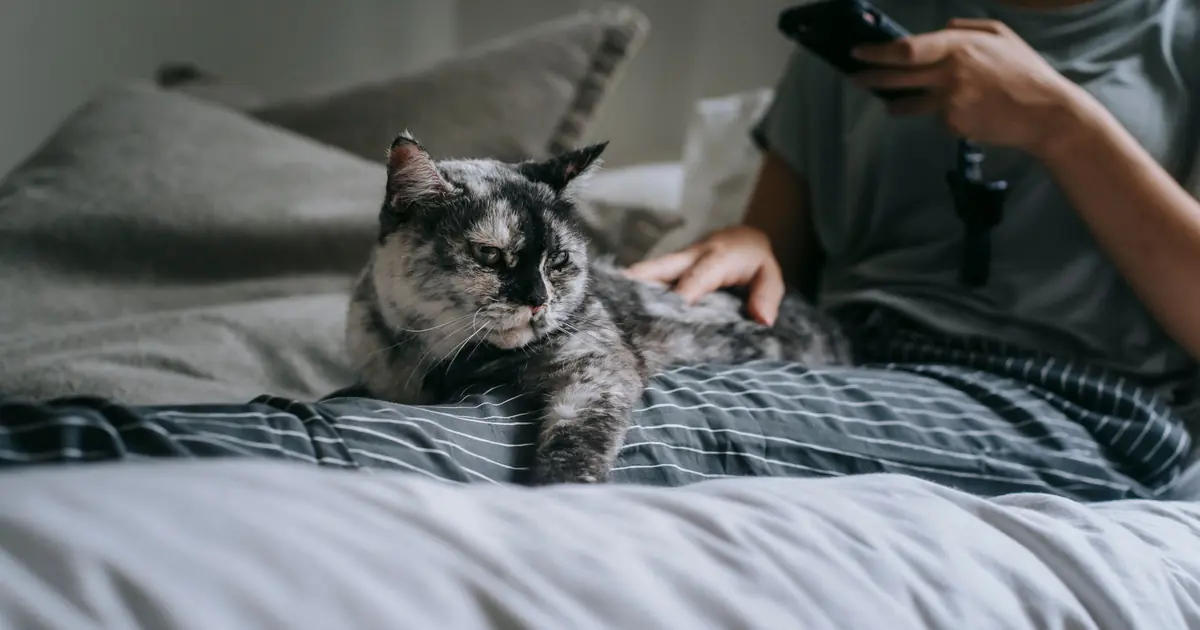
If your cat trails you from the kitchen to the couch to the bathroom door, you’re not imagining it, and you’re definitely not alone. So why does your cat follow you everywhere? Most of the time it’s a sweet mix of love, hunger, habit, and curiosity. But sometimes shadowing is your cat’s way of saying “I don’t feel safe” or even “I don’t feel well.” Let’s break down all of it.
- Cats most often follow their humans because of affection, social bonding, and the fact that their favorite person controls food, warmth, and attention.
- Healthy following looks relaxed and comes and goes, while anxiety-driven shadowing involves clinginess, crying when you leave, and visible distress.
- Kittens follow people they imprint on between roughly 2 and 9 weeks of age, treating their human like a parent.
- A confident cat that suddenly becomes clingy may be unwell, so sudden behavior changes deserve a vet visit.
- Following you into the bathroom is usually routine, curiosity, and wanting your undivided attention, not a problem.
Why does my cat follow me everywhere?
Cats follow their owners everywhere because you are the center of their world: their bonded companion, their food source, and the anchor of their daily routine. Following is mostly a sign of trust and affection. Cats are more social than their aloof reputation suggests, and many genuinely want to be near their favorite human. Below are the nine most common reasons, from the heartwarming to the ones worth watching.
| Reason | What it looks like |
|---|---|
| Affection and bonding | Relaxed body, purring, slow blinks, settling near you |
| You are the food source | Following before mealtimes, leading you to the bowl, meowing |
| Routine and learned habit | Same path every morning, following your daily pattern |
| Curiosity | Investigating where you go, especially new or closed-off rooms |
| Boredom | Following for stimulation, pawing for play or attention |
| Anxiety or insecurity | Crying when you leave, frantic clinging, can’t settle alone |
| Kitten imprinting | A young kitten treating you like a parent |
| Seeking comfort when unwell | A normally independent cat suddenly glued to you |
| Warmth and company | Following to sunny spots, your lap, or a warm bathroom |
1. Affection and a strong bond
The happiest reason a cat follows you everywhere is simple love. Cats form real social bonds with their humans and often want to be close to the person they trust most. Research from Oregon State University found that most cats form a secure attachment to their owners, much like babies do with parents. If your cat follows you with a loose, relaxed body, purrs, and settles down once you stop moving, that’s a contented companion choosing your company.
2. You are the food source
Cats quickly learn that their favorite human is also their personal chef. Following you to the kitchen, walking in front of you, and leading you toward an empty bowl is your cat lobbying for breakfast. This is especially common around dawn and dusk, when cats are naturally most active and hungry. If the following spikes right before mealtimes, food is almost certainly the motive.
3. Routine and learned patterns
Cats are creatures of habit, and they memorize yours. Your cat knows you get up, head to the bathroom, then go downstairs to fill the bowl. So they follow that whole sequence because it reliably ends in food, attention, or play. This learned routine explains why following often happens at the exact same times and along the exact same path every day.
4. Curiosity
Cats are natural investigators, and you are the most interesting thing in the house. When you open a closet, head into a room they rarely enter, or start an activity that makes noise, your cat tags along to see what’s happening. Curiosity-driven following tends to be casual and stops once the mystery is solved.
5. Boredom
A bored cat will often follow you simply because you’re the best entertainment available. Indoor cats without enough enrichment can shadow their owners hoping for play, petting, or any change of scene. If your cat follows you and then paws at you, brings a toy, or seems restless, boredom is likely the driver. More playtime and puzzle feeders usually help.
6. Anxiety or insecurity
Sometimes following crosses from happy companionship into anxious shadowing. Cats with separation anxiety follow their owners closely because they feel unsafe when alone, not just because they enjoy your company. Signs include crying or pacing as you get ready to leave, refusing to let you out of sight, over-grooming, or accidents outside the litter box. This is insecure attachment, and it deserves gentle attention rather than scolding.
7. Kitten imprinting
Kittens imprint on the people who care for them during their early socialization window, roughly 2 to 9 weeks of age. A kitten that follows you everywhere is treating you like a parent, looking to you for safety, warmth, and food. This is completely normal and often fades a little as the kitten grows more confident and independent.
8. Comfort-seeking when unwell, especially in senior cats
A cat that has always been independent and suddenly starts following you everywhere may be telling you something is wrong. When cats feel vulnerable or unwell, they often seek the comfort of their trusted person. In senior cats, sudden clinginess can be linked to conditions like hyperthyroidism, arthritis, failing vision or hearing, or feline cognitive dysfunction. Because the change in behavior looks like extra affection, it’s easy to miss. Any sudden shift in a previously aloof cat is worth a vet check.
9. Warmth and company
Cats are heat-seekers, and you generate warmth, a lap, and movement toward cozy spots. Many cats follow their humans to sunny windows, warm laundry, and yes, the bathroom, where tile stays cool in summer and the room warms quickly with a shower. Often the “follow” is really about the destination as much as the person.
Healthy companionship vs anxiety-driven shadowing: how to tell the difference
The key question isn’t whether your cat follows you, it’s how your cat follows you. Healthy companionship looks relaxed and flexible, while anxiety-driven shadowing looks tense and desperate. Use the comparison below to gauge where your cat falls.
| Healthy companionship | Anxiety-driven shadowing |
|---|---|
| Relaxed body, tail up, slow blinks | Tense body, dilated pupils, restlessness |
| Follows sometimes, settles easily alone | Follows constantly, panics when alone |
| Quiet or soft chirps and meows | Loud crying when you leave or as you get ready to go |
| Eats, sleeps, and plays normally | Over-grooming, litter box accidents, appetite changes |
| Comes and goes on their own terms | Cannot relax unless you are in sight |
If most of your cat’s behavior lands in the left column, relax and enjoy your little shadow. If you’re seeing signs from the right column, it’s worth addressing the underlying stress, and ruling out a health issue with your vet.
Why does my cat follow me to the bathroom specifically?
Cats follow you to the bathroom mostly out of routine, curiosity, and a desire for your undivided attention. The bathroom is one of the few places where you sit still and can’t go anywhere, so it’s prime cuddle and chat time from your cat’s point of view. Some cats also like the running water, the cool tile floor, or the warmth after a shower. A few may be guarding their territory, which to them includes you. None of this is cause for concern. It’s just your cat being a cat.
How to gently reduce excessive following
If your cat’s following has tipped into anxious or exhausting, you can ease it without pushing your cat away. The goal is to help your cat feel secure on their own, not to reject them.
- Add enrichment. Provide puzzle feeders, window perches, and rotating toys so your cat has reasons to explore besides you.
- Schedule real play. Two or three short interactive play sessions a day burn energy and reduce boredom-driven following.
- Reward calm independence. Quietly treat or praise your cat when they relax in their own spot, instead of only giving attention when they follow.
- Keep departures low-key. Avoid dramatic goodbyes and hellos so leaving feels less like a big event.
- Create cozy safe zones. A warm bed, a hideaway, or a sunny perch gives your cat an appealing place to be that isn’t your heels.
- Rule out health issues. If following is new or intense, see your vet before assuming it’s purely behavioral.
When to see a vet about your cat following you
Following you around is usually harmless, but a sudden change in behavior is one of the clearest signals that something may be wrong. Cats hide illness well, so increased clinginess can be an early clue. Please remember this article is educational and not a substitute for veterinary care.
Contact your veterinarian if the following appears alongside any of these red flags:
- A normally independent cat suddenly becomes clingy with no clear reason
- Changes in appetite, thirst, or weight
- Excessive vocalizing, especially yowling at night in older cats
- Litter box accidents or changes in bathroom habits
- Over-grooming, hiding, or signs of pain like reluctance to jump
- Disorientation or confusion in a senior cat
For trusted background reading on feline behavior and health, the Cornell Feline Health Center and the ASPCA are reliable starting points.
Frequently asked questions
Q: Is it normal for my cat to follow me everywhere?
Yes, it’s completely normal for a cat to follow you everywhere. Most following comes from affection, routine, hunger, and curiosity, and it’s a sign your cat trusts you. It only becomes a concern if your cat seems anxious, can’t be left alone, or the clinginess starts suddenly.
Q: Does my cat following me mean it loves me?
Following you is often a genuine sign of love and a secure bond. Cats form attachments to their owners and many choose to stay close to their favorite person. Relaxed body language, purring, and slow blinks while following are strong signs of affection.
Q: Why does my cat follow me but not want to be petted?
Many cats want proximity and company without the physical contact of petting. Following you satisfies their social and security needs, while they may still find handling overstimulating. This is normal personality variation and not a sign that your cat dislikes you.
Q: Why has my cat suddenly started following me everywhere?
A sudden increase in following can mean a change in routine, stress in the home, or an underlying health issue. In senior cats especially, new clinginess can signal conditions like hyperthyroidism or cognitive decline. Any sudden behavior change is worth a veterinary check.
Q: How do I know if my cat has separation anxiety?
Signs of cat separation anxiety include crying or pacing as you get ready to leave, distress when alone, over-grooming, and litter box accidents. Unlike happy following, anxious shadowing involves visible tension and an inability to settle without you. A vet or behaviorist can help confirm it.
Q: Why does my kitten follow me everywhere?
Kittens follow the people they imprint on during their early socialization window, roughly 2 to 9 weeks old, treating their human like a parent. This following provides safety, warmth, and food. It’s normal and often eases as the kitten grows more confident.
Q: Should I stop my cat from following me?
You don’t need to stop healthy, relaxed following, since it’s a sign of a good bond. If the behavior is anxious or excessive, focus on building your cat’s confidence with enrichment, play, and calm independence rather than rejecting them. See a vet first if the change was sudden.
So, why does your cat follow you everywhere? Almost always because you’re their favorite human, their meal ticket, and the center of a routine they love. Enjoy your devoted little shadow, and just keep an eye out for sudden changes, since a confident cat that turns clingy overnight may be quietly asking for help.

Hello and welcome to The Ideal Cat!
We are some passionate cat owners from different professions. We love our cats and have a lot of experience in how to care for our pets. We are incredibly excited to share our knowledge, experience, and research with you. So you can take good care of your loving cat. We will answer most of the common questions about owning cats, taking care of them, etc. If you have any question contact with us. Thanks for visiting! Enjoy the content.
