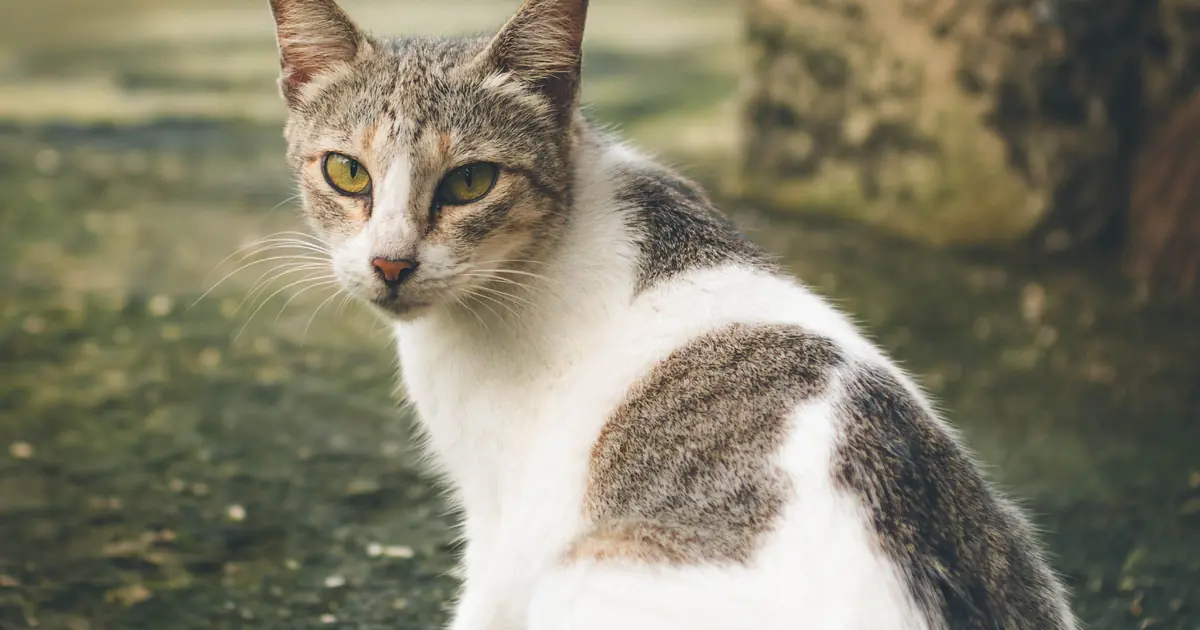
One day your kitten fits in your palm. A few months later, they’re sprawled across half the couch like they pay rent. If you’ve been wondering when is a cat fully grown, you’re not alone, and the honest answer has a few layers to it.
- The average domestic cat reaches its full adult size by around 12 months, then fills out in weight until 18 months to 2 years.
- Female cats usually finish growing by 10 to 12 months, while male cats often keep growing until closer to 18 months.
- Large breeds such as the Maine Coon and Ragdoll take 3 to 5 years to reach their full size and weight.
- A cat reaches sexual maturity at 4 to 9 months, long before it is physically fully grown.
- Social and behavioral maturity (true “adult” personality) lands later, usually between 2 and 4 years of age.
Here’s the thing: “fully grown” can mean three different things, and that’s why the answers online seem to disagree. Below we break down physical size, sexual maturity, and behavioral maturity, plus a stage-by-stage chart and breed-specific timelines. This article is educational, so check with your veterinarian about your own cat’s growth.
When Is a Cat Fully Grown in Size?
Most cats are fully grown in size by about 12 months of age, reaching their adult height and body length. After that, many cats keep adding muscle and weight until they’re 18 months to 2 years old. So your cat can look “full size” at one year and still be filling out for another year.
Growth happens fastest in the first six months. Kittens pack on most of their length and bone early, then growth slows down and tapers off as they near their first birthday. Cat growth is driven by growth plates, which are soft zones of cartilage at the ends of the long bones. When those plates close and harden into solid bone, the skeleton stops getting bigger.
A few things shift the timeline:
- Sex: Female cats often finish growing by 10 to 12 months. Male cats tend to be bigger and grow more slowly but for longer, often until around 18 months.
- Breed: Small breeds like the Singapura may stop by 9 months, while giants like the Maine Coon grow for years.
- Spay or neuter timing: Cats fixed before puberty can keep growing slightly longer, because the surgery delays growth plate closure. They often end up a touch taller and leggier.
- Nutrition: Good kitten food supports healthy growth. Poor early nutrition can stunt size, while overfeeding adds fat, not frame.
For the average house cat, picture full height around 12 months and full weight closer to 18 to 24 months.
What Are the Cat Growth Stages From Kitten to Adult?
Cats move through clear growth stages from newborn to fully grown adult, with the biggest physical changes happening in the first year. The chart below shows what’s happening at each stage and roughly how much an average domestic cat weighs along the way. Remember that weights vary by breed and build, so treat them as a guide, not a rule.
| Stage | Age | What’s happening | Typical weight (average breed) |
|---|---|---|---|
| Newborn | 0 to 2 weeks | Eyes closed, fully dependent, sleeping and nursing | 3 to 5 oz at birth |
| Young kitten | 2 weeks to 4 months | Fastest growth, weaning, baby teeth come in, play begins | 1 to 4 lb |
| Older kitten | 4 to 6 months | Adult teeth replace baby teeth; growth plates begin closing | 4 to 6 lb |
| Adolescent | 6 to 12 months | Sexual maturity hits; growth slows; cat nears adult height | 6 to 9 lb |
| Young adult | 1 to 2 years | Full height reached; muscle and weight still filling out | 7 to 12 lb |
| Mature adult | 3 to 6 years | Fully grown; settled adult body and personality | 8 to 12 lb |
By the adolescent stage, your kitten already looks a lot like the cat they’ll become. The young-adult stage is mostly about adding the last bit of bulk, not height.
At What Age Do Large Cat Breeds Stop Growing?
Large cat breeds stop growing much later than average cats, often taking 3 to 5 years to reach their full size and weight. Breeds like the Maine Coon, Ragdoll, and Norwegian Forest Cat are slow developers, so a “kitten” of these breeds can be physically immature well into their third or fourth year.
The table below shows full-grown timelines and adult weight ranges for several popular breeds, from the giants down to the smaller ones.
| Breed | Fully grown by | Typical adult weight |
|---|---|---|
| Maine Coon | 3 to 5 years | 8 to 25 lb |
| Ragdoll | 3 to 4 years | 8 to 20 lb |
| Norwegian Forest Cat | 3 to 5 years | 9 to 20 lb |
| Siberian | 3 to 5 years | 8 to 17 lb |
| Domestic shorthair (average) | About 12 months | 6 to 12 lb |
| Siamese | 12 to 18 months | 5 to 10 lb |
| Singapura (small breed) | 9 to 12 months | 4 to 8 lb |
If you’ve got a Maine Coon or Ragdoll, don’t worry if they seem gangly and lean at age two. Big breeds reach their full height first, then spend the next couple of years adding muscle, weight, and that famous fluffy coat density.
How Can You Tell If Your Cat Is Done Growing?
You can tell a cat is done growing when its height, length, and weight stay steady for several months on a consistent diet. If nothing changes over a few months and your cat has all its adult teeth, it has very likely reached full size.
Watch for these signs that your cat is fully grown:
- Stable weight and measurements: No real change in body length, height at the shoulder, or weight over several months.
- All adult teeth in: Cats have a full set of 30 permanent teeth by around 6 to 8 months of age.
- Proportional paws: Kittens often look “too big” in the paws and ears. When the body catches up, growth is winding down.
- Calmer energy: Adult cats settle into a routine and have fewer wild zoomie marathons than kittens.
The most reliable check is your veterinarian. A vet can feel the joints and, if needed, take an X-ray to see whether the growth plates have closed. That’s the clearest way to confirm your cat is fully grown.
Sexual Maturity vs. Full Size: What’s the Difference?
Sexual maturity and full physical size are not the same milestone, and cats reach sexual maturity first. A kitten can father or carry a litter at 4 to 9 months of age, long before its body is fully grown at 12 months or later.
The gap between sexual maturity and full size surprises a lot of new cat parents. Your “kitten” can start spraying, calling, or trying to escape outdoors while still growing. That’s why most veterinarians recommend spaying or neutering by around 5 months, before unwanted litters and adult behaviors set in. Early spay or neuter is safe for healthy kittens and is a big reason to talk timing through with your vet.
So a cat can be sexually mature but not physically full size. Both are real forms of “growing up,” they just happen on different clocks.
When Does a Cat Reach Behavioral and Social Maturity?
A cat reaches behavioral and social maturity between 2 and 4 years of age, well after it stops growing physically. Social maturity is when a cat’s adult personality, confidence, and social habits fully settle in.
Here’s the part nobody warns you about. Your cat hits full body size around one year but keeps maturing mentally for a couple more years. During this stretch, some cats become more territorial, more affectionate, or simply more “themselves.” A goofy, bouncy one-year-old often grows into a calmer, more deliberate three-year-old. So if your fully grown cat acts a little teenage at 14 months, that’s normal. Their brain is still catching up to their body.
Should You Still Feed Kitten Food to a Cat That Looks Full Grown?
Keep feeding kitten food until your cat is actually done growing, which is about 12 months for average breeds and up to 18 months to 2 years for large breeds. Kitten food is higher in calories and protein to fuel growth, so switching too early can shortchange a still-growing cat.
For most cats, switch to adult food around the first birthday. For Maine Coons, Ragdolls, and other large breeds, keep them on kitten food until at least 18 months, since they’re still building bone and muscle. When you do switch, transition gradually over 7 to 10 days by mixing in more adult food each day to avoid an upset stomach. Ask your veterinarian to confirm the right timing for your cat’s breed and body condition.
What Happens After a Cat Is Fully Grown?
After a cat is fully grown, it enters its adult years, holds a stable size for most of its life, then gradually transitions into its senior stage. Veterinary life-stage guidelines split the adult years into a young-adult phase (1 to 6 years) and a mature-adult phase (7 to 10 years).
Once growth stops, your cat’s job shifts from building a body to maintaining one. Watch the waistline, since adult cats burn fewer calories than growing kittens and can gain weight fast. Cats are generally considered senior at around 10 to 11 years old, when wellness checks become more frequent. A fully grown cat is far from old, though: most cats live 12 to 18 years, and many indoor cats reach their late teens or beyond.
Frequently Asked Questions
Q: At what age is a cat considered an adult?
A cat is considered an adult at 1 year of age. Veterinary life-stage guidelines classify cats from 1 to 6 years as young adults. Even though a cat is officially an adult at one year, large breeds may still be physically growing until 3 to 5 years old.
Q: Do cats keep growing after 1 year?
Most cats keep filling out after 1 year, even though they’ve reached their adult height. Average cats add muscle and weight until 18 months to 2 years. Large breeds like the Maine Coon keep genuinely growing in size until 3 to 5 years old.
Q: How big will my kitten get?
A rough rule is that a kitten’s adult weight is often close to double its weight at 4 months. Breed and sex matter most: males run larger than females, and breed sets the overall range, from 4 to 8 pounds for a Singapura up to 25 pounds for a large Maine Coon. Your veterinarian can give a breed-based estimate.
Q: Why does my cat still look small at 8 months?
A cat looking small at 8 months is usually normal, because cats aren’t fully grown until around 12 months or later. At 8 months your kitten is in the adolescent stage and still has months of growth left. If you’re worried about size or a poor appetite, ask your veterinarian to check growth and weight.
Q: Are male cats bigger than female cats?
Yes, male cats are usually bigger than female cats of the same breed. Males tend to grow more slowly but for longer, often until around 18 months, and end up heavier with a broader head and frame. Females typically finish growing earlier, by 10 to 12 months.
Q: Does neutering or spaying stop a cat from growing?
No, neutering or spaying does not stop a cat from growing. Cats fixed before puberty can actually grow slightly longer, because the surgery delays growth plate closure. Spayed and neutered cats often end up a little taller and leggier than intact cats.
Q: When do Maine Coons stop growing?
Maine Coons stop growing between 3 and 5 years of age, far later than the average cat. They reach much of their height and length by 18 to 24 months, then keep adding muscle, weight, and coat density into their fourth or fifth year. Adult Maine Coons typically weigh 8 to 25 pounds.
Q: How do I know when to switch from kitten food to adult food?
Switch from kitten food to adult food once your cat stops growing, which is about 12 months for average breeds. Keep large breeds like Maine Coons and Ragdolls on kitten food until at least 18 months. Transition gradually over 7 to 10 days, and confirm timing with your veterinarian.
So, when is a cat fully grown? For most cats, the answer is around 12 months for full size, with weight filling out by age two, and 3 to 5 years for the big breeds. Knowing your cat’s stage helps you feed, vet-check, and care for them at exactly the right time, all the way from wobbly kitten to fully grown companion.
This article is for educational purposes and isn’t a substitute for veterinary advice. If your cat’s growth, weight, or appetite seems off, talk with your veterinarian.

Hello and welcome to The Ideal Cat!
We are some passionate cat owners from different professions. We love our cats and have a lot of experience in how to care for our pets. We are incredibly excited to share our knowledge, experience, and research with you. So you can take good care of your loving cat. We will answer most of the common questions about owning cats, taking care of them, etc. If you have any question contact with us. Thanks for visiting! Enjoy the content.
