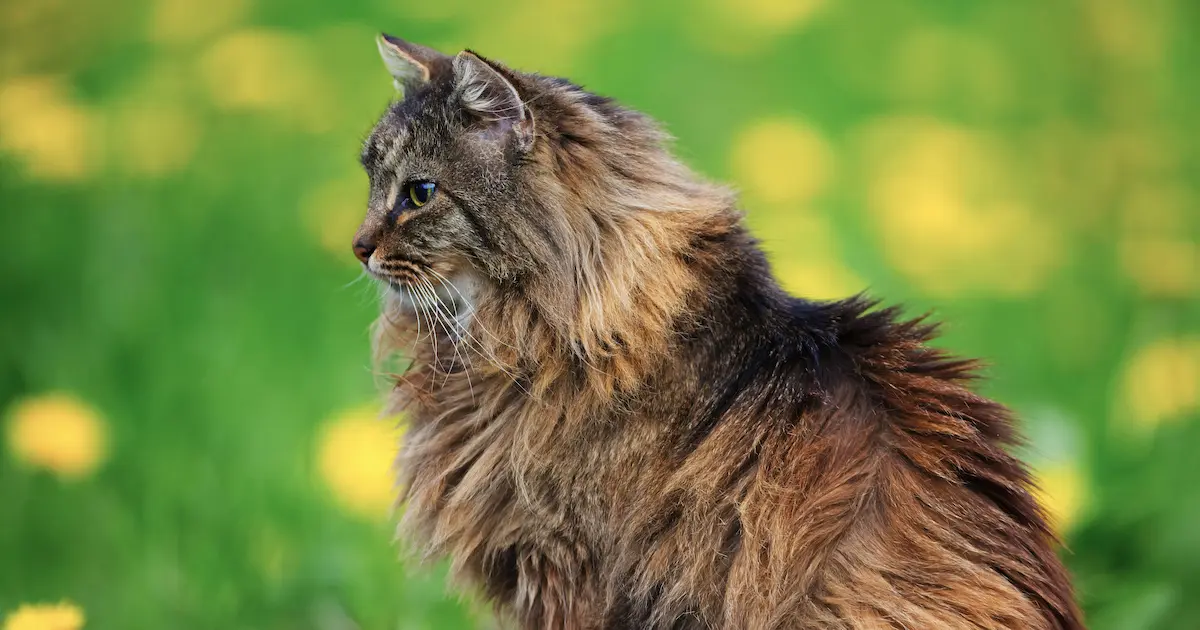
Picture this. You’re reaching for a book on the top shelf, and something large and impossibly fluffy is already up there, watching you with calm green eyes. It got up there before you did, and it made no sound doing it. That’s a Norwegian Forest Cat for you.
These cats look like they wandered out of a snowy Norse legend, all bushy tail and lion-like ruff. And honestly, that’s almost true. The Wegie (that’s the nickname fans use) is one of the oldest natural cat breeds around.
But here’s the thing nobody tells you before you fall for those photos. This is not the velcro lap cat the pictures suggest. Let’s get into what living with one is really like, the good and the slightly inconvenient.
Norwegian Forest Cat at a Glance
| Origin | Norway, ancient natural breed (formal breeding 20th century) |
| Weight (Male) | 12 to 16 lbs, sometimes up to 20 |
| Weight (Female) | 9 to 12 lbs, sometimes up to 16 |
| Lifespan | 14 to 16 years, occasionally longer |
| Coat | Long, water-resistant double coat |
| Colors | Nearly all colors and patterns except pointed (colorpoint) |
| Energy Level | Moderate to High |
| Grooming Needs | Moderate (spikes in spring and fall) |
| Good With Kids | Yes, with respectful kids |
| Good With Other Pets | Yes, including cat-friendly dogs |
| Average Price | $800 to $1,500 pet quality, $2,000+ show quality |
The Honest Truth: A Wegie Loves You Near You, Not On You
Let’s start with the thing that catches new owners off guard. You see those fluffy photos and imagine a giant cat melting into your lap every night. That’s usually not how it goes.
The Norwegian Forest Cat shows love by being in the room with you. It’ll follow you from the kitchen to the office to the bathroom, then flop down a few feet away and supervise. Close, but on its own terms.
Some Wegies do become lap cats, sure. But plenty would rather sit beside you than be picked up and squeezed. If your heart is set on a cat that wants to be held for hours, this gentle giant might quietly disappoint you.
The good news is that this independence has a flip side most people love. A Wegie won’t fall apart the second you leave for work. It can entertain itself, nap in a sunbeam, and greet you at the door like nothing happened.
Where the Norwegian Forest Cat Came From
This breed wasn’t designed in a lab or a show ring. It shaped itself over centuries in the cold forests and farms of Norway, where only the toughest, fluffiest cats survived the brutal winters.
You’ll find these cats woven into old Norse folklore. One tale describes a giant fairy cat that pulled the chariot of Freya, the goddess of love. Vikings are believed to have kept them aboard ships as skilled rat-catchers, which may explain how the breed spread.
By the early 1900s, all that casual crossbreeding with local cats nearly erased the Wegie as a distinct breed. Norwegian cat lovers started a rescue effort, World War II interrupted it, and the work resumed in earnest in the 1970s.
From there things moved fast. The breed was officially registered in Europe in the 1970s, earned championship status with the Cat Fanciers’ Association in 1993, and is now recognized by major registries including CFA, TICA, and FIFe. King Olav V even named it the official cat of Norway.
What a Norwegian Forest Cat Actually Looks Like
Big. That’s the first word that comes to mind. Males commonly hit 12 to 16 pounds, and a really substantial one can push 20. Females run smaller but still feel like a proper armful.
The signature feature is that double coat. There’s a dense, wooly undercoat for warmth and a glossy, water-resistant top layer that helped these cats shrug off Norwegian sleet. Add a thick neck ruff, fuzzy “britches” on the back legs, tufted ears, and a tail like a feather duster, and you get a seriously dramatic cat.
Look at the face and you’ll spot a clean triangle shape, with a straight profile from brow to nose. That triangular head is one of the easiest ways to tell a Wegie apart from a Maine Coon, which has a squarer, more lion-like muzzle.
Eyes come in green, gold, copper, and sometimes odd-eyed (two different colors). The coat shows up in nearly every color and pattern you can imagine, with the pointed Siamese-style coloring being the main exception.
One more thing worth knowing: these cats grow slowly. A Wegie isn’t fully mature until around four or five years old. So you get a big, gangly, kitten-brained teenager for a good long while.
Living With a Wegie: Personality and Temperament
If you want a one-word summary, it’s “steady.” Norwegian Forest Cats tend to be calm, confident, and hard to rattle. Loud houses, busy families, the doorbell going off, none of it usually fazes them much.
They’re affectionate in that quiet, loyal way we talked about. They bond hard with their people and like to keep tabs on everyone, but they’re not demanding about it. Think of a friendly roommate, not a needy toddler.
Voice-wise, they’re soft-spoken. Instead of the constant loud meowing you’d get from a Siamese, a Wegie tends to chirp, trill, and make funny little sounds, usually saving the real volume for when dinner is late.
And they’re smart. These cats pick up tricks, learn routines fast, and stay curious well into adulthood. Keep their brains busy or they’ll invent their own entertainment, which may involve opening cabinets you thought were secure.
One honest caveat: despite their independent reputation, they can develop separation anxiety if left alone too much, too often. Independent doesn’t mean indifferent. They still want you around, just not on top of them.
Is the Norwegian Forest Cat Right for You?
Beautiful cat, but not the right fit for everyone. Here’s a quick gut check before you commit.
A Wegie is probably a great match if you:
- Want a calm, gentle companion that’s happy to share space without being clingy
- Have room for a tall cat tree and a big cat to roam
- Don’t mind regular brushing and a serious shed twice a year
- Live somewhere with cool or moderate weather
- Want a steady cat that handles kids, dogs, and chaos with grace
You might want to look elsewhere if you:
- Dream of a constant lap cat that wants to be held all day
- Live in a hot climate with no air conditioning (that thick coat struggles in heat)
- Hate finding fur on your clothes and furniture
- Are away from home for very long stretches with no company for your cat
- Want a hypoallergenic cat (more on that myth below)
If most of the first list sounds like you, keep reading. You two might be made for each other.
Health Issues to Know About
The Wegie is a natural breed, which tends to mean a sturdy, healthy cat overall. But “natural” doesn’t mean bulletproof. A few inherited conditions show up often enough that you should know them by name before you buy.
Hypertrophic Cardiomyopathy (HCM)
This is the most common heart disease in cats, and large breeds like the Wegie can be prone to it. The heart muscle thickens and struggles to pump properly. Signs include fast or labored breathing, low energy, and weakness. Regular cardiac ultrasounds catch it early, and medication can manage it for years.
Glycogen Storage Disease Type IV (GSD IV)
This is the scary one, and it’s specific to this breed. It’s an inherited disorder that wrecks how the body processes glucose for energy. Most affected kittens die at or shortly after birth, and the rare ones that survive usually decline by around five months. Here’s what matters for you as a buyer: there’s a reliable DNA test. A responsible breeder tests both parents so no affected kittens are ever born. If a breeder can’t show you GSD IV results, walk away.
Hip Dysplasia
We usually think of this in dogs, but big cats get it too. The hip joint forms poorly, which leads to arthritis and pain over time. You might notice limping, a swaying walk, or a cat that suddenly stops jumping up to its favorite spots. Keeping your cat lean takes a lot of pressure off those joints.
Kidney and Blood Conditions
Two more to keep on your radar: polycystic kidney disease (PKD), where cysts slowly damage the kidneys, and pyruvate kinase deficiency, which can cause anemia. Both have screening options, and both are reasons to choose a breeder who tests rather than one who shrugs.
The takeaway here is simple. A good breeder turns most of this list into a non-issue. Your job is to ask for the paperwork and care if you don’t get it.
Grooming That Thick Double Coat
Good news first: that glorious coat is lower maintenance than it looks. The water-resistant texture means it doesn’t mat nearly as easily as some other long-haired breeds.
A thorough brushing once or twice a week keeps things tidy for most of the year. A steel comb that reaches the undercoat works better than a surface-only brush, since the wooly layer underneath is where tangles like to start.
Then comes shedding season. Twice a year, usually spring and fall, your Wegie “blows” its coat, and the fur arrives in dramatic quantities. During those weeks, daily brushing is your friend, and so is a good vacuum. This is the part the cute photos never warn you about.
Round out the routine with the basics: nail trims, dental care with cat-safe toothpaste, and a check of those tufted ears now and then. Skip the bath unless your cat truly needs one, since that coat is built to handle itself.
Feeding Your Norwegian Forest Cat
These are big, muscular cats, so they do best on a diet built around real animal protein. Look for a food where named meat like chicken, turkey, or fish leads the ingredient list, not vague fillers.
Because Wegies grow slowly and stay active, a quality kitten formula often makes sense for the first year or longer, then a transition to a large-breed or all-life-stages adult food. When in doubt, your vet can point you to the right fit.
Here’s the watch-out: this breed loves food and tends toward weight gain, especially as it slows down with age. Extra pounds make hip and heart issues worse, so measured meals beat free-feeding from a bottomless bowl. A lean Wegie is a healthier, longer-lived Wegie.
Wet food helps with hydration and is gentle on the kidneys, while a bit of dry food can help with dental wear. Many owners do a mix of both and call it a day.
Exercise, Climbing, and That Water Obsession
Wegies were forest cats, and it shows. They love to climb, perch up high, and survey their kingdom from the tallest spot in the house. A sturdy, tall cat tree isn’t a luxury here, it’s close to a requirement.
Plan on daily play. Wand toys, feather teasers, and anything they can chase and “hunt” tap into their natural instincts. A bored Wegie is a mischievous Wegie, and a big one can do real redecorating.
Now for the quirky part. Unlike most cats, Norwegian Forest Cats often adore water. Don’t be shocked if yours dips a paw in your glass, supervises your dishwashing, or tries to go fishing in the aquarium. If you keep fish, give that tank a secure lid.
They can live happily indoors, which is honestly the safest choice for their long life. Just give them vertical space, enrichment, and a window with a good view, and that hunting energy has somewhere healthy to go.
Wegies With Kids, Dogs, and Other Cats
This is where the breed really shines. That steady, unflappable temperament makes the Wegie one of the easier large breeds to fold into a busy household.
With kids, they’re patient and tolerant, especially when children are taught to handle them gently and respect a cat that wants space. Their size means they’re not as fragile as a tiny lap breed, which helps in a lively home.
Dogs? Usually no problem, as long as the dog is cat-friendly and introductions go slowly. Wegies tend to hold their own with calm confidence rather than panic.
Other cats are generally fine too. Your Wegie may take a little while to warm up, since they can be reserved at first, but they rarely look for fights. Slow, low-pressure introductions almost always win.
Lifespan and Aging Tips
A well-cared-for Norwegian Forest Cat typically lives 14 to 16 years, and some sail past that with good genetics and good care. For a cat this large, that’s a genuinely solid lifespan.
Remember that slow maturity. Your cat stays kitten-like in body and spirit for years, so don’t expect a settled adult overnight. Enjoy the long, goofy adolescence.
As they age, keep an eye on weight, joints, and that heart. Senior cats benefit from twice-yearly vet visits, since catching HCM or kidney changes early makes a real difference. Joint supplements can help older Wegies stay mobile, but check with your vet first.
Older cats also groom themselves less effectively, so they’ll lean on you more for brushing. A soft bed in a warm, easy-to-reach spot goes a long way for stiff senior joints.
How Much Does a Norwegian Forest Cat Cost?
Let’s talk money, because this breed isn’t cheap. From a reputable breeder, a pet-quality kitten usually runs between $800 and $1,500. Show-quality kittens with champion bloodlines can climb to $2,000, $4,000, or beyond.
Why the high tag? Wegies are still fairly rare outside Scandinavia, there are relatively few dedicated breeders, and good breeders invest heavily in health testing, vaccinations, and early care. You’re paying for a healthy start, not just a cute face.
The kitten price is only the beginning, though. Budget for first-year setup costs like spay or neuter, supplies, and vaccines, often a few hundred dollars on top. Then there’s ongoing food, litter, and vet care, plus the wisdom of pet insurance given the breed’s heart and joint risks.
Sourcing red flags to avoid: a “breeder” who won’t show health testing, refuses to let you see where the cats live, has kittens always available with no waitlist, or pushes you to take a kitten younger than 12 weeks. Any of those is your cue to keep looking.
Where to Find a Norwegian Forest Cat Ethically
You’ve basically got two honest paths: a responsible breeder or a rescue.
For breeders, start with the registries. TICA and CFA list registered Norwegian Forest Cat breeders, and that’s a far safer starting point than a random online ad. A good breeder will happily talk about GSD IV testing, HCM screening, and hip health, and will ask you plenty of questions in return. That back-and-forth is a great sign.
Don’t overlook rescue. Purebred Wegies and Wegie mixes do turn up in shelters and breed-specific rescues, sometimes as adults or seniors whose owners couldn’t keep them. Adoption fees usually land between $75 and $200 and often include vaccines, microchipping, and neutering. An adult cat also means you skip the wild kitten years if that appeals to you.
Whichever route you pick, slow down and ask questions. A rushed, no-questions-asked sale almost never ends well for the cat.
Wegie vs Maine Coon vs Siberian: The Comparison Everyone Wants
These three big, fluffy breeds get mixed up constantly, and choosing between them trips up a lot of buyers. Here’s the quick honest breakdown.
| Trait | Norwegian Forest | Maine Coon | Siberian |
| Size | Large (9 to 20 lbs) | Largest (often 13 to 25 lbs) | Large (11 to 17 lbs) |
| Face shape | Triangular | Square, lion-like | Rounded |
| Personality | Calm, independent | Outgoing, dog-like | Affectionate, lap-loving |
| Lap cat? | Usually no | Often yes | Often yes |
| Typical price | $800 to $1,500 | $1,000 to $2,500+ | $1,200 to $2,000 |
Quick version: pick the Wegie if you love a calm, independent beauty. Pick the Maine Coon if you want the biggest, most outgoing personality. Pick the Siberian if a true cuddly lap cat is the dream.
Similar Breeds to Consider
Not sure the Wegie is the one? A few cousins worth a look:
- Maine Coon: bigger, more playful and people-focused, the classic “dog-like” cat.
- Siberian: similar rugged look, more of a lap cat, and lower in the Fel d1 allergen for some people.
- Ragdoll: if you specifically want a cat that goes limp in your arms, this is your breed.
- Turkish Angora: elegant, long-haired, and active, with less bulk than a Wegie.
- British Longhair: plush and mellow, great for a calmer, lower-energy home.
Common Myths and Misconceptions
Let’s clear up a few things people get wrong about this breed.
Myth: They’re related to wild lynx or bobcats. Nope. The wild, untamed look is just great genetics for cold weather. They’re fully domestic cats.
Myth: Wegies are hypoallergenic. Sadly no. No cat is truly hypoallergenic, and these cats still produce the Fel d1 protein that triggers allergies. The long coat can actually spread more dander around.
Myth: That huge coat needs constant grooming. Less than you’d think. The water-resistant texture resists matting, so a couple of brushings a week handles most of the year. Shedding season is the real workout.
Myth: They’re the same thing as a Maine Coon. Common mix-up, but the triangular face, straight profile, and slightly smaller frame set the Wegie apart.
Myth: A big fluffy cat must be a cuddly lap cat. The myth that started this whole article. Wegies love you, but mostly from the next cushion over.
Frequently Asked Questions
Q: Are Norwegian Forest Cats good for first-time owners?
Yes. Their calm, easygoing, low-drama temperament makes them forgiving for beginners. Just be ready for seasonal shedding and the cost of a large, healthy cat.
Q: Do Norwegian Forest Cats shed a lot?
They shed moderately most of the year and heavily twice a year, in spring and fall. Daily brushing during those “coat blow” weeks keeps the fur tornado under control.
Q: How big do Norwegian Forest Cats get?
Males usually reach 12 to 16 pounds, sometimes up to 20. Females typically run 9 to 12 pounds. They’re a genuinely large breed and don’t finish growing until around age five.
Q: Are Norwegian Forest Cats cuddly?
They’re affectionate but usually not lap cats. Most prefer to sit near you and follow you around rather than be held for long stretches. Some individuals are cuddlier than others.
Q: Are Norwegian Forest Cats hypoallergenic?
No. They produce the Fel d1 allergen like other cats, and their long coat can spread dander. If allergies are a concern, spend time around one before committing.
Q: How long do Norwegian Forest Cats live?
Most live 14 to 16 years, and some go beyond that with good care. Keeping them lean and screening for heart and kidney issues helps maximize their lifespan.
Q: Do Norwegian Forest Cats really like water?
Many do, yes. Don’t be surprised if yours plays in the sink, paws at your water glass, or eyes the fish tank. A secure aquarium lid is a smart idea.
Q: Norwegian Forest Cat or Maine Coon, which should I get?
Choose the Wegie for a calmer, more independent cat with a triangular face. Choose the Maine Coon for a bigger, more outgoing, dog-like personality. Both are wonderful large breeds.
Final Verdict: Should You Get a Norwegian Forest Cat?
If you’ve made it this far, you already know this breed isn’t a one-size-fits-all answer. The Norwegian Forest Cat is a calm, intelligent, gorgeous companion that asks for room to climb, a brush in your hand twice a year, and your company without your lap.
Get one if you want a steady friend who’ll patrol the house, perch on the bookshelf, and love you in a quiet, loyal, near-you-not-on-you way. Look elsewhere if you need a permanent lap warmer or live somewhere with relentless heat.
Do the homework, find a breeder who tests for GSD IV and HCM, or open your home to a rescue, and you’ll gain a majestic little forest spirit for a decade and a half. Honestly, for the right person, there’s nothing else quite like a Wegie.

Hello and welcome to The Ideal Cat!
We are some passionate cat owners from different professions. We love our cats and have a lot of experience in how to care for our pets. We are incredibly excited to share our knowledge, experience, and research with you. So you can take good care of your loving cat. We will answer most of the common questions about owning cats, taking care of them, etc. If you have any question contact with us. Thanks for visiting! Enjoy the content.
