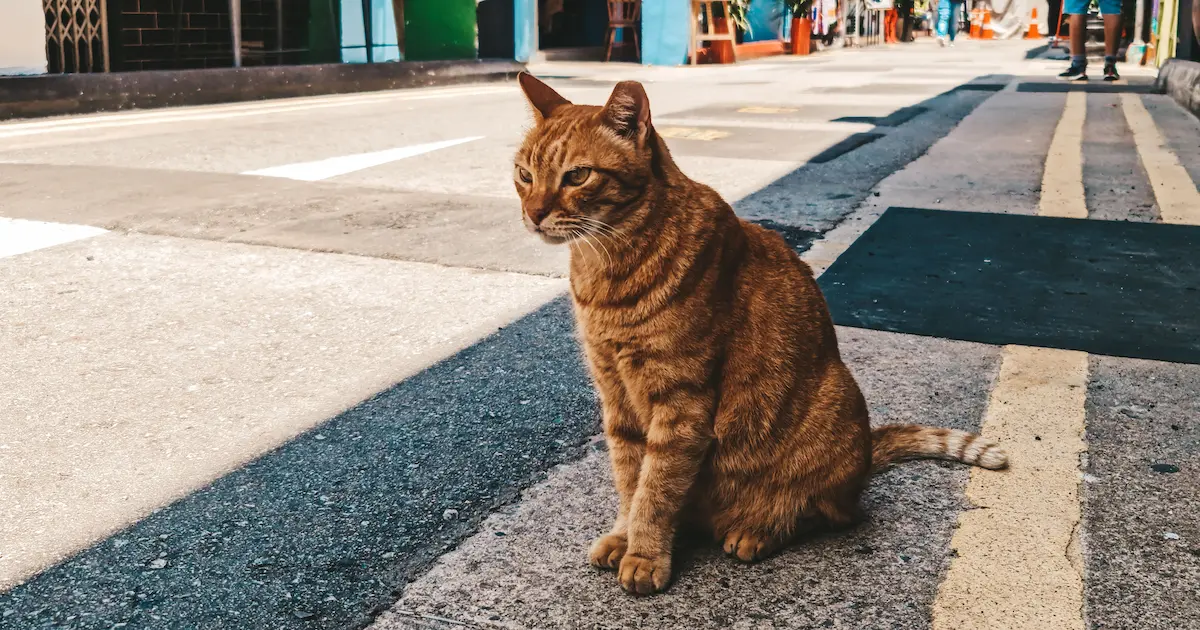
Picture this: you sit down with your morning coffee, and within seconds a cat the size of a small loaf of bread has scaled your leg, settled on your shoulder, and started chirping into your ear about her plans for the day. That’s a Singapura. She weighs less than a bag of sugar, but she runs the house like she pays the mortgage.
The Singapura is famous for two things. It’s often called the smallest cat breed in the world. And it has one of the most tangled, gossip-worthy origin stories in the entire cat fancy.
Most breed guides skip the messy parts. We’re not going to. Here’s everything you’ll actually want to know before you bring one of these tiny shadows home.
Singapura at a Glance
| Origin | Singapore / United States, 1970s (disputed) |
| Weight (Male) | 6 to 8 lbs |
| Weight (Female) | 4 to 6 lbs |
| Lifespan | 11 to 15 years (some reach 18) |
| Coat | Short, fine, close-lying single coat |
| Colors | One recognized color: sepia agouti (ticked brown on a warm ivory base) |
| Energy Level | High |
| Grooming Needs | Low |
| Good With Kids | With supervision (gentle, older kids) |
| Good With Other Pets | Yes, with slow intros |
| Average Price | $800 to $2,500 from breeders |
The Singapura’s Murky Origin Story (The Honest Version)
Here’s where it gets fun. The romantic version goes like this: in the 1970s, American breeders Hal and Tommy Meadow found a few small, brown ticked cats living in the drains and gutters of Singapore. Locals called them “drain cats.” The Meadows fell in love, brought three home, and a new breed was born. Singapore loved the story so much it made the cat a tourism mascot in 1991 and gave it the name Kucinta, from the Malay words for “cat” and “love.”
Sweet story. The problem is that big chunks of it fell apart under scrutiny.
When the Singapore Tourism Board started researching the breed for that mascot campaign, things got awkward. Import records showed that the Meadows had actually brought cats with the very same names into Singapore in 1974, before they supposedly “found” them. The Meadows, it turned out, had bred Abyssinians, Burmese, and Siamese for years. And plenty of people noticed that the Singapura looked an awful lot like a Burmese crossed with an Abyssinian.
So in 1990, a Singapura breed club asked The Cat Fanciers’ Association to investigate. During that process, Hal Meadow changed the story. He said the original cats were actually descendants of four local cats he had shipped back to the US during an earlier, secret business trip in 1971, a trip his wife had hidden by fudging the dates.
The CFA looked at all of it and decided there was no real wrongdoing. They kept the Singapura’s status as a natural breed. One CFA voice summed up the mood by saying it didn’t much matter whether the cats mated on the streets of Singapore or in Michigan, since the underlying gene pool traced back to Southeast Asia either way.
Then DNA had its say. A 2008 study found almost no genetic difference between the Singapura and the Burmese, and ranked the Singapura among the least genetically diverse breeds tested. That doesn’t prove the drain-cat tale false on its own, but it lines up neatly with the “American-made hybrid” theory.
So what’s the truth? Honestly, probably somewhere in the middle. The breed almost certainly has Southeast Asian roots, and it was almost certainly shaped by deliberate breeding in the US. We tell you all this not to spoil the magic, but because you deserve the real story before spending two grand on a kitten. The cat on your lap is wonderful regardless of where its great-grandparents had their flings.
What a Singapura Looks Like
The first thing you notice is the size. Or rather, the lack of it. Females often top out around 4 to 6 pounds, and males rarely pass 8. Stand one next to an average house cat and it looks like a scale model. The Guinness records folks have recognized it as the smallest domestic breed.
But “tiny” doesn’t mean “dainty.” Run your hand down a Singapura and you’ll feel surprising muscle. They’re stocky little athletes with strong legs, a sturdy frame, and a short, slightly blunt tail.
The face is pure cartoon charm. Two oversized ears sit on a small round head, and the eyes are huge, almond-shaped, and usually green, hazel, or gold. Many wear the classic tabby “M” on the forehead. The look has been compared to a miniature wild cat, and once you’ve seen it, the comparison sticks.
Then there’s the coat. The Singapura comes in exactly one recognized color, and it’s a beauty: sepia agouti. Each hair carries bands of dark brown ticking over a warm ivory base, so the cat seems to glow faintly bronze in good light. The fur is short, fine, and lies flat against the body, which makes that muscle definition show.
One quirk worth flagging: kittens grow slowly. A Singapura might not reach full size until 15 to 24 months. Some vets who haven’t met the breed assume a year-old Singapura is underweight or stunted. It usually isn’t. It’s just on Singapura time.
Singapura Personality: Life With a Pint-Sized Shadow
If you want a cat that keeps to itself, keep looking. The Singapura is one of the most relentlessly social cats out there. People sometimes call it a “pesky people cat,” and they mean it with love.
Your Singapura will follow you from room to room. She’ll supervise your cooking, inspect your laptop, and appoint herself assistant to whatever you’re doing. Sitting on shoulders and perching up high to survey the room are favorite hobbies. This is a curious, busy, into-everything kind of cat.
They’re vocal, but in a softer way than, say, a Siamese. Expect chirps, trills, and conversational little meows rather than full operatic yowling. You’ll find yourself answering back. It happens to everyone.
They’re also smart, and they stay playful their whole lives. A ten-year-old Singapura often still acts like a kitten. That’s delightful and also a commitment, because that energy needs somewhere to go.
Here’s the honest catch. All that devotion comes with a price: these cats hate being alone. Leave a Singapura by herself for long workdays, day after day, and you risk a stressed, anxious, possibly destructive cat. This breed genuinely does better with company, whether that’s a person who’s home a lot or a second pet.
Is a Singapura Right for You?
Let’s be real about who thrives with this breed and who struggles. The good news is that the fit is usually obvious once you’re honest with yourself.
A Singapura is a great match if you:
- Are home often, or work from home, or have another pet for company
- Want a cat that’s involved in your daily life rather than aloof
- Like the idea of a chatty, climbing, playful companion
- Don’t mind a “helper” supervising your every move
- Have the budget for a pricey kitten and good vet care
A Singapura is probably the wrong cat if you:
- Travel constantly or work very long days away from home
- Want an independent, low-contact cat
- Prefer a calm lap cat that mostly sleeps
- Have very young, rough-handed toddlers and can’t supervise closely
Think of it like this. The Singapura gives you huge affection and personality in a tiny package. In return, it asks for your time and attention. If that trade sounds wonderful, you’ll adore this cat. If it sounds exhausting, a more independent breed will make you both happier.
Singapura Health Issues to Know About
The Singapura is generally a hardy little cat, and many live well into their teens. But a small gene pool brings a few specific concerns you should understand before buying.
Pyruvate kinase deficiency (PK deficiency). This is the big one. It’s an inherited condition where red blood cells break down too early, which causes anemia. Signs can include lethargy, weakness, weight loss, pale gums, and yellowing of the skin or eyes. The tricky part is that symptoms can come and go and may not show up until adulthood. The reassuring part is that a simple DNA test exists, and responsible breeders test their cats so they never pair two carriers. Always ask to see PK deficiency test results.
Low genetic diversity. Remember that DNA study? The flip side of a narrow gene pool is a higher risk of inherited problems in general and more sensitivity to inbreeding. This is exactly why choosing a careful, health-testing breeder matters more for this breed than for many others.
Breeding and birth difficulties. Singapuras tend to have small litters, and uterine inertia (weak contractions during labor) has been reported in the breed. This won’t affect a spayed pet, but it’s part of why kittens are scarce and expensive, and it’s a window into the breed’s limited genetics.
Beyond these, treat your Singapura like any cat: keep up with vaccines, dental care, and a yearly checkup. A vet who knows the breed, or is willing to learn its slow-growth quirk, is worth finding.
Grooming and Care
Here’s a rare bit of easy news in cat ownership: the Singapura is almost no work to groom. That short, fine coat doesn’t mat, doesn’t tangle, and sheds very little. A quick brush once a week keeps it glossy and removes loose hairs. Honestly, many owners do even less and the cat looks fine.
What the Singapura does need is the usual boring-but-important stuff. Trim the nails every couple of weeks. Brush the teeth regularly, since dental disease sneaks up on small cats. Peek in the big ears now and then and wipe them gently if you see wax.
One small-cat detail people forget: these cats feel the cold. With so little body mass and a thin coat, a Singapura gets chilly faster than a chunky longhair. A warm bed in a draft-free spot, and maybe a sunny window perch, will be appreciated all winter.
Feeding Your Singapura
A Singapura may be small, but pound for pound it’s a furnace. All that climbing and zooming burns real energy, so these cats need quality fuel.
Go for a food built around real animal protein, with named meat or fish high on the ingredient list. Cats are true carnivores, and an active little breed like this leans on protein to stay lean and strong. A mix of wet and dry food works well for most: wet food helps with hydration, while a bit of dry can support dental health and free feeding.
Portion control matters more than you’d think with a tiny cat. A few extra treats that wouldn’t dent a 12-pound cat can tip a 5-pound Singapura toward overweight fast. Measure meals, go easy on treats, and check with your vet about the right daily amount for your cat’s size and age.
Fresh water should always be available. Many cats drink more from a fountain than a bowl, which is a nice trick for a breed that benefits from staying well hydrated.
Exercise and Enrichment
This is the part new owners underestimate. A Singapura is not a decoration. It’s a busy, athletic cat that needs to climb, chase, and problem-solve, or it’ll find its own “fun” in ways you won’t love.
Give it vertical space. A tall cat tree, some wall shelves, or a cat-safe perch by a window will make a Singapura genuinely happy, since these cats love getting up high and watching the world. Daily play with a wand toy or a feather teaser channels that prey drive, and puzzle feeders give that clever brain a job.
They can live happily in an apartment, as long as you build “up” instead of “out.” A small home with good vertical space beats a big home with nothing to climb. Many Singapuras also enjoy clicker training and learning tricks, which doubles as exercise and bonding.
Indoors is the safest place for any cat, and doubly so for one this tiny. A 5-pound cat is a target for predators and traffic. If you want fresh air, a secure catio or harness walks (with a small harness that actually fits) are far safer than letting your little one roam.
Living With Kids, Dogs, and Other Cats
The Singapura is a social butterfly, so it usually loves having a full house. The nuance is in the details.
With kids: Singapuras are playful and friendly, but they’re also small and a little fragile. A boisterous toddler can hurt a 5-pound cat without meaning to. These cats do best with gentle, older kids who understand how to handle a small animal. Supervise the early days and teach kids to let the cat come to them.
With dogs: Many Singapuras get on great with calm, cat-friendly dogs, and the company actually helps with their fear of being alone. Just be mindful of the size gap. A large, bouncy dog needs to learn manners around a cat it could knock over by accident. Slow, supervised introductions are your friend.
With other cats: Generally a yes. A second cat can be the perfect cure for Singapura separation anxiety, and many breeders even encourage buying kittens in pairs to prevent “single kitten syndrome.” Introduce new cats gradually, with separate spaces at first, and most Singapuras will happily make a buddy.
Lifespan and Aging Tips
Most Singapuras live 11 to 15 years, and some sail past that to 18. With good care, you’ve got a long companionship ahead.
The early years are all energy. Lean into it with play and enrichment, keep the weight in check, and stay on top of dental care, since small mouths crowd easily. Annual vet visits catch problems early.
As your cat enters the senior years, usually around 10 or 11, shift gears a little. Switch to twice-yearly checkups, watch for changes in appetite, weight, drinking, or litter box habits, and make high perches easier to reach with steps or ramps. Older Singapuras still want to be near you, so keep cozy spots close to where the family hangs out. A warm bed becomes even more appreciated as they age and feel the cold more.
How Much Does a Singapura Cost?
Brace yourself, because this is not a budget breed. A Singapura kitten from a reputable breeder usually runs somewhere between $800 and $2,500, and show-quality kittens or top bloodlines can climb past that. Some catteries quote prices in the thousands once spay or neuter and first-year vaccines are bundled in.
Why so steep? It comes back to those genetics. Singapuras are rare, litters are small, and demand outpaces supply. You’re paying for scarcity, plus the real cost of a responsible breeder doing health testing and raising kittens well.
The sticker price is just the start, though. Budget for ongoing costs too: quality food, litter, toys, and routine vet care typically land in the rough range of $100 to $250 a month, with bigger bills if health issues come up. Pet insurance is worth pricing out, especially given the breed’s inherited risks.
One red flag to watch: a “Singapura” being sold cheap with no paperwork and no health testing. At best you’re getting an unregistered cat of unknown background. At worst you’re funding a careless breeder. A genuine, well-bred Singapura simply isn’t a bargain-bin cat.
Where to Find a Singapura Ethically
Because this breed is rare and pricey, it attracts exactly the kind of sellers you want to avoid. A little homework protects your wallet and a kitten’s welfare.
If you go through a breeder, look for:
- Written proof of PK deficiency testing on the parents
- Registration with a recognized body like CFA or TICA
- A clean, home-raised environment you can visit in person
- Kittens that stay with mom until at least 12 weeks
- A breeder who asks you plenty of questions and offers a health guarantee
Walk away if you see:
- No health testing, or vague answers about genetics
- Multiple breeds churned out in volume
- Pressure to pay fast or meet in a parking lot
- Prices that seem too good to be true
And don’t rule out adoption. Purebred Singapuras are rare in shelters, but they do turn up, especially as adults needing a fresh start. Breed-specific rescues and sites like Petfinder and Adopt a Pet are worth checking. Many shelters also have ticked, big-eared lookalikes who’d love a home, even if they can’t show a pedigree.
Similar Breeds to Consider
Not sure the Singapura is your one? A few relatives and look-alikes are worth a look:
- Abyssinian: Same ticked coat and busy, curious energy, in a slightly larger and easier-to-find package.
- Burmese: The Singapura’s probable cousin. Affectionate, people-focused, and sturdier, with a sleek glossy coat.
- Devon Rex: Another small, big-eared, intensely social cat that loves to be involved in everything.
- Cornish Rex: Slim, playful, and clingy, great for someone who wants a velcro cat with a wash-and-go coat.
- Munchkin: If small size is the main draw, this short-legged breed offers a tiny footprint with a playful streak.
Common Myths and Misconceptions
This breed comes wrapped in folklore, so let’s clear a few things up.
Myth: The Singapura is purely a natural street cat from Singapore. The truth is far messier. The official story is disputed, import records and DNA both point to heavy Burmese and Abyssinian influence, and the breed was shaped by American breeders. It likely has Southeast Asian roots, but “pure natural breed” oversells it.
Myth: Tiny cat, tiny personality. Backwards. The Singapura might be the most outgoing, in-your-face cat per pound on the planet.
Myth: Small cats are low-maintenance. Grooming, sure. But this is a high-energy, high-attention breed that needs play, company, and enrichment. “Easy coat” is not the same as “easy cat.”
Myth: They’re delicate and sickly. Most Singapuras are robust and long-lived. The real concern is a narrow gene pool and PK deficiency, both managed by buying from a health-testing breeder.
Myth: A year-old Singapura that’s still small is unhealthy. Usually not. They mature slowly and may not finish growing until close to two years old.
Frequently Asked Questions
Q: Is the Singapura really the smallest cat breed?
Yes. The Singapura is widely recognized as the smallest domestic cat breed, with females often around 4 to 6 pounds and males rarely over 8. Even fully grown, they stay about the size of a half-grown kitten of other breeds.
Q: Why are Singapura cats so expensive?
They’re rare, litters are small, and demand is high. On top of that, responsible breeders invest in genetic health testing. Together that pushes kitten prices into the $800 to $2,500 range, sometimes higher.
Q: Are Singapura cats good for first-time owners?
They can be, if you’re home a lot and ready for a demanding, affectionate cat. Their grooming is easy, but their need for attention and play is not. A busy person who’s rarely home may find them a handful.
Q: Do Singapura cats get along with dogs?
Often yes. They’re social and a dog buddy can ease their fear of being alone. Just mind the size difference and do slow, supervised introductions with a calm, cat-friendly dog.
Q: Are Singapura cats hypoallergenic?
No. No cat is truly hypoallergenic. Their short coat and light shedding may mean slightly less loose hair around, but they still produce the Fel d 1 protein that triggers allergies.
Q: How long do Singapura cats live?
Most live 11 to 15 years, and some reach 18 with good care. Regular vet visits, dental care, and a healthy weight all help them hit the upper end of that range.
Q: Do Singapura cats shed a lot?
No. Their short, fine, single coat sheds very little and needs only a weekly brush. They’re one of the lower-maintenance breeds when it comes to grooming.
Q: Should I get one Singapura or two?
Two is often better. This breed hates being alone, and many breeders recommend buying kittens in pairs to prevent loneliness and “single kitten syndrome.” A companion keeps them happy when you can’t be there.
Final Verdict: Should You Get a Singapura?
The Singapura is a tiny cat with an enormous heart and a slightly scandalous backstory. If you can look past the murky origins (and really, the modern cat is lovely no matter how the breed came to be), you get one of the most affectionate, entertaining companions in the cat world.
Just go in clear-eyed. This is a cat that wants to be with you, all the time, for its whole life. It needs play, company, and a careful breeder behind it. Give it those things and you’ll have a devoted little shadow chirping at your side for years.
If you’re home a lot, charmed by a cat with opinions, and ready for the investment, the Singapura just might be the perfect tiny companion you didn’t know you were looking for.

Hello and welcome to The Ideal Cat!
We are some passionate cat owners from different professions. We love our cats and have a lot of experience in how to care for our pets. We are incredibly excited to share our knowledge, experience, and research with you. So you can take good care of your loving cat. We will answer most of the common questions about owning cats, taking care of them, etc. If you have any question contact with us. Thanks for visiting! Enjoy the content.
