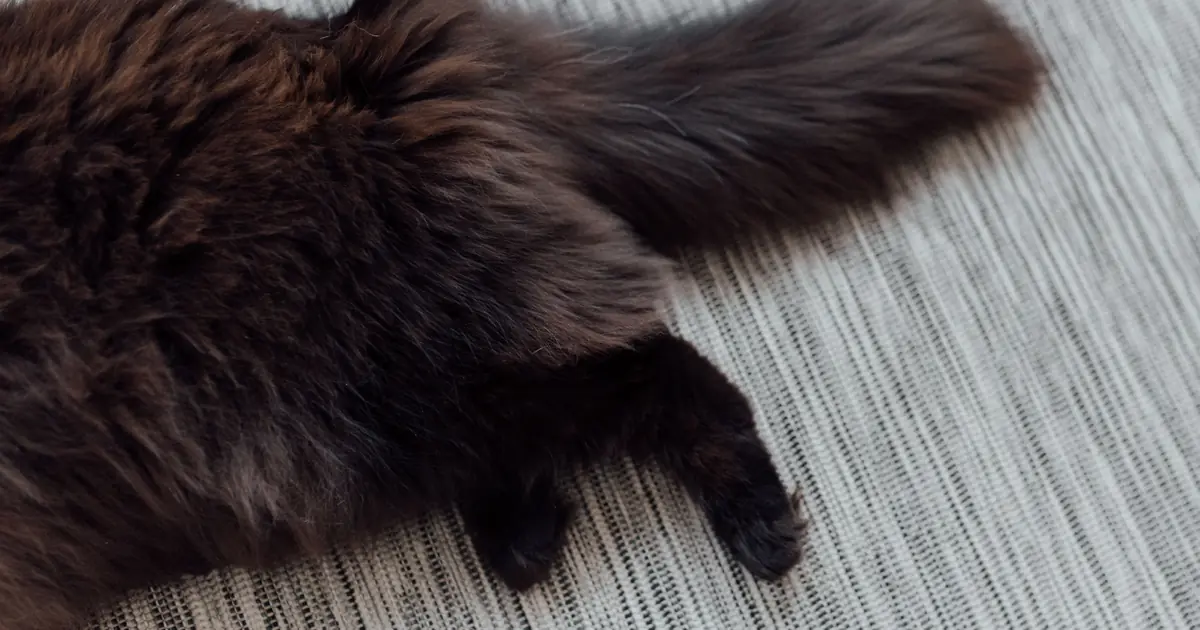
- A cat wagging or thrashing its tail usually signals annoyance or overstimulation, the opposite of a dog’s happy wag.
- A slow side-to-side swish means a cat is focused or hunting, often right before a pounce.
- A fast thrashing or thumping tail means a cat is irritated and wants space, so stop petting and step back.
- A tail held straight up with a quivering tip is one of the friendliest, happiest greetings a cat gives.
- A puffed-up tail signals fear or a threat, while a low or tucked tail signals anxiety.
- Always read the tail together with the cat’s ears, eyes, and body posture for the full message.
If you’ve ever pet your cat, felt that tail start thumping the couch, and thought “aw, they’re happy,” here’s the plot twist: they were probably telling you to stop. A cat’s tail is one of the most honest parts of its body, but it does not speak dog. When a dog wags, it usually means joy. When a cat wags its tail, it usually means the opposite.
The good news is that cat tail language is easy to learn once you know what to look for. Speed, height, and shape change everything. Once you can read those three things, you’ll catch your cat’s mood before a love bite ever happens. Let’s break down exactly what it means when a cat wags its tail, signal by signal.
Why Does a Cat Wag Its Tail Instead of Looking Happy?
A cat wags its tail mainly to release tension when it feels conflicted, irritated, or overstimulated. The tail acts like a pressure valve. The more energy a cat puts into the movement, the more worked up it usually is. A big, fast thrash means strong feelings, and those feelings are rarely positive.
This is the part that trips up so many cat parents. Dogs wag when they’re pleased to see you. Cats are wired differently. A cat that is genuinely content often holds its tail still and relaxed, maybe with a soft curl at the tip. So if your cat’s tail is moving a lot, read it as “something is going on here,” not “I’m thrilled.”
Speed is your best clue. As a rule of thumb: the faster and harder the wag, the more annoyed or aroused the cat. A slow, lazy movement is calm. A sharp, snapping thrash is a warning.
Cat Tail Movements and What They Mean (Chart)
Each cat tail movement and position points to a specific mood. This chart covers the most common signals so you can match what you’re seeing to what your cat is feeling. Remember to check the speed and the rest of the body too.
| Tail movement or position | What it usually means | What to do |
|---|---|---|
| Slow side-to-side swish | Focused or hunting, locked onto a target, often about to pounce | Let them play or stalk, this is healthy focus |
| Fast thrashing or thumping | Irritated, annoyed, overstimulated, asking for space | Stop petting and back off |
| Twitching tail tip | Mild interest and concentration, or mild irritation | Read the scene, give space if they’re not playing |
| Tail straight up, tip quivering | Excited, happy greeting, a friendly hello | Greet them back, this is affection |
| Puffed-up “bottle brush” tail | Fear, alarm, or a threat display | Remove the stressor, do not crowd them |
| Low tail, near or under the body | Anxiety, nervousness, or insecurity | Stay calm and give a safe, quiet space |
| Tail tucked between back legs | Fear, submission, or possible pain | Avoid handling, watch for other pain signs |
| Tail wrapped around you or another cat | Affection, trust, and social bonding | Enjoy it, this is a compliment |
What Does a Slow Tail Swish Mean?
A slow, sweeping tail swish means a cat is focused and calculating, usually while watching prey, a toy, or another animal. You’ll see this when your cat crouches by the window staring at a bird, tail gliding side to side just before the pounce. It is concentration, not anger.
This slow swish is part of normal hunting behavior. The movement may help a cat balance and stay loose while it decides whether to strike. If your cat does this during play, that’s a great sign of healthy predatory enrichment. Let them stalk and chase, it’s good for body and brain.
What Does a Thrashing or Thumping Tail Mean?
A fast thrashing or thumping tail means a cat is irritated, annoyed, or overstimulated and wants you to stop. This is the clearest “back off” signal a cat gives. If the tail is whipping side to side or slapping the floor, take it seriously.
You’ll often see this during petting. A cat enjoys the attention at first, then hits its limit and the tail starts thumping. This is called overstimulation or petting-induced aggression, and the thrashing tail is the warning that comes right before a swat or nip. The kind move is to stop petting the moment the thumping starts.
A thrashing tail can also appear when a cat is frustrated, blocked from something it wants, or facing another cat it dislikes. Whatever the trigger, the message is the same: give this cat some space.
What Does a Twitching Tail Tip Mean?
A twitching tail tip has two meanings depending on context: it can show mild, focused interest, or it can signal mild irritation that may be building. The tip is the most expressive part of the tail, so small flicks carry real information.
When your cat is watching a toy, a bug, or a sound with a calm body and a twitching tip, that’s curiosity and concentration. When the rest of the body looks tense and there’s nothing to hunt, that same twitch usually means low-level annoyance. Here’s the thing: if you keep doing whatever is causing it, a small twitch can grow into a full thrash. Read the whole cat, not just the tail.
What Does a Quivering Upright Tail Mean?
A tail held straight up with a fast little quiver at the tip means a cat is excited and happy to see you. This is one of the warmest greetings in the feline playbook, often paired with running over, rubbing against your legs, and purring. If your cat does this when you walk in the door, take it as a genuine compliment.
One quick caveat. A backed-up tail quiver against a wall or furniture, with the cat treading its back feet, can mean urine marking or spraying rather than a greeting. The difference is context: a happy quiver happens out in the open as your cat approaches you, while a spray-related quiver happens against a vertical surface. Spraying is usually linked to stress or territory, so it’s worth a vet chat if it’s new.
What Does a Puffed-Up or Low Tail Mean?
A puffed-up “bottle brush” tail means a cat is frightened, startled, or trying to look bigger against a threat. The fur stands on end to make the cat appear larger and more intimidating. You’ll often see it paired with an arched back and a sideways stance. A puffed tail says a cat is scared and possibly ready to defend itself, so give it room and remove whatever spooked it.
A low tail, held below the line of the back, signals anxiety or uncertainty. A tail tucked tightly between the back legs is an even stronger sign of fear, submission, or sometimes pain. If your cat is suddenly carrying its tail low or tucked for no clear reason, watch for other signs of discomfort and consider a vet visit.
When Tail Behavior Means a Trip to the Vet
Most tail wagging is normal communication, but a few patterns are worth a vet’s attention. This article is educational and not a substitute for professional care, so when in doubt, talk to your veterinarian.
One condition to know is feline hyperesthesia syndrome (FHS), sometimes called “twitchy cat syndrome.” FHS can cause sudden episodes of skin rippling along the back, frantic tail chasing or tail attacking, intense overgrooming, dilated pupils, and bursts of agitated, seemingly out-of-nowhere behavior. It is uncommon, and these signs can also point to other issues like skin allergies, fleas, pain, or thyroid problems, so a vet should sort out the cause.
See a vet promptly if your cat shows any of these red flags:
- Repeated, frantic tail chasing or biting at its own tail or lower back
- Skin that ripples or twitches along the spine during episodes
- A tail that suddenly hangs limp, drags, or looks paralyzed (possible injury)
- Signs of pain when the tail base is touched, or sudden aggression with no clear trigger
- New, frequent spraying or any abrupt change in normal tail carriage
For trustworthy background on these conditions, the Cornell Feline Health Center is a reliable starting point.
How to Read Your Cat’s Tail Like a Pro
The secret to reading a cat’s tail is to never read it alone. The tail tells you intensity and direction of mood, but the ears, eyes, and posture confirm what that mood actually is. Put them together and you get the full sentence.
Try this simple three-step read:
- Check the speed. Slow and loose is calm or focused. Fast and sharp is aroused or annoyed.
- Check the height and shape. High and upright leans positive or confident. Low, tucked, or puffed leans fearful or defensive.
- Check the rest of the body. Forward ears and soft eyes mean relaxed. Flat ears, wide eyes, or a tense crouch mean stop and give space.
Do this a few times a day and it becomes automatic. Soon you’ll know exactly what it means when your cat wags its tail before they ever have to spell it out with a swat.
Frequently Asked Questions
Q: Does a cat wagging its tail mean it’s happy?
No, a wagging tail usually does not mean a cat is happy. Unlike dogs, cats most often wag or thrash their tails to show irritation, agitation, or overstimulation. A truly content cat usually keeps its tail still and relaxed.
Q: Why does my cat wag its tail while lying down?
A cat wagging its tail while lying down is usually mildly irritated, half-asleep and reacting to a sound, or quietly focused on something. A slow tip flick from a relaxed cat is normal. A hard thump while resting often means leave me alone.
Q: Why does my cat thump its tail when I pet it?
A cat thumps its tail during petting because it is becoming overstimulated. This thumping is an early warning that a swat or nip may follow. The kindest response is to stop petting right away and give your cat space.
Q: What does it mean when a cat’s tail is straight up and shaking?
A tail held straight up with a quick shake or quiver at the tip is an excited, happy greeting. It is often paired with rubbing and purring. If the cat instead backs up to a wall and treads its feet, the quiver may signal urine spraying.
Q: Why does my cat twitch the tip of its tail?
A twitching tail tip means a cat is either concentrating with interest or feeling mildly irritated. If your cat is watching a toy or prey, it’s focus. If the body looks tense with nothing to hunt, it’s low-level annoyance that may grow.
Q: Why does my cat chase or attack its own tail?
Occasional tail chasing is normal play, especially in kittens. But frequent, frantic tail chasing or biting at the tail can be a sign of feline hyperesthesia syndrome, fleas, skin pain, or stress. Persistent tail attacking should be checked by a vet.
Q: Should I be worried if my cat’s tail is tucked between its legs?
A tucked tail signals fear, submission, or sometimes pain. It is not an emergency on its own, but if your cat keeps its tail tucked often, hides, or seems sore when the tail base is touched, talk to your veterinarian to rule out injury or illness.
Learning what it means when a cat wags its tail is one of the simplest ways to deepen your bond and avoid those surprise love bites. Watch the speed, the height, and the rest of the body, and your cat’s tail becomes an open book. Pair this with reading their purrs and other body language, and you’ll understand your cat better than ever.

Hello and welcome to The Ideal Cat!
We are some passionate cat owners from different professions. We love our cats and have a lot of experience in how to care for our pets. We are incredibly excited to share our knowledge, experience, and research with you. So you can take good care of your loving cat. We will answer most of the common questions about owning cats, taking care of them, etc. If you have any question contact with us. Thanks for visiting! Enjoy the content.
