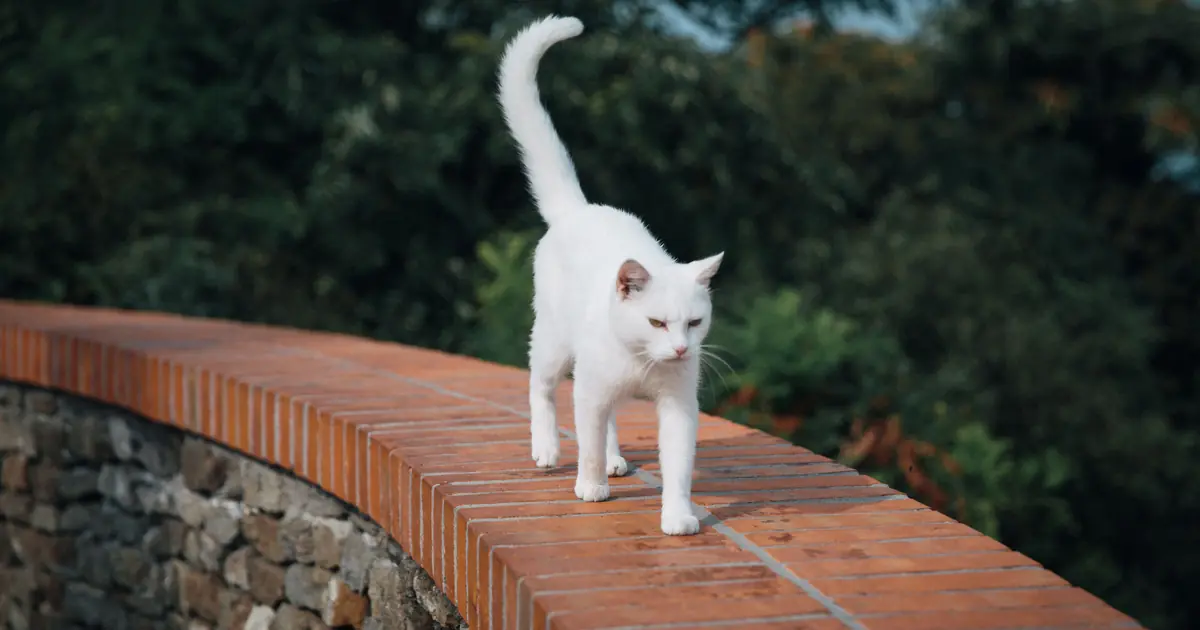
Picture this: your cat stands up from a nap, back curving into a tall, wobbly hump, tail stretched out behind her like she’s auditioning for a yoga class. Done right at your feet, that’s a greeting stretch. Ten minutes later she’s doing the exact same arch, except now her fur is huge, her ears are pinned flat, and she’s hissing at the vacuum cleaner. Same pose. Completely different message.
An arched back is one of the most flexible pieces of body language a cat has. It can mean “I love you,” “back off,” or just “my spine feels great after that nap,” and honestly, most new cat parents can’t tell the difference at first glance. Once you know what to look for, though, it’s pretty easy to read.
- Cats arch their back for at least four common reasons: stretching, greeting, fear or defense, and play.
- A scared cat’s arched back comes with piloerection (fur standing on end), flattened ears, and a sideways stance to look bigger.
- A friendly greeting arch happens with a relaxed, upright tail and the cat leaning into your hand, not away from it.
- A cat’s spine has roughly 53 vertebrae, nearly 10 more than a human’s, which is why they can arch and twist so dramatically.
- A stiff, hunched arch paired with lethargy, hiding, or not eating can point to abdominal pain and is worth a vet visit.
Why do cats arch their back?
Cats arch their back because the movement does double duty: it’s both a physical stretch and a form of communication. A cat’s spine is built for this kind of motion. It’s remarkably flexible thanks to elastic discs between the vertebrae and no rigid collarbone to limit the shoulders, so an arch that would look impossible on a person is just Tuesday for a cat. The Cornell Feline Health Center notes that an arched back with raised fur is a classic sign of feline aggression or fear, but that’s really just one of the arch’s several jobs. The same posture also shows up in a good stretch, a happy greeting, and rowdy play. Reading the reason correctly comes down to watching everything else the cat’s body is doing at the same time.
Why do cats arch their back after they wake up?
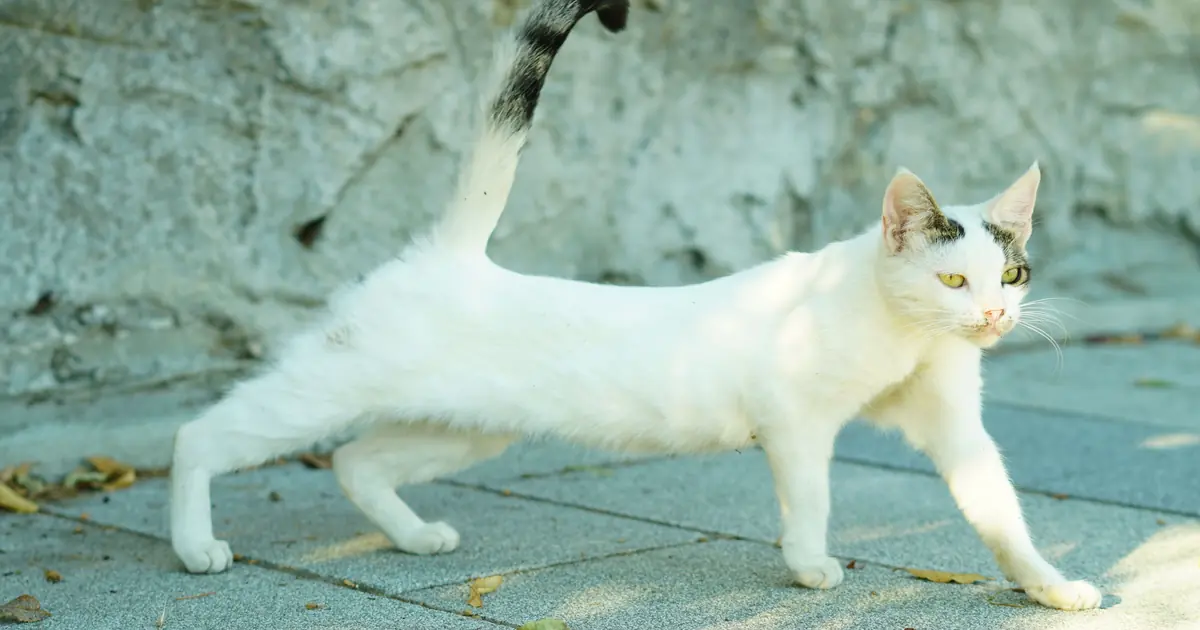
Cats arch their back after sleeping because it’s a full-spine stretch that gets stiff muscles moving again and pushes fresh blood through the body. You’ve probably seen it: your cat rises from a nap, front paws planted, back legs stretched behind her, spine curved up into a tall arch, sometimes finishing with a jaw-cracking yawn. This is often called a “cat stretch” for a reason.
Cats sleep 12 to 16 hours a day, and a lot of that is light dozing rather than deep sleep. All that lying around means muscles tighten up, so the arch, paired with a long front-leg stretch and splayed toes, works the kinks out before your cat springs into action. This kind of arch is loose and unhurried. Her fur lies flat, her ears stay relaxed, and she usually finishes with a slow blink or a stroll to the food bowl like nothing happened.
Why does my cat arch her back when I pet her?
Cats arch their back into your hand during petting because it feels good and it’s a sign of trust, not a warning. When your cat pushes her spine up to meet your palm, she’s increasing the contact and pressure in the exact spot she wants scratched, usually along the base of the tail or the shoulders. Pair that with purring, a tail held up with a gentle curl at the tip, or her rubbing her cheek against you, and you’ve got a cat who is completely content.
This is closely related to the greeting arch you’ll see when you walk in the door. Many cats arch and press against your legs, sometimes weaving figure-eights, as a hello. It’s the same instinct kittens use when rubbing against their mother, carried into adulthood as a bonding gesture toward the people they trust. If you want the fuller picture of what a relaxed, affectionate cat looks like versus a stressed one, it helps to learn general cat body language cues beyond just the back.
Why do cats arch their back and puff up when scared?
Cats arch their back and puff up when they’re frightened or feel cornered, and it’s a defensive bluff meant to make them look bigger and scarier than they actually are. This is the “Halloween cat” pose: a tall arched spine, fur standing straight up (a reaction called piloerection), a bushy bottle-brush tail, flattened ears, dilated pupils, and often a sideways stance rather than facing the threat head-on. Turning sideways isn’t an accident. It makes the cat’s silhouette look as large as possible while keeping an escape route open.
This posture is driven by adrenaline. The tiny muscles at the base of each hair follicle contract and pull the fur upright, the same fight-or-flight response you’d see in a startled dog or a threatened porcupine. A cat in this state may hiss, growl, or swat if you get closer, so the best move is to give her space and let her calm down on her own rather than reaching in for a comforting pet. If this kind of posture is becoming a regular thing around a specific person, pet, or situation, it’s worth reading up on why a cat might suddenly turn aggressive or why your cat is hissing at you, since both often show up alongside the defensive arch.
Why do cats arch their back during play?
Cats arch their back during play as part of the same “look bigger” instinct used in defense, but without any real fear behind it. You’ll see it most in kittens: back arched, tail puffed like a squirrel’s, body turned sideways, hopping and pouncing at a sibling, a toy, or your ankles. It looks dramatic, but it’s practice, not panic.
The tell is what’s missing. A playful arch usually comes without hissing, growling, or bared teeth, and the cat is bouncing toward the “threat” instead of retreating from it. Ears tend to stay up rather than pinned flat. If you’re ever unsure whether a session has tipped from fun into real irritation, it helps to know that even cats can hiss during rough play without it being a genuine fight, so hissing alone isn’t always the deciding clue. Watch the whole picture instead of any single signal.
How can you tell which kind of arch your cat is doing?
You can tell the difference between an arch by checking four things at once: the fur, the ears, the tail, and whether your cat is moving toward you or away from you. A stretch and a greeting arch are calm and loose. A fear or play arch is tense, puffed up, and paired with a bristled tail. The table below breaks down the clues side by side.
| Arch type | Body language clues | What to do |
|---|---|---|
| Stretch | Loose posture, fur flat, ears relaxed, often followed by a yawn or walking off | Nothing needed, this is completely normal |
| Greeting or petting | Fur flat, tail up with a curled tip, purring, leaning into your hand | Keep petting or scratching where she’s leaning |
| Defensive or scared | Fur puffed (piloerection), ears flat, sideways stance, bushy tail, hissing | Give her space, don’t reach in, let her decompress |
| Play | Fur may puff slightly, tail puffed, bouncing toward you or a toy, no hissing or growling | Keep playing, redirect to a wand toy if it gets too rough |
| Pain hunch | Rigid, tucked-up posture, back arched even at rest, no interest in petting, hiding, skipped meals | Call your veterinarian |
The VCA Animal Hospitals guide to cat communication makes the same point: no single signal tells the whole story. Ears, eyes, tail, and posture always need to be read together, not in isolation. A relaxed tail held upright with a soft curl, slow blinking, and loose, forward-facing ears round out the picture of a happy cat. Even a burst of the zoomies right after an arched stretch is usually just pent-up energy finally getting released, nothing to worry about. International Cat Care makes the same point: cats communicate through a whole combination of posture, facial expression, and vocalization at once, which is exactly why one pose, arched back included, never tells the full story on its own.
Can an arched back mean my cat is in pain?
Yes, an arched back can signal pain, especially if it’s rigid and constant rather than a quick stretch or a social gesture. A cat in pain often holds a hunched, tucked-up posture even while just standing or sitting still, with tense muscles and no interest in being touched near the belly or back. This is different from the loose, brief arch of a good stretch.
I get it, this one can be worrying to watch for. Red flags that mean it’s time to call the vet include a hunched posture that doesn’t go away, hiding more than usual, not eating or drinking, straining in the litter box, vomiting, or flinching when you touch her abdomen or spine. These can point to anything from a stomach upset to a urinary blockage or a spinal issue, and none of those are things to wait out at home. If your cat is also showing other signs of stress, like over-grooming or hiding, alongside the hunch, that combination is worth mentioning to your vet too. This article is educational, not a diagnosis, so when in doubt, a licensed veterinarian is always the right call. The VCA Hospitals guide to signs of illness in cats is a solid resource if you want to read more about what counts as urgent.
Q: Why does my cat arch her back and shake her tail?
An arched back with a shaking or vibrating tail usually means excitement or high arousal, often right before pouncing on a toy or during an enthusiastic greeting. If it’s paired with puffed fur, flattened ears, and hissing instead, it’s a fear response rather than excitement.
Q: Is it normal for cats to arch their back when you pet them?
Yes, it’s completely normal. Most cats arch their back into a petting hand to increase pressure on the spot they want scratched, usually the base of the tail. As long as her fur stays flat and she’s purring or leaning in, this is a sign of enjoyment, not distress.
Q: Why does my cat arch her back and walk sideways?
An arched back combined with a sideways walk, puffed fur, and a bushy tail is the classic “Halloween cat” defensive display. Cats turn sideways to look as large as possible to a perceived threat while keeping an eye on their escape route. Give her space rather than approaching.
Q: Do kittens arch their backs more than adult cats?
Kittens do arch their backs often, mostly during play as they practice the sideways hop-and-pounce move with siblings or toys. It’s a normal part of learning coordination and social play, and it usually shows up with a puffed tail but no hissing or growling.
Q: What does it mean if my cat’s back is arched but she’s not moving?
A cat holding a rigid, arched, hunched posture without moving, especially paired with hiding, skipped meals, or reluctance to be touched, can be a sign of pain. This is different from a quick, loose stretch and is worth a call to your veterinarian.
Q: How many vertebrae does a cat have that let it arch so much?
Cats have around 53 vertebrae, compared to 33 in humans, plus elastic discs between them and no rigid collarbone. That extra flexibility is exactly why a cat’s arch can look so much more dramatic than a person’s back stretch.
Q: Why does my cat arch her back and hiss at another cat?
An arched back with hissing directed at another cat is a defensive or territorial warning, telling the other cat to back off without an actual fight. It’s often accompanied by piloerection and a sideways stance. Separating the cats and reintroducing them slowly usually helps if this happens often.
Q: Should I touch my cat when her back is arched in fear?
No, it’s best not to reach for a cat showing a fearful, puffed-up arch. Touching a scared cat can escalate the situation into a scratch or bite. Give her a quiet space and let her posture relax back to normal on its own before approaching.

Hello and welcome to The Ideal Cat!
We are some passionate cat owners from different professions. We love our cats and have a lot of experience in how to care for our pets. We are incredibly excited to share our knowledge, experience, and research with you. So you can take good care of your loving cat. We will answer most of the common questions about owning cats, taking care of them, etc. If you have any question contact with us. Thanks for visiting! Enjoy the content.
