If you’ve been refilling the same bowl for weeks and your cat still feels like a bag of bones when you pick her up, you’re not imagining it. Some cats are naturally lean. Others are quietly losing weight for reasons that have nothing to do with how much food is in front of them.
The good news is that most underweight cats can gain weight back safely, once you know what’s actually going on. This guide walks through why cats lose weight, how to check if yours is too thin, and the exact feeding steps vets recommend to help a skinny cat put pounds back on the healthy way.
- An underweight or weight-losing cat needs a vet visit before any feeding plan starts, since weight loss is often a sign of illness rather than simple hunger.
- Hyperthyroidism, diabetes, kidney disease, dental pain, parasites, and cancer are among the most common medical causes of feline weight loss.
- Calorie-dense wet food, kitten food, and vet-recommended recovery diets pack more calories and protein into a smaller volume than typical adult cat food.
- Small, frequent meals spread across the day are usually easier for an underweight cat to eat than two large meals.
- Healthy weight gain in cats is gradual. A steady, slow climb on the scale is a good sign; a sudden jump is not.
Why Won’t My Cat Gain Weight?
A cat that stays thin despite eating normally is usually dealing with one of three things: an underlying medical condition, food that isn’t calorie-dense enough, or stress that’s cutting into her appetite. Weight is one of the clearest windows into a cat’s overall health, which is exactly why sudden thinness deserves attention rather than just a bigger bowl.
Kittens, senior cats, and certain naturally lean breeds like the Siamese can also run thinner than the average cat without anything being wrong. If you’re not sure whether your cat’s frame is a breed trait or a red flag, it helps to check her specific dietary needs against her body condition, since a naturally lean body type is not the same thing as an unhealthy one.
Why Should I See a Vet Before Trying to Fatten Up a Cat?
You should see a vet before starting any weight-gain plan because unexplained weight loss in cats is very often a symptom of disease, not just a nutrition problem. Piling on richer food without knowing the cause can mask a serious condition or, in some cases, make it worse.
According to VCA Animal Hospitals, cat weight loss can stem from problems with digestion, poor nutrient absorption, or ongoing nutrient loss from disease, and vets typically start with bloodwork, a urinalysis, and a parasite check to find the cause. Common medical culprits include:
- Hyperthyroidism: an overactive thyroid gland that speeds up metabolism, common in cats over 10 years old.
- Diabetes mellitus: a condition where the body can’t properly regulate blood sugar, often paired with a big appetite and weight loss at the same time.
- Kidney disease: especially common in older cats, and often causes nausea that suppresses appetite.
- Intestinal parasites: worms and other parasites that steal nutrients before the body can use them.
- Dental pain: sore teeth or gums that make chewing uncomfortable, so the cat quietly eats less.
- Cancer: tumors can cause weight loss directly or by reducing appetite and energy.
Do not force-feed a cat or start a high-calorie plan on your own if she’s actively losing weight. Get a diagnosis first, then build a feeding plan around what your vet finds.
Red Flags That Mean See a Vet Now
Some signs mean a same-day or emergency vet visit, not a wait-and-see approach. Call your vet right away if your cat shows:
- Rapid weight loss over days or a couple of weeks
- Refusing to eat at all for more than 24 hours
- Vomiting, especially repeated vomiting
- Drinking noticeably more water than usual
- Lethargy, hiding, or a general lack of energy
This article is educational and not a substitute for veterinary care. Only a licensed vet can diagnose why your cat is thin and confirm it’s safe to move ahead with a weight-gain plan.
How Do I Know If My Cat Is Underweight?
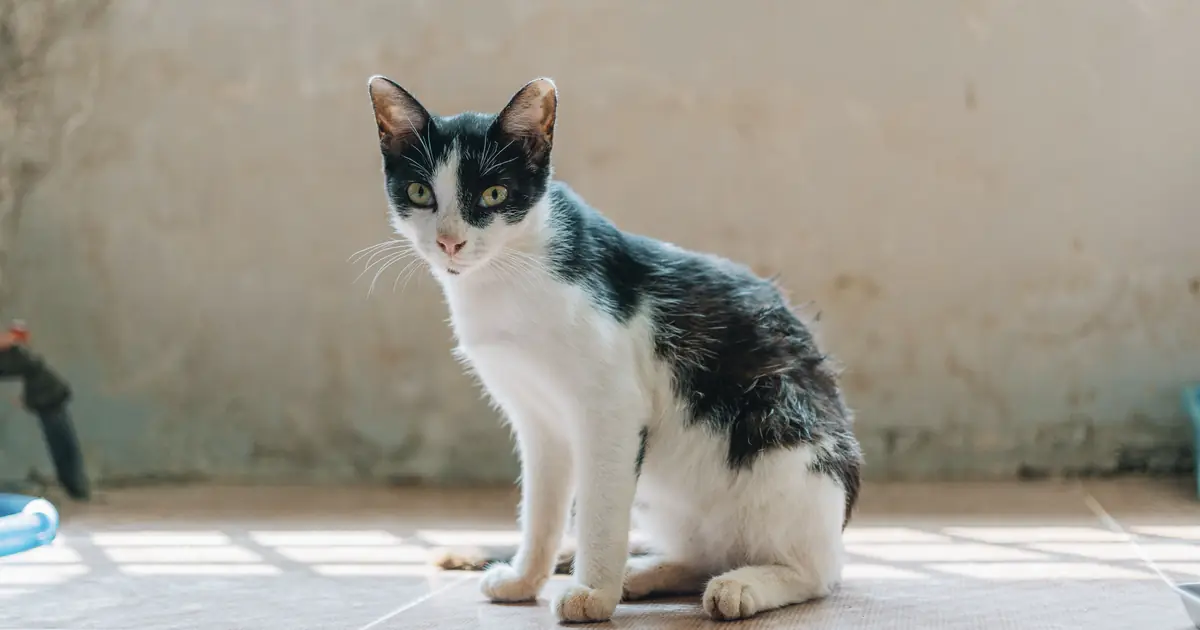
The fastest way to tell is to feel your cat’s ribs and look at her from above. If you can feel the ribs easily with very little fat over them, and her waist tucks in sharply behind the ribcage, she’s likely underweight. Vets use a body condition score, a 9-point scale that rates a cat from too thin to obese, to make this more precise than eyeballing it. VCA Animal Hospitals notes that at an ideal score, ribs are easy to feel under a thin layer of fat, and the waist has a visible hourglass curve when viewed from above.
If you’re not confident scoring your cat yourself, our guide on how to know if your cat is underweight walks through the body condition score step by step with photos to compare against.
How to Fatten Up a Cat Safely: Step-by-Step Feeding Plan
Once your vet has ruled out or treated an underlying illness, follow these steps to help your cat gain weight gradually and safely.
- Get a vet-confirmed diagnosis and target weight. Ask your vet what’s causing the weight loss, what your cat’s healthy target weight is, and whether a prescription recovery diet is recommended.
- Switch to a calorie-dense food. Choose a high-protein, high-fat cat food formulated for weight gain, growth, or recovery, since these pack more calories into every bite than a standard maintenance diet.
- Add wet food to the rotation. Wet food is easier to eat for cats with dental pain or a weak appetite, and its stronger smell often tempts a reluctant eater more than dry kibble does. A quality wet cat food is a simple first swap.
- Split meals into small, frequent portions. Offer 4 to 6 small meals a day instead of one or two large ones. A thin cat’s stomach can feel overwhelmed by a big meal, and small portions are easier to keep down.
- Warm the food slightly. Body-temperature food releases more aroma, which can coax a cat with a dulled sense of smell or a poor appetite into eating more.
- Reduce competition and stress at mealtime. If you have multiple cats, feed the underweight cat separately so she isn’t rushed or bullied away from the bowl.
- Consider free-feeding dry food between meals. For cats cleared by a vet for constant access, leaving a small amount of dry food out between wet meals adds extra calorie opportunities without extra stress.
- Weigh your cat weekly and track progress. Use a kitchen scale or ask your vet clinic for weigh-ins, and log the number so you can spot a slow, steady climb instead of guessing by feel.
What Should I Feed a Cat to Help Her Gain Weight?
The best foods for weight gain are calorie-dense, high-protein options built for cats with higher energy needs, such as kittens, nursing mothers, or cats recovering from illness. Kitten food works well for this because it’s formulated with more calories and protein per serving to support rapid growth. If your cat is a senior losing weight from age-related conditions, ask your vet whether a senior-specific formula or a recovery diet fits her needs better.
| Food Type | Why It Helps | Notes |
|---|---|---|
| Kitten food | Higher calories and protein per serving to support growth | Fine short-term for adult cats gaining weight, but ask your vet before long-term use |
| Calorie-dense wet food | Easier to chew, stronger smell, higher moisture | Good for cats with dental pain or a weak appetite |
| Vet-prescribed recovery diet | Formulated for illness recovery and rapid, safe weight gain | Requires a vet recommendation, best for cats recovering from disease or surgery |
| High-protein dry food | Calorie-dense and convenient for free-feeding between meals | Only appropriate once a vet clears free-feeding for your cat |
If your cat seems to eat constantly but still can’t gain weight, that’s its own red flag worth mentioning to your vet, since a big appetite paired with weight loss is a classic sign of hyperthyroidism or diabetes. Our article on why your cat always seems hungry goes deeper into that specific pattern.
How Fast Should a Cat Gain Weight?
A healthy cat should gain weight slowly and steadily, not in a sudden jump. Rapid weight gain puts strain on the liver and can actually be dangerous, especially in cats who have gone through a long period of poor eating. Your vet can give you a realistic timeline and target weight based on your cat’s age, breed, and the condition behind the weight loss. Weekly weigh-ins are the best way to confirm the plan is working without guessing.
What If My Cat Still Won’t Gain Weight?
If your cat isn’t gaining weight after a few weeks of a vet-approved feeding plan, go back to your vet rather than increasing food further on your own. It usually means either the underlying cause hasn’t been fully addressed, the calorie intake still isn’t high enough for her needs, or a second condition is at play. According to PetMD, persistent weight loss despite adequate food intake almost always warrants further diagnostic workup rather than more calories alone.
Frequently Asked Questions
Q: How can I fatten up my cat fast?
You shouldn’t try to fatten up a cat fast. Healthy weight gain is gradual, and rapid weight gain can strain the liver, especially in a cat that has been eating poorly. See a vet first, then follow a steady plan of calorie-dense food and small, frequent meals.
Q: What human food helps a cat gain weight?
Small amounts of plain, cooked chicken, turkey, or scrambled egg can add extra protein and calories for a thin cat, but they shouldn’t replace a complete cat food. Talk to your vet before adding any human food regularly, since cats need a balanced, cat-specific diet to stay healthy long term.
Q: Is kitten food safe for adult cats to gain weight?
Kitten food is generally safe for a short-term weight-gain plan because it’s higher in calories and protein than standard adult food. It isn’t meant for long-term adult feeding, so check with your vet on how long to use it and when to transition back.
Q: Why is my cat skinny but eating a lot?
A cat that eats a lot but stays thin may have hyperthyroidism or diabetes, both of which speed up metabolism or prevent the body from properly using nutrients. This combination of a big appetite and weight loss should always be checked by a vet rather than treated with more food alone.
Q: How much weight should a cat gain per week?
Weight-gain pace should be set by your vet based on your cat’s condition, age, and cause of weight loss. In general, vets look for a slow, steady upward trend on the scale over weeks, not a fast jump, since gradual gain is safer for the liver and overall health.
Q: Can stress make a cat lose weight?
Yes, stress from a new pet, a move, competition at the food bowl, or changes at home can reduce a cat’s appetite enough to cause weight loss over time. Reducing mealtime competition and stress is part of a safe weight-gain plan, alongside ruling out medical causes.
Q: Should I free-feed an underweight cat?
Free-feeding can help some underweight cats get extra calorie opportunities throughout the day, but it should only start once your vet has confirmed it’s appropriate for your cat’s specific condition. For cats with diabetes or certain other conditions, controlled meals are safer than free access.
Q: What breeds are naturally thin?
Siamese cats and other Oriental breeds tend to have a naturally lean, long-bodied frame even at a healthy weight. A naturally slim breed build is different from unhealthy weight loss, so it still helps to check body condition score rather than judging by breed alone.

Hello and welcome to The Ideal Cat!
We are some passionate cat owners from different professions. We love our cats and have a lot of experience in how to care for our pets. We are incredibly excited to share our knowledge, experience, and research with you. So you can take good care of your loving cat. We will answer most of the common questions about owning cats, taking care of them, etc. If you have any question contact with us. Thanks for visiting! Enjoy the content.
