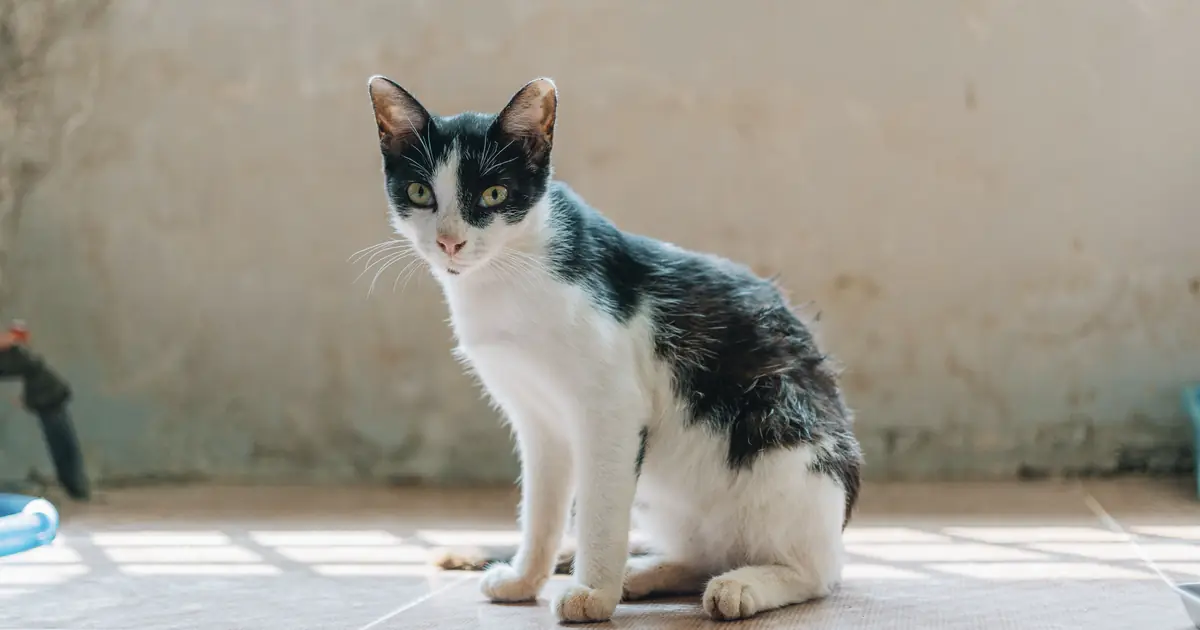
Picture this. You go to pick up your cat and something feels off. Your fingers land on ribs and bony ridges where there used to be a soft, springy body. Maybe a friend hasn’t seen your cat in a while and asks, gently, if everything is okay. That little gut-drop feeling is real, and it’s a good instinct to trust.
So how do i know if my cat is underweight, and not just naturally slim? The good news is you don’t need a scale or a vet visit to get a first read. Vets use something called a body condition score, and it’s a simple hands-on check you can do at home on the kitchen counter. This guide walks you through it, shows you what underweight actually looks and feels like, and explains when thinness is a red flag worth a vet’s attention.
- Vets score body condition on a 1-to-9 scale, where 4 to 5 is ideal and 1 to 3 is underweight.
- An underweight cat has ribs, spine, and hip bones that are easily seen or felt with little to no fat padding, plus an exaggerated tucked waist and belly.
- On an ideal cat, you can feel the ribs through a thin fat layer, like feeling the bones on the back of your hand. Sharp, unpadded ribs mean too thin.
- A cat that eats well but keeps losing weight is a classic warning sign of hyperthyroidism, diabetes, kidney disease, dental pain, or parasites.
- Any sudden or ongoing weight loss deserves a vet visit, since safe weight gain starts with finding the cause.
How do I check if my cat is underweight at home?
You check for underweight at home with a three-part hands-on test that mirrors the body condition score vets use. Feel the ribs, look at the waist from above, and check the belly from the side. No equipment needed, just your hands and good light.
Body condition scoring runs on a 1-to-9 scale. A score of 1 is emaciated, 4 to 5 is the sweet spot, and 9 is obese. An underweight cat lands at 1 to 3. Here’s how to place your own cat.
Step 1: Feel the ribs
Run both hands gently along your cat’s sides, over the rib cage. On a healthy cat, you’ll feel the ribs through a thin layer of fat, a bit like feeling the bones on the back of your hand. If the ribs feel sharp and bare, with no padding at all, or you can see them rippling through the coat, that’s a sign your cat is too thin.
Step 2: Look at the waist from above
Stand over your cat while they’re standing up and look straight down. You want to see a gentle waist that tucks in behind the rib cage, an hourglass shape. On an underweight cat, that waist is exaggerated and dramatic, almost pinched, because there’s so little fat and muscle over the hips and spine.
Step 3: Check the belly and spine from the side
Crouch down and look at your cat from the side. A slight upward tuck of the belly behind the ribs is normal and healthy. A belly that looks severely caved in and tucked up, paired with hip bones and a spine that jut out, points to underweight. Run a hand down the backbone too. The knobs of the spine should be coverable, not stick out like a row of beads.
What does an underweight cat look and feel like versus ideal?
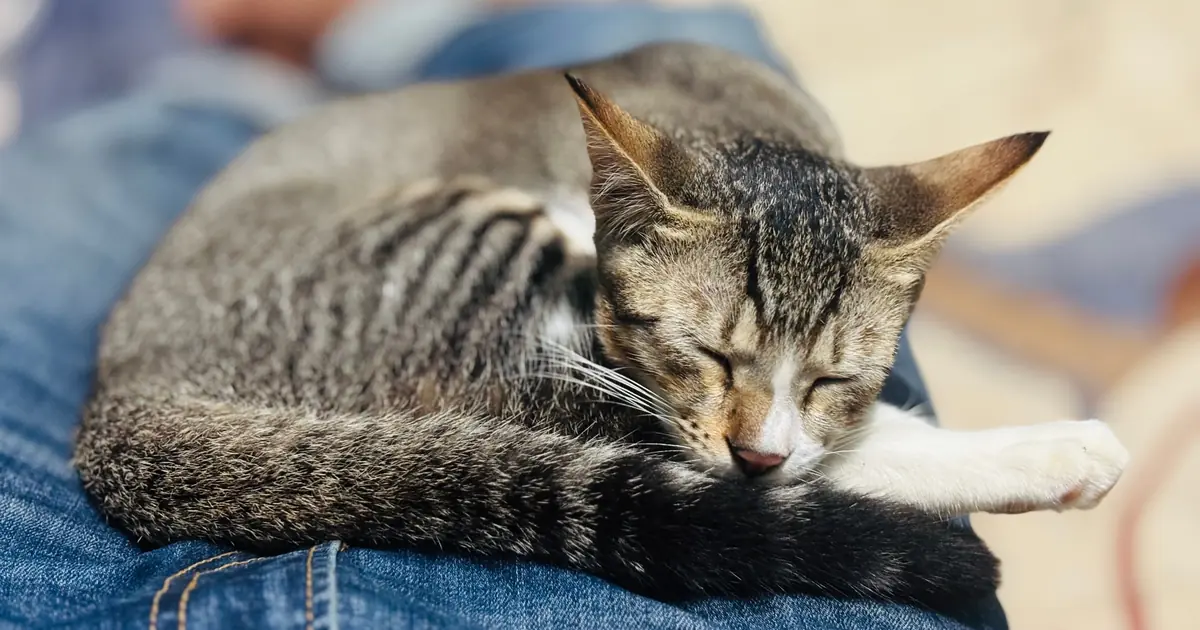
An underweight cat feels bony and angular, while an ideal-weight cat feels lean but padded. The difference comes down to how much fat covers the ribs, spine, and hips, and whether the waist tuck looks natural or extreme.
The table below breaks down what you’re feeling for at each stage. Keep in mind that long-haired cats hide a lot, so always go by touch, not just what you can see.
| What you check | Underweight (BCS 1-3) | Ideal (BCS 4-5) | Overweight (BCS 6-9) |
|---|---|---|---|
| Ribs | Easily seen or felt with no fat covering, feel sharp | Felt through a thin fat layer, like the back of your hand | Hard to feel under a thick fat pad |
| Spine and hips | Bones stick out and are highly visible | Felt easily but not prominent or sharp | Buried under fat, hard to locate |
| Waist from above | Extreme, pinched hourglass | Clear, gentle tuck behind ribs | No waist, or bulges outward |
| Belly from the side | Severely tucked up and caved in | Slight upward tuck | Rounded, sagging belly pad |
| Muscle | Wasted, little over the shoulders and hips | Firm and even | Present but padded with fat |
Is my cat naturally lean or actually underweight?
Some cats are naturally lean, but truly underweight cats show bone with no muscle or fat cushioning, plus signs like a dull coat, low energy, or a recent drop in body mass. A naturally slim cat stays that way steadily and still feels padded over the ribs.
Breed and build matter here. Sleek, athletic breeds like Siamese, Bengals, and Oriental Shorthairs are lean by design, with long bodies and fine bones. That’s their normal. Compare that to a cat who used to feel solid and now feels like a coat hanger, or a kitten who isn’t filling out. The key clue is change. A cat who has always been slim but active, bright-eyed, and eating well is probably just built that way. A cat losing condition is a different story. When in doubt, weigh your cat every couple of weeks; a drop of even a few ounces on a small animal is worth noticing. If your cat is eating a lot but staying thin, that combination is a red flag worth reading up on.
What causes a cat to become underweight?
Cats become underweight from a mix of not eating enough and medical problems that burn through calories or block absorption. The most concerning pattern is a cat who eats normally, or even more than usual, yet keeps dropping weight.
Common medical causes of weight loss in cats include:
- Hyperthyroidism: an overactive thyroid revs up metabolism, so the cat is often ravenous but shrinking. It’s one of the most common causes in older cats.
- Diabetes: the body can’t use glucose properly, so it burns fat and muscle for fuel, causing weight loss alongside a big appetite and extra thirst.
- Chronic kidney disease: very common in senior cats, often with increased drinking, more urination, and a fading appetite.
- Dental pain: sore gums or a bad tooth can make eating hurt, so your cat quietly eats less.
- Intestinal parasites or digestive disease: worms, inflammatory bowel disease, and other gut issues steal nutrients before your cat can use them.
Why is eating well but still losing weight so worrying? Because it usually means calories are going in but the body can’t hold onto them, which points to a metabolic or digestive disease rather than a simple appetite problem. According to the Cornell Feline Health Center, hyperthyroidism most often shows up in middle-aged and older cats and frequently affects the kidneys and heart, so early testing matters. If digestive upset seems to be the trigger, some cats do better on food formulated for sensitive stomachs, but only once a vet has ruled out the bigger causes.
How can I help my underweight cat gain weight safely?
You help an underweight cat gain weight safely by first getting a vet diagnosis, then feeding a calorie-dense, high-quality diet in small, frequent meals under your vet’s guidance. Never rush the process, since piling on food without fixing the cause rarely works and can backfire.
Once your vet has checked for underlying illness, the general playbook looks like this. Offer meals more often rather than one giant bowl, since small stomachs handle little and often better. Warming wet food slightly can boost the smell and tempt a picky eater. Choose a nutrient-dense, protein-rich diet built for the job; picking a genuinely nutritious cat food makes a real difference in how efficiently your cat rebuilds condition. For older cats, whose calorie needs and digestion shift with age, a good senior formula is often the smarter pick. Weigh your cat regularly so you and your vet can track real progress, not guesses.
One thing to skip: loading up on random supplements or “weight gain” powders on your own. Extra calories mean nothing if a thyroid problem or bad tooth is the real issue. Let your vet steer the plan.
When should I take an underweight cat to the vet?
Take your cat to the vet promptly for any unexplained weight loss, visible ribs and spine, or a drop in appetite, and treat sudden weight loss as urgent. Weight loss is often the first outward sign of illness in cats, and cats are experts at hiding sickness until it’s advanced.
Call your vet soon if you notice any of these red flags:
- Weight loss that keeps going, especially if your cat is eating normally or more than usual
- Ribs, spine, or hip bones becoming visibly prominent
- Increased thirst and urination, common with kidney disease and diabetes
- Vomiting, diarrhea, or trouble eating that lasts more than a day or two
- Low energy, hiding, a dull or unkempt coat, or muscle wasting
This article is educational and isn’t a substitute for veterinary care. A quick exam plus blood and urine tests can usually pin down the cause, and the sooner that happens, the easier most of these conditions are to manage. Trusted resources like VCA Animal Hospitals and PetMD agree that unexplained weight loss should always be checked rather than watched. When it’s your cat’s health on the line, an early vet visit beats waiting and hoping every time.
Frequently Asked Questions
Q: What is a healthy weight for a cat?
Most adult domestic cats sit around 8 to 10 pounds, but the right number depends on breed and frame. A petite cat might be perfect at 6 pounds, while a large Maine Coon can be healthy well above 12. Body condition score matters more than the number on the scale, so focus on how the ribs, waist, and belly feel.
Q: Can I tell if my cat is underweight without a scale?
Yes. Feel the ribs, spine, and hips, look at the waist from above, and check the belly tuck from the side. If bones feel sharp with no fat padding and the waist looks severely pinched, your cat is likely underweight. This hands-on body condition check is what vets use even when they do weigh a cat.
Q: Why is my cat eating a lot but still losing weight?
A cat that eats well but keeps losing weight often has hyperthyroidism or diabetes, where the body can’t properly use its calories. This pattern is a strong signal to see a vet quickly. Blood work usually finds the cause, and both conditions are very treatable once diagnosed.
Q: Is it normal for older cats to be skinny?
Some muscle loss with age is normal, but noticeable thinness in a senior cat is not something to shrug off. Kidney disease, hyperthyroidism, and dental problems all become more common with age and often show up first as weight loss. Any thin senior cat deserves a vet check and, often, a senior-specific diet.
Q: How fast should an underweight cat gain weight?
Weight gain in cats should be slow and steady, guided by your vet. Rushing it can upset the stomach and, in severely underweight cats, cause dangerous refeeding problems. The exact pace depends on your cat’s size and health, which is why a vet-directed feeding plan beats guessing at home.
Q: What is a body condition score in cats?
A body condition score is a 1-to-9 rating vets use to judge how much fat and muscle a cat carries. A score of 1 is emaciated, 4 to 5 is ideal, and 9 is obese. It’s based on feeling the ribs and spine and looking at the waist and belly, so you can estimate it at home.
Q: Could worms make my cat underweight?
Yes, intestinal parasites like roundworms and tapeworms can cause weight loss by stealing nutrients, and they’re common in cats that go outside or hunt. A cat with worms may lose weight despite a normal or big appetite. A vet can confirm with a stool test and treat it easily with deworming medication.
Q: My cat is thin but acts totally normal. Should I worry?
It’s worth a vet visit even if your cat seems fine, because cats hide illness well and weight loss is often the earliest clue. A naturally lean cat stays steady over time, while a cat that’s genuinely losing condition needs a cause found. When in doubt, weigh regularly and book a checkup.

Hello and welcome to The Ideal Cat!
We are some passionate cat owners from different professions. We love our cats and have a lot of experience in how to care for our pets. We are incredibly excited to share our knowledge, experience, and research with you. So you can take good care of your loving cat. We will answer most of the common questions about owning cats, taking care of them, etc. If you have any question contact with us. Thanks for visiting! Enjoy the content.
