If your cat treats the side of your couch like a personal nail salon, you don’t have a behavior problem. You have a furniture problem. Cats scratch because they have to, and the fix is almost never “make them stop.” It’s giving them something better to scratch.
The catch: most scratching posts are too short, too wobbly, or covered in the wrong stuff. A cat won’t use a post that tips over mid-stretch or only comes up to their knees. So after digging through thousands of verified owner reviews and feline-care guidance, here are the 7 best cat scratching posts of 2026, each picked for a specific cat and a specific problem.
- A vertical scratching post should be at least 28 inches tall so your cat can stretch out fully while scratching.
- Sisal rope or sisal fabric is the most cat-preferred scratching surface, outlasting carpet on a post.
- A wobbly post gets ignored, so stability and a heavy base are just as important as height.
- Offering both vertical and horizontal scratchers covers the two main ways cats like to scratch.
- Placing a post where your cat already scratches, like near the couch, boosts the odds they’ll use it.
Related reading: best cat trees. scratching post to file nails. cat toys.
Our Top Picks
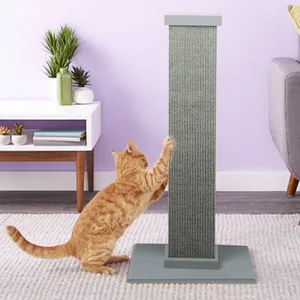
SmartCat The Ultimate 32-in Sisal Cat Scratching Post, Gray
Best Overall
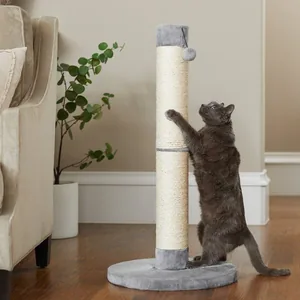
Frisco 35-in Heavy Duty Sisal Cat Scratching Post with Toy, Gray
Best Tall Vertical
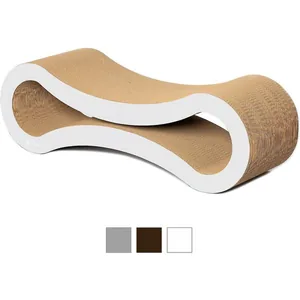
PetFusion Ultimate Cat Scratcher Lounge Toy with Catnip, Cloud White
Best Horizontal Lounge
Cat Scratching Post Comparison Table
| Scratching Post | Best For | Height / Size | Material | Orientation | Price Tier |
|---|---|---|---|---|---|
| SmartCat The Ultimate 32-in | Best overall | 32 in tall | Woven sisal fabric | Vertical | $$ |
| Frisco 35-in Heavy Duty Sisal | Tall vertical | 35 in tall | Sisal rope | Vertical | $$ |
| Frisco 21-in Sisal Post | Budget | 21 in tall | Sisal rope | Vertical | $ |
| PetFusion Ultimate Lounge | Horizontal scratchers | ~34 in long | Recycled cardboard | Horizontal / curved | $$ |
| SmartCat Bootsie’s Combination | Aggressive scratchers | ~26 in incline | Woven sisal fabric | Angled + vertical | $$ |
| Frisco Cactus Tri-Post | Style-conscious homes | 33 in tall | Sisal rope | Vertical (3 arms) | $$ |
| CatastrophiCreations Wall Pole | Wall-mounted climbers | Mounts to wall | Sisal rope | Vertical (mounted) | $$$ |
Not sure where to start? Most cats are happiest with one tall vertical post plus one horizontal scratcher, since plenty of cats switch between standing and floor scratching depending on their mood.
How We Chose These Cat Scratching Posts
We focused on the things that actually decide whether a cat uses a post or ignores it. That means stability under a full-body yank, height tall enough for a real stretch, and surfaces cats naturally prefer. We leaned on aggregated verified owner reviews at scale (several of these posts carry thousands of ratings), feline-care guidance from sources like the Cornell Feline Health Center and the ASPCA, and the materials-and-construction details that predict how long a post lasts. Every pick is currently available, well reviewed, and matched to a real-world cat problem, from couch-clawers to climbers. We also flag each post’s honest downside, because every one of them has a trade-off.
The 7 Best Cat Scratching Posts, Reviewed
1. SmartCat The Ultimate 32-in Sisal Post: Best Overall
Best for: almost any adult cat who needs one do-it-all vertical post.
Mini-specs: 32 inches tall, woven sisal fabric surface, weighted base, holds up to large cats. Rated about 4.6 out of 5 from 3,900+ owner reviews on Chewy.
The SmartCat Ultimate is the post we’d hand a first-time cat parent and a seasoned one alike. At 32 inches, it’s tall enough for a full stretch, which is the single biggest reason cats reject shorter posts. Instead of sisal rope, it uses tightly woven sisal fabric, so there are no loose loops to snag a claw, and it tends to wear evenly over years rather than fraying in one spot. The weighted, low-profile base keeps it planted when a cat throws their whole body into a scratch.
Pros:
- Tall enough (32 in) for adult cats to fully extend and stretch.
- Woven sisal fabric lasts longer than wrapped rope and resists snagging.
- Heavy, stable base that won’t tip during vigorous scratching.
- Plain, neutral look that blends into most rooms.
Cons:
- The base and cap are engineered wood, not solid hardwood, which a few owners expected.
- No toy or perch, it’s a no-frills scratcher only.
Best for: cat parents who want one tall, sturdy post that simply works and lasts.
2. Frisco 35-in Heavy Duty Sisal Post: Best Tall Vertical
Best for: big cats and enthusiastic standers who need maximum height.
Mini-specs: 35 inches tall, full sisal-rope wrap, weighted base, hanging pom-pom toy on top. Rated about 4.8 out of 5 from 2.9K reviews on Chewy.
The Frisco 35-in Heavy Duty post is built for cats who stand on their back legs and reach as high as they can. Those extra inches matter for Maine Coons, Ragdolls, and any cat that’s been clawing high up the back of the sofa. It’s wrapped top to bottom in thick sisal rope, so the whole pole is fair game, not just a panel. Owners call out how solid it feels: it stays put even when a cat climbs it. The pom-pom on top is a nice bonus that pulls kittens over to investigate.
Pros:
- Generous 35-inch height suits large breeds and tall stretchers.
- 360-degree sisal rope means your cat can scratch from any angle.
- Heavy base praised for not tipping, even when climbed.
- Attached toy adds play value and draws cats in.
Cons:
- Rope at the very top can loosen over time with heavy use.
- Taller posts need a bit more floor space than compact ones.
Best for: large cats, or any cat caught scratching high up your furniture.
3. Frisco 21-in Sisal Post: Best Budget
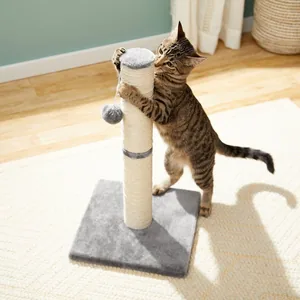
Best for: kittens, smaller cats, and a wallet-friendly first post.
Mini-specs: 21 inches tall, sisal-rope wrap, plush base, hanging toy, usually around $20. Rated about 4.5 out of 5 from 5,300+ reviews on Chewy.
The Frisco 21-in post proves a good scratcher doesn’t have to be expensive. For around $20, you get a genuine sisal-rope post with a plush base and a dangling toy, and the sheer volume of happy reviews tells you most cats take to it. At 21 inches it’s on the shorter side, so it’s a better fit for kittens, seniors, and small adults than for a big cat who wants a long stretch. Think of it as the easy, low-risk way to find out whether your cat is a vertical scratcher before you invest more.
Pros:
- Very affordable, often around $20.
- Real sisal rope, not carpet, so cats actually use it.
- Compact footprint fits small apartments and tight corners.
- Includes a hanging toy to spark interest.
Cons:
- At 21 inches, it’s too short for many full-grown cats to fully stretch.
- Lighter build is less stable than the heavier posts here.
Best for: kittens, small or senior cats, and anyone testing the waters on a budget.
4. PetFusion Ultimate Cat Scratcher Lounge: Best Horizontal / Cardboard
Best for: floor scratchers who go after rugs, carpet, and the base of the couch.
Mini-specs: roughly 34 inches long, curved recycled-cardboard scratch surface, reversible, includes catnip. Rated about 4.5 out of 5 from 1.6K reviews on Chewy.
Not every cat scratches up. Plenty drop to the floor and rake at carpets and rugs, and those cats want a horizontal scratcher. The PetFusion Ultimate Lounge is the best of the bunch because it’s also a place to nap, so cats claim it as their own. The corrugated cardboard is the texture floor-scratchers crave, the gentle curve fits a lounging cat, and you can flip it over to double its life. It’s heavier and better made than the flimsy cardboard pads at the grocery store.
Pros:
- Curved cardboard doubles as a scratcher and a comfy lounge.
- Reversible surface lasts roughly twice as long.
- Heavier, sturdier construction than cheap cardboard pads.
- Catnip included to draw cats in on day one.
Cons:
- Cardboard sheds little flecks as it wears, so expect light cleanup.
- It’s a consumable; heavy scratchers will eventually replace it.
Best for: cats who scratch the floor, rugs, or the bottom edge of the sofa.
5. SmartCat Bootsie’s Combination Scratcher: Best for Aggressive Scratchers
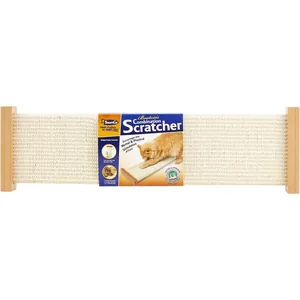
Best for: power scratchers who tear through posts and like to dig in at an angle.
Mini-specs: angled woven sisal fabric panel, usable vertical and horizontal, low stable footprint. Rated about 4.5 out of 5 from 700+ reviews on Chewy.
Some cats scratch like they mean it, and a thin post doesn’t stand a chance. The SmartCat Bootsie’s Combination Scratcher is built for those cats. The angled woven sisal panel lets a cat lean in with their full weight and really pull, which is exactly what hard scratchers want. Because it sits low and wide, it doesn’t tip when a determined cat goes to town. The same dense woven sisal that holds up on the Ultimate post shows up here, so it shrugs off the kind of clawing that shreds cheaper pads in weeks.
Pros:
- Angled design suits cats who like to lean and dig in hard.
- Tough woven sisal fabric handles heavy-duty scratching.
- Low, wide base stays stable under aggressive use.
- Works for both vertical and horizontal scratchers.
Cons:
- Shorter than a tall post, so dedicated standers may want both.
- The angled shape takes up more floor area than a slim post.
Best for: strong, destructive scratchers who blow through ordinary posts.
6. Frisco Cactus Tri-Post: Best for Decor-Conscious Homes
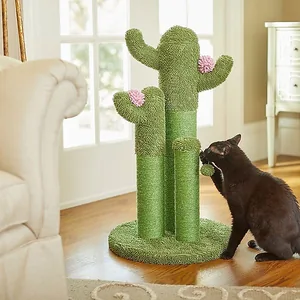
Best for: people who want a real scratcher that doesn’t look like an eyesore.
Mini-specs: 33 inches tall, three sisal-wrapped arms, plush fabric topper, double-layer base. Rated about 4.8 out of 5 from 400+ reviews on Chewy.
Let’s be honest: most scratching posts are ugly. The Frisco Cactus Tri-Post solves that without cutting corners on function. Shaped like a friendly cactus, its three sisal-wrapped arms give your cat multiple angles to scratch at once, which works nicely in a two-cat home. The double-layer base keeps it steady, and at 33 inches it’s tall enough for a proper stretch. It’s the post you can leave in the living room without wincing when guests come over.
Pros:
- Genuinely cute cactus design that fits modern decor.
- Three sisal arms give multiple scratching angles in one piece.
- 33-inch height allows a full adult stretch.
- Double-layer base adds real stability.
Cons:
- Costs more than a plain post for the styled look.
- The arms are slimmer, so the heaviest scratchers may prefer a thick single pole.
Best for: design-minded homes that still want a sturdy, cat-approved sisal post.
Frisco Wall Sisal Cat Scratcher: Best Wall-Mounted
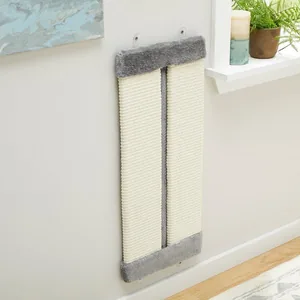
This is a wall-mounted sisal scratching panel that bolts to the wall instead of sitting on the floor. It gives your cat a durable sisal surface to dig into while freeing up floor space in small rooms and apartments.
It’s our wall-mounted pick because it lets cats stretch up high, the way they naturally want to scratch, without a bulky base taking over the room. Best for tight spaces, renters willing to patch a few holes, and cats who love a good vertical reach.
Pros:
- Mounts to the wall to save valuable floor space
- Sisal surface holds up well to daily scratching
- Lets cats stretch upward for a satisfying full reach
- Budget-friendly at around $20
Cons:
- Requires drilling and secure mounting into the wall
- No horizontal option for cats who scratch flat surfaces
How to Choose the Best Cat Scratching Post
The best cat scratching post is the one your cat will actually use, and that comes down to four things: height, stability, material, and orientation. Get those right and most cats switch from the couch to the post within days.
How tall should a cat scratching post be?
A vertical scratching post should be at least 26 inches tall, and 30 to 35 inches is better for an average adult cat. Cats scratch partly to stretch their spine and shoulders, so they want to reach up to nearly their full standing height. A good rule: the post should be a bit taller than your cat is long, from nose to base of tail, when they stretch out. Posts under 20 inches are fine for kittens but get ignored by grown cats.
Why does stability matter so much?
Stability is the make-or-break factor for a scratching post. If a post wobbles or tips even once, many cats decide it’s unsafe and never touch it again. Look for a heavy, wide base, and give any post a firm shove before you trust it. The heaviest posts here, like the SmartCat Ultimate and the Frisco 35-in, earn their reputation by staying planted when a cat throws their full weight into a scratch.
Sisal vs cardboard vs carpet: which material is best?
Sisal is the top choice for vertical posts, cardboard wins for horizontal scratchers, and carpet is the material to avoid. Here’s how they compare.
| Material | Best For | Why Cats Like It | Watch Out For |
|---|---|---|---|
| Sisal rope | Vertical posts | Coarse texture and great resistance for a satisfying pull | Top loops can loosen over years of use |
| Woven sisal fabric | Heavy-use posts | Tight weave, no snagging, very long-lasting | Slightly higher price |
| Cardboard | Horizontal scratchers | Shreddable texture cats love to dig into | Wears down and sheds flecks; a consumable |
| Carpet | Rarely ideal | Soft and familiar | Feels just like furniture, so it can confuse cats |
Vertical or horizontal: which does your cat need?
Watch where your cat already scratches. A cat that claws up the side of the couch or the drapes is a vertical scratcher and needs a tall post. A cat that rakes at rugs, carpet, or the floor is a horizontal scratcher and wants a flat or curved cardboard scratcher. Many cats do both, which is why one tall post plus one horizontal lounge covers most homes. The Cornell Feline Health Center recommends matching the post to your cat’s natural scratching orientation, not forcing a preference.
Where should you put the scratching post?
Place a new scratching post right next to the furniture your cat is already scratching, not hidden in a back room. Cats scratch in spots that matter to them, near sleeping areas, doorways, and windows, partly to mark territory. Put the post in the line of fire, rub a little catnip on it, and reward your cat for using it. Once the habit sticks, you can slowly move the post a few inches at a time toward a more convenient spot.
Common Cat Scratching Post Mistakes to Avoid
A lot of “my cat won’t use the post” stories trace back to a few avoidable buying mistakes. Here are the big ones.
- Buying a post that’s too short. A 16-inch post won’t let a grown cat stretch, so they’ll go back to the couch. Aim for 26 inches or more.
- Choosing carpet over sisal. Carpet posts feel like your furniture, which teaches the wrong lesson. Sisal gives a clearly different texture.
- Picking a wobbly post. If it tips during the first scratch, your cat is done with it. Stability beats style.
- Hiding it in a corner. A post in an unused room gets ignored. Put it where your cat actually wants to scratch.
- Offering only one option. Cats have preferences. In a multi-cat home especially, a couple of posts in different spots prevents squabbles and furniture damage.
- Giving up too soon. It can take a week or two of catnip and gentle encouragement before a cat fully commits to a new post.
Scratching is a normal, healthy behavior: the ASPCA and International Cat Care explain how to redirect it to a post.
Frequently Asked Questions
Q: What is the best cat scratching post overall?
The best cat scratching post overall is the SmartCat The Ultimate 32-in Sisal Post. At 32 inches it’s tall enough for a full stretch, its weighted base keeps it from tipping, and the woven sisal fabric holds up for years. It carries thousands of positive owner reviews and works for nearly any adult cat.
Q: How tall should a cat scratching post be?
A cat scratching post should be at least 26 inches tall, with 30 to 35 inches ideal for an average adult cat. Cats stretch their full body while scratching, so the post needs to be slightly taller than your cat measures from nose to tail base when extended. Kittens can start with shorter posts around 20 inches.
Q: Do cats prefer sisal or carpet scratching posts?
Most cats prefer sisal scratching posts over carpet. Sisal rope and woven sisal fabric give a coarse, satisfying resistance cats love, while carpet feels too much like household furniture and can confuse a cat about what’s okay to scratch. For vertical posts, sisal is the clear winner.
Q: How do I get my cat to use a scratching post?
Place the scratching post right next to where your cat already scratches, then make it appealing. Rub catnip on it, dangle a toy near it, and praise or treat your cat whenever they use it. Avoid forcing their paws onto it. Most cats start using a sturdy, well-placed post within a week or two.
Q: Why won’t my cat use the scratching post?
Cats usually reject a scratching post because it’s too short, too wobbly, made of the wrong material, or placed in the wrong spot. Try a taller, more stable sisal post positioned next to the furniture your cat scratches. Adding catnip and giving it a couple of weeks usually does the trick.
Q: Should I get a vertical or horizontal scratching post?
It depends on how your cat scratches. Cats that claw up furniture or drapes need a tall vertical post, while cats that scratch rugs and floors prefer a horizontal cardboard scratcher. Many cats enjoy both, so offering one of each covers your bases and protects more of your home.
Q: How many scratching posts does a cat need?
One cat does well with at least one tall vertical post plus one horizontal scratcher. In a multi-cat home, plan for one scratching surface per cat plus one extra, spread across different rooms. More options in the right places means less competition and far less furniture damage.
Q: Will a scratching post stop my cat from scratching furniture?
A good scratching post will redirect most furniture scratching, but it works best alongside a few extra steps. Put the post next to the targeted furniture, make the furniture less appealing with double-sided tape, and reward your cat for using the post. Scratching is normal behavior, so the goal is redirection, not elimination.
The Bottom Line: Which Cat Scratching Post Should You Buy?
If you want one post that does it all, the SmartCat The Ultimate 32-in Sisal Post is the best cat scratching post for most cats, tall, stable, and built from sisal cats keep coming back to. Shopping on a budget? The Frisco 21-in Sisal Post gives you a real, sturdy scratcher for around $20. And if your cat is a floor-scratcher, pair either one with the PetFusion Ultimate Lounge for horizontal scratching.
If you only buy one thing today, get a tall sisal post and set it right next to the spot your cat has been clawing. Nine times out of ten, the couch wins back its dignity within a week.

Hello and welcome to The Ideal Cat!
We are some passionate cat owners from different professions. We love our cats and have a lot of experience in how to care for our pets. We are incredibly excited to share our knowledge, experience, and research with you. So you can take good care of your loving cat. We will answer most of the common questions about owning cats, taking care of them, etc. If you have any question contact with us. Thanks for visiting! Enjoy the content.
)