
You catch your cat mid-swipe at the curtains, or up on the counter again, and your first instinct is to say “no!” loudly and maybe shoo them off with a hand clap. Fair enough. But here’s the thing: your cat isn’t sitting there thinking “I got in trouble for scratching the couch.” They’re thinking “a scary noise happened near me.” That’s a very different lesson, and it’s why so many cat parents feel like discipline just never sticks.
Cats aren’t wired like dogs. Dogs are pack animals who evolved alongside us to read our disapproval and want to fix it. Cats are solitary hunters at heart, and their brains just don’t file “consequence” and “action” together unless the two happen within about a second of each other. So instead of trying to punish your way to a better-behaved cat, the real fix is understanding why the behavior is happening and rerouting it. That’s what this guide walks you through.
- Cats can’t connect punishment to an action unless it happens within about a second of the behavior, so yelling or scolding later teaches them nothing about the behavior itself.
- Physical punishment (hitting, scruffing, flicking the nose) is one of the top causes of new fear and aggression in cats, according to veterinary behaviorists.
- Spray bottles and loud noises don’t teach a lesson; they just make a cat associate you, or the room, with something unpleasant.
- Positive reinforcement, like rewarding a scratching post or a paw-off-the-counter moment with a treat, changes behavior faster and without damaging trust.
- Sudden behavior changes, like new aggression or house-soiling, are often a medical or stress signal, not defiance, so a vet visit should come before any behavior plan.
Can you actually discipline a cat?
Not in the way most people mean it. You can’t scold a cat and expect them to “learn their lesson” the way a dog might. What you can do is redirect: interrupt the behavior in the moment, then point your cat toward something they’re allowed to do instead. Think of it less like discipline and more like coaching. You’re not punishing the scratching, you’re making the scratching post the more rewarding option.
According to International Cat Care, cats respond far better to reward-based training than to correction, because their brains are built around seeking things that feel good, not avoiding things that feel bad after the fact.
Why does punishing a cat not work?
Punishing a cat doesn’t work because cats need the consequence to land within roughly a second of the action, or the connection just doesn’t form. By the time you’ve noticed the shredded cushion and marched over to scold your cat, that window has closed. Your cat only learns that you, specifically, are unpredictable and a little scary.
This is also why cats who get yelled at often seem to “act guilty.” That crouched, ears-back look isn’t guilt, it’s fear of your body language and tone, learned from past scoldings. It has nothing to do with whatever they did five minutes ago. Punishment doesn’t teach the lesson you think it’s teaching; it just teaches your cat to read you as a threat.
What should you never do to discipline a cat?
Never use physical punishment, scruffing, spray bottles, loud noise-blasting, or rubbing a cat’s nose in a mess, because all of these damage trust without changing the behavior. Here’s the short list of what to skip entirely:
- Yelling or shouting: startles your cat and teaches them to avoid you, not the behavior.
- Hitting or flicking: causes pain and fear, and is linked to increased aggression and hiding in cats, per veterinary behavior research.
- Scruffing (grabbing the loose skin at the neck): can cause real stress and, in adult cats, isn’t the gentle “mama cat” move it’s often assumed to be.
- Spray bottles: a popular internet trick, but it mostly teaches cats to be jumpy around water, or around you, not to avoid the couch.
- Rubbing their nose in urine or mess: this is a dog-training relic that does nothing for cats and can make litter box aversion worse.
If your cat is suddenly acting aggressive after being disciplined this way, that’s often the punishment backfiring, not the cat being “difficult.”
What actually works instead of punishment?
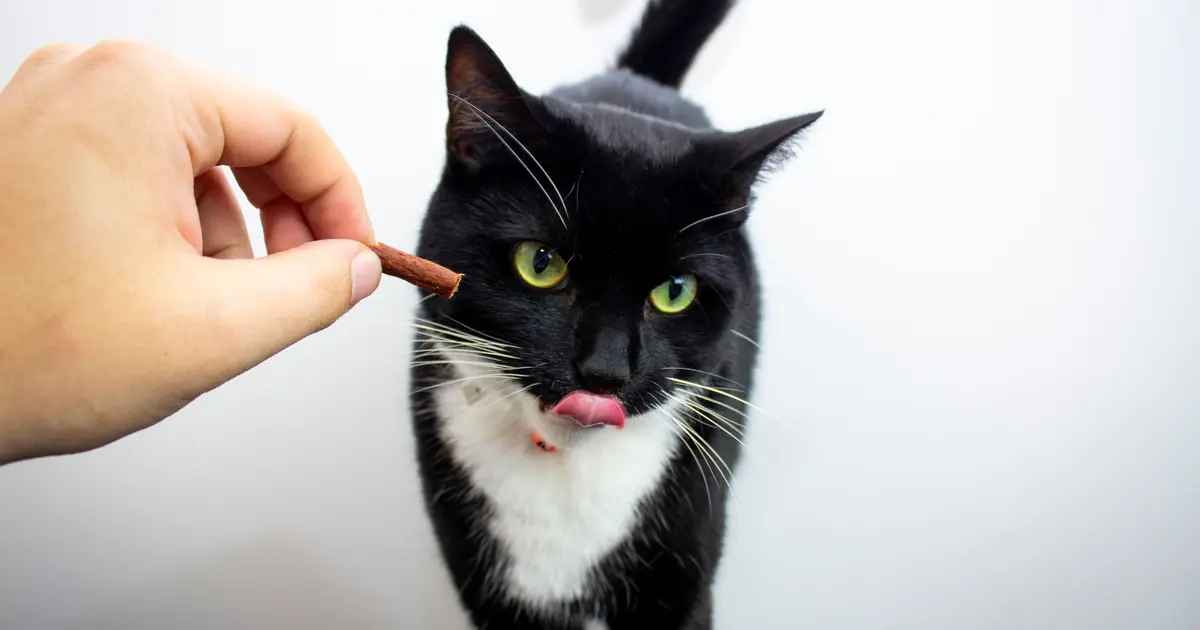
Positive reinforcement, redirection, and managing the environment work far better than any form of punishment, because they change what your cat wants to do rather than just scaring them out of doing it in front of you. A few approaches that hold up:
- Reward the behavior you want. A treat, a “good job,” or a few seconds of play the instant your cat uses the scratching post instead of the couch builds a real habit.
- Redirect in the moment. If your cat starts clawing the armchair, calmly pick them up (or lure them with a toy) and place them at the scratching post right next to it.
- Remove the reward. Counter surfing keeps happening because counters have food smells and warm sunny spots. Clear the counter and the behavior often fades on its own.
- Use a clicker. A clicker paired with treats gives you a precise, one-second-or-less marker for “yes, that’s it,” which solves the timing problem punishment can’t.
- Change the environment. Double-sided tape on furniture arms, foil on counters, or a covered litter box for a shy cat all steer behavior without a single scolding.
Punishment vs. positive redirection: what actually changes behavior?
| What doesn’t work (punishment) | What works (redirection and reinforcement) |
|---|---|
| Yelling “no” after the fact | Calmly redirecting to a scratching post or toy in the moment |
| Spray bottle or loud noise blasts | Rewarding the desired behavior with a treat or play the instant it happens |
| Hitting, flicking, or scruffing | Removing the reward (clearing counters, covering furniture) so the behavior stops paying off |
| Rubbing their nose in a mess | Addressing the root cause (litter box issues, stress, boredom) |
| Chasing or cornering a scared cat | Giving a stressed cat space and a safe retreat spot |
How do you handle common “problem” behaviors without punishment?
Most so-called bad behaviors have a simple redirect once you know the trigger behind them. Here’s how to handle the ones that come up most:
- Counter surfing: Cats climb counters for food smells, warmth, or a good vantage point. Clear food away, add a cat tree nearby for height, and reward paws-on-the-floor with a treat.
- Scratching furniture: Scratching is normal cat behavior, not defiance; it marks territory and stretches muscles. Put a sturdy scratching post right next to the furniture they’re targeting and reward its use.
- Biting or play aggression: This is usually leftover kitten play that never got redirected. Swap your hand for a wand toy the second teeth come near skin, and end play sessions calmly instead of abruptly.
- Waking you up at night: Cats are naturally more active at dawn and dusk. A solid play session and a small meal right before bed usually settles this without a single scolding.
If any of this ties back to trust issues, working on how to get a cat to trust you often does more for behavior than any correction ever will.
What role do enrichment and routine play in better behavior?
Enrichment and a steady routine prevent most “problem” behaviors before they start, because a lot of what looks like misbehavior is really a bored or under-stimulated cat looking for something to do. Cats who get regular play, climbing space, and a predictable schedule are far less likely to swat, knock things off shelves, or shred furniture out of restlessness.
A couple of short play sessions a day, a window perch, and a few rotating toys go a long way. If your cat has taken up knocking things off counters and tables, that’s frequently a bid for attention or stimulation, not a grudge against your candle collection.
When is “bad behavior” actually a medical or stress issue?
A sudden change in behavior is often your cat’s way of signaling pain, illness, or stress, not a discipline problem at all. New aggression, sudden litter box avoidance, excessive grooming, or a previously cuddly cat suddenly avoiding touch can all point to something physical going on, like arthritis, a urinary tract issue, or dental pain. The Cornell Feline Health Center notes that behavior changes are one of the most reliable early signs owners can catch, precisely because cats are so good at hiding pain otherwise.
Before you assume any “bad” behavior is something to train away, it’s worth checking for signs of stress in cats and ruling out anything medical with your vet. Punishing a cat who’s actually in pain or scared not only won’t fix anything, it can make the underlying problem worse.
This article is educational and not a substitute for veterinary care. If your cat’s behavior changed suddenly, or if you notice aggression, straining in the litter box, appetite changes, or signs of pain, please have them checked by a licensed veterinarian before starting any behavior plan.
Frequently Asked Questions
Q: Is it OK to say “no” to a cat?
Yes, a firm, calm “no” paired with immediately redirecting your cat to an acceptable activity is fine and can work as a verbal interrupter. What doesn’t help is yelling it repeatedly or using it as the whole strategy without redirecting to something better.
Q: Does squirting a cat with water stop bad behavior?
Not reliably. A spray bottle usually teaches a cat to be wary of water or of you, rather than teaching them to stop the behavior, and many cats simply wait until you’ve left the room to do it again.
Q: Should you scruff a cat to discipline them?
No. Scruffing an adult cat as punishment can cause real stress and fear, and it doesn’t teach the behavior you’re hoping for. It’s different from the brief, gentle scruff a vet might use for a medical exam.
Q: Why does my cat seem to “act guilty” after doing something wrong?
That crouched, ears-back posture is fear of your tone or body language from past scoldings, not guilt. Cats don’t have the cognitive link between “past misdeed” and “current punishment” the way people assume they do.
Q: How long does it take to redirect a cat’s behavior?
Many cats start shifting toward a new habit, like using a scratching post instead of furniture, within one to two weeks of consistent redirection and reward. Consistency matters more than intensity here.
Q: Can you train a cat like a dog?
Cats can absolutely be trained, including to sit, come when called, or use a scratching post, but they respond almost entirely to reward-based methods rather than correction-based ones. Clicker training works especially well because of its precise timing.
Q: Is punishment ever appropriate for cat aggression?
No. Punishing an aggressive cat tends to escalate fear-based aggression rather than calm it. A better approach is figuring out the trigger (pain, fear, overstimulation) and addressing that directly, with a vet’s help if the aggression is new or severe.
Q: What’s the difference between discipline and redirection for cats?
Discipline implies a consequence meant to teach a lesson after the fact, which cats can’t process that way. Redirection means interrupting the unwanted behavior in real time and guiding your cat toward an acceptable alternative, which is the version that actually works.

Hello and welcome to The Ideal Cat!
We are some passionate cat owners from different professions. We love our cats and have a lot of experience in how to care for our pets. We are incredibly excited to share our knowledge, experience, and research with you. So you can take good care of your loving cat. We will answer most of the common questions about owning cats, taking care of them, etc. If you have any question contact with us. Thanks for visiting! Enjoy the content.
)