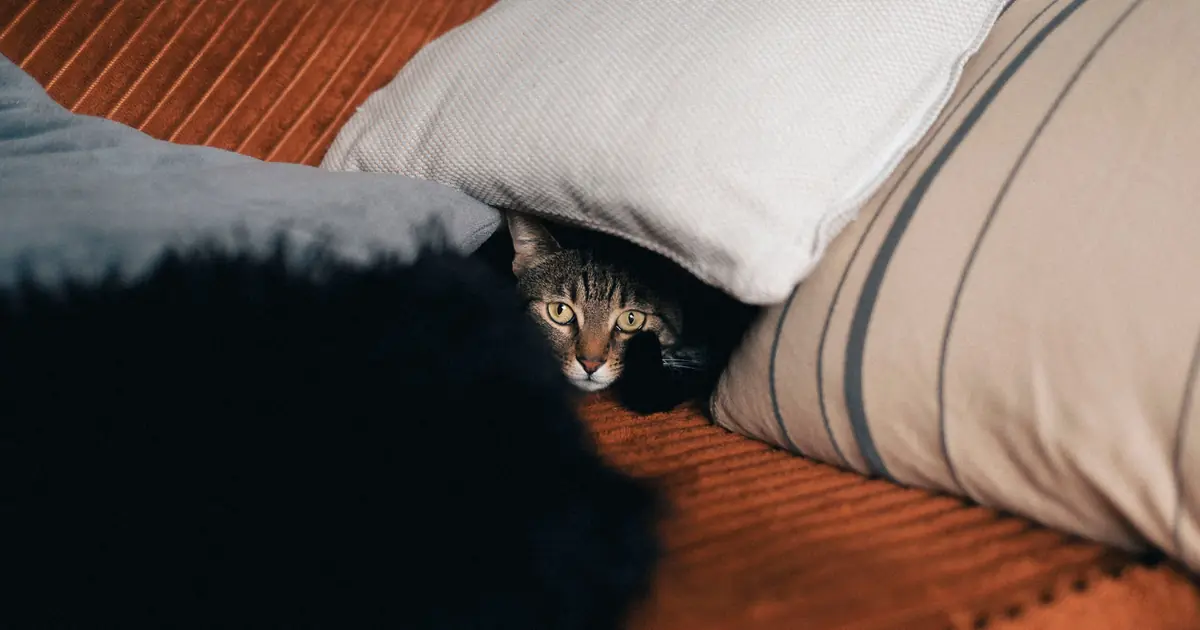
Picture this. Your usually chatty cat has gone quiet and spends her days tucked behind the couch. Or your calm boy suddenly hisses when you reach for him. Cats are experts at hiding how they feel, so the signs of stress in cats are often quiet and easy to miss until something bigger goes wrong.
Here’s the thing. Cats evolved as both predators and prey, so showing weakness or fear could once have cost them their lives. That instinct stuck. Your cat won’t sulk dramatically or tell you she’s anxious. Instead she shifts her behavior in small ways, and those small changes are the whole ballgame. The good news is that once you know what to look for, you can spot a stressed cat early and actually help.
- Cats hide stress by instinct, so the signs are usually subtle: small shifts in hiding, eating, grooming, or litter box habits matter more than any dramatic display.
- Stress signs fall into two groups: behavioral (hiding, over-grooming, spraying, aggression, extra meowing) and physical (bald patches, diarrhea, vomiting, appetite loss, straining to pee).
- Common triggers include changes at home, new pets or people, moving, loud noises, conflict with other cats, a dirty litter box, and plain boredom.
- Stress can trigger feline idiopathic cystitis, a painful bladder condition that causes straining and blood in the urine and needs a vet fast.
- Many stress signs overlap with real illness, so a vet check to rule out disease should come before you assume it’s “just stress.”
Why do cats hide their stress so well?
Cats hide stress because their survival instinct tells them that looking vulnerable is dangerous. In the wild, a cat that shows pain or fear becomes an easy target, so cats mask discomfort as long as they can. That’s why your cat won’t announce that she’s anxious. She quietly changes her routine instead.
This is exactly why subtle changes matter. A cat who eats a little less, hides an hour longer, or grooms one spot too much is often telling you something. You know your cat’s normal better than anyone. Any real drift from that baseline, especially a sudden one, deserves your attention. When in doubt, reading your cat’s body language gives you a head start on catching tension early.
What are the behavioral signs of stress in cats?
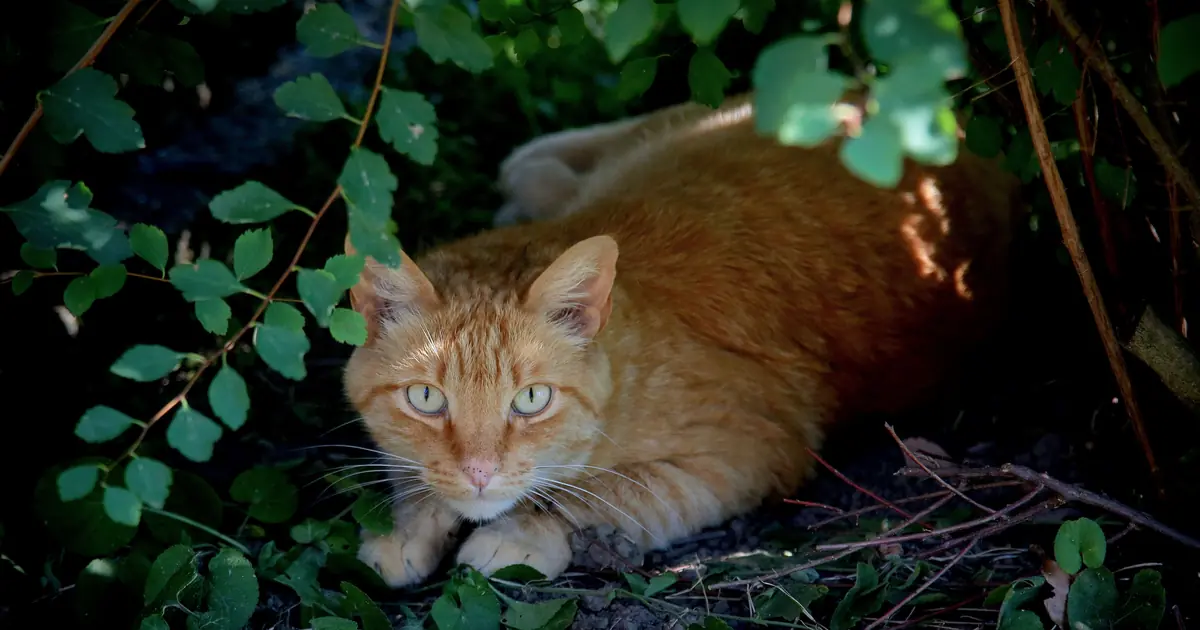
Behavioral signs of stress in cats show up as changes in how your cat acts day to day. A stressed cat often hides more, plays less, or reacts differently to people and other pets than she used to. These shifts are the earliest and clearest clues something is off.
Watch for these behavioral signs:
- Hiding more than usual. A cat who suddenly disappears for hours, or picks new hiding spots, is often trying to feel safe.
- Over-grooming. Stressed cats lick and chew the same spot until the fur thins, leaving bald patches, often on the belly or legs.
- Peeing or pooping outside the litter box. House-soiling is one of the most common stress signals, and it’s rarely about spite.
- Spraying. Backing up to a wall and marking with urine is a territorial stress response, common when a new cat or person enters the picture.
- Eating less (or barely at all). The stress hormone cortisol suppresses appetite and can cause nausea.
- Clinginess or withdrawal. Some cats shadow you everywhere; others vanish. Either extreme can signal anxiety. If your cat has turned into a velcro cat, here’s why your cat may be so clingy.
- Aggression or irritability. Hissing, swatting, or biting can come from a cat who feels cornered or on edge. Stress is a frequent reason behind sudden aggression in cats.
- Excessive meowing. More vocal than usual, especially yowling or nighttime crying, can point to distress.
- Pacing and restlessness. A cat who can’t settle and keeps moving room to room may be wound up.
- Less play and low energy. Sleeping more and ignoring toys can look like laziness but often reads as low mood. That flat, withdrawn state can also overlap with depression symptoms in cats.
What are the physical signs of stress in cats?
Physical signs of stress in cats are the body’s reaction to ongoing anxiety, and they can affect the skin, stomach, and bladder. These signs matter because they’re the ones most likely to overlap with real medical illness, so they should never be brushed off.
Keep an eye out for these physical signs:
- Bald patches or raw skin from over-grooming, sometimes with small sores.
- Diarrhea or vomiting that isn’t explained by a diet change or a hairball.
- Decreased appetite and, over time, weight loss.
- Straining to urinate, going often, or blood in the urine. Stress can trigger feline idiopathic cystitis (FIC), a painful inflammation of the bladder with no infection behind it.
That last one deserves a flag. Feline idiopathic cystitis is closely linked to stress, and a male cat straining in the litter box can be a life-threatening blockage. If your cat is straining and producing little or no urine, treat it as an emergency and call a vet right away.
What triggers stress in cats?
Stress in cats is usually triggered by change, conflict, or unmet needs in their environment. Cats are creatures of habit, and even small disruptions to their routine or territory can leave them anxious. Pinpointing the trigger is half the battle.
Common triggers include:
- Changes in the home, like new furniture, a rearranged room, or a shift in your schedule
- A new pet, a new baby, or a new person in the house
- Moving to a new home
- Loud noises: fireworks, thunderstorms, construction, or a vacuum
- Conflict or tension with another cat, indoors or even a strange cat seen through a window
- A dirty litter box, too few litter boxes, or a box in a busy spot
- Boredom and a lack of enrichment, especially for indoor-only cats
How can I tell stress from illness? (Sign, meaning, and what to do)
You often can’t tell stress from illness by looking, and that’s the honest truth. Nearly every stress sign, from hiding to not eating to litter box changes, can also be a symptom of a medical problem. This table breaks down what each sign can mean and your best next move.
| Sign you notice | What it can mean | What to do |
|---|---|---|
| Peeing outside the box, straining | Stress, feline idiopathic cystitis, a UTI, or a blockage | Vet now, especially if little urine comes out |
| Bald patches from grooming | Stress, allergies, fleas, or a skin condition | Vet visit to rule out medical causes first |
| Not eating or eating much less | Stress, dental pain, nausea, or organ disease | See a vet within 24 to 48 hours; sooner if fully off food |
| Hiding more than usual | Stress, fear, or pain from an unseen illness | Watch closely; vet check if it lasts or comes with other signs |
| Vomiting or diarrhea | Stress, diet issues, parasites, or illness | Vet if it repeats, or if you see blood or lethargy |
| Sudden aggression or irritability | Stress, fear, or pain | Vet check to rule out pain before assuming behavior |
The takeaway is simple. Assume medical first, “just stress” second. A vet check that rules out disease is the responsible starting point, not the last resort.
How do I reduce stress in my cat?
You reduce stress in a cat by making her world feel safe, predictable, and interesting. Cats calm down when they have control over their space and a steady routine. A few consistent changes usually go a long way.
Try these steps:
- Keep a routine. Feed, play, and clean the litter box at roughly the same times each day. Predictability is soothing for cats.
- Give safe spaces. Offer enclosed hideouts like a covered bed or a cardboard box where your cat can retreat and not be bothered.
- Add vertical territory. Cat trees, shelves, and window perches let your cat watch the world from up high, which feels secure.
- Boost enrichment. Daily interactive play (think wand toys and the chase-pounce sequence), puzzle feeders, and rotating toys beat boredom.
- Fix the litter setup. Scoop daily, and follow the rule of one box per cat plus one extra, spread around the home.
- Ease multi-cat tension. Provide separate food, water, and litter stations so cats don’t have to compete.
- Consider pheromones. Synthetic feline pheromones mimic the calming scent cats leave when they feel safe. A cat pheromone diffuser can take the edge off during moves, new arrivals, or noisy stretches.
Give any change a week or two before you judge it. Cats adjust on their own timeline, and rushing them tends to backfire.
When should I see a vet about my cat’s stress?
See a vet whenever a stress sign is sudden, severe, or sticks around, because the same signs can point to serious illness. This article is educational and not a substitute for veterinary care, so a licensed vet should be your first call for any health worry.
Get to a vet promptly if your cat shows any of these red flags:
- Straining in the litter box or producing little to no urine (this can be an emergency, especially in male cats)
- Not eating for more than 24 hours
- Repeated vomiting or diarrhea, or any blood
- Sudden weight loss
- Ongoing hiding paired with lethargy
- Bald patches, sores, or skin that looks raw or infected
Reputable resources like International Cat Care and the Cornell Feline Health Center stress the same point: rule out medical causes before treating a change as behavioral. The ASPCA also has helpful guidance on common cat behavior issues once your vet gives the all-clear.
Frequently Asked Questions
Q: What are the first signs of stress in cats?
The earliest signs of stress in cats are usually subtle: hiding a bit more, eating slightly less, playing less, or small changes in litter box habits. Because cats mask discomfort by instinct, these quiet shifts from your cat’s normal routine often show up before any dramatic behavior does.
Q: Can stress make a cat physically sick?
Yes, stress can make a cat physically sick. It can cause diarrhea, vomiting, appetite loss, and over-grooming that leaves bald patches. Stress is also a major trigger for feline idiopathic cystitis, a painful bladder inflammation that causes straining and blood in the urine and needs veterinary care.
Q: How long does stress last in cats?
Short-term stress from an event like a vet trip or fireworks usually eases within hours to a couple of days once the trigger is gone. Chronic stress from an ongoing issue, like conflict with another cat or a dirty litter box, lasts until you fix the underlying cause.
Q: Do cats grow out of stress on their own?
Cats rarely grow out of stress on their own if the trigger stays in place. Some adjust to a one-time change over a week or two, but ongoing stressors keep the anxiety going. Identifying and removing or easing the trigger is what actually resolves it.
Q: Can a stressed cat stop eating?
Yes, a stressed cat can stop eating because the stress hormone cortisol suppresses appetite and can cause nausea. This matters a lot: a cat who goes without food for more than 24 to 48 hours risks a serious liver condition called hepatic lipidosis, so see a vet if your cat won’t eat.
Q: Does a pheromone diffuser really help a stressed cat?
A pheromone diffuser can help many stressed cats by releasing a synthetic version of the calming scent cats naturally leave when they feel safe. It works best alongside other changes like a steady routine, safe hiding spots, and good litter box care, not as a fix on its own.
Q: How can I tell if it’s stress or a medical problem?
You often can’t tell just by looking, because signs like hiding, appetite loss, and litter box changes overlap with real illness. The safe approach is a vet check to rule out medical causes first. Only after your vet gives the all-clear should you treat the change as purely stress-related.
Q: What smells or situations stress cats out the most?
Cats are most stressed by change and conflict: new pets or people, moving, a rearranged home, loud noises like fireworks, tension with other cats, and a dirty or crowded litter box. Boredom stresses indoor cats too, which is why daily play and enrichment matter.
This article is for educational purposes and isn’t a substitute for professional veterinary advice. If your cat shows sudden, severe, or lasting changes, contact your veterinarian, since many stress signs overlap with medical illness.

Hello and welcome to The Ideal Cat!
We are some passionate cat owners from different professions. We love our cats and have a lot of experience in how to care for our pets. We are incredibly excited to share our knowledge, experience, and research with you. So you can take good care of your loving cat. We will answer most of the common questions about owning cats, taking care of them, etc. If you have any question contact with us. Thanks for visiting! Enjoy the content.
