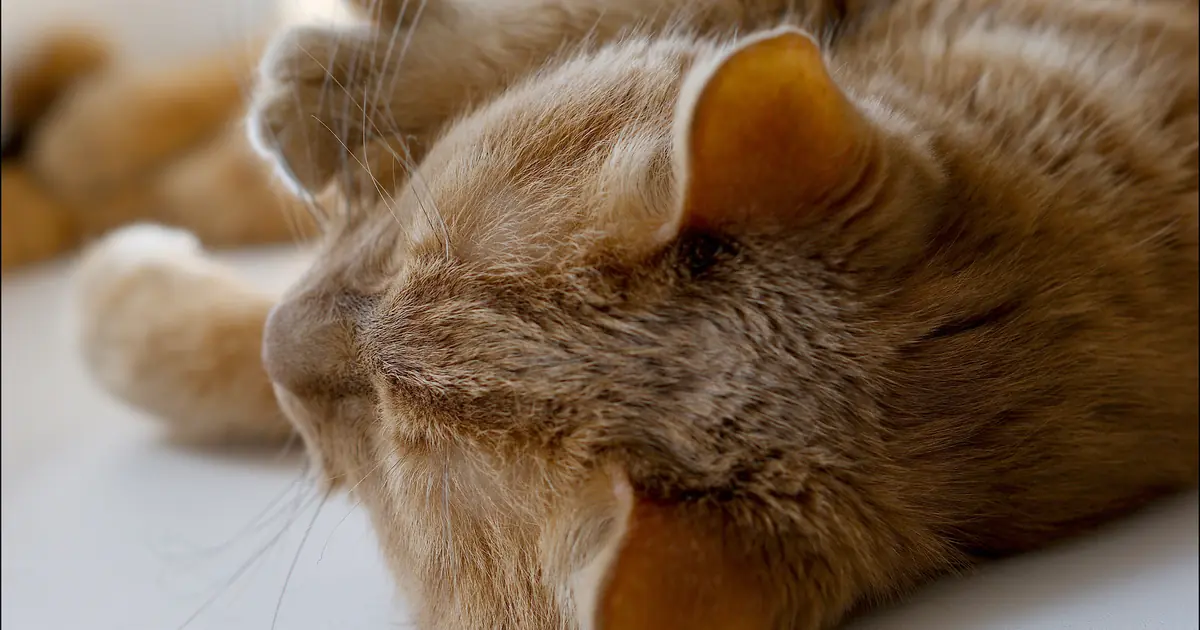
Picture this. You lightly run a finger down your cat’s soft belly, and her skin ripples like water. A back leg kicks. Maybe she grabs your hand with all four paws and gives it a warning nibble. So you wonder: was that a giggle, or a “back off”?
Here’s the honest answer to can cats be ticklish: yes, but only in a limited, twitchy way. Cats do react to light touch, and science even has names for what’s happening. What they do not do is enjoy tickling the way a giggling kid does. Once you know the difference, you’ll read your cat a whole lot better, and you’ll save your fingers from a few surprise chomps.
- Cats can feel knismesis, the light itchy tickle that makes skin twitch, but not gargalesis, the laugh-inducing tickle limited to humans and some primates.
- Common ticklish-like spots on cats are the belly, paw pads, base of the tail, behind the ears, and under the chin.
- A skin twitch, tail flick, or sudden bite is usually a reflex or a warning, not a sign your cat is enjoying the tickle.
- The belly is often a trap: touching it can trigger a defensive grab-and-kick even from cats who love you.
- Most cats prefer steady petting on the head, cheeks, and chin over tickling anywhere.
Can cats actually be ticklish?
Cats can be ticklish, but only in a mild, physical sense. They feel light touch on sensitive spots and respond with a twitch, a flick, or a wriggle. What they don’t have is the emotional, laughter side of ticklishness that people experience. So your cat isn’t secretly cracking up when you poke her side. She’s feeling a small ripple of sensation and deciding whether to tolerate it or shut it down.
Think of it as a reflex more than a game. That skin ripple down a cat’s back? Involuntary. The leg kick when you touch a paw? Also involuntary. These reactions probably exist to help a cat notice something crawling on her, like a flea or a tick, and shake it off fast. Reading those small reactions is a big part of understanding cat body language, and it tells you far more than a wagging tail on a dog ever would.
What are the two types of tickling, knismesis and gargalesis?
Scientists split ticklishness into two kinds, and the difference explains everything about cats. Knismesis is the light, itchy, goosebump-raising tickle you feel when a feather or a bug grazes your skin. Gargalesis is the deeper, laugh-inducing tickle you get when someone tickles your ribs or feet on purpose.
Cats feel knismesis. That’s the twitch-and-flick response. Researchers believe gargalesis, the laughing kind, is limited to humans and a few primates like chimpanzees. So a cat can register that light “something’s on me” sensation, but she has no laughing tickle reflex at all.
This matters because it changes what your cat’s reaction means. When you tickle a human friend, the squirming usually comes with laughter and (mostly) enjoyment. When you tickle a cat, the squirming is closer to swatting away an itch. International Cat Care notes that cats communicate discomfort through subtle body signals long before they escalate, so that twitch deserves respect. You can read more general cat-behavior guidance from International Cat Care.
| Tickle type | What it feels like | Do cats feel it? |
|---|---|---|
| Knismesis | Light, itchy, goosebump tickle from a feather-light touch | Yes, this is the twitch and paw-flick response |
| Gargalesis | Deep, laugh-inducing tickle from firmer, playful pressure | No, this seems limited to humans and some primates |
Which spots on a cat are ticklish?
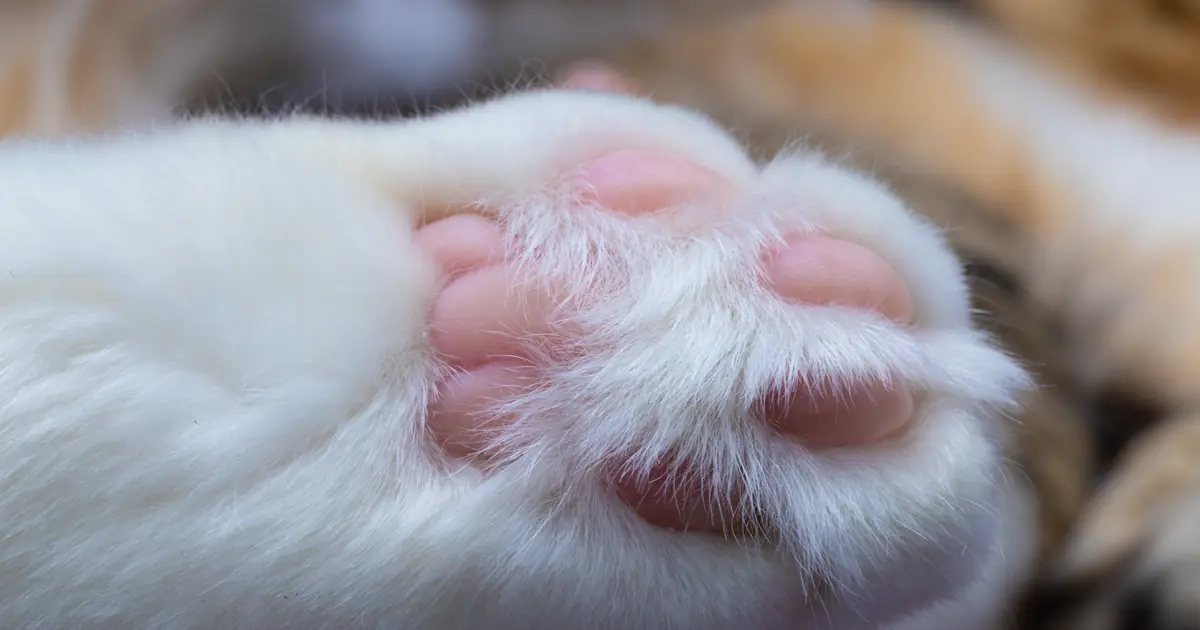
The most ticklish-like spots on a cat are the belly, the paw pads, the base of the tail, behind the ears, and under the chin. These areas have lots of nerve endings, so a light touch registers strongly. But “sensitive” and “enjoyable” are not the same thing, and that’s where a lot of cat parents get scratched.
Here’s the quick rundown of the usual reactors:
- Belly: Super sensitive and lightly protected. A tickle here often triggers a defensive reaction, not a happy one.
- Paw pads: Packed with nerves. Touch a paw and most cats yank it back or flick it, exactly like a tickle.
- Base of the tail: Some cats ripple their skin, nibble the air, or lick their own leg when you scratch here. Others love it, others hate it.
- Behind the ears and under the chin: The friendliest zone. Many cats lean in, and this is also where they love a good headbutt and scent rub.
Every cat is an individual, though. One cat purrs at a tail-base scratch, the next spins around to grab your hand. The only way to know your cat’s map is to watch her reactions closely.
Why does tickling my cat’s belly get me bitten or kicked?
Your cat bites or bunny-kicks when you tickle her belly because the belly is a vulnerable, instinct-protected zone, not because she’s being mean. The soft underside guards her vital organs, so most cats are hardwired to defend it. When your hand lands there, that grab-and-rabbit-kick move is a defensive reflex, even from a cat who adores you.
And here’s the classic trap. A cat flops over, shows you the belly, and looks impossibly cuddly. It feels like an invitation. Often it’s actually a sign of trust and relaxation, not a request to be touched there. Reach in anyway and you can trigger overstimulation fast. This is the same overload behind the way cats bite during petting, when a nice moment tips into “too much” without warning.
My honest take? Admire the belly, don’t touch it. Unless your cat has clearly proven she loves a belly rub (a rare breed of cat), treat that fluffy tummy as a look-but-don’t-poke zone. You’ll keep her trust and your skin.
How do I tell if my cat likes being tickled or hates it?
You can tell if your cat likes light tickling by reading her whole body, not just one signal. A relaxed cat leans in, kneads, purrs, blinks slowly, and keeps her body loose. An unhappy cat goes stiff, flicks her tail hard, flattens her ears, twitches her skin, or turns to grab your hand. When the good signs flip to the bad ones, stop.
Watch the tail especially. A slow, low swish or a fast thump usually means “I’m done.” Skin that ripples and a suddenly swishing tail can lead straight into that twitchy, over-aroused state where a cat bolts or lashes out. The ASPCA points out that many cat “aggression” moments are really overstimulation the owner missed, so catching the early cues matters. You can read their overview of common cat behavior on the ASPCA behavior page.
A simple test: pet for three to five seconds, then pause and lift your hand. If your cat nudges you for more, great, carry on. If she stays still or moves off, she’s telling you she’s had enough.
Where do cats actually enjoy being touched?
Cats usually enjoy being touched on the head, cheeks, chin, and the base of the ears, the same spots where their scent glands are. Petting these areas feels good and mimics friendly cat-to-cat rubbing, so it reads as social and safe rather than threatening. Steady, gentle strokes beat tickling almost every time.
Stick to these greener zones:
- Under the chin: A slow scratch here earns you purrs from most cats.
- Cheeks and the corners of the mouth: Loaded with scent glands, and cats love rubbing them on you.
- Base of the ears and the forehead: Classic sweet spot for gentle rubs.
- Along the back, with the fur: Fine for many cats, as long as you skip the tail base if she’s touchy there.
Skip the belly, go easy on the paws, and let your cat steer. Cornell’s feline experts stress that positive handling is always on the cat’s terms, and you can learn more from the Cornell Feline Health Center. Follow her lead and petting stays a bonding moment, not a battle.
Frequently asked questions about cats and tickling
Q: Do cats laugh when you tickle them?
No, cats do not laugh when tickled. They can feel knismesis, the light itchy tickle, but they lack the gargalesis response that makes humans and some primates laugh. A purr or a happy stretch is not a laugh, and a twitch or bite is often mild irritation.
Q: Are cats ticklish on their paws?
Yes, cat paws are very ticklish because the paw pads are packed with nerve endings. Most cats flick or yank the paw away when you touch it, which is a knismesis reflex. Many cats dislike having their paws handled, so go slow and stop if she pulls back.
Q: Why does my cat’s skin ripple when I touch near the tail?
Skin rippling near the tail base is a knismesis-style reflex to light touch, and in some cats it can be linked to overstimulation. The muscles twitch to shake off the sensation, similar to shaking off a bug. If it comes with a swishing tail or flat ears, stop touching that spot.
Q: Is it safe to tickle my cat’s belly?
Tickling a cat’s belly is usually a bad idea. The belly is a protected, vulnerable area, so touching it often triggers a defensive grab-and-kick reflex even in friendly cats. A belly flop usually signals trust and relaxation, not a request to be touched there.
Q: Do all cats hate being tickled?
No, not all cats hate light tickling. Some enjoy a gentle scratch at the chin, cheeks, or ear base and lean in for more. Reactions vary by individual cat, so watch her body language and stop if she stiffens, flicks her tail, or turns to bite.
Q: What’s the difference between knismesis and gargalesis in cats?
Knismesis is the light, itchy tickle that raises goosebumps and makes skin twitch, and cats do feel it. Gargalesis is the deeper, laugh-inducing tickle, and it appears limited to humans and some primates. Cats experience knismesis only, which is why they twitch but never laugh.
Q: How can I tell when my cat wants me to stop petting?
A cat signals “stop” by going stiff, flicking or thumping the tail, flattening the ears, rippling the skin, or turning to grab your hand. Pause every few seconds and lift your hand. If she does not nudge you for more, she is done and wants a break.
Q: Where is the safest place to pet a cat?
The safest, most enjoyed spots are the head, cheeks, chin, and base of the ears, where a cat’s scent glands sit. Steady, gentle strokes in these areas feel social and safe to most cats. Avoid the belly, go easy on the paws, and always let your cat lead.
So, can cats be ticklish? Yes, in the light, twitchy knismesis way, but never the laughing way, and their belly “tickle” is often a trap in disguise. Feel free to enjoy the skin ripples and paw flicks for what they are, respect the tummy, and give your cat the chin scratches she actually wants. Do that, and every touch stays a moment of trust between you two.

Hello and welcome to The Ideal Cat!
We are some passionate cat owners from different professions. We love our cats and have a lot of experience in how to care for our pets. We are incredibly excited to share our knowledge, experience, and research with you. So you can take good care of your loving cat. We will answer most of the common questions about owning cats, taking care of them, etc. If you have any question contact with us. Thanks for visiting! Enjoy the content.
