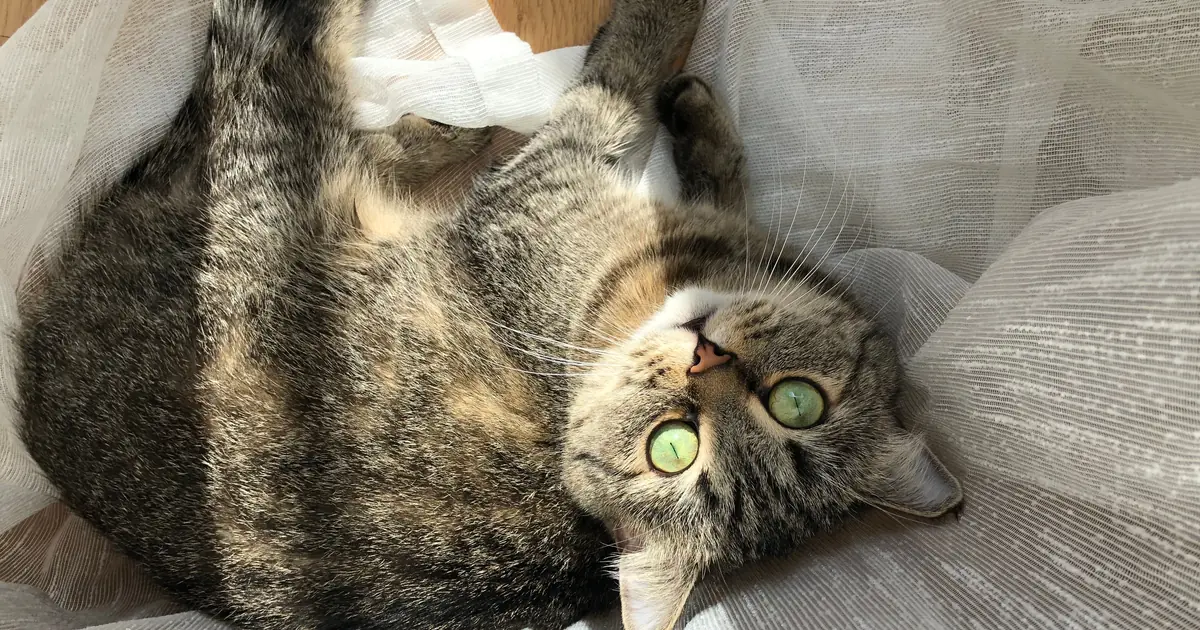
You just watched your cat chase a crumpled receipt across the kitchen floor like it owed him money, skid into the cabinet, and bounce right back up for round two. You laughed. He didn’t. But something in that little body sure looked like fun.
It’s a fair question. Cats seem to have a sense of humor sometimes, tearing through the house at 2am or batting a pen off the desk while staring you dead in the eye. So do cats actually laugh, or is that just us projecting? Let’s get into what’s really going on in that furry head.
- Cats physically cannot laugh because they lack the vocal cord structure and facial muscle control that produce human laughter.
- Laughter is largely a primate and social-bonding behavior; even our closest animal relatives only produce laughter-like sounds during physical play, not as a communication tool.
- Cats do feel positive emotions, including contentment and playfulness, backed by behavior researchers at institutions like Cornell Feline Health Center.
- A cat’s version of “laughing” is a mix of purring, slow blinking, chirping, trilling, kneading, and loose, bouncy body language.
- Purring is not a laugh. It’s a low-frequency vibration cats make when relaxed, nursing, healing, or sometimes even when stressed.
Can cats laugh?
No. Cats do not laugh, not even a little cat-sized giggle. Laughter is a specific vocal and facial response built around certain throat and mouth muscles, and cats simply don’t have that wiring. What you’re seeing when your cat looks “delighted” is really a mix of body language and vocal sounds that mean something else entirely, like excitement, playfulness, or plain old contentment.
Cats are still wildly expressive animals, though. They just express joy through their whole body instead of a sound aimed at you.
Why can’t cats laugh?
Cats can’t laugh because their vocal cords, throat muscles, and facial anatomy aren’t built for it, and laughter isn’t part of how cats evolved to communicate. Human laughter needs a specific combination: controlled breath, a flexible larynx, and facial muscles that pull into that open-mouthed expression. Cats’ faces and throats are built for different jobs, like hissing, chirping, and that famous purr.
There’s also a deeper reason. Laughter, according to behavior researchers, is mostly a social bonding signal in humans and other primates. It shows up during tickling, play, and group interaction, and it reinforces social connection. Cats bond differently. A cat doesn’t need to laugh to tell you it likes you; it head-bumps you, kneads your lap, or gives you a slow blink instead.
Do cats feel joy or happiness?
Yes, cats absolutely feel happiness, even without laughing to show it. According to the ASPCA, cats communicate emotional states through a combination of vocalizations, posture, and facial signals rather than sounds tied to humor. A happy cat looks relaxed: soft eyes, an upright tail, loose shoulders, ears forward.
Watch a cat mid-zoomie or rolling around after a good play session and you’ll see it. That’s not performance. That’s a genuinely content, stimulated cat enjoying itself.
How do cats show happiness instead of laughing?
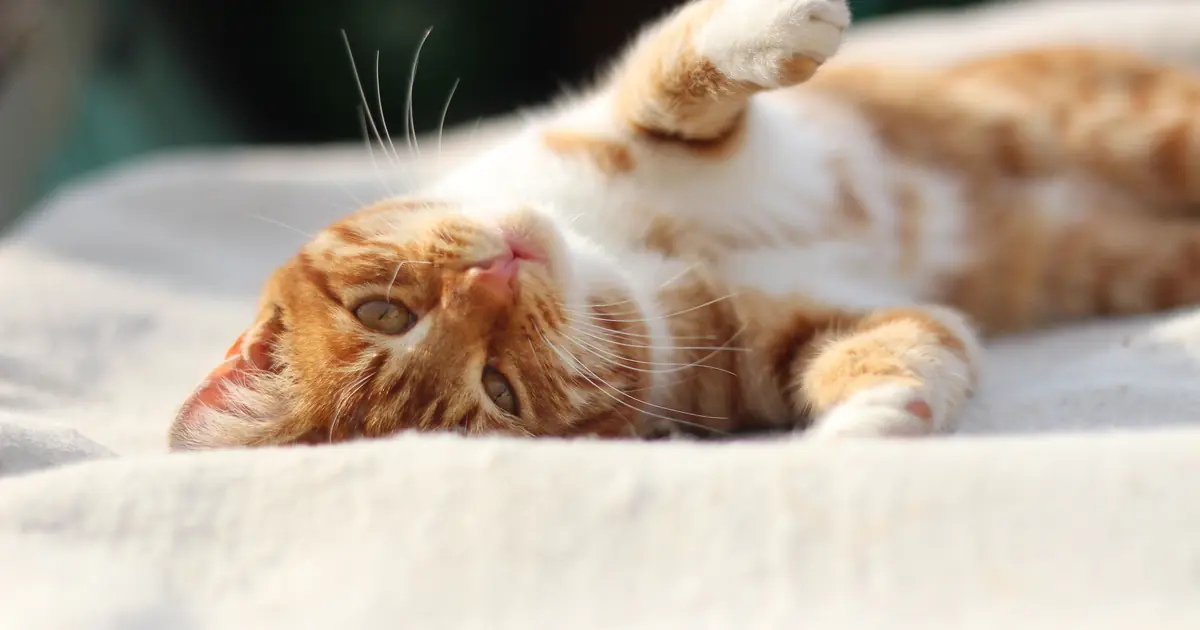
Cats show happiness through purring, slow blinks, trills, chirps, kneading, and relaxed, playful body language, not through any laughter-like sound. Each of these signals means something specific, and once you know them, your cat’s “laugh” becomes pretty easy to spot.
- Purring: A steady, low rumble usually tied to comfort and contentment.
- Slow blink: Often called a “cat kiss,” a slow blink toward you is a trust signal, according to International Cat Care.
- Trills and chirps: Short, bright, upward sounds cats make when greeting you or feeling playful and excited.
- Kneading: That paw-pushing motion left over from kittenhood, tied to comfort and security.
- Loose, bouncy body language: A relaxed tail, soft ears, and springy movement during play mean a genuinely happy cat.
If you want a full breakdown of these signals in context, check out our guide to cat body language, which covers posture and tail position in more depth.
Is a cat’s purr like a laugh?
No, purring isn’t a laugh, though it’s often the closest thing cats have to an audible happiness signal. A purr is a continuous, low-frequency vibration produced by the cat’s laryngeal muscles, and it shows up during contentment, but also during nursing, healing, and sometimes even fear or pain. That range is exactly why purring shouldn’t be read the same way as laughter.
If you’ve ever wondered what all that rumbling actually means, our post on what a cat’s purring means breaks down the full range of reasons behind it. And if your cat only purrs during vet visits or stressful moments, that’s worth understanding too, since not every purr equals a happy cat.
Do other animals laugh?
Some animals produce laughter-like sounds, but true laughter as a communication tool is mostly limited to humans and a few primates. Rats emit high-pitched chirps during play and tickling that researchers describe as laughter-like. Chimpanzees and other great apes make breathy, panting sounds during rough-and-tumble play that resemble human laughs. Dogs even have a distinct “play-pant” that some researchers loosely compare to laughing.
Cats don’t fall into that group. Their play vocabulary runs through chirps, trills, and body language instead, which fits how solitary hunters evolved to communicate versus highly social, group-living animals.
| Human Laughter Cue | Feline Equivalent |
|---|---|
| Laughing out loud when amused | Purring, trilling, or chirping when content or excited |
| Smiling with an open mouth | Relaxed half-closed eyes and forward ears |
| Giggling during a tickle fight | Rolling, batting, and playful pouncing during play |
| A friendly wink or nod | A slow blink toward a trusted person |
| Laughing with a group of friends | Kneading and head-bumping toward their favorite people |
How can you tell if your cat is having fun?
You can tell your cat is having fun when its body stays loose and bouncy, its tail is up or gently swishing, and it keeps coming back for more instead of avoiding the activity. A cat that’s enjoying a play session pounces with soft, springy movements, chases with real energy, and often follows up with a chirp or trill. Compare that to a stressed cat, which tends to flatten its ears, tuck its tail, or freeze.
Not sure your cat even likes you, let alone finds you funny? Our article on how to tell if your cat loves you walks through the real signs of feline affection beyond the obvious ones. And yes, cats really do smile in their own subtle way, even if it’s nothing like ours.
How do you make your cat happy?
You make your cat happy by giving it daily play, a predictable routine, safe places to perch, and plenty of affection on its own terms. Most cats need at least two short play sessions a day using a wand toy or something that mimics prey movement, according to VCA Hospitals. Cats also thrive with vertical space, scratching options, and consistent feeding times.
A cat that gets regular play, a clean litter box, and a bit of quiet lap time is a cat that shows contentment constantly, through purrs, slow blinks, and those wild little zoomie sprints across the living room. Curious why cats get those random bursts of energy in the first place? Our guide to why cats get the zoomies explains what’s actually behind them.
Frequently Asked Questions
Q: Can cats actually laugh like humans?
No, cats cannot laugh like humans. They lack the vocal cord structure and facial muscles needed to produce laughter, and instead show happiness through purring, trilling, and relaxed body language.
Q: Do cats have a sense of humor?
There’s no evidence cats understand humor the way people do. What looks like a cat “joking around” is usually playful hunting behavior, like batting an object or ambushing your feet, driven by instinct rather than comedy.
Q: Why does my cat make chirping sounds when playing?
Chirping and trilling are excited, friendly vocalizations cats use during play or greeting. They’re closer to an enthusiastic “hello” than anything resembling a laugh.
Q: Is purring the same as a cat laughing?
No, purring is a separate behavior tied to a low-frequency vibration in the larynx. Cats purr when content, but also when nursing, healing, or occasionally when stressed, which is very different from laughter.
Q: Do cats smile when they’re happy?
Cats show a version of a smile through relaxed, half-closed eyes and a soft face, often paired with a slow blink toward a trusted person. It’s a body-language signal, not a facial expression like a human grin.
Q: What sounds do cats make instead of laughing?
Cats make purrs, trills, and chirps to express positive emotion instead of laughing. Each sound carries a slightly different meaning, from contentment to excited greeting.
Q: Do any animals actually laugh like humans?
Rats produce high-pitched, laughter-like chirps during play, and great apes make breathy panting sounds during rough play that resemble laughs. True laughter as a social communication tool is mostly limited to humans and a few primates.
Q: How can I tell if my cat is enjoying playtime?
A cat enjoying playtime keeps its body loose and bouncy, tail up or swishing gently, and often chirps or trills while chasing a toy. If a cat goes stiff, flattens its ears, or hides, that’s a sign it’s stressed rather than having fun.

Hello and welcome to The Ideal Cat!
We are some passionate cat owners from different professions. We love our cats and have a lot of experience in how to care for our pets. We are incredibly excited to share our knowledge, experience, and research with you. So you can take good care of your loving cat. We will answer most of the common questions about owning cats, taking care of them, etc. If you have any question contact with us. Thanks for visiting! Enjoy the content.
