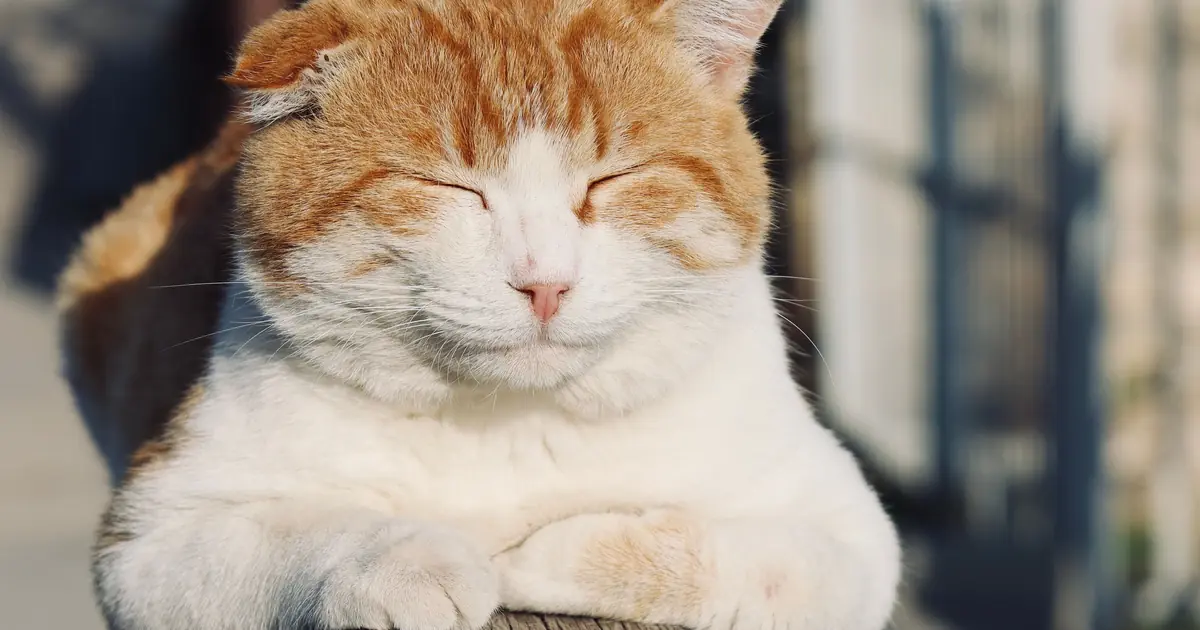
You catch your cat sprawled on the windowsill, sun on their fur, mouth curved just so, and you swear they’re grinning at you. It’s a good look on them. You grab your phone, snap a photo, and send it to three group chats captioned “she’s smiling!!”
Here’s the thing: do cats smile the way we do? Not really. Cats don’t have the facial muscles to pull off a human-style smile, and it’s not part of their natural expression toolkit. But that doesn’t mean your cat isn’t happy, or that they have no way of showing it. They just say it differently: through their eyes, their tail, and the way their whole body goes soft around you.
- Cats lack the facial anatomy for a human-style smile, so a “smiling” cat photo is almost always a relaxed resting face, a mouth shape, or the flehmen response.
- The flehmen response is a lip-curled, open-mouth grimace cats use to pull scent into the vomeronasal organ on the roof of their mouth, not a happy expression.
- A 2020 study in Scientific Reports found that slow blinking works like a smile between cats and humans, signaling calm, trust, and friendliness.
- Real feline happiness shows up as slow blinks, purring, a tail held straight up, loose body posture, and kneading, not a curved mouth.
- A tight, fixed grimace or a face that won’t relax can be a pain signal, especially if paired with squinting, flattened ears, or hiding.
Do Cats Smile the Way Humans Do?
No. Cats don’t smile the way humans do, because their facial muscles just aren’t built for it. Human smiles come from the zygomaticus major muscle pulling the corners of the mouth up and back, and cats don’t use their mouths that way to express emotion. Their faces communicate through ears, whiskers, eyes, and body language instead.
So when you see a cat with a mouth that looks curved into a grin, you’re reading a human expression onto a feline face. Researchers call this pareidolia, seeing a familiar pattern (a smile) where there isn’t really one. It’s not wrong to enjoy it. Just know your cat isn’t smiling back at you on purpose the way a person would.
What Looks Like a Smile on a Cat (But Actually Isn’t)?
A cat’s “smile” is usually one of three things: a relaxed resting face, natural mouth shape, or the flehmen response. None of these are actual expressions of joy, even though they can happen while your cat feels perfectly content.
- Relaxed resting face: When a cat’s jaw and whiskers go loose, the mouth can curve slightly upward, especially in cats with rounder faces. It’s a side effect of relaxation, not a deliberate grin.
- Natural mouth shape: Some cats simply have a mouth line that reads as “smiley” no matter their mood, the same way some people have a resting face that looks happy or grumpy by default.
- The flehmen response: That open-mouth, lip-curled grimace after sniffing something interesting isn’t a smile at all. More on that below.
None of this means your cat’s expressions are meaningless. You just need to read the right signals, which is exactly what cat body language is really about: watching the ears, tail, and posture together instead of fixating on the mouth.
What Is the Flehmen Response, and Why Does It Look Like a Smirk?
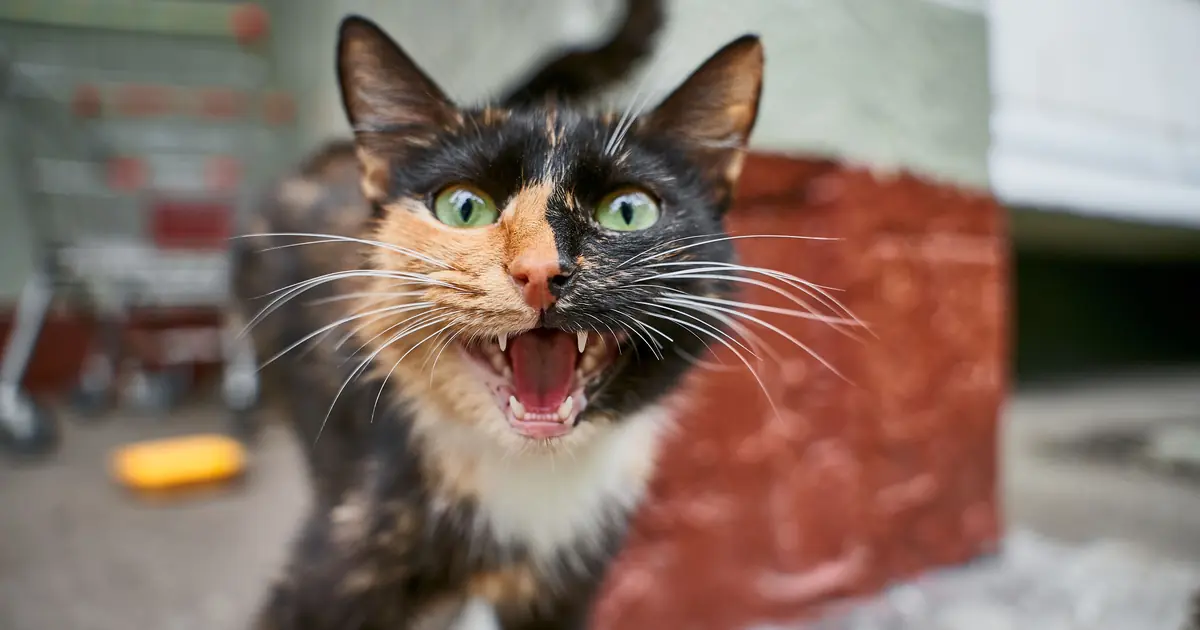
The flehmen response is a brief grimace cats make to pull scent particles onto the vomeronasal organ, a scent-analyzing structure in the roof of their mouth. You’ll see your cat curl their upper lip, part their teeth slightly, and freeze with their mouth open for a few seconds. It looks a little goofy, honestly, like they just smelled something they have strong opinions about.
This isn’t happiness and it isn’t a smile. It’s your cat gathering extra information, usually pheromones left by other cats, through a second scent-processing system that regular sniffing can’t fully tap into. According to the Cornell Feline Health Center, this response is more common in male cats investigating scent marks, though any cat can do it. If you catch your cat mid-flehmen, don’t read it as a grin. Read it as your cat’s nose (and mouth) doing detective work.
How Do Cats Actually Show They Are Happy?
Cats show happiness through their eyes, body, and sounds, not their mouth. A content cat gives you a whole cluster of signals at once, and once you know them, you’ll never need a “smiling” photo to tell if your cat is doing well.
- Slow blinking: A cat who looks at you and blinks slowly, almost lazily, is doing the feline version of a kiss. A 2020 study published in Scientific Reports found that cats slow blink more at their favorite humans and are more likely to approach a stranger who slow blinks first.
- Purring: A steady, relaxed purr (not the stressed kind at the vet) usually means your cat feels safe.
- Tail straight up, maybe with a curl at the tip: This is one of the clearest “I’m happy to see you” signals in a cat’s whole vocabulary.
- Loose, relaxed body: No tension in the shoulders, belly exposed while lounging, ears in a neutral or forward position.
- Kneading: Those rhythmic paw presses, a leftover kitten nursing behavior, show comfort and trust.
- Cuddling and head bumps: Pressing their head against you (called bunting) mixes affection with scent-marking you as theirs.
Curious how far this goes? A lot of cat parents wonder if their cat feels more complex emotions too, which is worth reading about in whether cats get jealous. And if your cat regularly presses into your chest and settles in for a nap, that’s its own specific bonding behavior, covered in why cats lay on your chest.
Are Some Cat Breeds Known for a “Smiling” Face?
Yes, a handful of breeds have a resting face that looks like a permanent smile, purely because of their bone structure. Persians, Exotic Shorthairs, and Scottish Folds often get called “smiley” cats thanks to their rounder faces and shorter muzzles, which naturally curve the mouth line upward.
The internet-famous grinning cats you’ve probably seen (some viral tabbies and a certain wide-mouthed meme cat) usually owe their look to jaw shape, missing teeth, or a slightly open mouth, not an actual grin muscle. It’s a fun coincidence of anatomy, not a sign that particular breed is happier than any other cat.
| Signal | What a Human Smile Means | What It Means on a Cat |
|---|---|---|
| Upturned mouth corners | Deliberate expression of joy or friendliness | Usually just resting face shape or jaw structure, not an emotion |
| Open mouth, lips curled back | Not a human expression | Flehmen response: analyzing scent, not showing pleasure |
| Slow, half-closed eyes | No direct human equivalent | The real “cat smile”: trust, calm, and affection |
| Steady rumbling sound | No direct human equivalent | Purring: contentment (usually) and self-soothing |
| Tail held high with a curled tip | No direct human equivalent | Happy greeting, confidence, friendliness |
Can a Cat’s Facial Expression Mean Pain Instead of Happiness?
Yes, and this one matters. A tight, fixed grimace on a cat’s face can signal pain, not happiness, especially when it shows up alongside squinted eyes, flattened ears, or a cat who suddenly wants to be left alone. Vets actually use facial tension (tight muzzle, narrowed eyes, ears pulled sideways or back) as part of feline pain-scoring tools, because cats hide pain well and the face is one of the few honest tells.
This article is educational, not a substitute for veterinary care. If your cat’s expression looks strained rather than relaxed, especially paired with hiding, reduced appetite, or reluctance to move, it’s worth a vet visit rather than a guessing game. For a broader read on what discomfort looks like in cats, check signs of stress in cats, since stress and pain often show up together.
A “smile” that looks off, forced, or paired with tension anywhere else on the body is your cue to look closer, not snap a cuter photo.
For more on how experts read subtle feline expressions, International Cat Care has solid guidance on the full range of feline body language, and the ASPCA covers common behavior signals worth knowing as a cat parent.
So How Do You Know If Your Cat Is Actually Happy?
You know your cat is happy by watching the whole picture, not just the mouth: relaxed body, tail up, slow blinks aimed at you, and a purr that isn’t hiding tension underneath it. Your cat “smiles” with their eyes and body language, not a curved mouth, so that’s where to look.
Next time your cat gives you that slow, sleepy blink from across the room, blink back. That’s the real smile. The mouth was never the tell.
Frequently Asked Questions About Cats and Smiling
Q: Do cats smile when they are happy?
Not with their mouth. Cats show happiness through slow blinking, purring, a raised tail, and a relaxed body, not a facial grin like a human smile.
Q: Why does my cat look like it’s smiling at me?
Your cat’s mouth shape, a relaxed resting face, or the flehmen response after smelling something interesting can all look like a smile. It’s rarely a deliberate expression of joy.
Q: What is the flehmen response in cats?
The flehmen response is a lip-curled, open-mouth grimace cats make to pull scent onto the vomeronasal organ in the roof of their mouth. It helps them analyze pheromones, not express happiness.
Q: How do I know if my cat is genuinely happy?
Look for slow blinking, a tail held upright with a curled tip, loose relaxed posture, kneading, and steady purring. Together these signals are far more reliable than a “smiling” mouth.
Q: Is a cat’s slow blink really like a kiss?
Yes, researchers describe it that way. A 2020 study in Scientific Reports found cats slow blink more at trusted humans and are more likely to approach strangers who slow blink at them first.
Q: Can a cat’s facial expression mean it’s in pain?
Yes. A tight, fixed grimace, squinted eyes, or flattened ears can signal pain rather than pleasure. If it’s paired with hiding or appetite changes, see a veterinarian.
Q: Are certain cat breeds known for having a “smiling” face?
Persians, Exotic Shorthairs, and Scottish Folds often have a naturally upturned mouth line due to their rounder faces and shorter muzzles, not because they’re happier than other cats.
Q: Do cats understand human smiles?
Cats can learn to associate a relaxed human face and calm voice with safety and positive attention, but they don’t read a smile as a smile the way another person would.

Hello and welcome to The Ideal Cat!
We are some passionate cat owners from different professions. We love our cats and have a lot of experience in how to care for our pets. We are incredibly excited to share our knowledge, experience, and research with you. So you can take good care of your loving cat. We will answer most of the common questions about owning cats, taking care of them, etc. If you have any question contact with us. Thanks for visiting! Enjoy the content.
