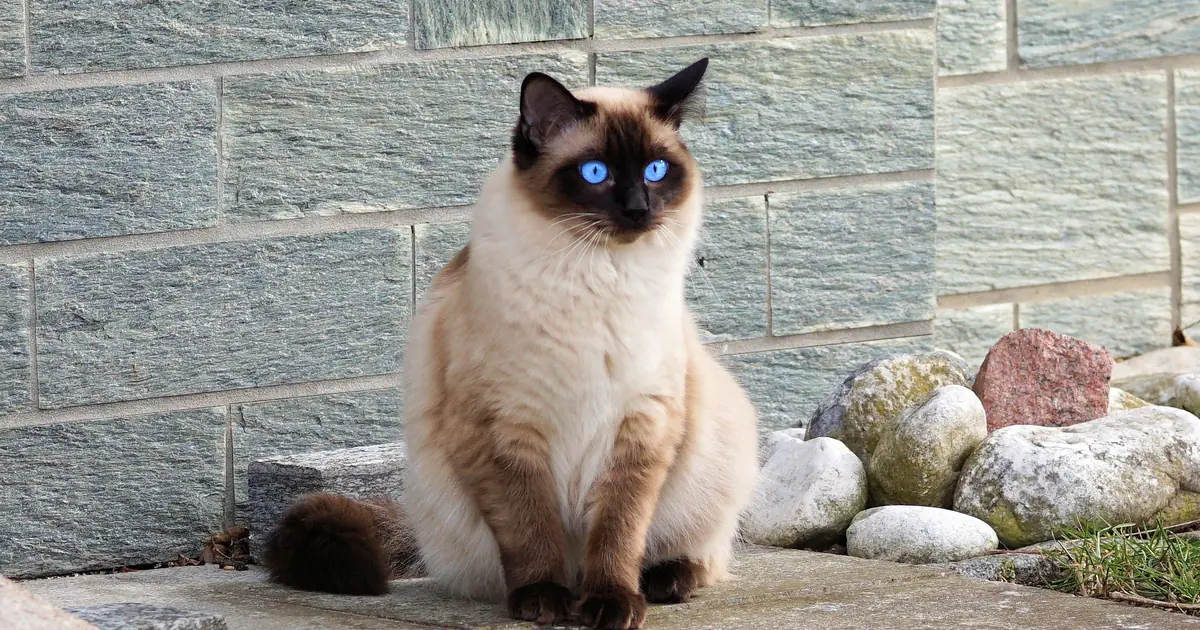
Picture two cats side by side. One has a sharp, almost triangular face and a body so slim it looks like it’s been stretched. The other has a round head, a stockier build, and looks like it walked straight out of a 1950s postcard. Someone tells you they’re both Siamese. Your brain says: no way.
Here’s the thing: they’re both right. When people search for types of Siamese cats, they’re usually asking about one of two totally different sorting systems, and most articles mash them together without saying so. One system is about body shape (how extreme that wedge head really is). The other is about coat color (seal point versus blue point versus something rarer). This guide untangles both, so you’ll know exactly what you’re looking at next time someone shows you a photo of their “Siamese.”
- Siamese cats sort into two unrelated categories: body type (modern/wedge, classic/old-style, or traditional/applehead) and color point (seal, blue, chocolate, lilac, and newer colors like red, cream, lynx, and tortie).
- The modern, show-ring Siamese has an extreme wedge-shaped head and a long, tubular body, a look breeders selected for starting in the 1950s and 1960s.
- The traditional or applehead Siamese has a rounder head and a heavier, more moderate build, and is closer to the cats originally imported from Siam in the late 1800s.
- The four classic color points (seal, blue, chocolate, lilac) are recognized by every major cat registry; newer points like red, cream, lynx, and tortie are accepted by most but not all.
- Every Siamese, regardless of body type or color, is born with the same temperature-sensitive gene that makes their face, ears, paws, and tail darker than the rest of their body.
What Does “Types of Siamese Cats” Actually Mean?
It means two different things depending on who’s talking. Breeders and cat show judges use “type” to describe body shape, the head, the build, the overall silhouette. Everyone else usually means coat color, as in “what type of Siamese is that, a blue one or a seal one?” Both are correct uses of the word. This guide covers both, starting with body type since that’s the one that causes the most confusion (and the most Facebook arguments in cat groups).
What Are the Body Types of Siamese Cats?
Siamese cats come in three recognized body types: modern (also called wedgehead), classic or old-style, and traditional (also called applehead or Thai). They all share the same pointed coat pattern and blue eyes, but the skeleton underneath looks almost like a different animal from one type to the next.
Modern (Wedgehead) Siamese
This is the Siamese most people picture: a long, narrow wedge-shaped head, big ears set wide apart, almond eyes, and a body so slender and tubular it can look almost snake-like. Show breeders started pushing this extreme look in the 1950s and 1960s, and it’s the standard you’ll see in most cat shows today. Modern Siamese also tend to be the chattiest of the bunch, though honestly, all Siamese have a lot to say.
Classic or Old-Style Siamese
Somewhere between the extreme wedge and the round applehead sits the classic, or old-style, Siamese. Think of the cats popular in the 1950s through 1970s: still lean, with a more triangular face than the applehead, but nowhere near as sharp or elongated as the modern show cat. If you’ve seen vintage Siamese photos from mid-century cat shows, that’s this look.
Traditional (Applehead / Thai) Siamese
The traditional Siamese, nicknamed “applehead” for its rounder skull, is the closest living link to the cats first brought over from Siam (modern-day Thailand) in the late 1800s. These cats have a sturdier, heavier-boned body, a rounder head, and a noticeably calmer voice than their wedgehead cousins. Some registries, including TICA and the World Cat Federation, now recognize this less extreme type under its own breed name: Thai. So if you’ve heard someone call their cat a “Thai cat” instead of a Siamese, that’s very likely what they mean.
Want the full rundown on temperament, history, and care beyond body type? Our Siamese cat breed guide covers the whole picture.
Modern vs. Traditional Siamese: What’s the Difference?
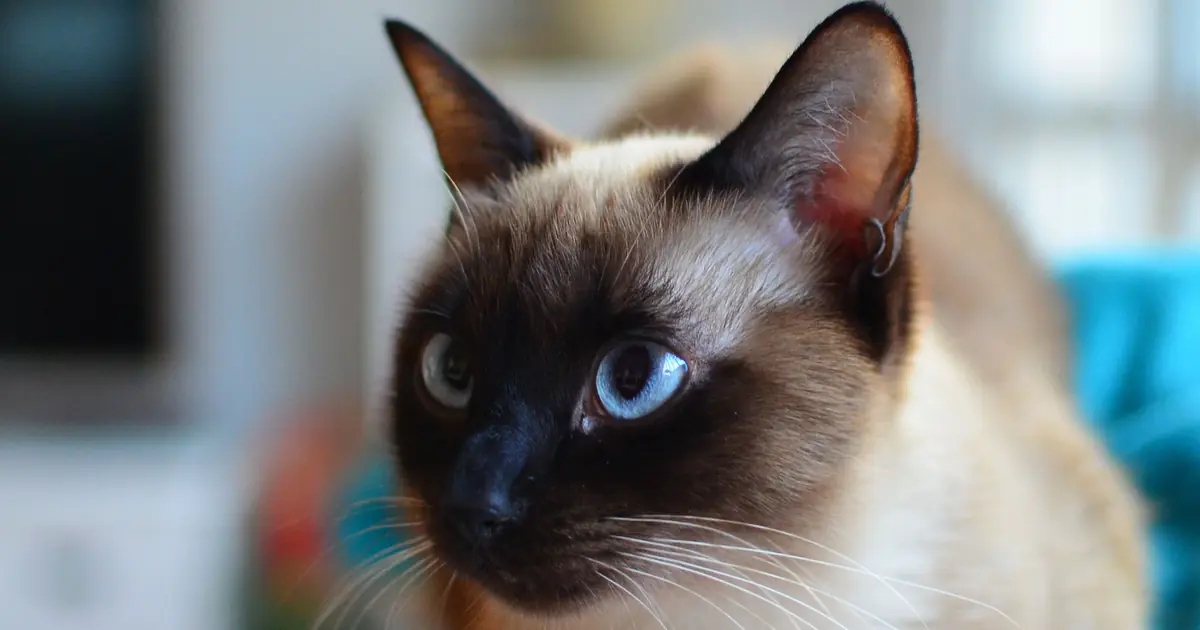
The clearest way to see the difference is side by side. Body shape, head, and even personality shift noticeably between the two ends of the spectrum, which is part of why people ask whether Siamese cats are skittish.
| Trait | Modern (Wedgehead) | Traditional (Applehead/Thai) |
|---|---|---|
| Head shape | Long, narrow wedge | Round, apple-shaped |
| Body build | Slender, tubular, fine-boned | Sturdier, moderate, heavier-boned |
| Ears | Large, wide-set, continuing the head’s wedge line | Medium, proportionate to a rounder head |
| Voice | Very vocal, loud and frequent | Vocal, but generally quieter |
| Origin era | Bred from the 1950s to 1960s onward | Closer to the original cats from Siam (1800s) |
What Are the Color Points of Siamese Cats?
Every Siamese is born with a pointed coat, meaning the face, ears, legs, and tail are noticeably darker than the body. Which
color those points are is what separates seal point from blue point from chocolate point, and so on. The Cat Fanciers’ Association and most other major registries recognize four classic points, plus a growing list of newer ones.
- Seal point: dark, almost black-brown points on a pale fawn to cream body; the original, most recognized Siamese color
- Blue point: slate-gray points with a cool undertone, on a bluish-white body
- Chocolate point: warm, milk-chocolate colored points on an ivory body, lighter and warmer-toned than seal
- Lilac point: pale, pinkish-gray points (sometimes called frost point) on a near-white body, the lightest of the four classics
- Red/flame point: reddish-orange points, a newer color from crossing Siamese with red tabby cats
- Cream point: soft, pale apricot-cream points, a diluted version of red point
- Lynx (tabby) point: tabby striping within the points, from early crosses with domestic tabbies
- Tortie point: mottled, patchy points mixing two colors, usually seen in female cats only
Seal, blue, chocolate, and lilac are accepted everywhere as true Siamese colors. Red, cream, lynx, and tortie points are recognized by most cat registries but not every single one, so a lynx point Siamese might show under a slightly different category depending on the organization judging the show.
Why Do Siamese Cats Have Points At All?
Siamese cats have color points because of a temperature-sensitive gene that affects how pigment gets produced in their fur. Warmer parts of the body, the torso, stay pale because the enzyme controlling pigment barely works at normal body heat. Cooler parts, the face, ears, paws, and tail, sit a few degrees lower, and that’s just enough for pigment to switch on and darken the fur.
This is also why Siamese kittens are born almost pure white. They pick up their points over the first weeks and months as their extremities cool relative to the womb’s warmth. And it’s why a sick or feverish Siamese can sometimes look paler than usual, and why cats who live somewhere cold often develop darker, more saturated points than cats lounging in a warm house year-round.
Do All Siamese Types Share the Same Personality?
Yes, mostly. Whether you’ve got a sleek wedgehead or a round-faced applehead, you’re getting a cat that’s social, smart, and talkative. Siamese cats are famous for following you room to room and narrating the whole trip. Traditional and classic types tend to be a notch quieter and more laid-back than the modern show type, but “quieter” for a Siamese still means plenty of opinions shared out loud.
All Siamese also share those striking blue eyes, caused by a lack of pigment in the iris tied to the same gene family behind their points. Curious how cat eye colors work more broadly? Check out our guide to what color eyes cats can have.
Which Type of Siamese Should You Adopt?
Honestly, it comes down to look and lifestyle, not one being “better” than another. If you love the sleek, dramatic show-cat look and don’t mind a nonstop conversationalist, a modern wedgehead fits right in. If you’d rather have a sturdier, slightly calmer companion with a softer voice, look for a traditional applehead or a Thai cat from a breeder who specializes in that line. Either way, you’re getting a cat that bonds hard with its people and is not shy about telling you when dinner is late.
Naming your new Siamese? We rounded up ideas that fit the breed’s personality and looks in our Siamese cat names guide. And once your cat’s home, feeding matters more than most owners expect, since Siamese can run lean and food-motivated. Our Siamese cat diet guide walks through what to feed them at every life stage.
Is the Thai Cat a Separate Breed From the Siamese?
In some registries, yes. TICA and the World Cat Federation now register the less extreme, traditional-bodied Siamese as its own breed called Thai, separate from the modern show Siamese. Other major registries, including the Cat Fanciers’ Association, still treat traditional-type cats as Siamese, just not the show standard. So depending on which organization you ask, your round-headed, sturdy-bodied cat might be called a “traditional Siamese” or simply a “Thai cat.” Same general type of cat, different paperwork.
The Cornell Feline Health Center and International Cat Care notes that breed standards can shift over time as registries reconsider which traits they prioritize, which is exactly what’s happened with Siamese body type over the last several decades.
Frequently Asked Questions
Q: What is the rarest type of Siamese cat?
Lilac point and tortie point Siamese tend to be the least common. Lilac is the lightest and most delicate of the four classic colors, and tortie points only occur in female cats, which naturally limits how often you’ll see one.
Q: Is an applehead Siamese a purebred cat?
Yes. Applehead, or traditional, Siamese are purebred cats descended directly from the original lines imported from Siam. Some registries now register this body type under the separate breed name Thai, but the cats themselves are just as purebred as the modern wedgehead show type.
Q: What’s the difference between a Siamese and a Thai cat?
A Thai cat is essentially a traditional, applehead-type Siamese registered under a different breed name by TICA and the World Cat Federation. The body is rounder and sturdier than a modern show Siamese, closer to the original cats from Siam.
Q: Do all Siamese cats have blue eyes?
Yes, blue eyes are a breed standard for Siamese cats across every recognized color point. The same gene family responsible for their pointed coat also limits pigment in the iris, which is why the eyes stay blue rather than green or gold.
Q: Are lynx point and tabby point Siamese the same thing?
Yes. Lynx point is the term used in the United States, while tabby point is the more common term in the United Kingdom. Both describe the same pattern: visible tabby striping within the darker points.
Q: Why are Siamese kittens born white?
Siamese kittens are born nearly white because the womb keeps their whole body at a warm, even temperature, and the pigment-producing enzyme in their fur only activates in cooler areas. Points start showing up within the first couple of weeks as their extremities cool down.
Q: Which Siamese body type is more vocal?
The modern, wedgehead Siamese is generally considered the most vocal of the body types. Traditional and classic Siamese are still talkative cats by any normal standard, just a bit quieter and more measured than their sleek show-ring relatives.
Q: Can a Siamese have more than one color point?
A single cat has one base point color, but patterns like tortie point combine two colors in a mottled pattern within the points themselves. Lynx point cats also show tabby striping layered over their base point color, so it can look like more than one color at a glance.

Hello and welcome to The Ideal Cat!
We are some passionate cat owners from different professions. We love our cats and have a lot of experience in how to care for our pets. We are incredibly excited to share our knowledge, experience, and research with you. So you can take good care of your loving cat. We will answer most of the common questions about owning cats, taking care of them, etc. If you have any question contact with us. Thanks for visiting! Enjoy the content.
