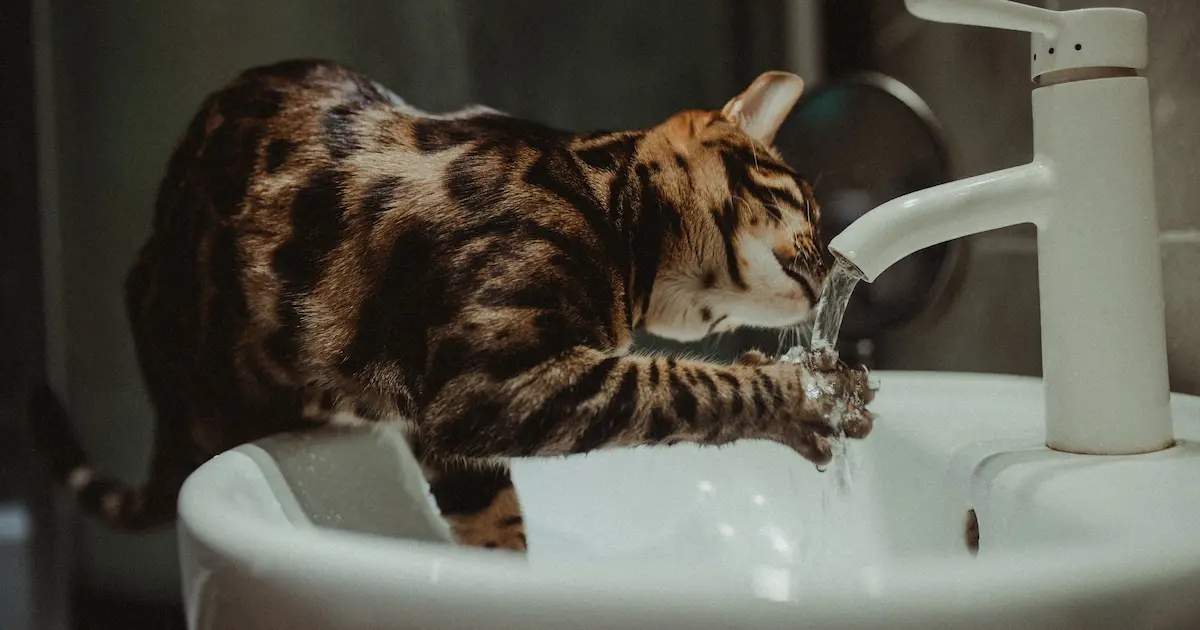
If you’ve caught your cat practically living at the water bowl lately, or sneaking sips from the bathroom sink, your gut is right to pay attention. Cats are famously light drinkers. So a sudden thirst is one of the easiest early warning signs to spot at home.
The good news is that some causes are completely harmless. The not-so-fun news is that increased thirst is also one of the first signs of a few serious feline diseases. Let’s walk through it together so you know which camp your cat is in.
- A typical cat drinks about 4 ounces of water per 5 pounds of body weight per day, including water from food.
- Drinking more than 100 ml per kilogram of body weight in 24 hours is called polydipsia and signals a possible health problem.
- The three most common medical causes of excessive thirst in cats are chronic kidney disease, diabetes mellitus, and hyperthyroidism.
- Increased thirst combined with weight loss, vomiting, or appetite changes means you should book a vet visit promptly.
- Never restrict your cat’s water to control the drinking, since the thirst is usually helping your cat cope with an underlying issue.
How much water should a cat drink a day?
A healthy cat drinks roughly 4 ounces of water for every 5 pounds of body weight per day, which means a 10-pound cat drinks around 8 ounces (about one cup) daily. This total includes moisture from food, so cats eating wet food may barely visit the bowl at all.
Vets use a more precise benchmark. Normal water intake sits around 40 to 60 ml per kilogram of body weight per day. The clinical line is clear: drinking more than 100 ml per kilogram per day is called polydipsia, the medical term for excessive thirst. Cross that line consistently and it’s time for a checkup.
Here’s the thing to remember: a single thirsty day means very little. What matters is a real change in your cat’s normal pattern that lasts several days or longer.
How do I know if my cat is really drinking too much?
The simplest way to know if your cat is drinking too much is to measure intake over 24 hours. Guessing is unreliable, especially in homes with multiple pets or several bowls.
Try this at home:
- In the morning, wash one bowl and fill it with a measured amount of water using a measuring cup.
- For accuracy, temporarily reduce your cat to that single water source for the day.
- The next morning, measure what’s left and subtract it from what you started with.
- Compare the result to the 100 ml per kg threshold. For a 4 kg (about 9 lb) cat, anything over roughly 400 ml a day is a red flag.
It also helps to note how often your cat visits the bowl. Most cats drink several times a day, and a jump in frequency, or new interest in faucets and tubs, is worth writing down to share with your vet.
Why is my cat drinking so much water? 7 common causes
Cats drink more water for reasons that range from a simple food change to serious metabolic disease. The table below pairs each cause with its tell-tale extra sign and the cats it tends to affect, so you can start narrowing things down before your appointment.
| Cause | Tell-tale extra sign | Most affected cats |
|---|---|---|
| Diet change (wet to dry) | Thirst rises right after switching food; cat is otherwise normal | Any cat |
| Hot weather or dehydration | Thirst tracks the temperature or follows vomiting/diarrhea | Any cat |
| Chronic kidney disease | Weight loss, poor coat, less appetite, large dilute urine | Senior cats; Persians for PKD |
| Diabetes mellitus | Big appetite but losing weight; large urine clumps | Overweight, middle-aged, often male |
| Hyperthyroidism | Weight loss despite eating well, restlessness, fast heart rate | Older cats, around age 10+ |
| High blood calcium | Often no obvious sign; found on a blood test | Any cat; needs workup |
| Stress or behavior | Drinking eases when the cat settles; no illness signs | Anxious or bored cats |
1. A recent diet change (wet food to dry)
Switching your cat from wet food to dry food is one of the most common harmless causes of extra thirst. Canned food is about 70 to 80% moisture, while kibble is only around 10%. So a cat on dry food has to make up the difference by drinking from the bowl. If your cat’s thirst started right after a food change and they’re acting completely normal, this is the likely answer.
2. Hot weather or mild dehydration
Warm weather makes cats drink more, just like it does for us. Cats cool themselves partly through water intake, so a heatwave or dry indoor heating naturally bumps up thirst. Cats also drink more to recover fluids after a bout of vomiting or diarrhea. This kind of thirst should settle back to normal once things cool off or the upset stomach passes.
3. Chronic kidney disease
Chronic kidney disease (CKD) is the most common reason older cats start drinking and urinating more. As the kidneys decline, they lose the ability to concentrate urine, so the cat passes large amounts of watery urine and drinks more to keep up. According to the Cornell Feline Health Center, cats often don’t show symptoms until much of kidney function is already lost, which is why early bloodwork matters. Watch for thirst paired with weight loss, a scruffy coat, bad breath, and a fading appetite. Persians and a few related breeds carry a higher risk through polycystic kidney disease.
4. Diabetes mellitus
Diabetes mellitus causes excessive thirst because high blood sugar spills into the urine and pulls water out with it, leaving the cat dehydrated and thirsty. The classic giveaway is a cat that’s eating well, sometimes ravenously, yet still losing weight. You may also notice unusually large clumps in the litter box. Diabetes shows up most often in overweight, middle-aged cats, and male cats carry a slightly higher risk. The good news is that it’s straightforward to diagnose with blood and urine tests, and many cats respond well to treatment.
5. Hyperthyroidism
Hyperthyroidism is an overactive thyroid gland that speeds up a cat’s whole metabolism, and increased thirst and urination are common signs. The hallmark clue is weight loss despite a hearty or even increased appetite. Affected cats are often older, frequently around age 10 and up, and may seem restless, vocal, or hyperactive, sometimes with a faster heart rate or occasional vomiting. A simple thyroid blood test (T4) usually confirms it, and several effective treatments exist.
6. High blood calcium and other medical causes
High blood calcium, known as hypercalcemia, is a lesser-known cause of thirst that often shows no other obvious signs and is caught on a blood panel. Other medical causes of polydipsia include liver disease, certain urinary tract problems, and some medications such as steroids and diuretics. These are exactly why your vet runs a full workup rather than guessing, since several conditions look similar from the outside.
7. Stress, boredom, or behavior
Sometimes a cat drinks more for behavioral reasons rather than disease, a pattern vets call psychogenic polydipsia. Anxiety, a recent move, a new pet, or plain boredom can drive a cat to the bowl. Some cats simply love running water and gravitate to faucets out of novelty rather than true extra thirst. Behavioral drinking tends to ease once the cat settles and isn’t paired with illness signs, but it’s a diagnosis your vet makes only after ruling out medical causes.
Harmless reasons vs serious reasons: which bucket is your cat in?
The fastest way to sort harmless thirst from a worrying sign is to ask whether your cat seems otherwise healthy. Harmless thirst comes with a clear trigger and a normal, happy cat. Serious thirst comes with other symptoms creeping in alongside it.
| Probably fine | Call the vet |
|---|---|
| Started right after a food switch | Thirst plus weight loss |
| Tracks hot weather, eases when it cools | Eating more but still losing weight |
| Cat is bright, eating, and active | Less appetite, vomiting, or lethargy |
| Thirst is short-lived | Drinking heavily for days or weeks |
| No change in litter box habits | Much larger or more frequent urine clumps |
When should I take my cat to the vet for excessive thirst?
Take your cat to the vet if the heavy drinking lasts more than a few days, crosses the 100 ml per kg threshold, or comes with any other symptom. Increased thirst is one of the earliest signs of treatable diseases, and catching them early genuinely improves the outcome.
Book a prompt visit, or seek urgent care, if you notice any of these red flags alongside the drinking:
- Noticeable weight loss
- Eating much less, or refusing food entirely
- Vomiting or diarrhea
- Lethargy, weakness, or hiding
- Straining in the litter box or signs of pain when urinating
- Bad breath or a scruffy, unkempt coat
Your vet will usually take a history of your cat’s habits, do a physical exam, and run baseline tests: a complete blood count, a chemistry panel, a urinalysis, and often a thyroid (T4) level, especially in cats over seven. These tests quickly tell apart kidney disease, diabetes, and hyperthyroidism so treatment can start.
This article is educational and isn’t a substitute for veterinary care. A change in your cat’s thirst is something only a licensed veterinarian can fully diagnose, so please loop them in when in doubt.
How can I help a cat that’s drinking a lot of water?
The single most important rule is never to restrict your cat’s water to slow the drinking. When a cat drinks heavily, that thirst is usually a compensation for an underlying problem, and cutting off water can quickly cause dangerous dehydration. Instead, support your cat while you sort out the cause:
- Keep fresh, clean water available at all times, in more than one spot.
- Track daily intake and litter box output to share with your vet.
- Note any other changes in appetite, weight, energy, or behavior.
- Follow your vet’s plan precisely if a condition is diagnosed, including any prescription diet.
If your cat seems put off by their bowl and you suspect they’re seeking running water, a pet water fountain can encourage healthy hydration and keep water tasting fresh.
PetSafe Drinkwell Pet Fountain
This is a circulating water fountain that keeps water moving and filtered, which many cats prefer over a still bowl. It’s a good fit for cats who like drinking from faucets or who you’re trying to keep well hydrated, especially older cats. It does not treat any disease, so pair it with a vet visit if thirst is excessive.
Frequently Asked Questions
Q: How much water is too much for a cat?
For a cat, drinking more than 100 ml per kilogram of body weight in 24 hours is considered too much and is called polydipsia. For a 4 kg (about 9 lb) cat, that’s roughly more than 400 ml a day. Consistently crossing that line warrants a vet visit.
Q: Is it normal for an old cat to drink a lot of water?
Increased thirst in a senior cat is common but not something to ignore. In older cats it often points to chronic kidney disease, hyperthyroidism, or diabetes, all of which are more frequent with age. A senior cat that suddenly drinks more should have bloodwork done to check.
Q: Can stress make my cat drink more water?
Yes, stress, anxiety, and boredom can make some cats drink more, a pattern called psychogenic polydipsia. Behavioral thirst usually eases once the cat settles and isn’t paired with weight loss or appetite changes. A vet diagnoses it only after ruling out medical causes first.
Q: Why is my cat drinking a lot of water but acting normal?
A cat drinking more water while otherwise acting normal often has a harmless cause like a switch to dry food or hot weather. Still, early kidney disease and diabetes can begin with thirst before other signs appear. If the heavy drinking lasts more than a few days, have your vet check.
Q: What are the first signs of kidney disease in cats?
Increased thirst and increased urination are often the very first signs of kidney disease in cats. As the disease progresses, owners may also notice weight loss, a poor coat, reduced appetite, and bad breath. Because symptoms appear late, routine senior bloodwork is the best way to catch it early.
Q: Why is my cat drinking water but not eating?
A cat that’s drinking a lot but not eating needs prompt veterinary attention. This combination can point to kidney disease, diabetes, or other illness, and a cat that stops eating for more than a day risks serious complications. Don’t wait this one out; call your vet.
Q: Should I limit how much water my cat drinks?
No, you should never limit your cat’s water to control excessive drinking. The thirst is usually the body’s way of coping with an underlying problem, and restricting water can cause dangerous dehydration. Keep water freely available and focus on getting a diagnosis from your vet.
Q: Does dry food make cats drink more water?
Yes, dry food makes cats drink more water. Kibble is only about 10% moisture, while canned food is 70 to 80% water, so cats on dry food drink more from the bowl to make up the difference. This is a normal, harmless reason for increased thirst.
So, why is your cat drinking so much water? It might be nothing more than warm weather or a new bag of kibble. But because excessive thirst is also an early signal of kidney disease, diabetes, and hyperthyroidism, the safest move is to measure your cat’s intake, watch for other changes, and check in with your veterinarian if the drinking keeps up. Catching these things early is one of the kindest things you can do for your cat.

Hello and welcome to The Ideal Cat!
We are some passionate cat owners from different professions. We love our cats and have a lot of experience in how to care for our pets. We are incredibly excited to share our knowledge, experience, and research with you. So you can take good care of your loving cat. We will answer most of the common questions about owning cats, taking care of them, etc. If you have any question contact with us. Thanks for visiting! Enjoy the content.
