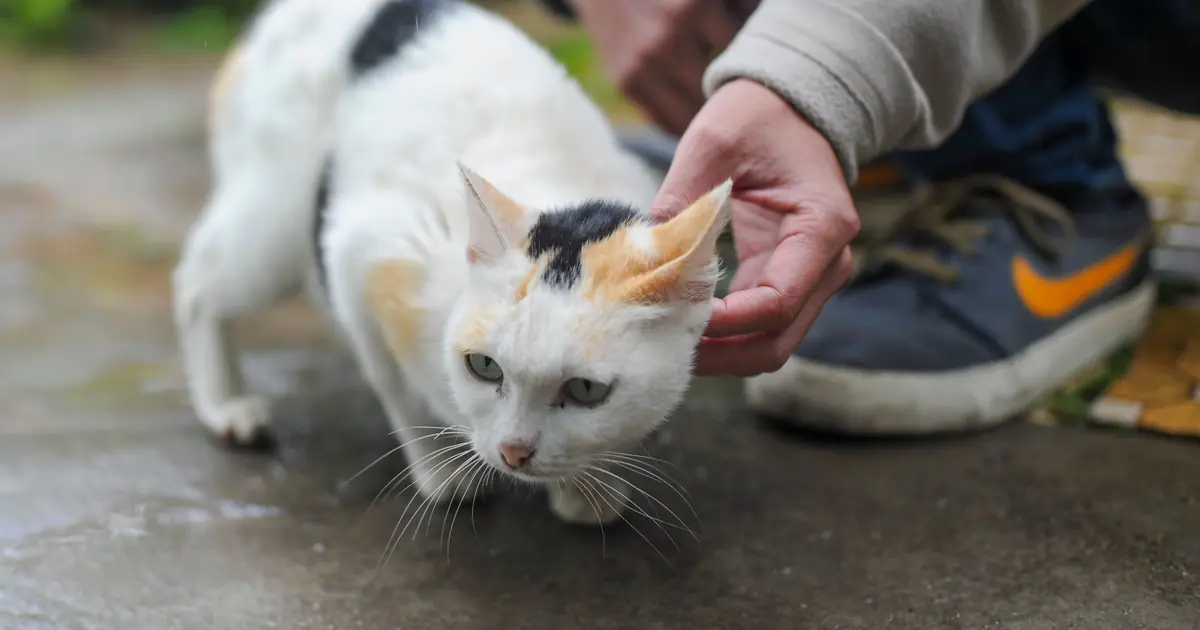
Picture this: you scratch your cat right where the tail meets their back, and their whole rear end shoots straight up into the air like you just hit a button. Maybe their tail curls into a question mark. Maybe they lean back into your hand like they can’t get enough. It’s one of the funniest, most oddly specific reactions in the cat world, and if you’ve ever wondered why do cats like butt pats this much, you’re not alone.
Here’s the thing: it’s not random. That spot at the base of the tail is a genuine feline sweet spot, wired with nerve endings and sitting close to a gland your cat uses for scent communication. But (and this is important) not every cat is into it. Some go full elevator butt and beg for more. Others whip around annoyed after two seconds. Both reactions are completely normal, and reading your own cat matters more than any general rule.
- The base of a cat’s tail is dense with nerve endings, close to where the spinal cord ends and a bundle of nerves called the cauda equina fans out to the tail, hind legs, and bladder.
- Cats have a scent gland near the tail base called the supracaudal gland, and pats there may feel socially meaningful, not just physically pleasant.
- The raised-rear reaction, nicknamed “elevator butt,” is a reflex: pressure on the lower back triggers the front end to drop and the hindquarters to lift.
- Not every cat enjoys tail-base pats. Some get overstimulated in seconds, and that reaction is just as normal as loving it.
- A frantic, painful-looking reaction, or scooting and biting at the tail base, can point to fleas, skin irritation, or anal gland trouble that’s worth a vet visit.
Why do cats like butt pats?
Cats like butt pats mainly because the base of the tail is one of the most nerve-dense spots on their entire body. The spinal cord tapers off right around there, and a cluster of nerves fans out to control the tail, back legs, and bladder. That’s a lot of wiring packed into a small patch of fur, which is exactly why a light scratch there can feel so intense, in a good way, for a lot of cats.
It’s also a spot your cat cannot reach well on their own. They can twist and stretch to groom plenty of their body, but the exact base of the tail is awkward even for a famously flexible animal. When you scratch it for them, it can feel a bit like the grooming a mother cat or a bonded cat friend would give, which is part of why it reads as affectionate rather than just physical.
There’s a scent angle too. Cats have a gland near the top of the tail called the supracaudal gland, and it plays a role in scent marking. Some behaviorists think stimulating that area taps into something more social than a simple itch, almost like the touch is doubling as a form of communication between you and your cat.
What is “elevator butt” and why does my cat do it?
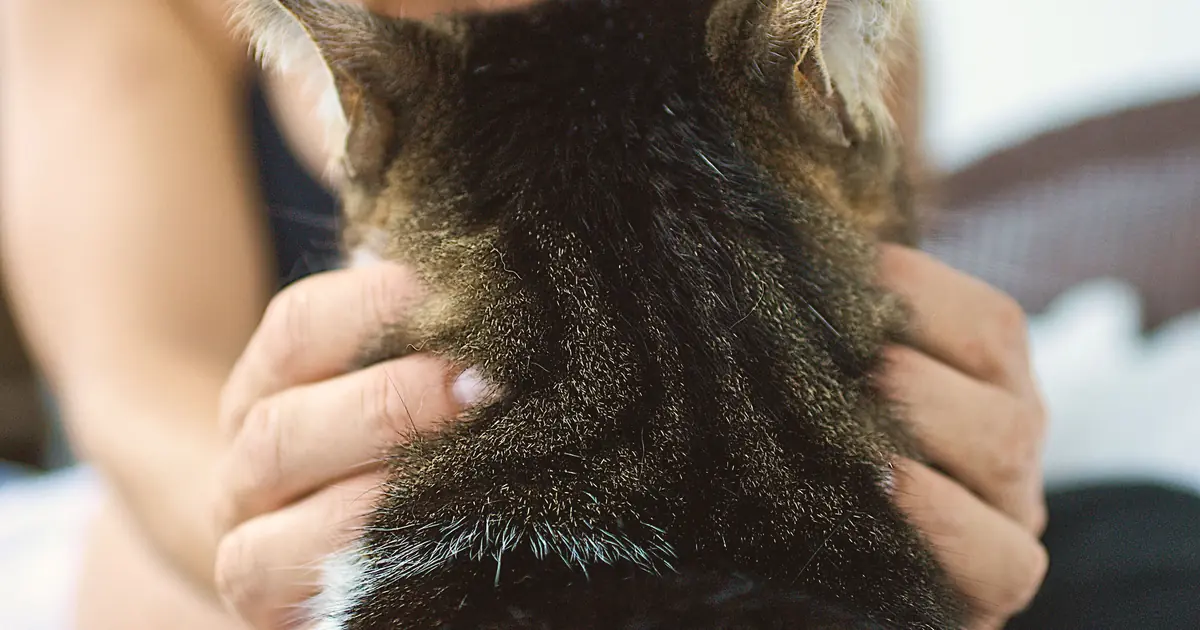
Elevator butt is the nickname for when a cat’s rear end lifts straight into the air the moment you touch the base of their tail. It looks deliberate, but it’s actually a reflex. Pressure on the lower back near the tail triggers the front legs to dip and the hindquarters to rise, almost like a switch got flipped.
Cats who go into full elevator mode are usually telling you they feel safe. Turning their back and lifting their rear exposes one of the most vulnerable parts of their body, tail, spine, and scent glands included. A cat only does that around someone they trust. It’s a close cousin of the behavior in our guide on why cats put their butt in your face, which is really the same trust signal, just delivered without you touching them first.
Why does my cat hate having its butt patted?
Some cats hate tail-base pats because the same nerve-dense spot that feels good for a few seconds can tip into overstimulation fast. All those signals firing at once can go from pleasant to irritating, and sometimes even a little painful, in the space of a couple pats. Your cat isn’t being dramatic. Their nervous system is just wired to reach that tipping point quickly in that one spot.
Individual temperament plays a role too. Some cats are naturally more touch-sensitive everywhere, not just at the tail base. Others were never big fans of being petted past a few strokes in the first place, and the tail base just happens to be where they hit their limit first. None of this means something is wrong with your cat. It just means their comfort zone is smaller than your neighbor’s cat who begs for more.
How can I tell if my cat is enjoying it or getting annoyed?
You can tell the difference by watching your cat’s tail, ears, and body, not just listening for a purr. A relaxed cat who’s enjoying tail-base pats will usually hold their tail up and curved, keep their ears forward or relaxed, and lean into your hand. A cat who’s had enough tends to flick or thump their tail, flatten their ears, tense their back, or turn their head sharply toward your hand as a warning.
Our guide to reading cat body language covers this in more detail, but the short version is this: a slow tail flick means “I’m thinking about it,” and a fast, sharp flick means “stop now.” Learning to spot that half-second warning is the whole trick to keeping the interaction fun instead of ending in a swat.
A good rule of thumb: give two or three pats, then pause. If your cat leans in, arches, or repositions for more, keep going. If they walk off, twitch their skin, or turn to look at your hand, that’s your cue to stop. Respecting that boundary, every single time, is what keeps your cat trusting you with the spot at all.
| Cats who tend to love butt pats | Cats who tend to dislike butt pats |
|---|---|
| Lifts rear into “elevator butt” and leans in | Tail flicks or thumps quickly after one or two pats |
| Tail held up and relaxed, sometimes curved | Ears flatten or swivel back |
| Purrs, kneads, or presents rear again for more | Skin ripples along the back near the tail |
| Stays put or repositions closer to your hand | Turns head toward your hand or walks away |
| Comfortable being touched in most spots | Often sensitive to touch in general, not just the tail |
Are there other spots cats like being touched as much as the tail base?
Yes, most cats have a short list of favorite spots beyond the base of the tail, usually the cheeks, chin, and the area around the ears. These spots
also carry scent glands, which is part of why cats enjoy being touched there and often headbutt you to trigger it themselves. If you want the full rundown on that behavior, our piece on why cats headbutt you walks through the other places cats like to be scratched and why.
The belly is usually the opposite story. It’s not a scent-gland zone and it covers vital organs, so most cats guard it even if they roll over to show it to you. A relaxed belly display is a compliment. An invitation to rub it is a different matter entirely for most cats.
When could a reaction to butt pats be a health issue?
A reaction becomes a health concern when it looks frantic or painful rather than pleasant, or when your cat starts scooting, biting, or chewing at the base of their tail without you touching them at all. Those signs can point to fleas, a skin irritation, or a problem with the anal glands, and they’re worth a vet visit rather than a guess.
This article is meant to help you understand normal cat behavior, not replace a vet’s opinion. If your cat’s tail-base reaction has changed suddenly, seems painful, or comes with hair loss, scabs, or a strong odor back there, it’s time to get them checked out. The Cornell Feline Health Center and International Cat Care is a solid resource if you want to read more about common feline skin and grooming issues while you wait for an appointment.
Frequently Asked Questions
Q: Why do cats like butt pats so much?
The base of a cat’s tail is packed with nerve endings and sits near a scent gland, so gentle pats there can feel genuinely good and hard for your cat to reach and groom on their own.
Q: Why does my cat’s butt go up when I pet near its tail?
That’s the “elevator butt” reflex. Pressure near the base of the tail triggers a spinal response that drops the front legs and raises the hindquarters, and cats who do this usually feel safe and comfortable with you.
Q: Is it bad if my cat doesn’t like butt pats?
No, it’s not bad at all. Plenty of cats find that spot overstimulating rather than enjoyable, and it usually just means your cat’s comfort zone for touch is smaller than average, not that anything is wrong.
Q: How do I know if my cat is enjoying being patted there or getting annoyed?
Watch the tail and ears. A relaxed, curved tail and forward ears usually mean your cat is enjoying it, while a fast tail flick, flattened ears, or rippling skin along the back means it’s time to stop.
Q: Why does my cat bite me after I pat its butt for a while?
That’s usually overstimulation, not aggression. The nerve-dense tail-base area can go from pleasant to too intense within seconds, and a nip is your cat’s way of saying the sensation crossed a line.
Q: What is the scent gland near a cat’s tail called?
It’s called the supracaudal gland, located at the top of the tail base, and it produces oils involved in scent marking, which may be part of why touch in that exact spot feels significant to cats.
Q: Can scratching my cat’s tail base too much cause a health problem?
Gentle pats within a session your cat enjoys are not harmful. But frantic reactions, scooting, or biting at that spot without being touched can signal fleas, skin irritation, or anal gland issues, so it’s worth mentioning to your vet.
Q: Do all cats like the same spots touched?
No. Most cats enjoy touch near the cheeks, chin, and base of the tail because those areas carry scent glands, but individual preference varies a lot, and some cats dislike being touched in one or more of those spots entirely.

Hello and welcome to The Ideal Cat!
We are some passionate cat owners from different professions. We love our cats and have a lot of experience in how to care for our pets. We are incredibly excited to share our knowledge, experience, and research with you. So you can take good care of your loving cat. We will answer most of the common questions about owning cats, taking care of them, etc. If you have any question contact with us. Thanks for visiting! Enjoy the content.
