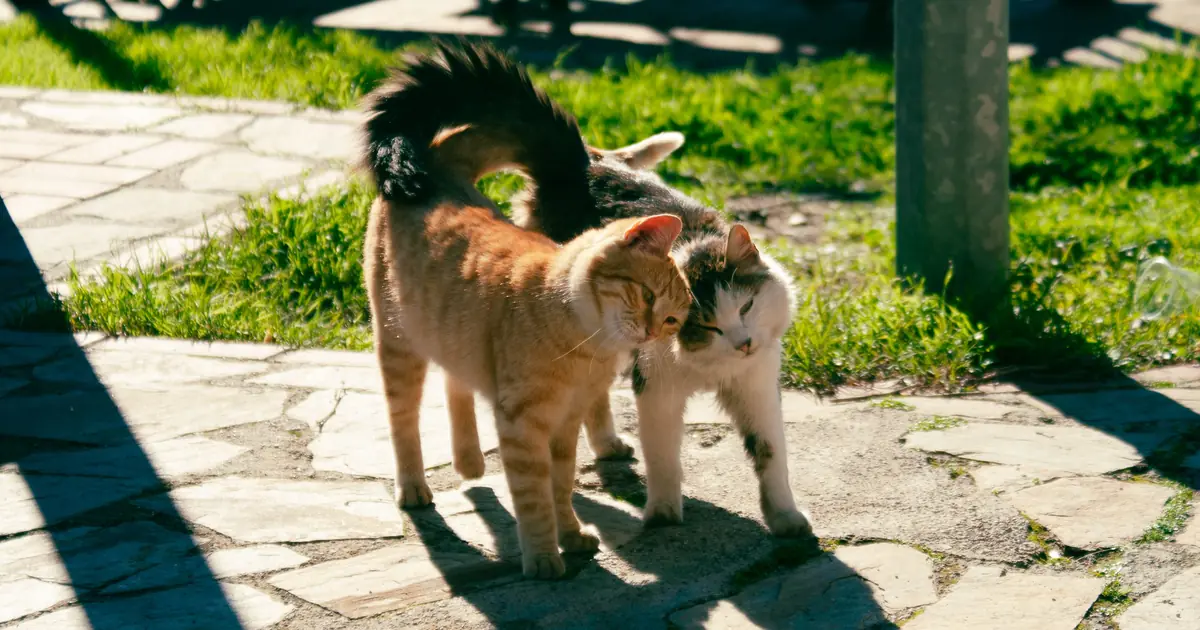
You’re lying on the couch, minding your own business, and suddenly there’s a tail in your nose and a furry backside parked directly on your face. If you’ve ever wondered why cats put their butt in your face, you’re not alone, and no, your cat isn’t being rude.
It feels backwards to us. A dog brings you a ball. A cat brings you its rear end. But once you understand how cats actually greet each other, the whole thing makes a strange kind of sense. Cats put their butt in your face because it’s how they say hello, and how they check in on someone they trust.
- Cats have scent glands near the anus and at the base of the tail that carry a unique chemical “ID card” with information about age, sex, health, and mood.
- A raised, straight tail (called “tail up”) is a confident, friendly greeting posture cats use with people and cats they like.
- Presenting their rear end to you is your cat’s version of a handshake, the same greeting they’d give a trusted cat companion.
- You never have to sniff back. A gentle scratch at the base of the tail or a calm “hi, buddy” is all the response your cat needs.
- Persistent scooting, licking, or a sudden foul smell back there can point to anal gland problems or worms, and it’s worth a vet visit.
Why Does My Cat Put Their Butt in My Face?
Your cat puts its butt in your face because that’s how cats greet the people and animals they trust. It looks embarrassing to us, but to your cat it’s a warm hello, not disrespect. Cats greet each other nose to rear, not nose to nose the way dogs and humans do, and when your cat turns around and backs into you, they’re treating you exactly like a member of their inner circle.
Think about it from their side. A cat doesn’t hand out this greeting to strangers or cats they’re unsure of. They save it for you, for the housemate cat they nap with, for the people they’ve decided are safe. Getting a face full of tail is honestly a bit of an honor, even if it doesn’t feel that way at 6am.
Why Do Cats Sniff Each Other’s Rear Ends to Say Hello?
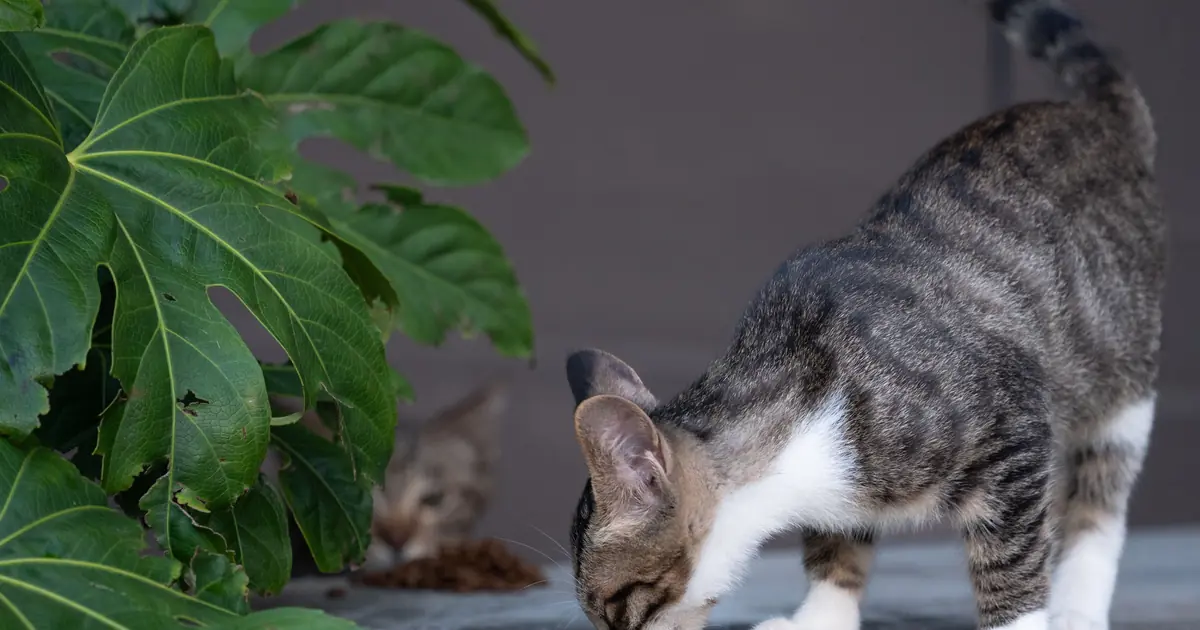
Cats sniff rear ends because scent glands there hold detailed information about who another cat is. Every cat has anal glands, small sacs on either side of the anus that release a scent unique to that individual, plus scent glands at the base of the tail. Together, they work almost like a fingerprint or an ID card, letting cats identify age, sex, reproductive status, and even general health just by taking a sniff.
Two cats meeting for the first time will often approach rear-first and sniff, and it’s a quick, efficient way to answer the question “who is this?” without a single sound. When your cat backs their rear end toward you, they’re inviting you into that same exchange, treating you like family and offering the feline equivalent of “here’s my ID, nice to see you.” You don’t need to actually sniff, don’t worry, but the gesture is 100 percent sincere. If you want to go deeper on how cats communicate through posture and scent, cat body language covers a lot of the other signals your cat sends you every day.
What Does It Mean When a Cat’s Tail Is Up?
A tail held straight up, sometimes with a little curl or quiver at the tip, means your cat is happy, confident, and glad to see you. Vets and behaviorists call this “tail up,” and it’s one of the clearest friendly signals in a cat’s body language. A nervous or unhappy cat tucks its tail low or puffs it out. A relaxed, cheerful cat marches toward you with the tail flagged high, sometimes with the very tip flicking side to side like a little wave.
That tail-up strut is almost always the opening move before the butt-in-your-face greeting. Your cat trots over, tail straight up, and turns around to offer their rear end as the second half of the hello. The two behaviors are a package deal. Notice the tail first next time, and you’ll see the greeting coming before it lands on your lap.
Is It a Compliment When My Cat Shows Me Their Butt?
Yes, it’s genuinely a compliment. A cat only presents its rear end to people and animals it feels safe around, so a face full of tail means your cat trusts you completely. This behavior usually shows up alongside other bonding moves, like headbutting (called bunting) and rubbing their cheeks and body against your legs or face. All three are ways your cat marks you with their scent and claims you as theirs.
Cats have scent glands on their cheeks and forehead too, and when they headbutt you, they’re leaving that scent behind, mixing their smell with yours so you both carry the same “family” signature. Put it all together, the headbutts, the rubbing, the tail up, the rear-end presentation, and you get a cat that has decided you’re theirs. It’s gross to us. It’s sweet to them. That’s just cats.
What Should I Do When My Cat Puts Their Butt in My Face?
You don’t need to do much of anything, and you definitely don’t need to sniff. A gentle scratch or a scoop away from your face works fine, and your cat won’t be offended. Most cats are happy with a calm response, a soft word, a pet at the base of the tail, or just a light nudge to redirect that tail out of your nose.
Here’s what tends to work well:
- Give a gentle scratch right above the tail base, a spot many cats love. It’s the same general area as the sweet spot behind why cats like butt pats, so leaning into it usually gets you a happy, arched-back response.
- Redirect calmly. Slide your hand under their belly and turn them around, or offer your hand for a headbutt instead. Most cats take the hint without any fuss.
- Skip the drama. Yelling “no” or pushing your cat away hard can confuse a cat who thought they were being friendly. A calm redirect teaches the behavior without hurting feelings.
- Enjoy it, honestly. If your cat is comfortable enough to greet you this way, that’s a sign of a genuinely strong bond.
How Does Butt-Presenting Compare to Other Cat Greetings?
Cats have a handful of go-to greetings, and the rear-end presentation is just one of several friendly signals in their toolkit. Here’s how the main ones stack up.
| Behavior | What It Means | Where the Scent Comes From |
|---|---|---|
| Tail up (straight, sometimes with a curl) | Confident, happy greeting | Tail base scent glands |
| Butt presentation | Trust, treating you like family, inviting a “sniff” | Anal and tail base glands |
| Headbutting (bunting) | Affection and scent-marking you as theirs | Cheek and forehead glands |
| Body rubbing against your legs | Bonding and claiming territory or a person | Cheek, flank, and tail glands |
| Slow blink | Relaxed trust, a feline “I love you” | No scent involved, purely visual |
Why Does My Cat Only Do This to Certain People?
Your cat presents its rear end only to people and animals it has decided are safe, which is why some guests never get the honor. This behavior is tied to trust and familiarity, not to how much a person likes cats or how long they’ve known your cat. A confident cat with a settled home life tends to greet trusted humans this way far more often than an anxious or newly adopted cat does.
It also connects to a bigger pattern of attachment. Cats that trot after you room to room, wait by the door, or hop up the second you sit down are showing the same underlying bond. If your cat also tends to follow you everywhere, the butt-in-your-face greeting is just one more piece of that same devoted, shadow-you-around personality.
A quick health note: persistent scooting, licking or biting at the area, or a sudden foul or fishy smell back there can point to anal gland problems or intestinal worms, not just a friendly greeting. That’s worth a trip to the vet rather than a wait-and-see approach.
When Should I Worry About My Cat’s Rear End?
A friendly, tail-up butt presentation is normal and doesn’t smell strong or off. What’s not normal is scooting across the floor, constant licking under the tail, swelling near the anus, or a sharp, fishy odor that lingers. Those signs usually point to impacted or infected anal glands, or sometimes intestinal parasites like tapeworms, and both need a veterinarian’s attention rather than a home fix.
According to the Cornell Feline Health Center, cats’ anal glands can become impacted or infected and typically need to be checked and, if needed, expressed by a vet. Catching it early usually means a quick, simple fix at the vet’s office. Left alone, it can turn into a painful abscess, so don’t wait it out if you notice these signs.
Frequently Asked Questions
Q: Why does my cat sit with their butt facing me?
Sitting with their rear end facing you is a relaxed, trusting posture, similar to the full butt-presentation greeting. Your cat feels safe enough to turn its back on you, which is actually a sign of comfort rather than rudeness.
Q: Is it normal for a cat to put its butt on your face while sleeping?
Yes, it’s common and usually means your cat feels secure enough to fully relax near you. Many cats choose to sleep back-to-front against a trusted person, and the tail-in-face position is just where they end up settling.
Q: Should I sniff my cat’s butt back?
No, you never need to sniff back. A gentle pet, a soft word, or a scratch at the base of the tail is more than enough to acknowledge the greeting on your terms.
Q: Why do cats raise their tail when they walk up to you?
A raised, straight tail (tail up) is a confident, happy greeting signal cats use with people and other cats they like. It often leads straight into a headbutt or a butt-presentation greeting.
Q: Do kittens do the butt-in-your-face thing too?
Kittens usually start showing tail-up greetings and rear-end presentations once they’re a few months old and comfortable in their home, since the behavior is tied to trust that builds over time.
Q: What’s the difference between headbutting and butt presentation?
Headbutting, or bunting, uses scent glands on the cheeks and forehead to mark you as theirs, while butt presentation uses anal and tail base glands and works more like an identity check between trusted individuals. Both are affectionate, and cats often do them back to back.
Q: Why does my cat’s butt smell bad when they greet me?
A light musky scent is normal cat scent gland activity, but a strong, foul, or fishy smell usually means impacted or infected anal glands. If the odor is sudden or strong, it’s worth a vet visit rather than assuming it’s just a greeting.
Q: Can I train my cat to stop putting their butt in my face?
You can gently redirect the behavior by scooping your cat around or offering a headbutt instead, but you can’t fully stop a trust-based greeting without damaging the bond. Calm redirection works far better than scolding.
Cats do a lot of things that look strange out of context, and the butt-in-your-face greeting is one of the classics. But strip away the ick factor and what’s left is pretty simple: your cat trusts you, your cat likes you, and this is how a cat says both. According to International Cat Care, most feline social greetings, from tail up to rear presentation, are built entirely around scent and familiarity rather than sight, which is exactly why this behavior can look odd to us and mean everything to your cat. The ASPCA notes that understanding these normal feline behaviors helps owners tell the difference between typical affection and signs something’s off. So next time your cat plants their rear end an inch from your nose, take it for what it is: a compliment, wrapped in fur, delivered from the wrong end.

Hello and welcome to The Ideal Cat!
We are some passionate cat owners from different professions. We love our cats and have a lot of experience in how to care for our pets. We are incredibly excited to share our knowledge, experience, and research with you. So you can take good care of your loving cat. We will answer most of the common questions about owning cats, taking care of them, etc. If you have any question contact with us. Thanks for visiting! Enjoy the content.
