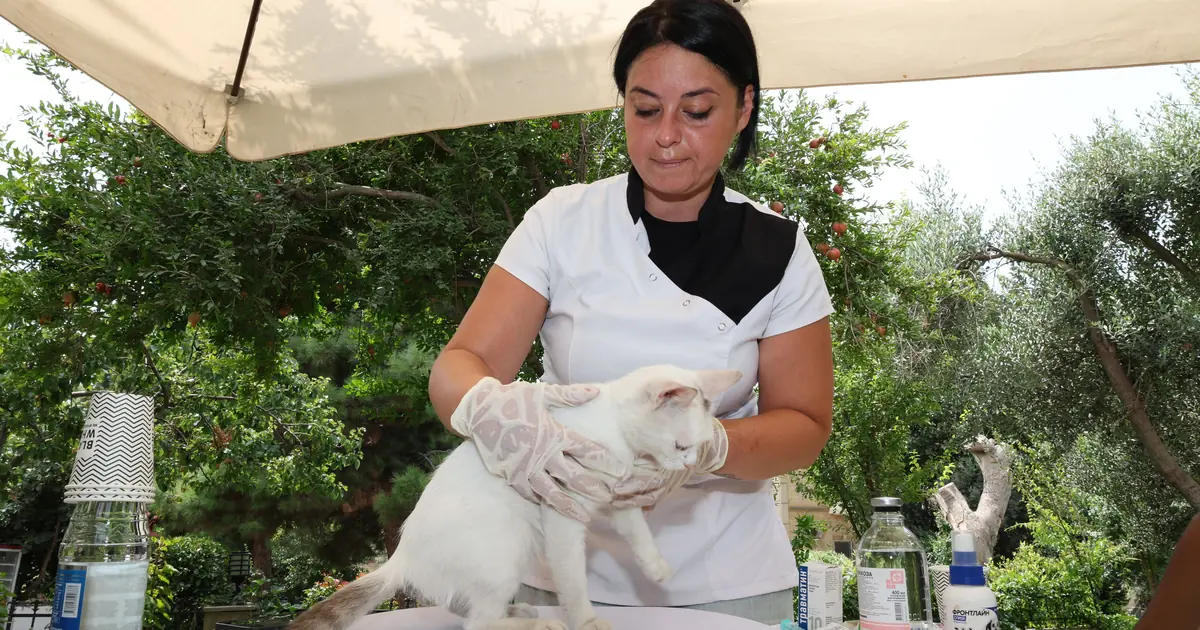
You reach down to scratch your cat’s cheek and your fingers hit a warm, squishy lump that wasn’t there yesterday. Your cat flinches. Maybe there’s a little scab nearby, or a whiff of something foul. A few days ago there was that scuffle with the neighbor’s tom, remember? Here’s what’s probably going on, and why it needs a vet.
- Most cat abscesses come from bite wounds during fights, because a cat’s teeth push bacteria deep under the skin where it gets sealed in.
- Common signs are a warm painful swelling, a fever, limping, hiding, not eating, and sometimes a burst spot leaking smelly pus.
- A cat abscess rarely heals on its own. Most need a vet to drain and flush the pocket plus a course of antibiotics.
- Unneutered outdoor male cats are the highest-risk group, since they fight over territory and mates.
- Bite wounds can also pass on FeLV and FIV, so a fresh fight injury is worth a vet check even before an abscess forms.
What is a cat abscess?
A cat abscess is a pocket of pus that builds up under the skin when a wound gets infected. Pus is a thick mix of dead bacteria, white blood cells, and tissue. The body walls the infection off inside a capsule, which is why an abscess feels like a firm or squishy lump rather than a flat scrape.
Cat teeth are the perfect abscess-making tool. They’re thin and sharp, so a bite makes a tiny puncture that seals over fast on the surface. The bacteria stay trapped underneath. Over three to five days, that trapped infection swells into a warm, tender pocket. By the time you feel the lump, the little bite hole has often healed over completely.
What causes an abscess in cats?
The number one cause of cat abscesses is bite and scratch wounds from fighting with other cats. A cat’s mouth is loaded with bacteria, especially Pasteurella multocida, and a bite injects it straight into the tissue. That’s why fight wounds abscess so reliably.
Some cats are far more likely to end up with one:
- Unneutered male cats roam and fight over territory and females, so they take the most bites.
- Outdoor and indoor-outdoor cats meet other cats and get into scraps.
- Cats in multi-cat homes with tension can nip each other over food, litter, or space.
Bite wounds are the classic cause, but they aren’t the only one. A few other types show up at the vet:
| Abscess type | Where it forms and why |
|---|---|
| Bite or fight abscess | Under the skin, usually on the head, neck, legs, or base of the tail, from another cat’s bite. By far the most common. |
| Tooth-root abscess | Around the root of an infected or broken tooth. Causes bad breath, drooling, face swelling, and trouble eating. |
| Anal gland abscess | Beside the anus when a scent gland gets blocked and infected. Causes scooting, licking under the tail, and a swelling that may burst. |
The rest of this guide focuses on the common bite-wound abscess, since that’s what most cat parents are dealing with. If you’ve just noticed swelling after a cat bite, that’s often the first sign an abscess is forming.
How do I know if my cat has an abscess?
A cat abscess usually shows up as a warm, painful swelling somewhere your cat doesn’t want you to touch. The lump often appears three to five days after a fight, so a recent scuffle plus a new lump is a strong clue.
Watch for these signs:
- A soft or firm swelling that feels warm and hurts when touched.
- Limping if the abscess is on a leg or paw.
- A fever, which shows up as a listless, off-color cat that just wants to hide.
- Not eating or eating much less than usual.
- Over-grooming or licking one spot again and again.
- A burst, draining wound leaking blood-tinged or greenish pus, often with a foul smell.
- Matted, damp fur over the lump once it starts to leak.
Sometimes the first thing you notice is the smell, or a wet patch of fur, because the abscess has already ruptured. That relieves the pressure, but the wound still needs proper cleaning and usually antibiotics.
What should I do at home while I wait for the vet?
While you wait for your vet appointment, keep your cat calm, keep the area clean, and do not try to squeeze or lance the abscess yourself. Forcing an intact abscess can push infection deeper and hurt your cat.
Safe things you can do at home:
- Apply a warm compress. Soak a clean cloth in warm (not hot) water, wring it out, and hold it gently on the lump for 5 to 10 minutes, a couple of times a day. Warmth eases pain and can help a ripe abscess drain.
- Gently clean a burst abscess. If it has already ruptured, dab away the discharge with a warm, damp cloth. Don’t scrub, and don’t press hard.
- Keep your cat from licking it. A recovery cone (e-collar) stops your cat reopening or re-infecting the wound.
- Keep your cat indoors and quiet. No more fights, and it’s easier to watch how they’re doing.
- Skip the human meds. Never give human painkillers or leftover antibiotics. Many are toxic to cats, and the wrong dose can be deadly.
Home care is a holding pattern, not a cure. Even a small draining abscess usually needs a vet to make sure the whole pocket is cleaned out and the infection is treated.
What will the vet do for a cat abscess?
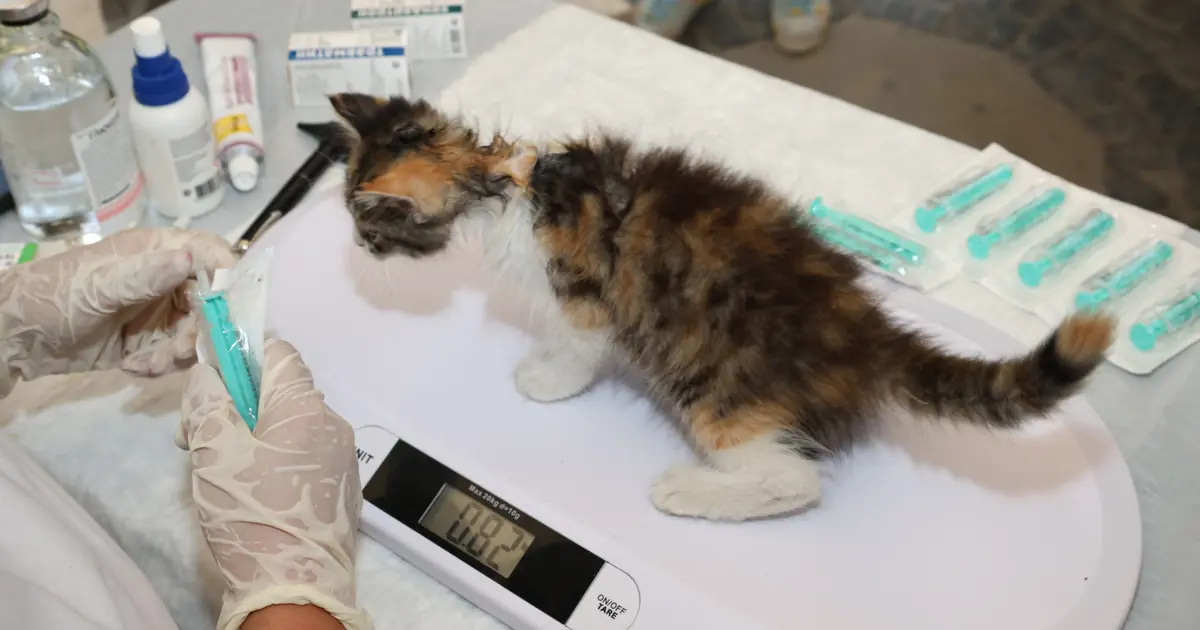
Your vet will open and drain the abscess, flush out the infected pocket, and send you home with antibiotics and pain relief. This is the treatment that actually clears the infection, and cats usually feel better within a day or two of starting it.
Here’s what a typical visit looks like:
| Home care (while you wait) | Vet care (the actual fix) |
|---|---|
| Warm compress a few times a day | Sedation or anesthesia if the abscess is large or painful |
| Gently clean a wound that has burst | Lancing (opening) the abscess and draining all the pus |
| Cone to stop licking | Flushing the pocket clean with sterile fluid |
| Keep your cat calm and indoors | Antibiotics and pain medication |
| Watch for fever, hiding, not eating | Sometimes a soft drain stitched in to keep it draining for a few days |
For a big or deep abscess, the vet may place a drain and ask you back to remove it after a few days. They’ll also likely suggest keeping the wound draining and clean at home while it heals from the inside out.
Will a cat abscess heal on its own?
Usually no, a cat abscess will not fully heal on its own. Now and then a small one bursts, drains, and settles, but that’s a gamble. The infection can wall off again, spread into the bloodstream, or leave your cat feverish and sick. The safe move is always a vet.
Leaving an abscess untreated can lead to a spreading skin infection, a return of the abscess, or in bad cases sepsis, where infection floods the body. Getting treatment early means a faster recovery and far fewer complications. So even if the lump popped and looks better, book the vet.
Can a cat abscess make my cat really sick?
Yes. An abscess is an active infection, and cats can get quite ill from one, especially if it’s ignored. On top of the local infection, bite wounds carry a bigger worry: they can transmit feline leukemia virus (FeLV) and feline immunodeficiency virus (FIV) from cat to cat.
Both FeLV and FIV spread mainly through the bites and saliva of an infected cat, and they weaken the immune system over time. That’s a big reason a fresh fight wound deserves a vet check even before it turns into an abscess. Your vet may recommend testing a few weeks after a bite. You can read more from the Cornell Feline Health Center on FIV.
How long does a cat abscess take to heal?
With prompt vet treatment, most cat abscesses heal in about 7 to 14 days. Your cat often perks up within a day or two of starting antibiotics, but the wound itself needs the full course to close properly. Finish every dose, even after your cat looks fine.
Aftercare at home usually means giving the antibiotics on schedule, keeping the cone on, cleaning the wound as your vet shows you, and keeping your cat indoors and rested. Call your vet if the swelling comes back, the wound reopens, the discharge gets worse, or your cat stops eating again.
How can I prevent cat abscesses?
The best way to prevent cat abscesses is to cut down on fighting, and the single most effective step is neutering. Neutered cats roam less, fight less, and take far fewer bites. Keeping cats indoors or in a safe enclosure removes the run-ins entirely.
A few habits that really lower the risk:
- Neuter or spay your cat. It calms territorial fighting and roaming. Here’s what neutering a cat typically costs.
- Keep cats indoors, or use a catio. A secure outdoor cat enclosure lets them enjoy the outside without brawls.
- Check for wounds after any scuffle. Part the fur and look for punctures, especially around the head, legs, and tail base. Early cleaning can stop an abscess forming.
- Ease multi-cat tension. Enough litter boxes, feeding stations, and hiding spots cut down on household squabbles, and on the bites that follow.
- Stay on top of overall health. Regular vet visits and up-to-date parasite treatment keep the immune system strong.
Frequently asked questions about cat abscesses
Q: How much does it cost to treat a cat abscess?
Treating a cat abscess often runs somewhere between $100 and $500, depending on your area, whether sedation is needed, and if a drain goes in. A simple lance-and-drain with antibiotics sits at the lower end, while a large abscess needing anesthesia and a drain costs more. Ask your vet for an estimate up front.
Q: Can I treat my cat’s abscess at home without a vet?
No, you shouldn’t rely on home care alone. You can warm-compress it and gently clean a burst abscess while you wait, but an abscess is an infection that usually needs professional draining and antibiotics. Never lance an intact abscess yourself, and never give human medications.
Q: Why does my cat’s abscess smell so bad?
An abscess smells foul because it’s full of pus, made of dead bacteria, white blood cells, and broken-down tissue. When the pocket bursts and drains, that smell escapes. The odor is a normal sign of infection, and it should improve quickly once the vet cleans out the wound and starts antibiotics.
Q: My cat’s abscess burst on its own. Do I still need a vet?
Yes, still see your vet. A ruptured abscess relieves the pressure, but the pocket often isn’t fully clean and the infection can return or spread. Your vet will flush the wound properly and usually prescribe antibiotics to make sure it heals from the inside out.
Q: Where do cat abscesses usually form?
Bite-wound abscesses most often form on the head, neck, front legs, and the base of the tail. Those are the spots a cat gets bitten while fighting, either facing off or spinning to flee. Tooth-root abscesses appear on the face, and anal gland abscesses show up beside the tail.
Q: How long after a cat fight does an abscess appear?
An abscess usually shows up three to five days after a bite. The surface wound heals over fast and traps bacteria underneath, which then swell into a pocket of pus. That’s why the lump can seem to appear out of nowhere days after the fight itself.
Q: Is a cat abscess an emergency?
A cat abscess needs prompt vet care, and it becomes urgent if your cat has a fever, is lethargic, stops eating, or if the swelling is large, spreading, or on the face near the eye. Don’t wait it out. The sooner it’s treated, the faster and safer the recovery.
Q: Can indoor cats get abscesses too?
Yes, though it’s less common. Indoor cats in multi-cat homes can bite each other during squabbles over food, litter boxes, or territory, and any bite can abscess. Indoor cats can also get tooth-root and anal gland abscesses, which have nothing to do with fighting.
This guide is educational and doesn’t replace veterinary advice. If you think your cat has an abscess, or your cat has a fever, is hiding, or has stopped eating, contact your veterinarian. Sources worth reading include VCA Animal Hospitals on fight wound infections, PDSA on cat bite abscesses, and PetMD’s cat abscess guide.

Hello and welcome to The Ideal Cat!
We are some passionate cat owners from different professions. We love our cats and have a lot of experience in how to care for our pets. We are incredibly excited to share our knowledge, experience, and research with you. So you can take good care of your loving cat. We will answer most of the common questions about owning cats, taking care of them, etc. If you have any question contact with us. Thanks for visiting! Enjoy the content.
)