
Your cat suddenly throws itself into a dramatic roll-and-flip like a tiny furry gymnast. It’s hilarious and adorable, and almost always a sign of a happy, comfortable cat.
Here’s what’s behind those feline somersaults, and the rare time to take note.
- Cats do somersaults and rolls mainly from playfulness, excitement, and joy.
- Rolling over often seeks attention and shows your cat feels safe and relaxed.
- Catnip and being in heat commonly trigger rolling, flipping, and writhing.
- It’s usually a happy, healthy behavior that peaks in energetic young cats.
- Rare red flags: repeated rolling with distress, head tilt, or loss of balance, see a vet.
Why does my cat do somersaults?
Cats do somersaults and rolls mostly out of playfulness, excitement, and a desire for attention, and it’s usually a sign of a happy, secure cat. Flinging themselves into a roll or flip is often part of play, a burst of the “zoomies,” or a way to invite you to interact. Exposing the belly during a roll also signals trust and comfort. In many cases, catnip or hormones (being in heat) trigger the acrobatics. Almost always, somersaulting is a joyful, normal behavior.
Is somersaulting a sign of a happy cat?
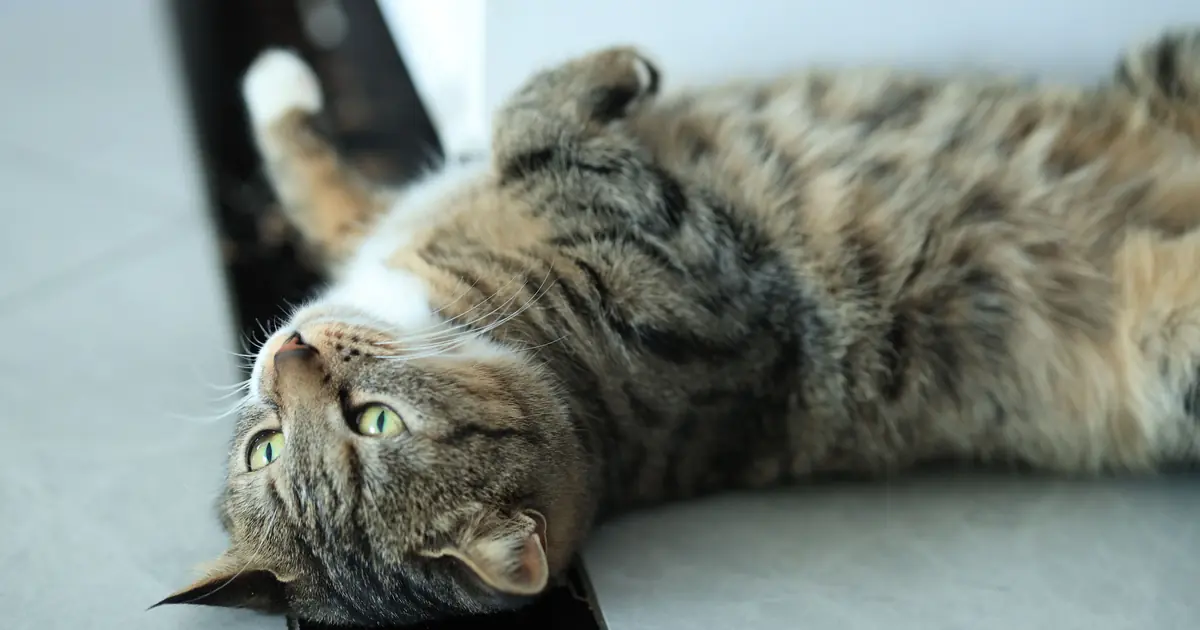
Yes, rolling and flipping is typically a happy, relaxed behavior. When a cat throws itself down and rolls, often showing its belly, it’s demonstrating that it feels safe and content in its environment and with you. This is the same trust signal behind the belly-up pose, which we cover in why cats look at you upside down. Playful somersaults, especially with a loose, wiggly body and bright eyes, are a cat’s way of expressing joy and inviting fun.
What triggers rolling and flipping?
Several common things set off feline somersaults. The usual triggers:
- Play and excitement: energetic bursts, especially in kittens and young cats.
- Attention-seeking: rolling near you to say “look at me, play with me.”
- Catnip: many cats roll, flip, and writhe happily under its influence.
- Being in heat: unspayed females often roll and writhe when in heat.
- Scent-marking: rolling on a spot to leave their scent, like in dirt or on your things.
Rolling in specific spots, like the ground outdoors, has its own explanation too, covered in why cats roll in dirt.
Could catnip or heat be the cause?
Yes, both catnip and heat are classic causes of dramatic rolling. Catnip triggers a temporary euphoric response in many cats, causing them to roll, flip, rub, and writhe happily for several minutes before it wears off, entirely harmless. Separately, an unspayed female cat in heat often rolls, writhes, and vocalizes as part of hormonal behavior; if your cat also yowls, raises its rear, and is extra affectionate, heat may be the reason. Spaying resolves heat-related rolling and prevents unwanted litters.
Playful rolling vs a warning sign
Here’s how to tell happy acrobatics from a concern.
| Normal, happy rolling | Worth a vet check |
|---|---|
| Playful, wiggly, relaxed body | Rolling with distress or crying |
| Triggered by play, catnip, or attention | Head tilt, circling, or loss of balance |
| Cat eats, plays, and acts normally | Excessive ear scratching or head shaking |
| Stops on its own, then relaxes | Disorientation or repeated falling |
When should you see a vet?
See a vet if rolling looks distressed or comes with balance or ear problems. While somersaults are almost always playful, repeated rolling combined with a head tilt, circling, loss of balance, disorientation, or frantic ear scratching can indicate an ear infection, ear mites, or a neurological (vestibular) issue rather than fun. This article is educational and not a substitute for veterinary care; if the behavior seems compulsive, painful, or paired with those signs, get it checked. For how cats stay coordinated, see how cats balance. Trusted background comes from the ASPCA and VCA Hospitals.
Frequently Asked Questions
Q: Why does my cat roll and do somersaults?
Mostly playfulness, excitement, and attention-seeking, and it shows your cat feels safe and happy. Catnip and being in heat are also common triggers. Rolling with a relaxed, wiggly body is a joyful, normal behavior.
Q: Is rolling over a sign my cat is happy?
Yes. Rolling and showing the belly signals trust, comfort, and contentment. A playful somersault with bright eyes and a loose body is your cat expressing joy and often inviting you to interact. It’s a great sign.
Q: Does catnip make cats do somersaults?
Often, yes. Catnip triggers a temporary euphoric response in many cats, causing rolling, flipping, rubbing, and writhing for a few minutes before wearing off. It’s harmless fun, so catnip is a very common cause of the acrobatics.
Q: Why does my female cat keep rolling and writhing?
An unspayed female in heat commonly rolls, writhes, and yowls as hormonal behavior, often with a raised rear and extra affection. Spaying stops heat-related rolling and prevents unwanted litters. Check with your vet about timing.
Q: When is rolling a health concern?
If rolling looks distressed or comes with a head tilt, circling, loss of balance, disorientation, or frantic ear scratching, it can signal an ear infection, mites, or a vestibular issue. See a vet if you notice those signs.
Q: Why does my cat somersault when it sees me?
That’s a happy greeting and attention invitation, your cat is excited to see you and wants to interact. Rolling near you, often belly-up, shows trust and affection. Reward it with gentle attention or play (but be cautious touching the belly).

Hello and welcome to The Ideal Cat!
We are some passionate cat owners from different professions. We love our cats and have a lot of experience in how to care for our pets. We are incredibly excited to share our knowledge, experience, and research with you. So you can take good care of your loving cat. We will answer most of the common questions about owning cats, taking care of them, etc. If you have any question contact with us. Thanks for visiting! Enjoy the content.
