
You’re scratching your cat’s chin like always, and then you notice it. One ear looks red inside. There’s a bit of dark, crumbly gunk, and a smell that wasn’t there last week. Your cat keeps shaking their head and pawing at the same ear.
That combination usually points to one thing: an ear infection. Cats get them, and they can go from mildly annoying to genuinely painful fast. The good news? Most clear up well once a vet figures out what’s driving them.
Here’s what the signs mean, what’s usually behind them, how vets sort it out, and why the cotton swabs and home remedies need to stay in the cabinet.
This article is educational and isn’t a substitute for veterinary care. Ears are delicate, so when something looks off, call your vet.
- A cat ear infection, or otitis, is inflammation of the ear canal, usually with redness, discharge, odor, and head shaking.
- Ear mites are the leading cause of ear infections in cats, responsible for about half of all cases, especially in kittens and outdoor cats.
- Vets diagnose ear infections with an otoscope exam and ear cytology, where a swab sample is checked under a microscope for mites, yeast, or bacteria.
- Cat ear infections rarely heal on their own and need vet-prescribed drops or cleaners plus treatment of the underlying cause.
- A head tilt, loss of balance, or facial droop can signal a deeper middle or inner ear infection and needs a vet promptly.
What is a cat ear infection?
A cat ear infection, called otitis, is inflammation of the ear canal, most often caused by mites, yeast, or bacteria taking hold in that warm, dark space. Vets split it into three levels by how deep it goes. Otitis externa is the outer ear canal and the most common. Otitis media is the middle ear. Otitis interna is the inner ear, which is the most serious because it affects balance.
Most cat ear infections start in the outer canal. Left alone, an outer ear infection can creep deeper into the middle and inner ear, which is exactly why you don’t want to wait one out.
What are the signs of an ear infection in cats?
The classic signs of a cat ear infection are head shaking, scratching or pawing at the ear, redness, dark or waxy discharge, and a bad smell. Many cats also hold one ear at an odd angle or flinch when you touch that side of the head. You’ll often notice it on just one ear.
Watch for these common symptoms:
- Frequent head shaking or head tilting toward one side
- Scratching or pawing at the ear, sometimes to the point of scabs
- Redness or swelling inside the ear flap and canal
- Dark brown, black, or yellow discharge (mite debris often looks like coffee grounds)
- A yeasty or foul odor coming from the ear
- Pain, so your cat pulls away or cries when the ear is touched
- Rubbing the ear against furniture or the floor
- Hair loss or crusty skin around the ear
A cat with an itchy, gunky ear is uncomfortable, not just picky. If your cat won’t let you near the ear at all, that pain is a signal to get it checked rather than push through it.
What causes ear infections in cats?
Ear mites are the number one cause of ear infections in cats, behind roughly half of all cases. After mites, the usual suspects are yeast and bacterial overgrowth, allergies, wax buildup, polyps, and foreign material stuck in the canal. Most infections trace back to an underlying trigger, which is why finding that root cause matters so much.
| Cause | What’s happening | Common clue |
|---|---|---|
| Ear mites (Otodectes cynotis) | Tiny contagious parasites living in the ear canal, the leading cause in cats | Dark, crumbly, coffee-ground debris; intense itching; common in kittens and outdoor cats |
| Yeast infection | Yeast overgrows in the warm, moist canal | Brown, waxy discharge with a distinct yeasty smell |
| Bacterial infection | Bacteria multiply, often on top of another problem | Yellow or pus-like discharge, strong odor, redness |
| Allergies | Food or environmental allergies inflame the ears | Recurring infections, itchy skin elsewhere too |
| Wax buildup | Excess wax traps debris and moisture | Gradual buildup, mild odor, in prone or older cats |
| Polyps or growths | Benign growth blocks or irritates the canal | One stubborn ear, infections that keep returning |
| Foreign material | Grass seed, dirt, or debris lodged in the ear | Sudden onset, head shaking, often after outdoor time |
Ear mites deserve the spotlight, since they cause the majority of feline ear infections and spread easily between pets. That telltale dark debris is a giveaway, but it’s not always mites, so it’s worth confirming. Our guides on what cat ear mites look like and how to get rid of cat ear mites walk you through spotting and clearing them the right way.
Why do infections keep coming back?
Recurring ear infections almost always mean the underlying cause was never fully addressed. As the VCA Animal Hospitals notes, if the root problem, like allergies or a polyp, isn’t found and treated, the infection tends to clear briefly and then relapse once the medication stops. That’s why chronic ear trouble deserves a deeper workup, not just another round of drops.
How do vets diagnose a cat ear infection?
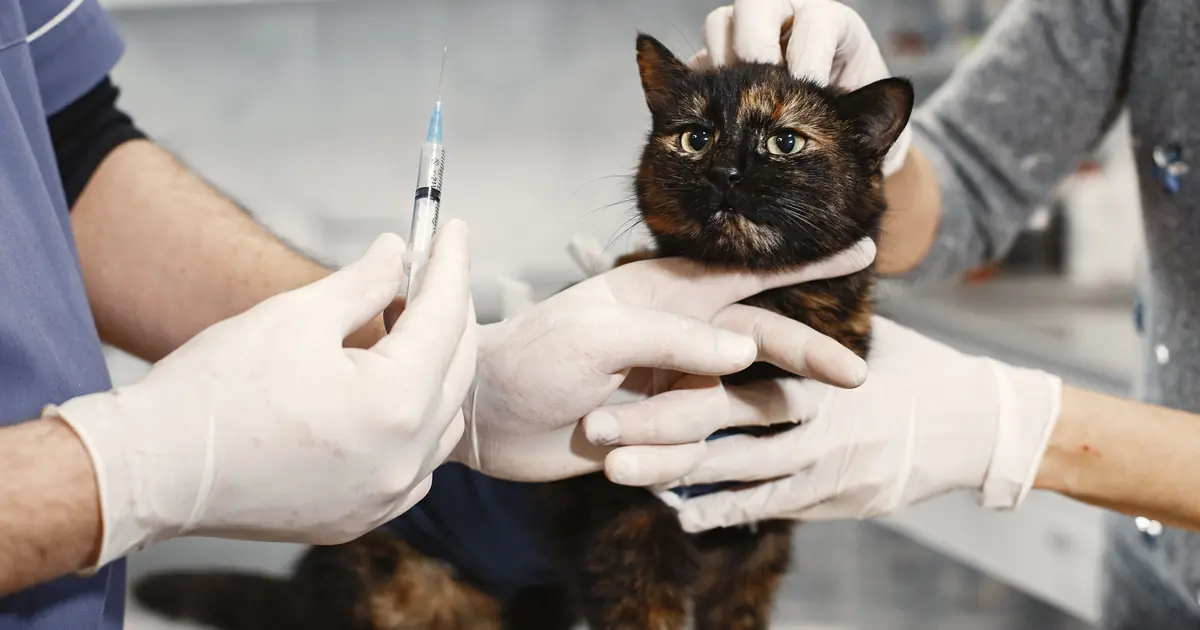
Vets diagnose an ear infection with two main steps: an otoscope exam to look down the canal, and ear cytology, where a swab sample is examined under a microscope. Cytology is what tells your vet whether they’re dealing with mites, yeast, bacteria, or a mix, and that answer decides the treatment.
Here’s what usually happens at the visit:
- History and questions. Your vet asks about the symptoms, timeline, allergies, and whether other pets are affected.
- Otoscope exam. A lighted scope lets the vet see down the canal and check whether the eardrum is intact. A painful or blocked ear sometimes needs mild sedation.
- Ear cytology. A gentle swab collects debris that’s viewed under a microscope. This is the key test, and it’s quick and low cost, often around $25 to $40.
- Deeper testing if needed. For stubborn or recurring cases, your vet may run a culture, look for allergies, or image the ear.
Checking whether the eardrum is intact matters more than you’d think. Some ear medications aren’t safe if the eardrum is ruptured, so your vet needs that look before prescribing. This is one reason guessing at home can backfire.
How are cat ear infections treated?
Cat ear infections are treated with vet-prescribed ear drops or ointments, a proper ear cleaning, and treatment of whatever caused the problem. Most topical ear medications combine an antibiotic, an antifungal, and a steroid to fight infection and calm inflammation at once. Mites get a specific antiparasitic, and allergies or polyps get their own targeted plan.
A typical treatment plan looks like this:
- Cleaning: your vet clears out debris so medication can reach the canal, then shows you how to clean gently at home.
- Medicated drops: applied for the number of days your vet specifies, even if the ear looks better early.
- Treating the cause: mite treatment, allergy management, or removing a polyp or foreign object.
- Pain relief: for sore, inflamed ears, since these infections genuinely hurt.
- A recheck: to confirm the infection is fully gone, not just quieter.
Finish the full course, even once your cat seems fine. Stopping early is a top reason infections bounce back. Giving ear drops to a squirmy cat is a skill, and our guide on how to give medicine to a cat makes it a lot less stressful for both of you. If mites are the cause, a broader cat parasite treatment plan helps stop them spreading to other pets.
Can a cat ear infection heal on its own?
No, cat ear infections rarely heal on their own and usually get worse without treatment. Because most infections sit on top of a deeper cause like mites or allergies, ignoring one lets it dig in, spread deeper, and in severe cases lead to lasting damage such as deafness. A quick vet visit almost always beats waiting and hoping.
Why you shouldn’t use cotton swabs or home remedies
Skip the cotton swabs and DIY ear “cures,” because both can do real harm. Pushing a cotton swab deep into the canal can pack debris further down or even rupture the eardrum. Home remedies like vinegar, hydrogen peroxide, or oils can burn already-inflamed tissue and delay the treatment your cat actually needs.
A few ground rules that keep ears safe:
- Never insert a cotton swab deep into the ear canal. Clean only what you can see with a vet-approved cleaner and a cotton ball.
- Don’t pour in peroxide, vinegar, alcohol, or essential oils. They sting and can worsen inflammation.
- Don’t reuse leftover drops from a past infection or another pet. The wrong medication can hurt a ruptured eardrum.
- Don’t diagnose mites by guessing. That dark debris can also be yeast or bacteria, which need different treatment.
The safest, gentlest routine is the one your vet recommends. For everyday upkeep between infections, our step-by-step guide on how to clean cat ears shows the right way to do it without going too deep.
When is a cat ear infection an emergency?
A cat ear infection becomes urgent when it moves into the middle or inner ear, and the tell is balance. A sudden head tilt, stumbling, circling, facial droop, or flicking eye movements can all mean the infection has reached the inner ear and the nerves that control balance. Those signs deserve a prompt vet visit, not a wait-and-see.
Call your vet promptly if you notice:
- A persistent head tilt to one side
- Loss of balance, stumbling, or walking in circles
- Rapid side-to-side eye movements (nystagmus)
- Facial drooping or paralysis on one side
- Severe pain, crying, or refusing to let you near the ear
- Sudden signs of hearing loss
- Bleeding or heavy pus from the ear
According to the Cornell Feline Health Center, an untreated outer ear infection can migrate into the middle and inner ear, and severe cases can damage the eardrum and inner ear enough to cause deafness and balance problems on the affected side. The reassuring part: most cats with inner ear infections respond well to treatment, and the balance issues usually improve over a few weeks. For the clinical details, the Merck Veterinary Manual is a solid, vet-reviewed reference.
How can you prevent cat ear infections?
You can prevent many ear infections with regular checks, gentle cleaning, and staying ahead of mites and allergies. Cats with healthy, clean ears and a good parasite-prevention routine simply run into fewer problems.
- Peek in your cat’s ears weekly for redness, debris, or odor, so you catch trouble early.
- Clean ears only when needed, and only with a vet-approved cleaner, never a cotton swab deep in the canal.
- Keep up with parasite prevention to head off ear mites, especially for kittens and indoor-outdoor cats.
- Manage known allergies with your vet, since they’re a big driver of recurring infections.
- Dry ears gently after baths or wet play, since moisture feeds yeast and bacteria.
- Treat any infection fully and go to the recheck, so it doesn’t quietly return.
Cat ear infection FAQ
Q: What is the most common cause of ear infections in cats?
Ear mites are the most common cause of ear infections in cats, behind roughly half of all cases. These tiny, highly contagious parasites are especially common in kittens and outdoor cats, and they leave dark, crumbly, coffee-ground-like debris in the ear.
Q: Can a cat ear infection go away on its own?
No, cat ear infections rarely resolve on their own and usually worsen without treatment. Because most sit on top of a deeper cause like mites or allergies, they need a vet’s diagnosis and prescribed medication to clear up fully.
Q: How do vets diagnose a cat ear infection?
Vets look down the ear with an otoscope, then run ear cytology, examining a swab sample under a microscope. Cytology reveals whether the cause is mites, yeast, or bacteria, which determines the right treatment. It’s a quick, low-cost test, often around $25 to $40.
Q: What does a cat ear infection smell like?
An infected cat ear often has a strong, unpleasant odor. Yeast infections tend to smell musty or yeasty, while bacterial infections smell foul or pus-like. A noticeable smell from one ear, paired with discharge, is a good reason to see your vet.
Q: Is it safe to clean my cat’s ears with cotton swabs?
No. Cotton swabs can push debris deeper or rupture the eardrum. Clean only the visible outer part of the ear with a vet-approved cleaner and a cotton ball, and never insert anything deep into the ear canal.
Q: How long does it take a cat ear infection to clear up?
A simple outer ear infection often improves within one to two weeks of treatment, but you should finish the full prescribed course. Deeper middle or inner ear infections can take longer, sometimes weeks to months, and may need oral medication.
Q: Can ear mites cause a cat ear infection?
Yes. Ear mites are the leading cause of feline ear infections. They irritate the canal and often trigger secondary yeast or bacterial infections on top of the mite infestation, which is why vets treat both the mites and any infection they caused.
Q: Why does my cat keep getting ear infections?
Recurring ear infections usually mean an underlying cause, like allergies, a polyp, or ongoing mite exposure, wasn’t fully addressed. Chronic cases deserve a deeper workup so your vet can treat the root problem, not just the latest flare-up.
Bottom line: a red, smelly, itchy ear is your cat asking for help, and the fix is almost always a quick vet visit rather than a cabinet full of home remedies. Catch it early, treat the real cause, and finish the full course. Your cat’s ears (and their balance) will thank you.

Hello and welcome to The Ideal Cat!
We are some passionate cat owners from different professions. We love our cats and have a lot of experience in how to care for our pets. We are incredibly excited to share our knowledge, experience, and research with you. So you can take good care of your loving cat. We will answer most of the common questions about owning cats, taking care of them, etc. If you have any question contact with us. Thanks for visiting! Enjoy the content.
