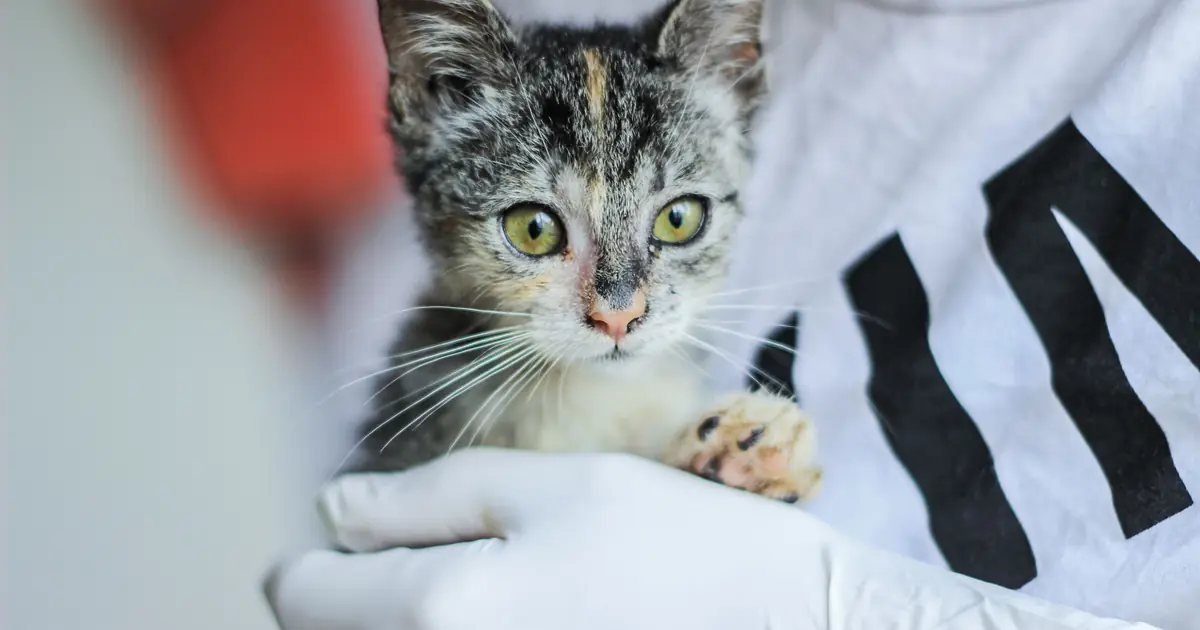
Your cat won’t stop scratching at their ears. You take a peek and spot dark, crumbly gunk that looks a lot like coffee grounds. Not pretty. And if the smell has your nose wrinkling, that’s a classic sign too.
Ear mites are tiny, incredibly itchy, and wildly contagious. The good news? They’re also very treatable once you know the plan. Here’s exactly how to clear them out, step by step, and keep them from coming back.
This article is educational and isn’t a substitute for veterinary care. Ear mites are easy to confuse with an ear infection, so let your vet confirm what you’re dealing with.
- Cat ear mites (Otodectes cynotis) are tiny parasites that cause intense itching and dark, coffee-ground-like debris in the ears.
- A vet-recommended, single-dose spot-on treatment like selamectin or moxidectin clears most ear mite infestations safely.
- Ear mites have a roughly three-week life cycle, so treatment usually runs about a month to catch newly hatched mites.
- Ear mites spread easily between cats, dogs, and ferrets, so every pet in the home needs treating at the same time.
- Home remedies like olive or baby oil are unreliable and slow, and there’s no proven safe at-home cure without a vet.
How do you get rid of cat ear mites, step by step?
You get rid of cat ear mites by confirming the diagnosis with a vet, applying a vet-recommended treatment, cleaning the ears, treating all pets in the home, and finishing the full course. Rushing or stopping early is the number one reason mites come back. Follow these six steps in order.
- Confirm it’s actually mites. Ear mites look a lot like a yeast or bacterial ear infection, and the treatments differ. Your vet takes a quick swab of the ear debris and checks it under a microscope, where mites show up as little moving white specks. This one step saves you from treating the wrong problem.
- Get a vet-recommended treatment. Ask your vet which product fits your cat. A single-dose spot-on applied between the shoulder blades, such as selamectin or a moxidectin combination, is highly effective and easy. Some cats get prescription ear drops instead. Skip the guesswork and let your vet pick.
- Clean the ears gently first. Ear mites leave behind waxy debris that can block treatment from reaching them. Use a vet-approved ear cleaner and soft cotton balls or gauze to wipe the visible parts of the ear. Never jam a cotton swab deep into the canal.
- Treat every pet in the home. Ear mites hop between animals fast. Even if your other cat or dog seems fine, treat them at the same time, or the mites just bounce back and forth. Ask your vet for the right product for each species.
- Wash the bedding and clean the environment. Mites can briefly survive off your cat. Wash all bedding, blankets, and soft cat beds in hot water, and vacuum favorite napping spots. It’s a small step that closes the loop.
- Follow up and finish the course. Even if your cat feels better in days, keep going for the full treatment window your vet sets, often about a month. A follow-up check confirms the mites are gone and that no ear infection is hiding underneath.
Not sure the culprit is mites versus something else? Our guide on what cat ear mites look like walks through the telltale signs so you know what you’re staring at.

What are cat ear mites?
Cat ear mites are tiny eight-legged parasites called Otodectes cynotis that live in the ear canal and feed on ear wax and skin oils. They’re barely visible to the naked eye, about the size of a pinhead, and they cause serious itching. Ear mites are one of the most common causes of ear trouble in cats, and they’re especially common in kittens and outdoor cats.
Here’s why they matter beyond the itch: all that scratching and head-shaking can damage the ear and open the door to a secondary cat ear infection. That’s why clearing mites promptly is worth it.
How do cats get ear mites?
Cats get ear mites through direct contact with another animal that already has them. Ear mites are highly contagious and pass quickly between cats, dogs, and ferrets that share space. Kittens often catch them straight from their mother, which is why litters frequently need treating together. Outdoor cats and cats from shelters or multi-pet homes are at higher risk.
What are the signs of ear mites in cats?
The signs of ear mites in cats are intense ear scratching, head shaking, and dark, dry, crumbly debris that looks like coffee grounds. Many cats also have a faint odor from the ears and red, irritated skin around the opening. If both ears are involved and your cat is a kitten or recent rescue, mites jump to the top of the suspect list.
| Sign | What you’ll notice |
|---|---|
| Itching and scratching | Frequent pawing at the ears, sometimes hard enough to break the skin |
| Head shaking | Repeated shaking or tilting of the head |
| Dark debris | Dry, crumbly, coffee-ground-colored buildup deep in the ear |
| Odor | A mild, waxy or musty smell from the ear canal |
| Redness and irritation | Inflamed, scabby skin at the ear opening or around the base |
| Scratches and hair loss | Bald patches or sores near the ears from constant scratching |
These signs overlap with other ear problems, so a home guess isn’t enough. According to the Cornell Feline Health Center, ear mites are a frequent cause of feline ear disease and can lead to more serious damage if left untreated. A quick vet swab settles it.
What is the best treatment for cat ear mites?
The best treatment for cat ear mites is a vet-recommended prescription product, most often a single-dose spot-on containing selamectin or moxidectin. These are applied to the skin between the shoulder blades and clear mites with one or two doses. Some vets prescribe medicated ear drops instead, especially if there’s a secondary infection to treat.
Research backs the spot-ons. Studies show a single application of selamectin or a moxidectin combination is safe and highly effective against Otodectes cynotis. The VCA Animal Hospitals note that these once-a-month topicals are a convenient, reliable choice for most cats.
| Treatment type | How it works | Good to know |
|---|---|---|
| Single-dose spot-on (selamectin, moxidectin) | Absorbed through the skin, kills mites bodywide | Easy to apply, often one dose repeated in a month; prescription |
| Medicated ear drops | Antiparasitic drops placed directly in the ear canal | May need daily use for weeks; good when infection is present |
| Ear cleaner | Loosens and removes waxy debris | Supports treatment but does not cure mites on its own |
| Whole-body parasite preventives | Some flea and worm products also cover ear mites | Ask your vet before combining products |
Whichever route your vet picks, the goal is the same: kill the mites and any eggs that hatch after. That’s where timing comes in. For the bigger picture on keeping cats free of creepy-crawlies, our overview of cat parasite treatment ties it all together.
Do home remedies for ear mites actually work?
Home remedies for ear mites are unreliable and slow, and none is a proven, safe cure. Oils like olive or baby oil can coat and smother some mites, but they don’t reliably kill eggs, they take weeks of daily use, and they can trap debris or irritate an already-inflamed ear. There’s also the real risk of treating “mites” that turn out to be an infection needing very different care. Honestly, skip the DIY oils and get a proper diagnosis, because a single vet-recommended dose usually works better and faster.
How long does it take to get rid of cat ear mites?
It usually takes about three to four weeks to fully get rid of cat ear mites, even though your cat may feel better within a few days. The reason is the mite life cycle: Otodectes cynotis takes roughly 18 to 28 days to go from egg to adult. A treatment that kills adult mites still has to outlast the eggs hatching behind them, which is exactly why finishing the full course matters.
Stop too soon and a fresh batch of mites hatches into an empty, itchy ear, and you’re back to square one. Your vet may recommend a recheck a few weeks after treatment to confirm the ears are clear. That follow-up is worth keeping.
How do you keep ear mites from coming back?
You keep ear mites from coming back by treating all pets together, finishing the full course, cleaning the environment, and staying on year-round parasite prevention. Ear mites return when one untreated pet re-infects the others, so the whole household has to clear at once.
- Treat every cat, dog, and ferret in the home at the same time, even the ones that seem fine.
- Wash bedding and blankets in hot water and vacuum where your pets sleep.
- Keep up with a vet-recommended parasite preventive, since many also guard against ear mites.
- Check your cat’s ears now and then, and clean them only when your vet advises. Learn the safe way to clean your cat’s ears without pushing debris deeper.
- Quarantine and check any new pet’s ears before introducing them to the household.
When should you see a vet about ear mites?
See a vet any time you suspect ear mites, and go promptly if your cat is in obvious distress. Because mites mimic other ear problems, a vet visit is the fastest path to the right treatment. Don’t wait it out.
Call your vet soon if you notice:
- Constant scratching that’s breaking the skin or causing bleeding
- A strong or foul odor, discharge, or pus from the ear
- Swelling, a hot ear flap, or a soft lump on the ear (a possible aural hematoma from head shaking)
- Head tilt, loss of balance, or signs your cat is in pain
- No improvement after starting treatment, or symptoms that keep returning
The International Cat Care notes that heavy scratching from mites can cause secondary infections and ear damage, so early treatment protects your cat’s ears long term.
Cat ear mites FAQ
Q: Can I get rid of cat ear mites without going to the vet?
It’s not recommended. There’s no proven, safe over-the-counter cure, and ear mites look almost identical to ear infections that need different treatment. A vet can confirm the diagnosis with a quick swab and prescribe a single-dose treatment that works far better than home remedies.
Q: Are cat ear mites contagious to other pets or to me?
Ear mites are highly contagious between cats, dogs, and ferrets, so treat all pets in the home together. They rarely spread to humans, though in uncommon cases a person can get a temporary itchy rash. Treating your pets promptly removes the risk.
Q: How much does ear mite treatment cost?
Costs vary by region and product, but expect to pay for a vet exam plus the treatment itself. A single-dose spot-on is often affordable, while cases with a secondary infection or repeat visits cost more. Your vet can give an exact estimate.
Q: Do ear mites go away on their own?
No, ear mites don’t clear up on their own. Without treatment they keep reproducing on a roughly three-week cycle, spreading to other pets and worsening the itch and irritation. Prompt treatment is the only reliable way to end the infestation.
Q: Can I use dog ear mite medicine on my cat?
Never use a dog product on a cat unless your vet says so. Some dog parasite treatments contain ingredients that are toxic to cats. Always use a product labeled for cats and dosed for your cat’s weight, chosen by your veterinarian.
Q: Should I clean my cat’s ears before or during treatment?
Gently clean the visible parts of the ear before treatment so the medication can reach the mites, using a vet-approved cleaner and cotton balls. Never push a cotton swab deep into the canal. Ask your vet how often to clean during the treatment period.
Q: Why does my cat still have symptoms after treatment?
Lingering symptoms usually mean eggs hatched after the first dose, another pet re-infected your cat, or a secondary ear infection is present. Finish the full course, treat all pets, and return to your vet if the itching, debris, or odor doesn’t clear.
Bottom line: cat ear mites are annoying and contagious, but they’re beatable. Get a proper diagnosis, use the vet-recommended treatment, clean the ears gently, treat every pet, and see it through the full three-week-plus window. Do that, and those itchy little squatters won’t stand a chance.

Hello and welcome to The Ideal Cat!
We are some passionate cat owners from different professions. We love our cats and have a lot of experience in how to care for our pets. We are incredibly excited to share our knowledge, experience, and research with you. So you can take good care of your loving cat. We will answer most of the common questions about owning cats, taking care of them, etc. If you have any question contact with us. Thanks for visiting! Enjoy the content.
