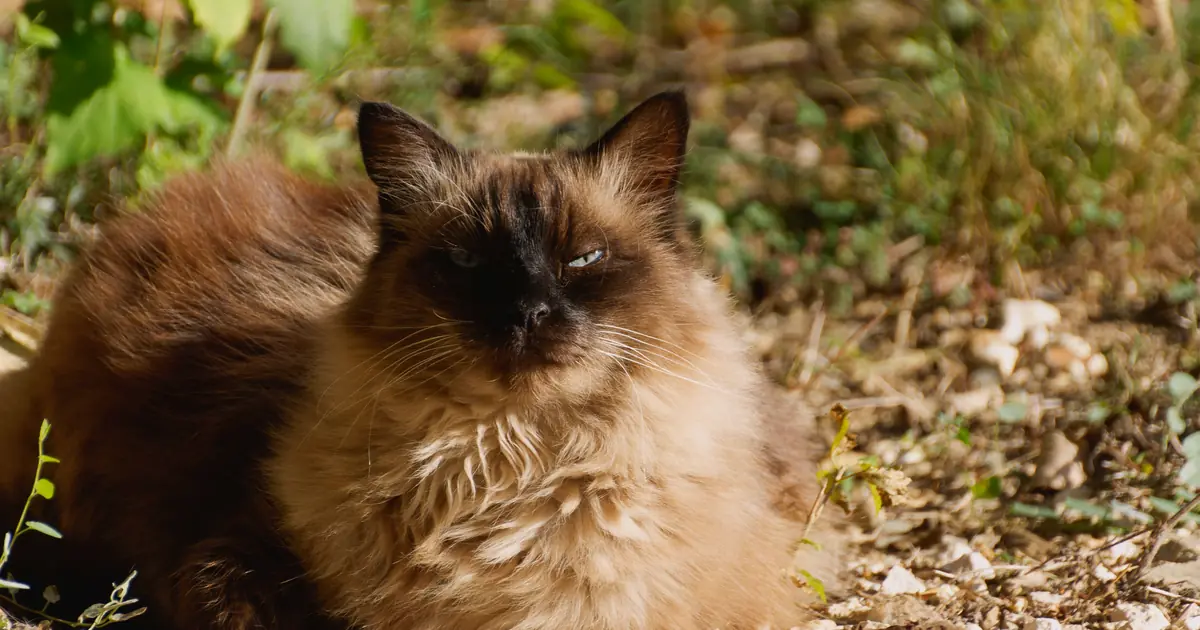
If you’ve ever wanted a cat who follows you from room to room, narrates your every move, and insists on supervising dinner prep, the Balinese might ruin you for any other breed. This isn’t a cat who watches life from the top of the fridge. She wants a front-row seat, preferably in your lap.
People considering a Balinese usually already know they want a lively, people-focused cat. What they really want to know is how far that friendliness goes, and whether it comes with a catch. It does, a little. Let’s get into what living with a Balinese actually looks like, the good and the demanding. (For the full rundown on appearance, history, and care, our Balinese cat breed guide covers the basics too.)
- Balinese cats are among the most affectionate and people-oriented cat breeds, often described as “velcro cats” for how closely they bond with their owners.
- The Balinese is essentially a long-haired Siamese, sharing the same vocal, intelligent, and social temperament as its short-haired cousin.
- Balinese cats generally do well with respectful kids and other friendly pets, and many owners keep them in pairs so they always have company.
- This breed can develop separation-related stress and destructive boredom habits when left alone too often, so it’s not the best fit for empty-house households.
- Balinese cats are talkative, using a softer, more melodic voice than the classic Siamese yowl, and they use it a lot.
Are Balinese Cats Friendly?
Yes, Balinese cats are genuinely, reliably friendly, not just tolerant of people but actively seeking them out. This is a breed built around connection. A Balinese cat wants to be near you, on you, or at minimum in the same room as you, and she’ll make her opinion about your absence known.
Breed organizations like the Cat Fanciers’ Association describe the Balinese as outgoing and interactive, and that lines up with what owners report day to day. This isn’t a shy, independent cat who tolerates affection on her own schedule. She initiates it. If you sit down, expect a lap invasion within minutes.
What Is a Balinese Cat’s Personality Really Like?

A Balinese cat’s personality centers on three traits: affection, intelligence, and involvement. She wants to be part of whatever you’re doing, whether that’s folding laundry, working from home, or eating breakfast.
These cats are often called “velcro cats” because they stick to their favorite person so closely. That framing gets used a lot in breed writing, and for good reason: a Balinese genuinely tends to pick a person and follow them everywhere, including the bathroom. She’s curious about closed doors, open cabinets, and suitcases. Nothing in the house is really off-limits to her attention.
Balinese cats are also quick learners. Many pick up tricks, learn to open doors or drawers, and figure out how to fetch small toys. Bored, understimulated Balinese cats tend to invent their own entertainment, and it’s not always entertainment you’ll appreciate.
Are Balinese Cats Just Long-Haired Siamese Cats?
Yes, the Balinese cat is a long-haired variation of the Siamese, sharing nearly identical body type, coloring, and personality traits. The main difference is coat length: the Balinese carries a recessive gene for medium-length, silky fur, while a classic Siamese has a short, close-lying coat.
Because of that close relationship, a lot of what makes Siamese cats such social, opinionated companions carries straight over to the Balinese. Both breeds are famously vocal, and if you’ve ever wondered whether Siamese cats make good pets, the short version is yes for the right household, and that answer applies to the Balinese too. The Balinese voice tends to be a bit softer and more melodic than the classic Siamese yowl, but she’ll still hold up her end of a conversation, loudly, whenever she has an opinion (which is often).
Are Balinese Cats Good With Kids and Other Pets?
Yes, Balinese cats usually do well with kids and other pets, especially when they’re raised together or introduced gradually. Their social, playful nature makes them a good match for busy households that can offer plenty of interaction.
With children, a Balinese generally does best with kids old enough to understand gentle handling. She’s playful and patient, but she’s also sensitive to rough treatment or loud chaos and may retreat if things get too intense. With other cats and even dogs, Balinese cats tend to adapt well, particularly when a companion animal is calm and willing to play along with her energy.
Here’s something worth knowing before you bring one home: a lot of Balinese owners end up adopting two. This breed craves company so strongly that a same-species buddy often makes a real difference in how settled and content she is when you’re not around.
| Balinese Trait | What It Means for You |
|---|---|
| Highly affectionate | Expect constant lap time, shadowing, and a cat who wants physical closeness, not a cat who keeps her distance. |
| Vocal | She’ll talk back, greet you at the door, and comment on things you didn’t ask about. Not the right pick if you want a quiet home. |
| Highly intelligent | She gets bored fast without puzzle toys, training games, or new challenges, and bored Balinese cats get into things. |
| Needs company | Long stretches alone don’t suit this breed well. Plan for daily interactive playtime or consider a second cat. |
What’s the Trade-Off Behind All That Affection?
The trade-off is dependency: a Balinese cat’s friendliness comes with a real need for attention, and she can struggle when that need goes unmet. This isn’t a breed that shrugs off a long workday alone in an empty apartment.
Cats as a species can experience real distress from isolation, and loneliness in cats is a documented behavioral concern, not just a cute exaggeration. In a breed as people-focused as the Balinese, that risk is higher than average. Left alone too often, a Balinese may become withdrawn, overgroom, get destructive, or simply cry more, and if you’ve ever wondered why some cats cry like babies, a lonely, talkative breed like this one is a classic example of that sound showing up at full volume.
None of this means a Balinese can’t handle a normal workday. It means she does best when someone comes home to actual interaction, not just a full food bowl.
Who Should (and Shouldn’t) Get a Balinese Cat?
A Balinese cat is a great fit for attentive owners who are home often, enjoy interactive play, and want a genuinely bonded companion. She’s a poor fit for anyone hoping for a quiet, low-maintenance, or largely independent cat.
- Good fit: people who work from home, retirees, families who want an involved family cat, and owners willing to do daily play sessions or keep a second pet for company.
- Not a great fit: anyone who travels often, works long hours away from home with no one to check in, or specifically wants a cat who doesn’t demand much interaction.
Honestly, if you’re picturing a cat who mostly does her own thing in a sunny window, look elsewhere. If you’re picturing a cat who greets you at the door, talks about your day, and naps on your keyboard mid-email, the Balinese is exactly that cat.
What Do Balinese Cats Need for Care and Health?
Balinese cats need moderate grooming, daily play, and awareness of a few Siamese-line health conditions, but overall they’re a fairly low-fuss breed to maintain physically. Most of the “work” with a Balinese is emotional and social, not medical.
Their single coat lacks the thick undercoat of many long-haired breeds, so it doesn’t mat easily and sheds less than you’d expect. A weekly brush is usually plenty, and it happens to be a favorite bonding ritual for a cat this attached to you anyway. If you’re weighing this against a Siamese, Siamese shedding levels are similarly light, which tracks given how closely related the two breeds are. Lighter shedding is not the same as allergy-friendly, though, so if that’s a concern for your household, read our breakdown on whether Balinese cats are hypoallergenic before you commit.
On the health side, Balinese cats can inherit some conditions seen in the Siamese line, including certain heart conditions, respiratory sensitivities, and progressive retinal atrophy, an inherited eye disease. According to the International Cat Care breed profile, reputable breeders should screen for known hereditary issues in the Siamese-Balinese line. Ask any breeder directly about health testing before bringing home a kitten. Balinese cats are generally long-lived, often reaching 12 to 16 years with good care, so this is a long-term relationship worth setting up right from day one.
If you’re set on this breed, look for a breeder who health tests and lets you meet the parent cats, or check Balinese-specific rescue groups since purebred cats do end up needing new homes. Either way, plan for daily interaction from day one. A Balinese who gets consistent attention rarely develops the anxious or destructive habits that come from being left to her own devices too often.
This article is educational and not a substitute for veterinary advice. If your cat shows signs of distress, illness, or a sudden behavior change, talk to a licensed veterinarian.
Frequently Asked Questions
Q: Are Balinese cats affectionate with everyone or just one person?
Balinese cats often bond most closely with one favorite person but are typically affectionate toward the whole household. They tend to greet guests too, rather than hiding, since they generally enjoy social attention from most people.
Q: Do Balinese cats like to be held?
Most Balinese cats enjoy being held and carried more than the average breed, thanks to their strong desire for physical closeness. Individual tolerance still varies, so always let a cat signal when she’s had enough.
Q: Are Balinese cats good for first-time cat owners?
Balinese cats can work well for first-time owners who are ready for an interactive, talkative companion. They’re less ideal for a first-time owner who wants a quiet, hands-off cat, since the Balinese needs consistent daily engagement.
Q: Do Balinese cats get along with dogs?
Yes, Balinese cats often get along well with calm, cat-friendly dogs, especially with a gradual introduction. Their social, adaptable nature makes multi-pet households a realistic option for this breed.
Q: Why is my Balinese cat so vocal?
Balinese cats are vocal because they inherit that trait directly from their Siamese ancestry, and they use their voice to communicate wants, greet you, or express frustration. A softer, more melodic tone than the classic Siamese yowl is typical, but frequent talking is completely normal for this breed.
Q: Can Balinese cats be left alone during the day?
A Balinese cat can handle a typical workday alone if she has enrichment, like puzzle feeders or a window perch, and gets real interaction once you’re home. Long stretches of daily isolation, however, can lead to stress-related behaviors like excessive vocalizing or destructive habits.
Q: Are Balinese cats better in pairs?
Many Balinese cats do better with a feline companion, since their high need for social contact isn’t always fully met by a busy human household alone. A well-matched second cat can reduce loneliness-related stress, particularly in homes where people are out most of the day.
Q: How is a Balinese cat’s personality different from a regular Siamese?
Personality-wise, Balinese and Siamese cats are nearly identical, both affectionate, vocal, and intelligent. The real difference is coat length: the Balinese has medium, silky fur from a recessive long-hair gene, while the Siamese has a short, close coat.

Hello and welcome to The Ideal Cat!
We are some passionate cat owners from different professions. We love our cats and have a lot of experience in how to care for our pets. We are incredibly excited to share our knowledge, experience, and research with you. So you can take good care of your loving cat. We will answer most of the common questions about owning cats, taking care of them, etc. If you have any question contact with us. Thanks for visiting! Enjoy the content.
