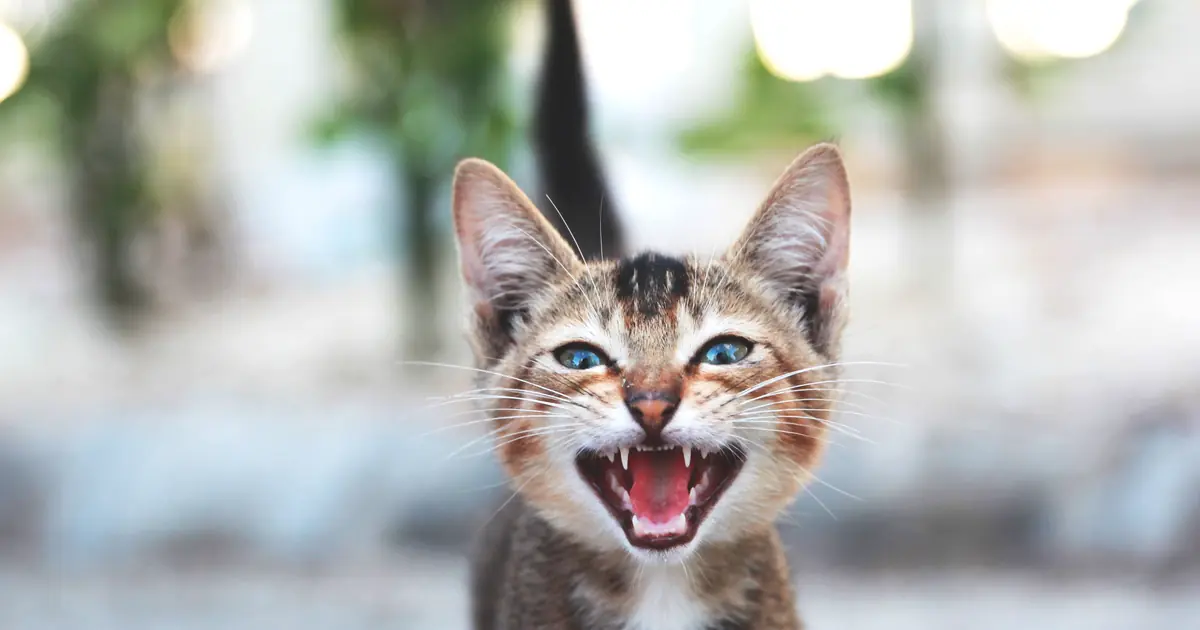
You’re half asleep at 3am when you hear it: a thin, wobbly wail from somewhere in the house that sounds unsettlingly like an actual human baby. Your heart jumps before your brain catches up and says, wait, I don’t have a baby. I have a cat.
You’re not imagining the resemblance, and you’re not losing your mind. Cats really can produce a cry that overlaps with the pitch of a human infant’s cry, and there’s a reason for it that goes back thousands of years of cats living alongside us. Here’s what’s actually going on, and when that eerie little cry is just your cat being your cat versus a sign something’s wrong.
- Researchers found cats can embed a cry within their purr at a frequency similar to a human baby’s cry, which taps into our nurturing instinct and makes us respond faster.
- Cats only meow at adult humans, not at other adult cats, which suggests the sound developed specifically as a tool to communicate with us.
- The most common reasons cats cry like this are hunger, wanting attention, loneliness, stress, or being in heat.
- Senior cats who suddenly start crying loudly or at night may be dealing with cognitive dysfunction, hyperthyroidism, high blood pressure, hearing loss, or pain.
- Siamese and other Oriental breed cats are known for being especially vocal and are more likely to produce loud, baby-like cries as part of normal behavior.
Why do cats cry like babies?
Cats cry like babies because their vocal cords can produce a sound layered inside a purr that lands in a frequency range close to a human infant’s cry, and that sound is really good at getting us to drop what we’re doing. Scientists at the University of Sussex recorded this “solicitation purr” and found it carries an extra, higher-pitched cry embedded in the low rumble of a normal purr. That embedded cry is what makes the sound so hard to tune out.
The theory is that cats, whether on purpose or through generations of trial and error, learned that a cry-like sound gets a faster reaction from humans than a plain purr does. A regular purr is soothing and easy to ignore. A cry that echoes a baby’s distress call taps straight into a caregiving instinct most humans have, even if they’ve never held a baby in their life.
What’s the science behind the baby-like cat cry?
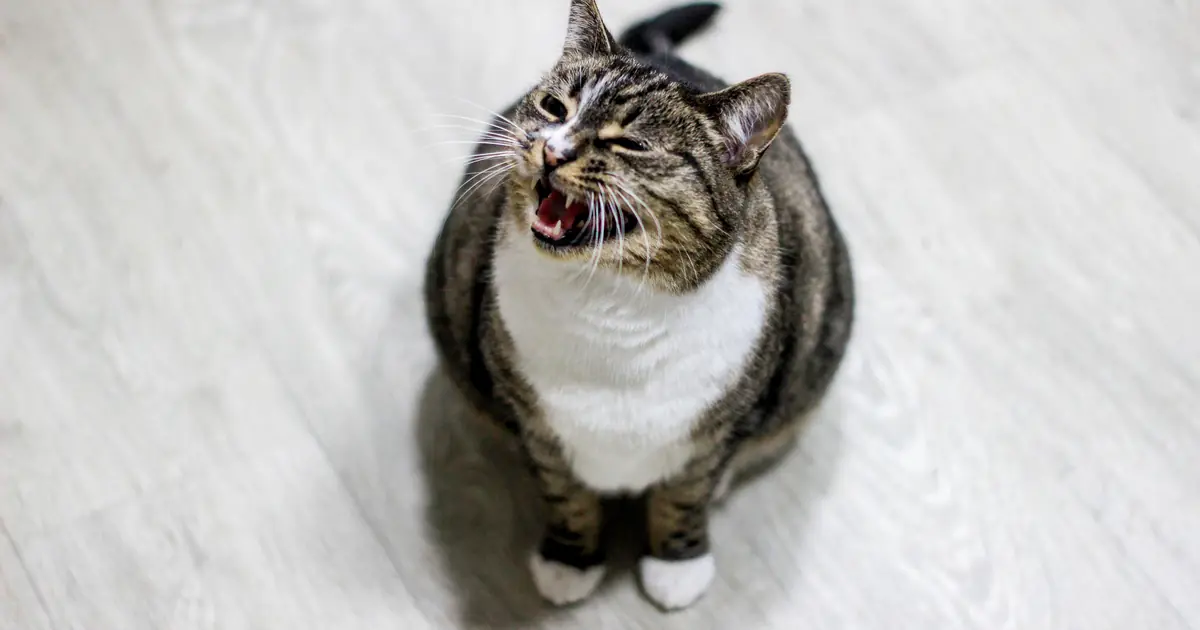
The science comes down to frequency overlap: a cat’s solicitation cry and a human baby’s cry share acoustic properties that our brains are wired to find urgent. In a 2009 study published in Current Biology, researchers at the University of Sussex analyzed purrs that cat owners described as “irritating” or “hard to ignore” and found these purrs contained an embedded cry with energy in the same frequency range as a human infant’s cry.
The team, led by Karen McComb, played recordings for people who had never owned a cat and found they rated the solicitation purrs as more urgent and less pleasant than ordinary purrs, even without knowing why. That’s the trick: your cat doesn’t need to sound exactly like a baby, just close enough to trigger the same “I need to check on this” reflex.
You can read more about the original solicitation purr study in Current Biology, which remains the main scientific source behind the “cats cry like babies” claim. It’s also one more piece of evidence that cats can “talk” to us in their own way, even without words.
What are the most common reasons cats cry like babies?
Most baby-like cat cries come down to a short list of everyday triggers: hunger, attention-seeking, loneliness, stress, or reproductive hormones. Figuring out which one applies usually means looking at when and where the crying happens.
- Hunger or feeding time: Many cats learn that a pitiful cry gets the food bowl filled faster than a regular meow.
- Attention-seeking: A cat who’s bored or wants play, petting, or company may cry outside a closed door or follow you around wailing.
- A female in heat: An unspayed female cat “calling” during her heat cycle can produce loud, drawn-out cries that sound eerily like a crying infant, sometimes for days. Check how often a cat goes into heat if this pattern sounds familiar.
- Loneliness or boredom: Cats left alone for long stretches, especially single cats in quiet homes, may cry more out of understimulation.
- Stress or a change in routine: A new pet, a move, a schedule change, or a shift in the household can all trigger more vocal, distressed-sounding cries. If you’re noticing other signs of stress in cats, the crying may be part of a bigger pattern.
- Being locked out of a room: Cats will absolutely cry like the world is ending over a closed bedroom or bathroom door.
- Unneutered males seeking a mate: Intact male cats can cry loudly when they detect a female in heat nearby, even through walls.
Why do cats cry like babies at night specifically?
Cats cry more at night because they’re naturally most active at dawn and dusk, a pattern called crepuscular activity, and a quiet house makes any cry sound louder and more alarming. Add in boredom from sleeping most of the day, and 3am becomes prime time for a cat to decide it’s time to demand food, play, or attention.
If your cat only cries like this at night, the fix is usually more daytime stimulation and a firm no-reward policy for nighttime yowling. For a full breakdown of nighttime-specific causes and fixes, see our guide on why cats meow at night.
Can crying like a baby be a health warning sign?
Yes, a sudden or new baby-like cry, especially in an older cat, can be a sign of an underlying medical issue rather than normal attention-seeking. Cats are experts at hiding pain, so a change in how vocal they are is often one of the few outward clues something’s wrong.
Conditions linked to increased or unusual crying include:
- Feline cognitive dysfunction: A dementia-like condition in senior cats that often causes confused, loud crying, especially at night.
- Hyperthyroidism: An overactive thyroid gland, common in older cats, that can cause restlessness, weight loss, and increased vocalizing.
- High blood pressure: Often linked to hyperthyroidism or kidney disease, it can cause disorientation and crying.
- Pain: Arthritis, dental disease, or an injury can all show up as sudden crying, especially when moving or being touched.
- Hearing loss: Cats who can’t hear themselves well sometimes cry louder or more often without realizing it.
The Cornell Feline Health Center notes that excessive vocalization in older cats is worth investigating rather than dismissing as “just getting old.” If you’re unsure whether your cat counts as a senior yet, our guide on when a cat is considered a senior can help you know when to start watching more closely.
Is crying like a baby worse in certain cat breeds?
Yes, some breeds are simply louder by nature, and Siamese cats top that list. Siamese and other Oriental breed cats are famous for a raspy, insistent voice they use often and loudly, and their cries can sound especially close to a human wail. If you live with a Siamese, Balinese, or Oriental Shorthair, frequent loud crying is often just part of the package rather than a red flag on its own.
Even so, breed tendency doesn’t rule out a health cause. A chatty breed that suddenly gets noticeably louder or changes its cry’s tone still deserves a closer look.
How should you respond when your cat cries like a baby?
The right response depends on ruling out needs first, then deciding whether to reward the behavior. Here’s a simple approach:
- Check the basics: food, fresh water, and a clean litter box. Cats are simple in the moment they aren’t.
- Rule out a closed door, a stuck toy, or another physical obstacle causing the distress.
- Add more daytime play and enrichment if boredom seems like the driver, especially before bed.
- Avoid feeding or fussing over your cat the instant it cries at 3am. That trains the behavior to repeat, since it worked once.
- Consider spaying or neutering if the crying is tied to heat cycles or mating behavior; it’s the most reliable fix for that specific cause.
- Book a vet visit if the crying is new, sudden, constant, or paired with other changes like appetite loss, weight loss, or confusion.
| Reason for crying | Other clues to watch for | What to do |
|---|---|---|
| Hunger | Crying near the food bowl or kitchen, stops after feeding | Check feeding schedule, consider a timed feeder |
| In heat | Unspayed female, rolling, raised tail, restlessness | Talk to your vet about spaying |
| Loneliness or boredom | Crying most when alone, more active at dawn/dusk | Add play sessions, puzzle toys, window perches |
| Stress or change | Hiding, over-grooming, appetite changes | Keep routines steady, give it time, ask a vet if it persists |
| Medical (pain, thyroid, cognitive decline) | New/sudden onset, senior cat, confusion, weight change | Schedule a vet exam |
This article is for general education and isn’t a substitute for veterinary advice. If your cat suddenly starts crying like a baby, cries constantly, or yowls at night, especially if it’s a senior cat, it’s worth having a veterinarian check for pain, hyperthyroidism, high blood pressure, or cognitive decline. Never medicate a crying cat on your own; let a vet guide any treatment.
Frequently Asked Questions
Q: Why does my cat’s meow sound like a crying baby?
Your cat’s meow can sound like a crying baby because cats can embed a higher-pitched cry inside their purr, and that pitch overlaps with the frequency range of a human infant’s cry. This “solicitation purr” was documented in a 2009 University of Sussex study and is thought to trigger a caregiving response in people.
Q: Do all cats cry like babies?
No, not all cats do this, and how often a cat uses this cry varies a lot by individual and breed. Siamese and other Oriental breed cats are known for being especially vocal, while some cats rarely cry loudly at all.
Q: Is it normal for a cat to cry at night?
Yes, occasional nighttime crying is normal since cats are naturally most active around dawn and dusk. If it’s new, constant, or happening in a senior cat, it’s worth a vet visit to rule out pain or a medical condition like hyperthyroidism.
Q: Why does my female cat cry like she’s in pain?
An unspayed female cat can produce loud, drawn-out cries during her heat cycle that sound distressed even though she isn’t in pain. This “calling” behavior can happen every two to three weeks during breeding season until she’s spayed or becomes pregnant.
Q: Should I ignore my cat when it cries at night?
You should rule out real needs like hunger, water, or a dirty litter box first, then avoid rewarding attention-seeking crying with food or fuss. Consistently not responding to nighttime demands, while adding more daytime play, usually reduces the behavior within a couple of weeks.
Q: Can crying like a baby mean my cat is sick?
Yes, a sudden change in how much or how loudly your cat cries can signal pain, hyperthyroidism, high blood pressure, hearing loss, or feline cognitive dysfunction, especially in senior cats. Any new or escalating vocal change is worth mentioning to your vet.
Q: What breeds of cats are known for crying like babies?
Siamese cats are the breed most associated with loud, baby-like crying, along with related Oriental breeds like the Balinese and Oriental Shorthair. These breeds are naturally more talkative and tend to use their voices often to communicate.
Q: Do cats cry like babies on purpose to manipulate humans?
Not exactly on purpose in a scheming sense, but cats do learn which sounds get a reaction and repeat what works. Since a baby-like cry taps into human caregiving instincts, cats that stumble on this sound tend to keep using it because it gets attention faster than a regular meow.

Hello and welcome to The Ideal Cat!
We are some passionate cat owners from different professions. We love our cats and have a lot of experience in how to care for our pets. We are incredibly excited to share our knowledge, experience, and research with you. So you can take good care of your loving cat. We will answer most of the common questions about owning cats, taking care of them, etc. If you have any question contact with us. Thanks for visiting! Enjoy the content.
