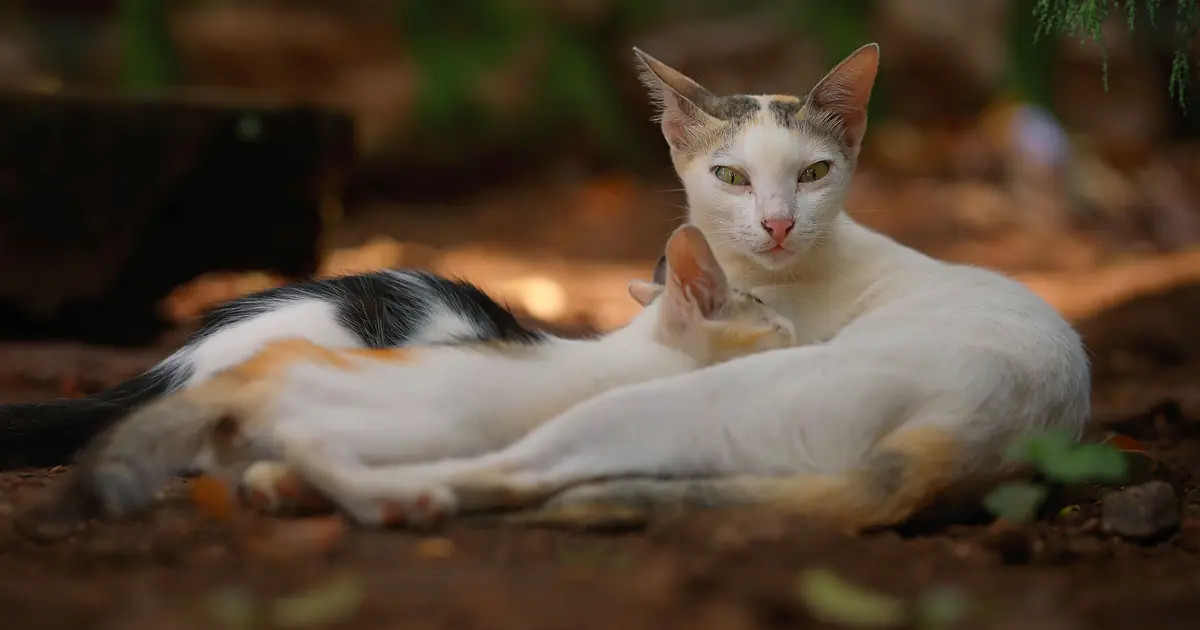
Picture this: you found homes for a litter of kittens months ago, and now one of them is back for a visit, all grown up. Does mom’s face light up? Does she sniff him and just know? It’s a sweet thought. But the honest answer is a little less like a movie reunion and a little more like plain cat biology.
Cats aren’t wired for nostalgia the way we are. They live tuned into scent, routine, and whoever smells familiar right now. That’s not cold, it’s just how a cat’s brain works. So let’s get into what actually happens between a mother cat and her kittens, how long that bond really lasts, and what “remembering” even means for an animal that reads the world through its nose.
- Mother cats identify their kittens mainly through scent, not by sight, sound, or facial recognition.
- The mother-kitten bond is strongest during nursing and weaning, roughly the first 8 to 12 weeks of a kitten’s life.
- Once kittens are weaned and living apart from mom, their scent changes, and the recognition bond usually fades over weeks to months.
- A mother cat and her grown kitten reunited after a long separation typically treat each other as strangers, at least at first.
- Vets recommend keeping kittens with their mother and littermates until at least 8 to 12 weeks old for healthy weaning and social development.
Do Cats Remember Their Kittens?
Cats “remember” their kittens in a scent-based, present-tense way, not in the long-term, sentimental way people do. While a mother cat (called a queen) is nursing and raising her litter, she absolutely knows which kittens are hers. She can tell them apart from a strange litter by smell alone. But that recognition depends on ongoing contact and a familiar scent profile. Once the kittens leave, get bathed, grow up, and start smelling like new households, that scent match disappears, and so does the queen’s ability to identify them as her own.
This isn’t a memory failure. Cats simply don’t build the kind of long-term autobiographical memory of relationships that humans do. Their world runs on “does this smell right, right now,” which is efficient for a species that historically raised multiple litters and needed to move on quickly.
How Do Mother Cats Recognize Their Kittens?
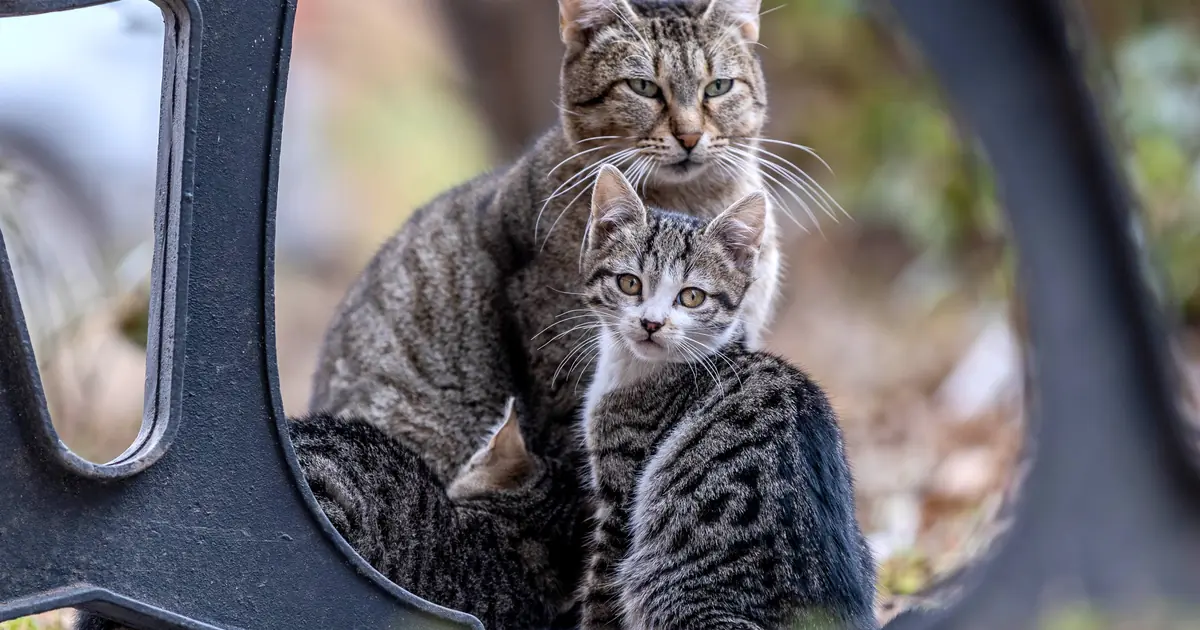
A mother cat recognizes her kittens primarily through scent, using cues from her kittens’ skin, saliva, and the group scent the whole litter shares from nesting and nursing together. She isn’t reading faces the way you’d pick your kid out of a crowd. Cats aren’t especially skilled at recognizing faces the way humans are, so smell does almost all the heavy lifting.
Sound plays a small supporting role too. Newborn kittens and their mother exchange specific chirps and mews, and a queen will respond to the distress calls of her own litter faster than to unfamiliar kittens crying nearby. But strip away the shared scent, and that vocal recognition weakens fast. The Merck Veterinary Manual’s overview of feline social behavior notes that cats are strongly guided by scent in nearly all their social interactions, and that kittens develop social skills largely through close contact with their mother and littermates during these early weeks.
How Long Does the Mother-Kitten Bond Actually Last?
The mother-kitten bond is strongest for roughly the first 8 to 12 weeks, covering nursing, weaning, and early socialization, and it starts to fade once the kittens are weaned and separated. Weaning, when kittens move from mother’s milk to solid food, usually starts around 3 to 4 weeks and wraps up by about 8 weeks. Cornell’s shelter medicine program marks roughly 5 to 10 weeks as the key socialization window, when kittens are still learning bite inhibition, play manners, and confidence from their mom and siblings.
Here’s a simple way to picture where recognition stands at different points:
| Situation | Does the mother recognize them? |
|---|---|
| Kittens still nursing, living with mom | Yes, strongly and reliably, by scent and daily contact |
| Recently separated (days to a few weeks) | Likely yes, especially if the kitten’s scent hasn’t changed much |
| Long separated (many months to years) | Unlikely, scent has changed and daily contact is gone |
| Reunited after a long gap | Usually treated as a stranger, though a calm, non-aggressive greeting is common |
Do Kittens Remember Their Mother?
Kittens recognize their mother the same way she recognizes them, mostly through scent, and that recognition fades in a similar timeframe once they’re separated. A young kitten can find its mother in a pile of littermates purely by smell within days of birth, since kittens are born blind and deaf and rely on scent and touch first. As kittens grow, get adopted, and start living new lives with new scents around them, the specific “this is my mother” recognition seems to fade. There isn’t a large body of research testing adult cats on this directly, but everything we know about scent-based social recognition points the same way for kittens as it does for moms.
Will a Mother and Her Grown Kitten Recognize Each Other If Reunited?
No, not usually, at least not as mother and offspring. If a mother cat and her now-grown kitten are reunited after months or years apart, they’ll most likely act like two cats meeting for the first time: cautious sniffing, maybe some posturing, occasionally an easy friendship, occasionally tension. Their scent profiles have changed completely by then, and neither cat has a mental “family tree” to consult. Whether they end up as friends comes down to their individual personalities in that moment, not shared history.
This is one reason cats can seem a bit detached compared to dogs about old relationships. They aren’t being cold. They just don’t carry an emotional filing cabinet labeled “kittens I raised in 2023.”
Do Cats Remember Their Siblings, Too?
Littermates bond the same way mothers and kittens do, through scent and shared time, and that bond fades the same way once they’re separated. Kittens raised together in one litter build a strong group scent and often develop lasting comfort with each other if they stay together into adulthood. That’s part of why adopting two littermates together tends to go smoothly. But two siblings separated young and reunited years later will most likely treat each other as new cats, not old friends. If you’re weighing whether to keep a bonded pair together, it’s worth knowing that cats can also get lonely when a longtime companion is suddenly gone, which is a real, observable stress response, separate from the question of family memory.
Is It Sad to Separate Kittens From Their Mother?
It’s only genuinely harmful if kittens are separated too early, before 8 weeks old, which can hurt their health and social development. Kittens weaned and removed from mom before that point tend to miss out on immune benefits from nursing, bite-inhibition lessons, and the confidence that comes from play with littermates. That’s different from the natural, expected split that happens once kittens are grown and off to their own homes, which is simply how cat life works and isn’t something a cat experiences as loss the way a person might.
International Cat Care recommends keeping kittens with their mother for proper weaning and socialization, and Cornell’s feline health specialists point out that letting kittens stay closer to 12 weeks, rather than the bare minimum of 8, tends to produce more confident, better-socialized adult cats. If you’re bringing home a kitten, it’s worth asking the breeder or shelter when kittens can safely leave their mother before you commit to a pickup date.
This article is for general education and isn’t a substitute for advice from a licensed veterinarian. If you’re caring for a nursing queen or a very young kitten and something seems off, like a kitten refusing to nurse or a mother rejecting her whole litter, call your vet the same day.
Is This Memory, or Just Instinct?
It’s mostly instinct and scent-driven attachment, not memory in the human sense of holding onto a relationship over time. Cats live largely in the present. A mother cat’s drive to protect and nurse her kittens is instinctual and hormone-driven, tied to nursing itself, not to a stored memory of “these are my babies” that persists once the hormones and daily contact fade. This is also why maternal behavior can look inconsistent from the outside. It’s rare, but a stressed or unwell queen may even reject or harm kittens in ways that look shocking to us but trace back to instinct, not malice or memory. Cats also don’t process relationships through language, so don’t expect a cat to understand words like “kitten” or a name the way a person would understand family terms. Everything runs on smell, hormones, and habit, not a mental scrapbook.
Frequently Asked Questions
Q: Do mother cats grieve when their kittens are taken away?
Mother cats often show short-term distress, like restlessness, calling for kittens, and searching, right after a litter is removed, especially if it happens abruptly. This settles within days to a couple of weeks as her hormones shift and nursing stops, rather than continuing as long-term grief.
Q: Can a father cat recognize his own kittens?
No, male cats have no reliable way to identify their own offspring, since they usually aren’t present during birth or nursing and cats don’t have a biological mechanism for paternal recognition. In fact, some unfamiliar male cats can pose a real risk to kittens, which is one reason experts caution about whether male cats can kill kittens they don’t recognize as part of their household.
Q: Do cats recognize their kittens by their meow?
Sound plays a small, supporting role early on. A nursing queen responds faster to her own kittens’ distress calls than to unfamiliar ones, but this fades once scent recognition fades, since the two work together rather than sound working alone.
Q: How long before a mother cat stops recognizing her kittens?
There’s no exact studied number of days, but recognition reliably weakens within weeks to a few months after separation, as the kitten’s scent changes through new food, a new environment, and growth. By the time a kitten reaches adulthood in a new home, the mother almost certainly no longer identifies it as hers.
Q: Will a mother cat reject a kitten that smells unfamiliar?
Yes, this can happen. Queens rely so heavily on scent that a kitten returned after being handled by strangers, or bathed with strong-smelling products, can sometimes be rejected or treated with suspicion by its own mother, even within the first few weeks.
Q: Do feral or stray cats remember their kittens after the litter scatters?
Feral mother cats follow the same scent-based pattern as pet cats. She’ll defend and nurse her kittens closely while they’re together, but once they disperse to find their own territory, which often happens naturally by 4 to 6 months of age, that specific recognition fades.
Q: Can kittens recognize their littermates as adults?
Only if they’ve stayed together continuously. Littermates raised in the same home tend to keep a close bond into adulthood because they share ongoing scent and routine, not because they’re recalling being born together. Separated young and reunited later, they’re essentially strangers.
Q: Should I keep a mother cat and one kitten together so they remember each other?
You can keep them together for companionship, and many mother-kitten pairs do bond well long-term, but understand it’s an ongoing relationship built on daily contact and shared scent, not the kitten’s original birth bond being preserved. The friendship is real either way, it’s just built in the present, not carried from memory.

Hello and welcome to The Ideal Cat!
We are some passionate cat owners from different professions. We love our cats and have a lot of experience in how to care for our pets. We are incredibly excited to share our knowledge, experience, and research with you. So you can take good care of your loving cat. We will answer most of the common questions about owning cats, taking care of them, etc. If you have any question contact with us. Thanks for visiting! Enjoy the content.
