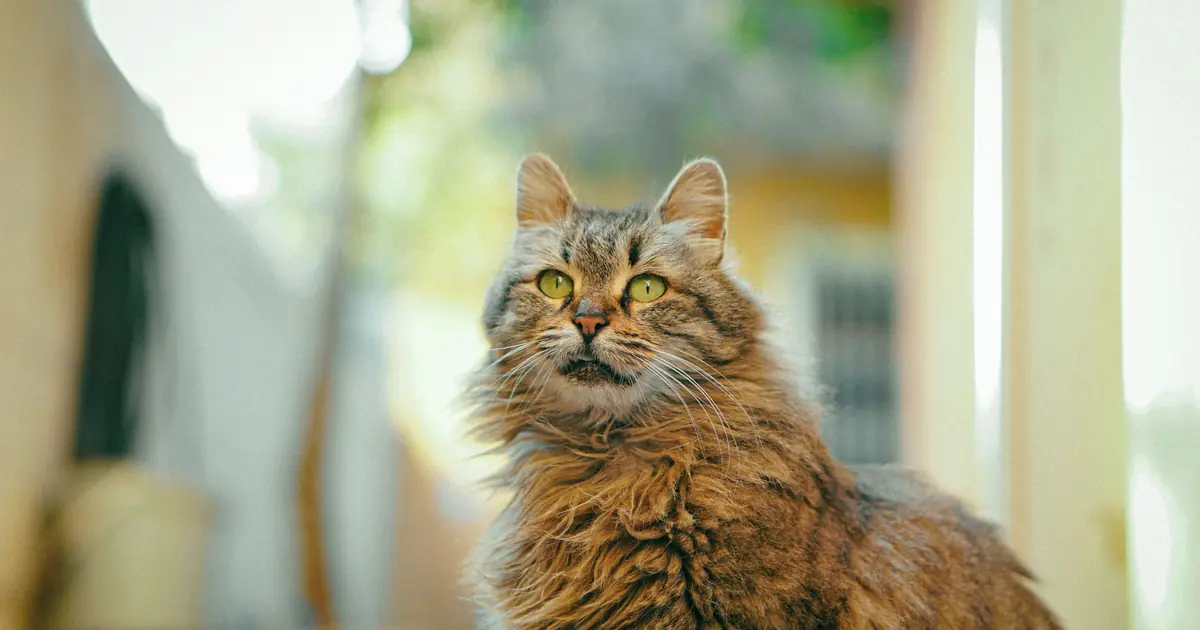
You walk in wearing a hat you’ve never worn before, and your cat gives you a long, suspicious stare. A stranger sits in your exact spot on the couch, and your cat hops right into their lap like nothing’s wrong. If that’s ever confused you, you’re not imagining things.
Cats experience the world through their nose and ears first, eyes second. That doesn’t mean your cat doesn’t know you. It just means the “knowing” happens in a completely different way than it does for us.
- Cats are not strong at visually telling human faces apart, unlike dogs, who rely on facial recognition much more heavily.
- In one well known comparative study, cats picked out their own handler’s face only about 55% of the time, barely better than a coin flip, while dogs picked their handler correctly around 88% of the time.
- A 2013 study published in the journal Animal Cognition found that cats reliably recognize their owner’s voice and can tell it apart from a stranger’s voice.
- Cats fail the classic mirror test, the standard scientists use to check for visual self-recognition in animals.
- Cats identify people mainly through scent, voice, routine, and body language, a system that works well without depending on faces at all.
Do Cats Recognize Faces?
Not really, at least not the way people do. Cats have decent eyesight for movement and low light, but they don’t process human faces as a distinct, memorable pattern the way dogs and primates do. In the wild, a face was never the most useful thing for a cat’s brain to track, so that specialized wiring simply didn’t develop.
One comparative study puts a number on this. Researchers paired 12 cats and 12 dogs each with a human handler for two hours a day over six months, then tested whether the animals could pick their handler’s face out from a stranger’s. Dogs nailed it around 88% of the time. Cats landed at about 55%, barely better than a coin flip.
How Do Cats Actually Recognize Their Humans?
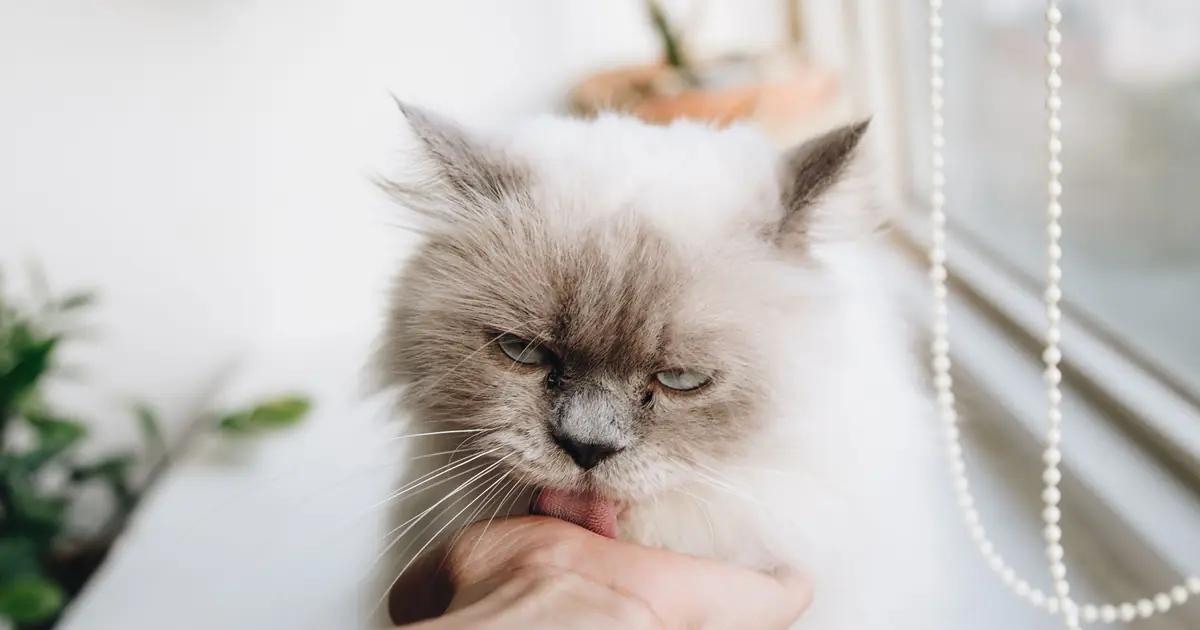
Cats recognize their humans mainly through voice, scent, and body language, not appearance. Each sense does a different job, and together they build a surprisingly reliable picture of who you are, even in the dark or from another room.
- Voice: Your cat knows the specific pitch, rhythm, and tone of how you talk, and can tell it apart from a stranger calling their name.
- Scent: Cats have scent glands on their cheeks, chin, and paws, and they build a “scent profile” of the people and things in their territory. Your smell (soap, laundry detergent, natural body scent) is one of the fastest ways your cat clocks that you’re you.
- Body language and gait: The way you walk, sit, and move is distinct and repeatable, and cats pick up on those patterns fast.
- Routine and footsteps: A lot of cat parents notice their cat perks up the second they hear a particular set of footsteps on the stairs, well before anyone’s in sight. That’s pattern recognition, not face recognition.
This is also part of why so many cats greet you at the door before they’ve even seen your face. If you’ve ever wondered why your cat follows you everywhere, this same sensory toolkit, scent, sound, and routine, is doing most of the work.
What Does the Research Actually Show?
The research shows cats lean hard on hearing and smell for identifying people, and lean much less on sight compared to dogs. A 2013 study in the journal Animal Cognition, led by researcher Atsuko Saito, found that cats could reliably distinguish their owner’s voice from a stranger’s voice calling out their name, even with the owner out of sight. The catch: cats often didn’t bother reacting the way a dog would. They’d flick an ear or glance over, not come running. Recognizing you and being excited about it are two separate things.
Scent research backs this up too. Cats use smell to build familiarity with people and other cats in their space, which is part of why a newly washed blanket or a change in your perfume can throw them off for a minute. According to International Cat Care, scent sits at the center of how cats organize their entire social world.
| How Cats Identify People | How Well Cats Use It |
|---|---|
| Voice | Strong. Cats reliably tell an owner’s voice apart from a stranger’s. |
| Scent | Strong. Scent is a primary way cats build familiarity with people and territory. |
| Body language and gait | Moderate to strong. Cats pick up on posture, movement, and habits quickly. |
| Routine (timing, footsteps) | Moderate to strong. Predictable patterns build fast recognition. |
| Face | Weak. Cats perform close to chance at telling human faces apart. |
Do Cats Recognize Other Cats by Face Too?
No, cats don’t rely on faces to recognize other cats either. Scent is the main tool cats use to identify each other, which is why two cats who live together will often sniff noses or rub cheeks after any time apart, even a short trip to another room. That exchange updates their scent memory of each other.
This is also why a cat can act like a total stranger toward a housemate that just came back from the vet. The visit strips away familiar scent and layers on unfamiliar smells, so a cat that’s normally friendly with calm, relaxed body language toward its housemate might hiss or back away until the scent resets. It’s not that the returning cat “looks wrong.” It smells wrong for a little while.
Can Cats Recognize Themselves in a Mirror?
No, cats do not pass the standard test for mirror self-recognition. Scientists use the mirror test, developed by psychologist Gordon Gallup Jr., where a mark is placed somewhere on an animal’s body that it can only see in a reflection. Animals that investigate the mark are considered to understand the reflection is themselves.
Cats typically treat their reflection as a strange cat instead, sniffing at the mirror or staring. A handful of species pass this test, including great apes, dolphins, and magpies. Cats and dogs generally don’t. That doesn’t mean cats lack any self-awareness. It more likely means a vision-based test isn’t the right fit for an animal whose world runs on smell, a point PetMD’s veterinary review of feline mirror behavior also raises.
Does Your Cat Actually Know Who You Are?
Yes, your cat absolutely knows who you are, just not primarily by your face. Between your voice, your scent, your walk, and your daily routine, your cat has built a full, working picture of you that doesn’t depend on facial features at all. Plenty of cat parents wonder outright whether their cat actually loves them, and the honest answer is that recognition and affection are both real, they just show up in cat-shaped ways.
Cats aren’t confused about who you are just because they didn’t clock your new haircut. If anything, a cat that reacts strangely to your face but calms right down once you speak is proof the recognition system is working exactly as it should.
How Can You Strengthen the Bond With Your Cat?
You strengthen the bond by leaning into the senses your cat actually trusts: voice, scent, and routine. A few things genuinely help.
- Talk to your cat often, in a calm, familiar tone. Cats tune into a specific person’s voice over time.
- Keep your scent consistent where you can. Avoid washing every blanket or bed your cat has claimed all at once.
- Stick to a predictable routine for feeding and play. Predictability reads as safety to a cat.
- Let your cat approach you, rather than reaching for its face first. A slow blink or an offered hand to sniff builds trust faster than direct eye contact.
- Watch its body language, not just yours. Learning your cat’s signals builds the same recognition your cat already has with you.
Our guide on reading cat body language covers the postures worth paying attention to day to day. It’s also worth learning whether cats hold grudges, since a lot of “does my cat still recognize me” worry comes from a cat acting cool after a vet trip or a long absence.
Frequently Asked Questions
Q: Do cats recognize faces at all?
Cats have weak facial recognition compared to dogs and humans. In one comparative study, cats correctly picked their own handler’s face only about 55% of the time, close to random chance, while dogs picked correctly around 88% of the time.
Q: How do cats recognize their owners if not by face?
Cats recognize owners mainly through voice, scent, body language, and routine. A 2013 study in Animal Cognition found cats could reliably tell their owner’s voice apart from a stranger’s, even without seeing them.
Q: Can my cat recognize me in a hat or glasses?
Many cats hesitate or stare at an owner in unfamiliar clothing or accessories, since a changed silhouette briefly disrupts the visual pattern they’re used to. That reaction usually fades within seconds once the cat hears your voice or catches your scent.
Q: Do cats recognize themselves in the mirror?
No. Cats do not pass the standard mirror test for self-recognition, the same test some primates, dolphins, and magpies pass. Most cats treat their reflection like an unfamiliar cat, sniffing or staring at the glass instead.
Q: Can cats recognize other cats by face?
Cats identify other cats mainly by scent, not by facial appearance. That’s why two cats who live together often sniff and rub cheeks after time apart, and why a cat returning from the vet can smell unfamiliar enough to get hissed at by its own housemate.
Q: Why does my cat ignore me when I call its name but come running for someone else?
Cats do recognize their name and their owner’s voice specifically, based on 2013 research from Animal Cognition, but they choose whether to respond. A cat that’s comfortable, sleepy, or simply uninterested may skip the reaction entirely, even while fully recognizing who’s calling.
Q: Do cats recognize photos or videos of their owner?
There’s limited strong evidence that cats reliably recognize a two dimensional photo or video of their owner as that specific person. Cats rely far more on real-time cues like voice, scent, and movement, which a photo or video can’t fully provide.
Q: Does my cat know I’m its owner, not just a random person?
Yes. Cats build a specific recognition profile for their primary people using voice, scent, and daily patterns, and that profile is distinct from how they treat strangers. Recognition doesn’t always look like excitement, but it’s there.

Hello and welcome to The Ideal Cat!
We are some passionate cat owners from different professions. We love our cats and have a lot of experience in how to care for our pets. We are incredibly excited to share our knowledge, experience, and research with you. So you can take good care of your loving cat. We will answer most of the common questions about owning cats, taking care of them, etc. If you have any question contact with us. Thanks for visiting! Enjoy the content.
