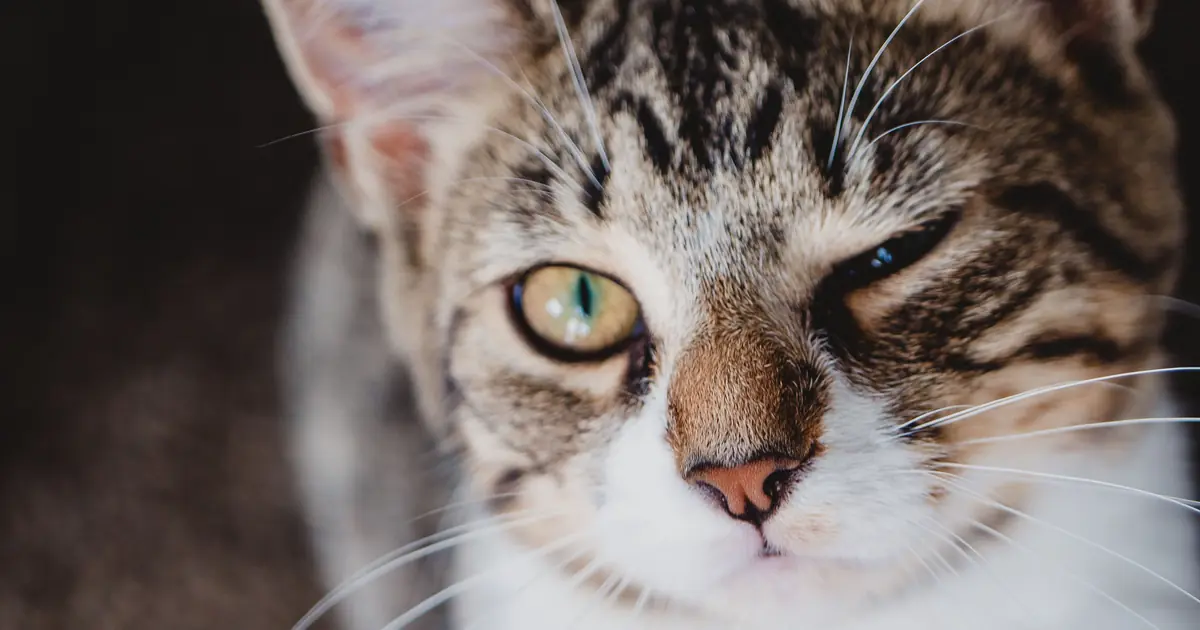
You’re on the couch, minding your own business, and your cat looks over and gives you one slow, deliberate wink. It’s a small thing. But it can stop you mid-scroll, because it feels almost human.
Here’s the good news: most of the time, that wink is your cat telling you something sweet. Cats don’t wink the way people do, as a planned gesture with a specific meaning behind it. What looks like a wink is almost always a one-sided version of the slow blink, a relaxed half-closed eye that says “I feel safe with you.” But because a wink involves just one eye, it’s also worth knowing when it’s not affection at all, but a sign that eye needs attention.
- A cat wink is typically a one-eyed version of the slow blink, a relaxed signal linked to trust and calm.
- Slow blinking, including the one-eyed version, has been studied by researchers and is associated with positive emotion in cats.
- A happy wink looks loose and soft, lasts a second or two, and happens now and then, not constantly.
- One eye held shut, squinting, watering, or discharge points to irritation, a scratch, or an infection, not affection.
- You can “wink back” at your cat by slow blinking with one or both eyes to build trust and closeness.
Why Do Cats Wink at You?
Cats wink at you as a friendly, low-key signal, most often a one-sided slow blink aimed straight at you. When a cat feels relaxed around a person, its face softens. The eyes narrow, the ears sit forward or neutral, and sometimes only one eye closes instead of both. That lopsided version is what most people mean when they say their cat winked at them.
Unlike a full slow blink, a wink can also happen because a cat is lying on one side with a paw or a blanket near one eye, or simply looking at you from an angle where one eye naturally closes more than the other. The context matters as much as the eye itself. A relaxed body, a soft face, and a calm environment all point toward a friendly wink rather than a medical issue.
What Does It Mean When a Cat Winks?
A cat wink usually means the cat feels calm, safe, and comfortable with you in that moment. It’s not a secret code or a joke between the two of you, even though it feels that way. Cats use their whole body to communicate, and the eyes are a big part of that. A soft, half-closed eye paired with a relaxed body says “no threat here.”
A study out of the University of Sussex, covered by International Cat Care, found that cats slow blink more often at humans who slow blink at them first, and that cats were more likely to approach a stranger who slow blinks compared to one with a neutral expression. That research focused on the two-eyed slow blink, but the same relaxed muscle response is behind the one-eyed version most owners call a wink.
How Does a Wink Relate to the Slow Blink?
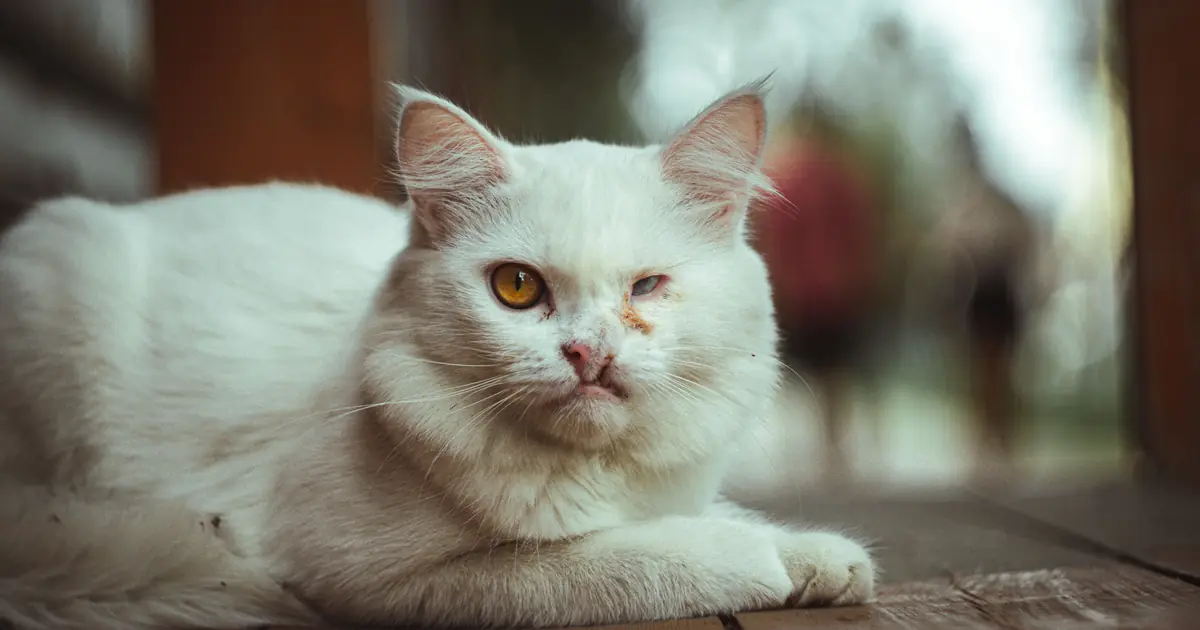
A wink is essentially a slow blink that only closes one eye instead of two. The slow blink is the well-known “cat kiss,” a soft, drawn-out blink cats give to people and other cats they trust. A wink is the same relaxed expression, just asymmetrical, sometimes because the cat is angled toward you, sometimes because one eye simply closes a beat before the other.
If you want the full picture on this behavior, including exactly how to recognize it and what it means for your bond with your cat, our guide on what it means when a cat slow blinks at you covers the two-eyed version in detail. Think of the wink as its shy, one-sided cousin.
Should You Wink Back at Your Cat?
Yes, winking or slow blinking back at your cat is a simple way to build trust. Here’s how to do it:
- Get down near your cat’s eye level, not looming over them.
- Look at your cat softly, without a hard stare, which cats read as a challenge.
- Close your eyes slowly for a second or two, then open them just as slowly.
- Pause and let your cat respond in their own time, some cats blink right back, some just relax their posture.
This little exchange won’t work like a magic trick every time. Some cats are chattier with their eyes than others, and a nervous or distracted cat may not respond at all in that moment. But over time, slow blinking back is a genuinely good habit. It tells your cat, in a language they already understand, that you’re not a threat.
When Is a Wink Actually a Problem?
A wink is a problem when the same eye stays closed, squinted, or watery over and over, rather than opening and closing loosely like the rest of the face. That pattern points to eye irritation, a scratch on the cornea, conjunctivitis, or another infection, not affection. According to VCA Animal Hospitals, cats are stoic about pain, so a held-shut eye is often the clearest sign something’s actually wrong.
Watch for these red flags alongside a repeated “wink”:
- The eye stays partly or fully closed for minutes at a time, not just a quick blink.
- Discharge, crusting, or excess tearing around the eye.
- Redness, cloudiness, or a visible film over the eye.
- Pawing at the eye, rubbing the face on furniture, or head shaking.
- Squinting that gets worse in bright light.
If any of these show up, this isn’t a wink anymore, it’s a squint, and it deserves a proper look. Our article on why your cat is squinting one eye walks through the common causes, from scratches to herpesvirus flare-ups, and what to expect at the vet.
How Can You Tell a Happy Wink From an Eye Problem?
You can tell them apart by looking at how relaxed the rest of your cat’s face and body are, and how long the eye stays closed. A happy wink is quick, loose, and paired with a calm body. An eye problem looks tense, repeats constantly, and often comes with discharge or pawing.
| Signal | Happy Affectionate Wink | Eye Problem Squint |
|---|---|---|
| Frequency | Occasional, happens now and then during calm moments | Frequent or constant, the eye keeps returning to a closed state |
| Muscle tension | Loose and relaxed, the whole face looks soft | Tense, tight, sometimes with a visible squint or grimace |
| Other body signals | Relaxed ears, soft posture, purring, slow blinking with the other eye too | Pawing at the eye, head shaking, avoiding light, hiding |
| Eye appearance | Clear, bright, normal color | Redness, cloudiness, discharge, or excess tearing |
| What to do | Enjoy it, and slow blink back if you’d like | Book a vet visit, especially if it lasts more than a day |
This article is educational and not a substitute for a hands-on exam. The Cornell Feline Health Center notes that eye problems in cats can progress quickly, so if your cat’s eye stays squinted, waters constantly, or shows any discharge, please call your vet rather than waiting it out. A same-day or next-day appointment is the safest move.
For more on how your cat expresses affection with more than just the eyes, our guide to cat body language breaks down tail position, ear angle, and posture together. And if you’ve ever wondered whether the bond runs both ways, does my cat love me looks at the science behind cat affection.
Do Cats Wink at Other Cats Too?
Cats mostly reserve slow blinks and winks for individuals they trust, whether that’s a person or another cat in the household. Two cats who get along well will often exchange soft, half-closed glances across a room, especially during quiet moments like grooming breaks or nap time. It’s the same relaxed signal, just directed at a feline housemate instead of a human.
If your cat also nuzzles you, headbutts you, or gives slow kisses with closed eyes, that’s part of the same affectionate toolkit. Our piece on whether cats understand kisses looks at how cats read our affection, even when they can’t return it in exactly the same way.
Frequently Asked Questions
Q: Why does my cat wink at me with one eye?
Your cat is most likely giving you a one-sided slow blink, a relaxed signal of trust and contentment. As long as the eye looks clear and the wink is quick and occasional, it’s a friendly gesture rather than a health concern.
Q: Is winking the same thing as a slow blink?
A wink is a one-eyed version of the slow blink. Both come from the same relaxed emotional state, the wink just closes one eye instead of two, often because of the cat’s angle toward you.
Q: Should I wink back at my cat?
Yes. Slow blinking or winking back at your cat, done softly and at their eye level, is a simple way to build trust. Many cats will slow blink back or relax further when you do this.
Q: When should I worry about a cat winking?
Worry if the same eye stays closed, squinted, or watery for more than a few minutes, or if it happens repeatedly throughout the day. That pattern suggests irritation, a scratch, or an infection, and it’s worth a vet visit.
Q: Can allergies make a cat wink or squint one eye?
Yes, environmental allergies and mild irritants like dust or smoke can cause one-sided squinting and watering. If it clears up on its own within a day and there’s no discharge or pawing, it’s likely minor irritation, but persistent squinting still deserves a vet check.
Q: What does it mean if my cat winks and then squints?
A quick wink that turns into a held squint is a sign the eye is uncomfortable, not affectionate. Look for redness, discharge, or pawing at the face, and call your vet if the squinting continues past a day.
Q: Do kittens wink the same way adult cats do?
Kittens can give one-eyed slow blinks too, though their eye control is still developing in the first few weeks of life. A kitten with one eye that stays shut or looks swollen should be checked by a vet promptly, since kitten eye infections can progress quickly.
Q: Why does my cat only wink at me and not other people?
Cats tend to slow blink and wink most at people they feel most comfortable with, often whoever spends the most calm, low-pressure time with them. It’s less about liking one person “more” and more about who has earned that relaxed trust.

Hello and welcome to The Ideal Cat!
We are some passionate cat owners from different professions. We love our cats and have a lot of experience in how to care for our pets. We are incredibly excited to share our knowledge, experience, and research with you. So you can take good care of your loving cat. We will answer most of the common questions about owning cats, taking care of them, etc. If you have any question contact with us. Thanks for visiting! Enjoy the content.
