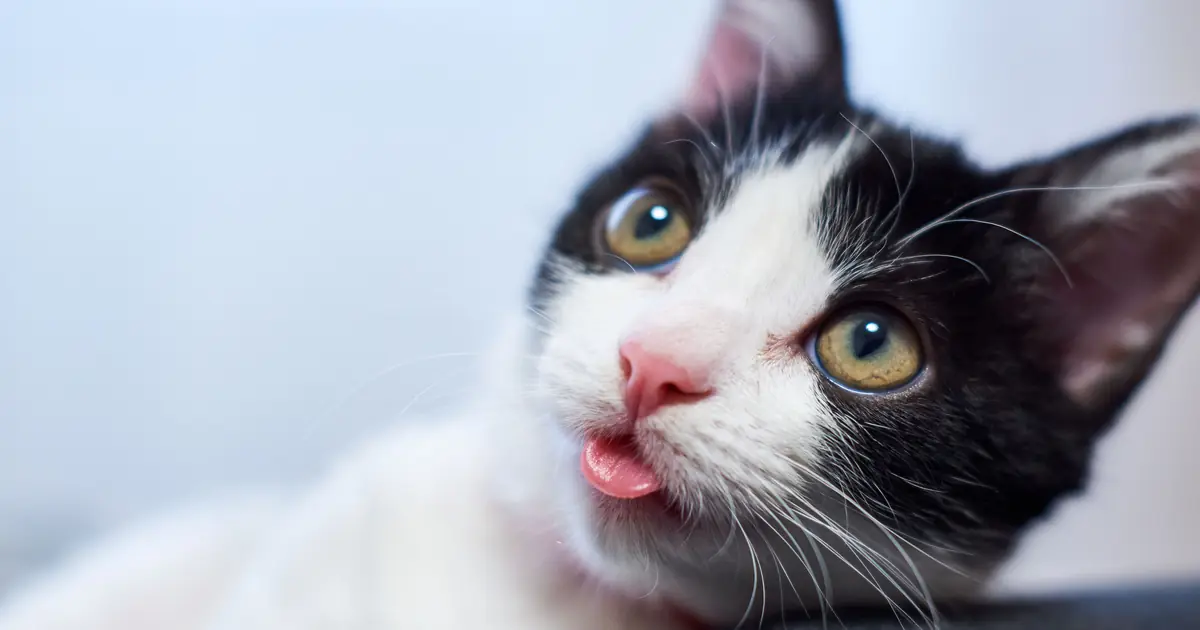
You know the photo. A cat sprawled on the couch, eyes half closed, tiny pink tongue poking out like it forgot to go back inside. Someone snaps a picture, it ends up on the internet, and suddenly your cat is famous for doing absolutely nothing on purpose.
That little tongue slip has a name now: a blep. It’s not a medical term, it’s internet slang, but it describes something real that cats do all the time. Most of the time it means nothing at all. Every once in a while, though, a tongue that won’t go back in is trying to tell you something. Here’s how to tell the difference.
- A blep is the informal term for a cat’s tongue tip resting outside its mouth, almost always by accident rather than on purpose.
- Cats commonly blep when they doze off mid-groom, when they’re deeply relaxed, or when they’re doing the flehmen response, a lip-curling reaction to interesting smells.
- Flat-faced (brachycephalic) breeds like Persians and exotic shorthairs blep more often because their shortened jaw and dental crowding give the tongue less room to sit tucked away.
- An occasional, brief blep in a normal, relaxed cat is not a health concern.
- A tongue that stays out for a long time, especially with drooling, bad breath, pawing at the mouth, or labored breathing, can point to dental disease, pain, nausea, or a medical emergency and needs a vet visit.
What Exactly Is a Cat Blep?
A blep is when a cat’s tongue rests just past its front teeth, usually a small pink or gray tip, while the rest of the mouth stays closed. It’s not a scientific term. Cat owners and the internet coined it to describe a specific, funny, extremely common expression. There’s no muscle disorder or syndrome called “blep.” It’s just a cat, mid-nap or mid-thought, who hasn’t pulled its tongue all the way back in.
Vets don’t use the word in exam rooms, but the behavior itself is completely real and well documented in how cats groom, sniff, and relax. Think of it as a snapshot of a cat’s nervous system taking a break, not a symptom of anything.
Why Do Cats Blep? The Most Common Reasons
Cats blep mainly because they got distracted while grooming, drifted into deep relaxation, or are processing a smell. None of these reasons involve discomfort. Here’s what’s actually happening in each case.
Distracted Mid-Groom
Cats use their tongue like a built-in hairbrush. The surface is covered in tiny, backward-curving hooks called papillae, which is exactly why cats’ tongues feel so rough against your skin. Mid-lick, something catches their attention, a sound, a bird outside, a sudden urge to nap, and the tongue just stays put, half out, while the cat’s brain moves on to something else.
Deep Relaxation and Sleepy Muscles
Cats sleep 12 to 16 hours a day, and a lot of that time is spent in a loose, floppy, fully-off-duty kind of rest. When the muscles around the jaw and mouth relax completely, the tongue can slide forward slightly and just sit there. It’s the same reason a sleeping cat’s lips sometimes hang a little open. Nobody’s minding the door.
The Flehmen Response
Sometimes a blep isn’t sleepy at all, it’s investigative. The flehmen response is when a cat curls its upper lip, opens its mouth slightly, and briefly stops breathing through the nose to push interesting scent molecules toward the vomeronasal organ (also called Jacobson’s organ) on the roof of the mouth. This little organ helps cats “taste” smells, especially pheromones from other cats. Mid-flehmen, the tongue can poke forward for a second or two before the cat closes back up. It looks goofy. It’s actually a cat doing some serious scent analysis.
Why Do Flat-Faced Cat Breeds Blep More Often?
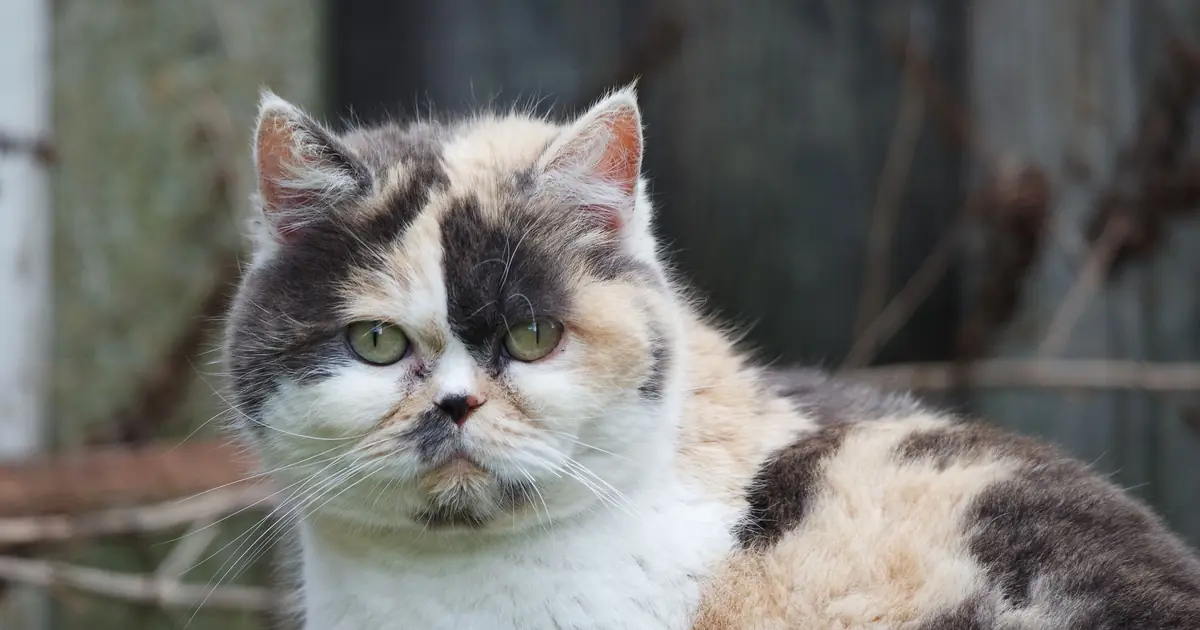
Flat-faced breeds blep more because their shortened jaw leaves the tongue less room, and crowded teeth make it harder to keep it fully tucked in. Persians, exotic shorthairs, and other brachycephalic cats have a compressed skull shape bred for a specific look, but it comes with less internal space for the tongue and teeth to sit neatly. Add in the mild dental crowding that’s common in these breeds, and a low-level, permanent blep can become part of their everyday look rather than a one-off cute moment. Worth knowing if you own one of these breeds, so a resting blep doesn’t send you into a panic every time you glance over.
Is Blepping Normal, or a Sign of a Problem?
Blepping is almost always completely normal in a healthy, relaxed cat. The key word is “almost.” A short, occasional tongue-tip poke during sleep or grooming, in a cat that’s eating, drinking, and acting like herself otherwise, is not something to worry about. Cats have been doing this since long before anyone put a name to it.
Context is everything here. A blep during a nap on a sunny windowsill is adorable and meaningless. A tongue hanging out for hours, especially paired with other odd behavior, is a different story, and that’s covered next.
When Does a Tongue Sticking Out Signal a Real Problem?
A tongue that stays out for an extended period, especially with drooling, bad breath, pawing at the mouth, or trouble breathing, is not a cute blep, it’s a possible medical sign. According to Cornell Feline Health Center, oral pain and dental disease in cats often show up as subtle changes around the mouth long before an owner notices anything obviously “wrong.” A tongue that won’t retract can be one of those subtle changes.
Conditions to take seriously include:
- Dental disease. Cats over age three are especially prone to periodontal disease, and a sore mouth can make it uncomfortable to fully close around the tongue. You might also notice bad breath alongside it.
- Mouth pain or injury. A cracked tooth, an oral tumor, or a stuck object under the tongue can all cause a cat to hold its mouth slightly open with the tongue protruding.
- Nausea. Cats that feel sick to their stomach sometimes drool and let the tongue hang, similar to excessive lip licking before vomiting.
- Poisoning or toxin exposure. Certain toxins cause drooling, an open mouth, and a lolling tongue as part of a bigger, urgent picture.
- Heatstroke. An overheated cat may pant with its mouth open and tongue out, which is different from normal cat behavior since cats rarely pant the way dogs do unless they’re stressed, overheated, or in respiratory distress.
- Breathing trouble. Open-mouth breathing combined with a protruding tongue, especially with any blue or pale tint to the gums, is an emergency, not a quirk.
The ASPCA Animal Poison Control Center and your local emergency vet are the right calls if you suspect poisoning or you see open-mouth breathing along with tongue protrusion. Don’t wait it out at home.
How Do You Tell a Happy Blep From a Medical Sign?
You can usually tell them apart by looking at duration, context, and whatever else is going on with your cat. A happy blep is brief, shows up during sleep or grooming, and disappears the moment your cat wakes up, yawns, or gets distracted. A concerning tongue-out episode tends to last, repeat throughout the day, or come with other red flags like drooling, pawing at the face, reduced appetite, or unusual breathing.
The table below breaks down the practical differences.
| Sign | Harmless Blep | Concerning Tongue-Out |
|---|---|---|
| Context | Napping, mid-groom, sniffing something interesting | Awake, alert, or agitated; happens randomly during the day |
| Duration | Seconds to a few minutes, resolves on its own | Persists for an extended period or keeps recurring |
| Other signs | None, cat is eating, playing, and acting normal | Drooling, bad breath, pawing at mouth, panting, appetite loss |
| What to do | Take a photo, enjoy it | Check the mouth gently, call your vet |
If you notice the “concerning” column more than once or twice, a check-in with your vet is worth it. This article is educational and not a substitute for a hands-on vet exam. If your cat shows open-mouth breathing, pale or blue gums, repeated pawing at the mouth, or sudden lethargy along with the tongue protrusion, treat it as an emergency and get veterinary care right away.
Do All Cats Blep the Same Way?
No, bleps vary from cat to cat. Some show barely a sliver of pink, others let a good half inch hang out mid-nap. Senior cats and flat-faced breeds blep more consistently, almost as a resting expression, while alert kittens blep less simply because they spend less time in deep, floppy relaxation. International Cat Care notes that individual variation in facial resting expressions is normal across the species, tongue quirks included.
Frequently Asked Questions About Cat Bleps
Q: What does it mean when a cat’s tongue sticks out?
Most of the time it means the cat got distracted mid-groom or is deeply relaxed and simply forgot to retract its tongue. It can also happen during the flehmen response, when a cat processes an interesting scent. It only becomes a concern if the tongue stays out for a long stretch or comes with drooling, bad breath, or breathing changes.
Q: Is blepping bad for cats?
No, an occasional blep is not bad for cats and causes no discomfort on its own. It’s simply a resting tongue position that shows up during sleep, grooming pauses, or scent investigation. It only signals a problem when it’s constant, prolonged, or paired with other symptoms like drooling or pawing at the mouth.
Q: Why do some cats blep all the time?
Cats that blep constantly are often flat-faced breeds like Persians or exotic shorthairs, whose shortened jaw and dental crowding leave the tongue less room to sit fully tucked in. For these cats, a low-level blep can just be part of their everyday facial structure rather than a one-off moment.
Q: Is blep related to the flehmen response?
Yes, sometimes. The flehmen response is when a cat curls its lip and briefly opens its mouth to push scent molecules toward the vomeronasal organ on the roof of its mouth. The tongue can poke out for a second or two during this process, which looks like a blep but is actually the cat analyzing a smell.
Q: Do senior cats blep more than kittens?
Yes, senior cats tend to blep more often than kittens, largely because older cats spend more time in deep, relaxed rest and are more likely to have some dental wear or mild jaw looseness. Kittens are more alert and active during waking hours, which leaves less time for a tongue to slip out unnoticed.
Q: Can a blep be a sign of pain?
A brief, occasional blep is not a sign of pain. But a tongue that hangs out for a long time, especially with drooling, reduced appetite, or pawing at the face, can point to dental disease or oral pain and is worth a vet visit.
Q: Should I take my cat to the vet if it bleps a lot?
Not for blepping alone, as long as your cat is eating, drinking, and behaving normally otherwise. Book a vet visit if the tongue stays out for extended periods, if you notice bad breath or drooling, or if your cat seems to be pawing at its mouth or avoiding food.
Q: What’s the difference between a blep and a cat sticking its tongue out on purpose?
A blep is unintentional, it happens while a cat is relaxed, sleepy, or mid-groom and isn’t aware its tongue is out. Cats don’t deliberately stick their tongues out the way humans do to make a face. Any tongue-out moment in a cat is either accidental relaxation, a grooming pause, or part of the flehmen response.

Hello and welcome to The Ideal Cat!
We are some passionate cat owners from different professions. We love our cats and have a lot of experience in how to care for our pets. We are incredibly excited to share our knowledge, experience, and research with you. So you can take good care of your loving cat. We will answer most of the common questions about owning cats, taking care of them, etc. If you have any question contact with us. Thanks for visiting! Enjoy the content.
