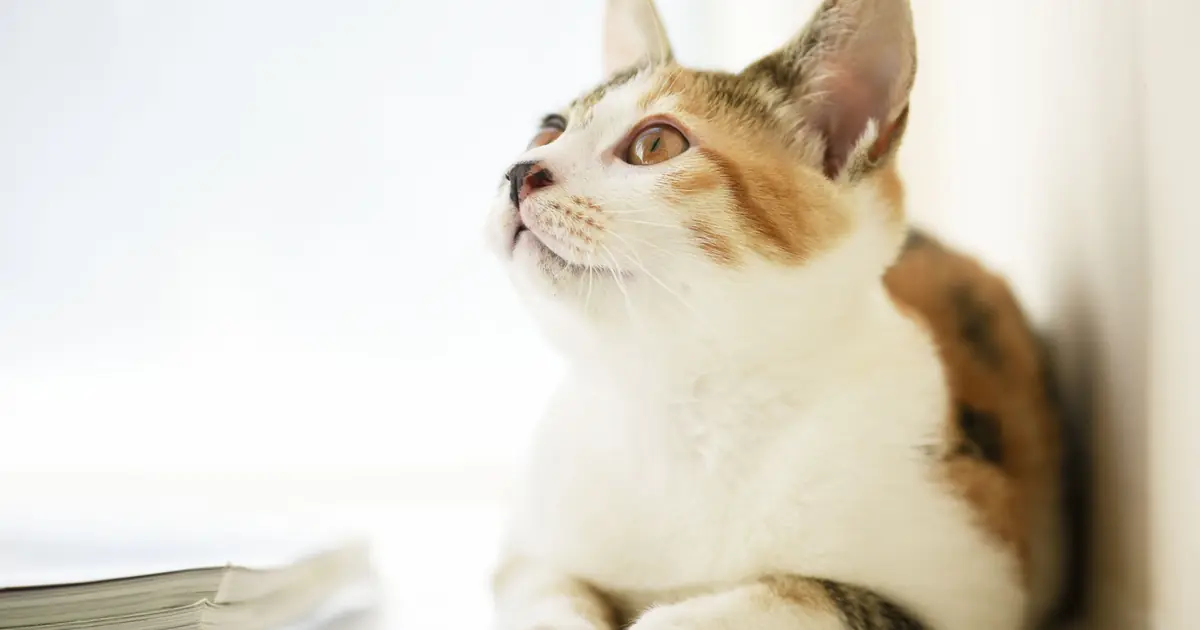
You’ve seen it a hundred times. That little white cat statue with one paw raised, sitting by the register at your favorite ramen spot. Most people think it’s just a cute good-luck charm. Here’s the fun part: that statue is a real cat breed. The maneki-neko, or “beckoning cat,” is modeled on the Japanese Bobtail, a genuine breed with a short, pom-pom tail and a history in Japan going back more than a thousand years.
So when someone asks about Japanese cat breeds, the honest answer is short. Only a couple of breeds can really claim Japan as home. But the story behind them is a good one, and it involves temples, folklore, and one very lucky calico. Let’s get into it.
- The Japanese Bobtail is the only cat breed that truly originated in Japan, and it has been documented there for over a thousand years.
- The maneki-neko “lucky cat” statue is based on a calico Japanese Bobtail, traditionally the tri-color “mi-ke” coloring seen as the luckiest.
- The Japanese Bobtail’s short, kinked tail comes from a natural dominant gene, unlike the Manx whose taillessness carries health risks.
- The Kurilian Bobtail comes from the Kuril Islands near Japan and is a separate breed with its own short, fluffy tail.
- Most cats kept as pets in Japan today are common domestic cats or imported breeds, not native Japanese breeds.
Which cat breeds actually come from Japan?
Only one cat breed genuinely originated in Japan: the Japanese Bobtail. Everything else people group under “Japanese cat breeds” is either a close regional relative, a longhair version of the same cat, or a popular import.
Here’s the thing about breed origins. A breed has to develop in a place over time and get recognized by a registry like The Cat Fanciers’ Association (CFA) or The International Cat Association (TICA). By that standard, Japan gives us the Japanese Bobtail, in both shorthair and longhair forms. The Kurilian Bobtail sits right next door, from the Kuril Islands, a chain that runs between Japan and Russia. It’s often mentioned in the same breath, though it’s its own distinct breed.
Beyond those, Japan is full of cats, they’re just not native breeds. Plenty of Japanese homes have regular domestic shorthairs or imported favorites like the Scottish Fold, which had a big pop-culture moment there. If you’re curious how to tell a true breed from a mixed-breed cat, our guide on how to figure out what breed your cat is walks through the clues.
| Breed | Origin | Coat | Tail | Personality |
|---|---|---|---|---|
| Japanese Bobtail (Shorthair) | Japan | Short, silky, low-shedding | Short bobbed pom-pom, unique to each cat | Chatty, playful, people-loving |
| Japanese Bobtail (Longhair) | Japan | Medium to long, soft | Fluffy bobbed pom-pom | Same social, active nature |
| Kurilian Bobtail | Kuril Islands (near Japan) | Short or semi-long, dense | Short fluffy tail, 2 to 8 kinks | Calm, sturdy, dog-like, loves water |
What is the Japanese Bobtail cat?
The Japanese Bobtail is a small-to-medium domestic cat known for its short, curved “pom-pom” tail and its role as Japan’s lucky cat. The breed has lived in Japan for centuries, showing up in old paintings, woodblock prints, and temple folklore long before it was ever formally registered.
Cats likely arrived in Japan around 600 to 700 AD, probably traveling with Buddhist monks from China or Korea, according to breed historians cited by the Cat Fanciers’ Association. Over the generations, the bobtailed cat became woven into daily Japanese life. It even earned a working reputation: legend says these cats were prized for guarding silkworm farms and grain stores from mice.
Why does the Japanese Bobtail have a short tail?
The Japanese Bobtail’s short tail comes from a natural genetic mutation, and it’s carried by a dominant gene. That’s a big deal. Because the gene is dominant and only affects the tail, the breed doesn’t suffer the spinal and nerve problems linked to the tailless Manx, whose gene can cause serious health issues.
Every Japanese Bobtail’s tail is a little different. Some are curled tight, some kink once or twice, and the fur usually fluffs out into that signature pom-pom look. No two are exactly alike, kind of like a fingerprint. The tail is usually only a few inches long when stretched out.
How is the Japanese Bobtail connected to the maneki-neko lucky cat?
The maneki-neko, that beckoning cat statue with one raised paw, is modeled on the Japanese Bobtail, traditionally a tri-color calico one. The statue is believed to have appeared during Japan’s Edo period (1603 to 1868), and one popular legend ties it to a cat at Gotoku-ji Temple that beckoned a feudal lord out of a coming storm.
So the cat by the cash register isn’t random. It’s a specific breed, in a specific lucky color, tied to a specific piece of folklore. Owning a Japanese Bobtail was long thought to invite prosperity and happiness into the home.
What is the Japanese Bobtail’s personality like?
Japanese Bobtails are outgoing, talkative, and deeply people-oriented. They tend to bond hard with their families and follow you room to room. Many owners describe a soft, chirpy, sing-song voice, less of a demanding yowl and more of a running commentary.
They’re smart and active, too. Expect a cat that plays fetch, learns little tricks, and stays kitten-like well into adulthood. If you want a cat that ignores you and sleeps 20 hours a day, this isn’t your breed. If you want a fuzzy shadow that talks back, it just might be.
What is the Japanese Bobtail Longhair?
The Japanese Bobtail Longhair is the same breed as the shorthair, just with a medium-to-long, silky coat and an even fluffier pom-pom tail. It’s not a separate breed, only a coat-length variety, and registries like CFA recognize both.
The longhair likely developed in the colder, more remote parts of Japan, where a thicker coat helped. The good news for owners: the coat is soft and doesn’t mat as easily as some longhairs, so grooming stays manageable with a weekly brush. If you love a fluffier look, browse more options in our roundup of long-haired cat breeds worth knowing.
What is the Kurilian Bobtail, and is it a Japanese cat?
The Kurilian Bobtail comes from the Kuril Islands, a volcanic chain sitting between Japan and Russia’s Kamchatka Peninsula. It’s closely tied to the Japan region but is its own distinct breed, separate from the Japanese Bobtail, with a short fluffy tail that forms from 2 to 8 kinks.
Kurilians are bigger and sturdier than Japanese Bobtails, with a wild, rugged look and famously calm, dog-like temperaments. A lot of them genuinely love water and will paw at a running tap. Their bobbed tail is a separate genetic development from the Japanese Bobtail’s, so don’t think of them as the same cat with a different passport. Want the full picture? Here’s our deep dive on the Kurilian Bobtail breed.
What is “mi-ke” calico coloring in Japanese cats?
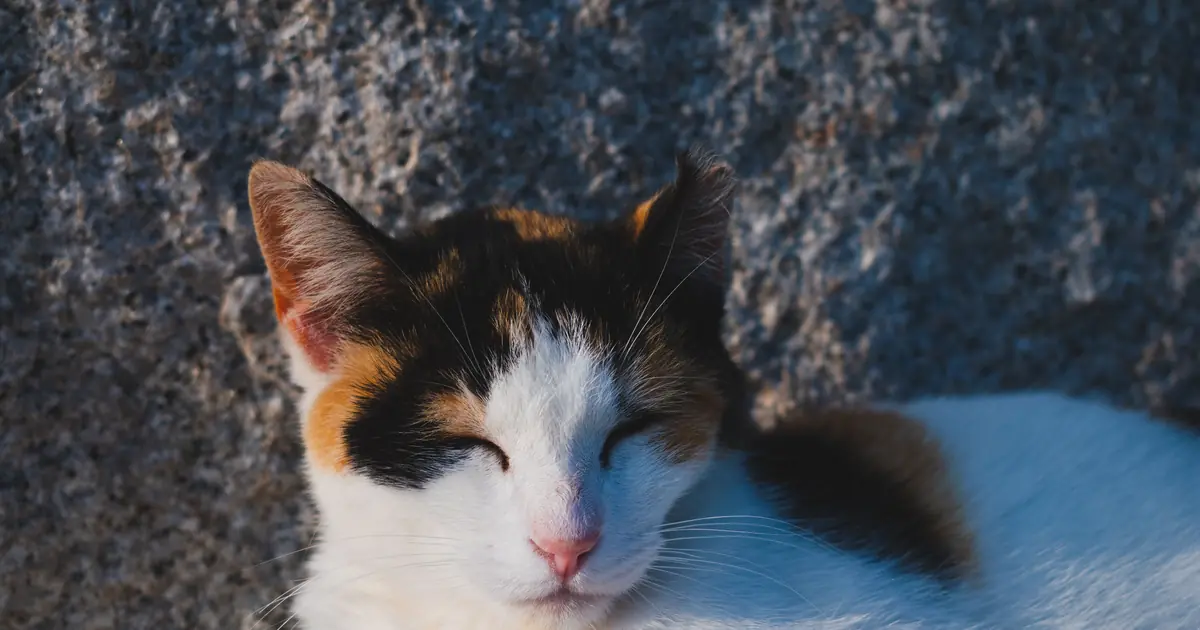
“Mi-ke” (pronounced mee-keh) is the Japanese word for the tri-color calico pattern: white with patches of black and red or orange. In the Japanese Bobtail, mi-ke is the classic lucky coloring and the exact look of the traditional maneki-neko statue.
Calico coats are almost always female, because the genetics tie coat color to the X chromosome. That makes a male mi-ke Japanese Bobtail genuinely rare, and historically these were seen as extra lucky. If calicos fascinate you, our calico kitten guide explains why these coats work the way they do. And for the wider science of coat colors, our overview of cat coat patterns breaks it down.
What cats are most popular in Japan today?
Most cats kept as pets in Japan today are common mixed-breed domestic cats, not native Japanese breeds. Among pedigreed cats, imported breeds like the Scottish Fold, Munchkin, American Shorthair, and Russian Blue are widely popular, and Japan is famous for its cat cafes and “cat islands” full of free-roaming community cats.
So there’s a bit of irony here. The Japanese Bobtail, Japan’s own lucky cat, is actually more common in North America and Europe than it is as a registered pedigree in Japan. Many Japanese Bobtails in Japan simply live as regular street and community cats rather than show cats. If you’re drawn to unusual and hard-to-find breeds, you’ll enjoy our list of rare cat breeds you rarely see.
Do Japanese cat breeds make good pets?
Yes, Japanese Bobtails make excellent pets for active, social households. They’re affectionate, playful, great with kids and other pets, and generally hardy with no breed-specific tail health problems. The Kurilian Bobtail is a calm, easygoing choice for families who want a mellower, sturdier cat.
A few honest notes. Bobtails want interaction, so they’re happier with company than left alone all day. They talk, they play, and they’ll turn your fetch game into a full-time job. This educational guide isn’t a substitute for a vet’s advice, so if you’re bringing home any new cat, a wellness check with a licensed veterinarian is always a smart first move.
Here’s my take: if you want a chatty, doglike cat with a great backstory and a naturally low-maintenance coat, the Japanese Bobtail is a lovely, underrated pick. Read the full breed profile in our Japanese Bobtail care guide before you commit.
Frequently asked questions about Japanese cat breeds
Q: Are there any cat breeds native to Japan?
The Japanese Bobtail is the only cat breed truly native to Japan, in both shorthair and longhair varieties. It has been documented in Japan for over a thousand years. The Kurilian Bobtail comes from the nearby Kuril Islands and is a separate, closely related breed.
Q: Is the maneki-neko lucky cat a real breed?
Yes. The maneki-neko “beckoning cat” statue is modeled on a real breed, the Japanese Bobtail, traditionally shown in the tri-color calico “mi-ke” coloring. The statue is believed to have first appeared during Japan’s Edo period, between 1603 and 1868.
Q: Is the Japanese Bobtail’s short tail healthy?
Yes. The Japanese Bobtail’s short tail comes from a natural dominant gene that affects only the tail, so the breed doesn’t have the spinal or nerve problems linked to the tailless Manx. Bobtails are generally hardy, healthy cats.
Q: What is the difference between a Japanese Bobtail and a Kurilian Bobtail?
The Japanese Bobtail originates in Japan and is smaller with a fine coat, while the Kurilian Bobtail comes from the Kuril Islands and is larger, sturdier, and often loves water. Their short tails come from separate genetic developments, so they’re distinct breeds.
Q: Are Japanese Bobtail cats rare?
Japanese Bobtails are uncommon but not extremely rare. They’re actually more established as a registered pedigree in North America and Europe than in Japan, where many live as ordinary community cats. A male tri-color “mi-ke” Japanese Bobtail is genuinely rare because calico coats are almost always female.
Q: What color is the luckiest Japanese Bobtail?
The tri-color “mi-ke” calico, white with black and orange patches, is considered the luckiest Japanese Bobtail coloring. It’s the exact look of the traditional maneki-neko lucky cat statue and was historically thought to bring prosperity to the household.
Q: Do Japanese Bobtails get along with other pets?
Yes. Japanese Bobtails are social, playful, and adaptable, and they usually do well with children, dogs, and other cats. They bond strongly with their families and prefer company over being left alone for long stretches during the day.
Q: What cat breeds are popular in Japan now?
Most pet cats in Japan are common mixed-breed domestic cats. Among pedigreed cats, imports like the Scottish Fold, Munchkin, American Shorthair, and Russian Blue are especially popular. Japan is also known for its cat cafes and free-roaming cat islands.
Japanese cat breeds may be few, but the Japanese Bobtail more than earns its fame. From temple folklore to the lucky cat on the counter, it’s a breed with real history, a one-of-a-kind pom-pom tail, and a big, chatty personality. If that sounds like your kind of cat, it’s a wonderful one to welcome home.
This article is for educational purposes and isn’t a substitute for professional veterinary care. Always consult a licensed veterinarian about your cat’s health.
Sources: The Cat Fanciers’ Association, The International Cat Association, and CFA Cat Talk.

Hello and welcome to The Ideal Cat!
We are some passionate cat owners from different professions. We love our cats and have a lot of experience in how to care for our pets. We are incredibly excited to share our knowledge, experience, and research with you. So you can take good care of your loving cat. We will answer most of the common questions about owning cats, taking care of them, etc. If you have any question contact with us. Thanks for visiting! Enjoy the content.
