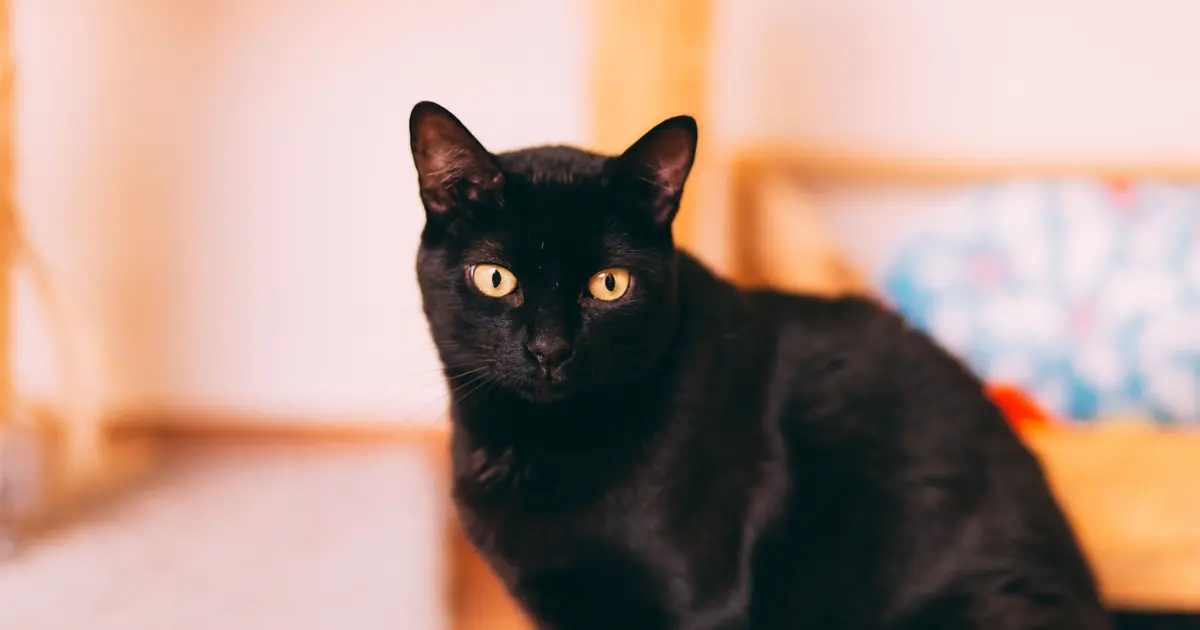
Picture a cat that follows you room to room, hauls a toy back to your feet like a retriever, and then hops into the bathtub on purpose. That’s not a golden doodle. That’s a Kurilian Bobtail.
This is the rugged island cat almost nobody outside Russia and Europe has met. It comes from the Kuril Islands, a windswept volcanic chain between Russia and Japan, where cats survived for centuries by hunting, fishing, and being genuinely tough.
And that little tail? No two are alike. Each one is a soft pom-pom of kinks and curves, like a fingerprint with fur.
Kurilian Bobtail at a Glance
| Origin | Kuril Islands and Sakhalin, Russia (natural breed, 200+ years; formalized from the 1990s) |
| Weight (Male) | 11 to 15 lbs |
| Weight (Female) | 8 to 11 lbs |
| Lifespan | 15 to 20 years |
| Coat | Double coat, short-haired OR semi-long-haired, water-resistant |
| Colors | Most traditional solids and tabbies, with or without white (no pointed or chocolate/lilac in most registries) |
| Energy Level | High |
| Grooming Needs | Low (short-haired) to Moderate (semi-long) |
| Good With Kids | Yes |
| Good With Other Pets | Yes, including dogs, with proper intros |
| Average Price | $1,000 to $3,000 from breeders (rare outside Russia/Europe) |
Where Does the Kurilian Bobtail Come From?
The Kurilian Bobtail comes from the Kuril Islands and nearby Sakhalin, a volcanic archipelago stretched between Russia’s far east and northern Japan. This is a true natural breed, meaning nature shaped it long before any breeder did. Cats with these short pom tails have lived on the islands for at least 200 years.
So how did the tail happen? The leading theory is that local cats mixed with Siberian cats brought over by Russian sailors and soldiers, and the bobtail trait simply took hold in an isolated island population. No human picked it. The harsh climate and the need to hunt did the selecting.
Russian researchers and cat lovers started formally documenting and developing the breed in the 1990s. Soldiers and scientists returning from the islands brought cats back to the mainland, and the breed slowly gained a following.
When Did the Kurilian Bobtail Get Recognized?
The Kurilian Bobtail earned recognition from Europe’s big registries first. Both FIFe and the World Cat Federation (WCF) recognized the short-haired and semi-long-haired varieties by 2009. In North America, The International Cat Association (TICA) accepted the breed and granted it Championship status in 2012. TICA also counts it among its small group of recognized natural breeds.
One thing to flag: the Cat Fanciers’ Association (CFA) does not currently recognize the Kurilian Bobtail. If you’re in the US and shopping by registry, you’ll be working mostly with TICA paperwork.
What Does a Kurilian Bobtail Look Like?
A Kurilian Bobtail looks like a cat built for cold, rough country. It’s medium to large, sturdy, and a little wild around the edges, with a semi-cobby body, strong legs, and back legs slightly longer than the front. There’s nothing dainty about this cat.
The head is a soft, modified wedge with rounded contours. The eyes are walnut-shaped and expressive. Many have lynx-like tufts on the ears. Put it all together and you get a cat that reads as alert, athletic, and just a touch feral, in the best way.
The Pom-Pom Tail: Why Every One Is Different
The Kurilian Bobtail’s tail is its signature, and it’s genuinely unique. Instead of a long tail, you get a short, fluffy pom-pom made of two to ten or more kinks, curves, and bends, usually measuring around 2 to 13 cm. Here’s the wild part: no two tails are exactly the same. Each one is its own little structure, like a snowflake you can pet.
The tail can be shaped a few ways. Breeders use terms like “whisk,” “spiral,” and “snag” to describe the bends. Some are tight and curled, some are looser. All of them are short.
Short Coat or Semi-Long Coat?
Kurilian Bobtails come in two coat lengths, and both have a double coat with a soft, water-resistant feel. The short-haired version looks neat and low-fuss. The semi-long-haired version adds a ruff around the neck, fluffy “britches” on the back legs, toe tufts, and a fuller, plumier tail pom.
For color, this breed keeps it classic. You’ll see most traditional solids and tabby patterns, with or without white. Pointed (Siamese-style) coloring and dilute chocolate or lilac shades generally aren’t part of the accepted palette.
Kitten vs Adult
Kurilian Bobtail kittens are slow growers. This is a hardy, late-maturing breed, and some don’t reach full size and muscle until around 3 to 5 years old. So that lanky teenager phase lasts a while. The tail pom is present from birth, though it fills out as the coat matures, especially in the semi-long-haired cats.
What Is the Kurilian Bobtail’s Personality Like?
The Kurilian Bobtail acts more like a dog than most dogs’ owners would admit. It’s loyal, deeply bonded to its people, smart, and endlessly curious. This is a cat that wants to be in the room with you, on the project with you, supervising whatever you’re doing.
Many of them fetch. You toss a toy, they chase it down and trot it back, and they’ll do it again until your arm gives out. They’re trainable too, picking up tricks and routines faster than your average house cat.
And here’s the lovely part: they’re famously gentle and easygoing. Bred by survival, not by temperament fads, Kurilians tend to be confident and calm rather than nervous. Aggression is rare. They handle change, travel, and new faces better than a lot of pedigreed cats.
Are Kurilian Bobtails Friendly?
Yes, Kurilian Bobtails are very friendly, both with their own family and usually with new people. They’re social, affectionate, and bond hard, often choosing to follow one favorite human around the house. They’re not clingy or needy in a stressful way; they just genuinely like your company.
Do Kurilian Bobtails Like Water?
Yes, and this is one of the breed’s most charming quirks. Kurilian Bobtails often love water, a leftover from their fishing ancestry on the islands. Many will paw at a running tap, splash in their water bowl, join you in the shower’s path, or even go for a swim. If you’ve ever wanted a cat that finds the bathtub interesting instead of terrifying, this is your breed.
Is the Kurilian Bobtail Right for You?
The Kurilian Bobtail suits active, attentive homes that want a cat acting like a small, clever dog. If you want a pet that plays, fetches, follows you around, and stays close, you’ll adore one. If you want an aloof cat that ignores you for 22 hours a day, look elsewhere.
Be honest with yourself about energy. This is a high-drive hunter that needs play, climbing, and mental stimulation. A bored Kurilian will invent its own fun, and you may not love the results.
A Kurilian Bobtail is a great fit if you:
- Want a loyal, interactive, dog-like companion cat
- Have time for daily play and enrichment
- Like the idea of a fetch-loving, water-curious cat
- Have other pets (including dogs) and want a sociable addition
- Have kids and want a sturdy, patient breed
It’s probably not for you if you:
- Want a low-energy lap cat that mostly sleeps
- Are away from home most of the day with no enrichment plan
- Need a specific look on a tight timeline (they’re rare and waitlisted)
- Have small prey pets like hamsters or birds (high prey drive)
Are Kurilian Bobtails Healthy? Health Issues to Know
The Kurilian Bobtail is one of the healthiest cat breeds you can own, thanks to its natural origins. Because nature, not selective inbreeding, shaped this cat, it carries a wide, robust gene pool and no major breed-specific diseases that researchers have flagged so far. Many live a full 15 to 20 years.
The biggest worry new buyers have is the tail, so let’s clear it up.
Is the Bobbed Tail Harmful?
No, the Kurilian Bobtail’s tail is benign and does not cause health problems. This is a real difference from the Manx, where the tailless gene can come with spine and nerve issues (a condition often called Manx syndrome). The Kurilian’s short tail comes from a different genetic mechanism with variable expression, and it isn’t linked to the spinal defects or lethal effects seen in some other tailless and short-tailed breeds. Your Kurilian’s pom is just a pom.
That said, every cat is an individual. Routine vet care still matters, and this article is for general education, not medical advice. If something seems off with your cat, talk to your veterinarian. As a natural breed, Kurilians mostly face the ordinary stuff: dental disease, weight gain, and the normal age-related issues of senior cats.
Grooming and Care: How Much Work Is the Coat?
Grooming a Kurilian Bobtail is refreshingly easy, especially the short-haired version. The double coat is dense but not prone to heavy matting, and the water-resistant texture keeps it surprisingly tidy.
Brush a short-haired Kurilian about once a week. For the semi-long-haired type, aim for a few times a week, bumping up to daily during seasonal shedding to keep the ruff and britches mat-free. A stainless steel comb and a slicker brush handle the job nicely.
Thanks to that weatherproof coat, baths are rarely needed (which is ironic for a cat that voluntarily plays in water). Round out care with regular nail trims, ear checks, and dental hygiene.
Do Kurilian Bobtails Shed a Lot?
Kurilian Bobtails are moderate shedders, not the worst and not the lowest. The short-haired type sheds less day to day; the semi-long-haired type drops more, especially during spring and fall coat changes. Neither is hypoallergenic. Regular brushing keeps loose fur off your couch and your clothes.
Feeding and Diet for an Active Breed
Feed a Kurilian Bobtail a high-protein, meat-first diet that matches its athletic, hunter’s metabolism. These are muscular, energetic cats that do best on quality food with real animal protein leading the ingredient list. Portion to the individual cat, since a working-built Kurilian can carry more muscle than a typical house cat.
Fresh water should always be available, and given how much these cats love water, a pet fountain is often a hit. Watch the waistline as they mature and slow down, because extra weight is the enemy of a long, healthy life.
Exercise and Enrichment: Channeling the Island Hunter
A Kurilian Bobtail needs daily, active play to stay happy, because this is a true hunter at heart. Wand toys that mimic birds and mice, fetch games, puzzle feeders, and tall cat trees all hit the right buttons. Ten to twenty minutes of focused play, twice a day, makes a huge difference.
Lean into the breed’s quirks. They fetch, so keep a basket of toss toys. They love water, so a cat water fountain or a shallow water play station can entertain them for ages. Many adapt well to harness training and leash walks too, which suits their adventurous streak.
Living With Kids, Dogs, and Other Cats
The Kurilian Bobtail is one of the more family-friendly and pet-friendly breeds around. Its calm confidence and lack of aggression make it a solid choice for busy, multi-creature households.
With kids: Great. They’re sturdy, patient, and playful, and they tend to tolerate the chaos of family life well. Teach kids gentle handling, as always.
With dogs: Often excellent. Their dog-like social style means many Kurilians befriend the family dog quickly, especially with calm, gradual introductions.
With other cats: Usually fine. They’re sociable and not territorial by nature. Slow, proper introductions still smooth the path.
One honest caveat: that strong prey drive means small caged pets (hamsters, birds, fish in open bowls) are not safe roommates. This cat was bred to catch things.
Lifespan and Aging Tips
Kurilian Bobtails are long-lived cats, commonly reaching 15 to 20 years. To help yours hit the high end, stay ahead of the predictable senior-cat issues. Keep up annual (then twice-yearly) vet visits as they age, watch their teeth, and keep them lean.
As your cat slows down, adjust the home a little. Add steps or ramps to favorite perches, switch to easier-access litter boxes, and keep enrichment going at a gentler pace. Mental stimulation keeps senior Kurilians sharp well into old age.
How Much Does a Kurilian Bobtail Cost?
A Kurilian Bobtail kitten typically costs between $1,000 and $3,000 from a reputable breeder, with price driven heavily by rarity, location, coat type, and pedigree. Outside Russia and Europe, supply is thin, so expect higher prices and a waitlist.
| Cost | Estimated Range |
|---|---|
| Kitten from a breeder | $1,000 to $3,000 |
| Initial setup (litter, beds, trees, bowls) | $150 to $400 |
| First-year vet care, vaccines, spay/neuter | $200 to $600+ |
| Ongoing yearly (food, litter, vet, supplies) | $600 to $1,200 |
Are Kurilian Bobtails Rare?
Yes, Kurilian Bobtails are genuinely rare, especially in North America. TICA has historically reported only around 100 registered individuals in the US, which makes finding a kitten a patience game. They’re more established in Russia and parts of Europe, where the breed has a longer foothold and more breeders.
Where to Find a Kurilian Bobtail Ethically
Buy a Kurilian Bobtail only from a registered, health-focused breeder, since the breed’s rarity attracts shady sellers. Most legitimate breeders are in Russia and Europe, with a handful in the US, so be ready to research, travel, or import responsibly.
Look for a breeder who:
- Is registered with TICA, FIFe, or WCF
- Health-tests breeding cats and shares records
- Raises kittens underfoot, socialized in the home
- Won’t release kittens before about 12 to 14 weeks
- Asks you plenty of questions in return
Walk away if you see:
- No registration or vague pedigree claims
- Multiple breeds for sale, always available, no waitlist
- Pressure to pay deposits fast with no contract
- Suspiciously cheap “Kurilian” kittens (often just random bobtailed cats)
Rescue is a long shot for such a rare breed, but it’s worth checking breed-specific rescues and registry referral lists. A short-tailed shelter cat is a wonderful pet too, just don’t assume it’s a pedigreed Kurilian.
Kurilian Bobtail vs Other Bobtail Breeds
Plenty of cats have short tails, but they’re not the same cat. The Kurilian is often confused with the Japanese Bobtail in particular, so here’s how it stacks up against its look-alikes.
| Breed | Origin | Build | Tail and Notes |
|---|---|---|---|
| Kurilian Bobtail | Kuril Islands, Russia (natural) | Medium-large, sturdy, semi-cobby | Dense pom of multiple kinks; benign; water-loving hunter |
| Japanese Bobtail | Japan (older, refined breed) | Slender, elegant, lighter | Distinct pom tail; different look and build; not the same breed |
| American Bobtail | United States | Large, rugged, athletic | Short tail from a different gene; longer, leggier look |
| Manx | Isle of Man | Round, compact | Tailless gene can carry spinal issues (Manx syndrome) |
| Pixie-Bob | United States | Big, wild-looking | Bobcat-inspired appearance; short tail; large breed |
Kurilian Bobtail vs Japanese Bobtail: What’s the Difference?
The Kurilian Bobtail and Japanese Bobtail are two separate breeds from different places, despite the shared “bobtail” name. The Kurilian comes from Russia’s Kuril Islands and is a heavier, sturdier, more rugged cat with a dense, kinked pom tail. The Japanese Bobtail is a lighter, more elegant breed refined over a much longer history in Japan, with its own pom-tail look and finer build. They differ in body type, country of origin, and overall presence, so they really shouldn’t be lumped together.
Common Myths and Misconceptions
Myth 1: The short tail means spine or health problems
False. The Kurilian Bobtail’s tail is benign. Unlike the Manx, whose tailless gene can come with spinal trouble, the Kurilian’s pom comes from a different mechanism that isn’t tied to those defects. It’s a healthy, natural feature.
Myth 2: It’s just a Japanese Bobtail with a different name
False. The Kurilian Bobtail is its own breed from Russia’s Kuril Islands, with a heavier, sturdier build and a denser, more kinked tail than the slimmer, refined Japanese Bobtail. Different origin, different look, different breed.
Myth 3: All short-tailed cats are Kurilian Bobtails
False. Random bobtailed cats turn up everywhere, but a true Kurilian has documented pedigree and registry papers. A short tail alone doesn’t make a cat a Kurilian Bobtail.
Myth 4: They’re aloof like “typical” cats
False. Kurilian Bobtails are unusually social, loyal, and dog-like. They follow you around, fetch, and bond closely with their families.
Kurilian Bobtail FAQ
Q: Are Kurilian Bobtails good pets?
Yes, Kurilian Bobtails make excellent pets for active, engaged families. They’re loyal, smart, playful, gentle, and get along well with kids, dogs, and other cats. They do best in homes that give them daily play and attention.
Q: How much does a Kurilian Bobtail cost?
A Kurilian Bobtail kitten usually costs $1,000 to $3,000 from a reputable breeder. Prices run higher outside Russia and Europe because the breed is rare there, and you’ll often join a waitlist.
Q: Are Kurilian Bobtails rare?
Yes, especially in North America. TICA has reported only around 100 registered Kurilian Bobtails in the US. The breed is more common in Russia and parts of Europe, where it has more established breeders.
Q: Do Kurilian Bobtails like water?
Many do. Kurilian Bobtails often enjoy water thanks to their fishing heritage on the Kuril Islands. They may paw at running taps, splash in bowls, or even swim, which is unusual and delightful for a cat.
Q: What’s the difference between a Kurilian Bobtail and a Japanese Bobtail?
They’re separate breeds. The Kurilian is a sturdier, heavier Russian breed with a dense, kinked pom tail. The Japanese Bobtail is a lighter, more elegant breed refined over centuries in Japan. Different origin, build, and tail.
Q: How big do Kurilian Bobtails get?
Kurilian Bobtails are medium to large cats. Males typically weigh 11 to 15 pounds and females 8 to 11 pounds. They’re muscular and slow to mature, sometimes not reaching full size until 3 to 5 years old.
Q: Do Kurilian Bobtails shed a lot?
They’re moderate shedders. The short-haired type sheds less daily, while the semi-long-haired type sheds more, especially during spring and fall. They aren’t hypoallergenic, but weekly brushing keeps loose fur under control.
Q: How long do Kurilian Bobtails live?
Kurilian Bobtails commonly live 15 to 20 years. As a healthy natural breed with a robust gene pool, they enjoy long lifespans when given good nutrition, regular vet care, and a healthy weight.
Final Verdict: Should You Get a Kurilian Bobtail?
If you want a cat with a dog’s heart, a hunter’s instincts, and a tail unlike any other cat on earth, the Kurilian Bobtail is hard to beat. It’s loyal, smart, healthy, sturdy, and genuinely fun to live with, the kind of cat that becomes a true companion rather than a piece of furniture that occasionally tolerates you.
The catch is access. This rugged Russian island breed is rare outside Russia and Europe, often pricey, and almost always waitlisted, and its high energy needs an owner who shows up to play. But if you can find one and you’re ready for an active, devoted, water-loving sidekick, few breeds will reward you more. The Kurilian Bobtail isn’t famous yet. The people who own one wouldn’t trade it for anything.

Hello and welcome to The Ideal Cat!
We are some passionate cat owners from different professions. We love our cats and have a lot of experience in how to care for our pets. We are incredibly excited to share our knowledge, experience, and research with you. So you can take good care of your loving cat. We will answer most of the common questions about owning cats, taking care of them, etc. If you have any question contact with us. Thanks for visiting! Enjoy the content.
