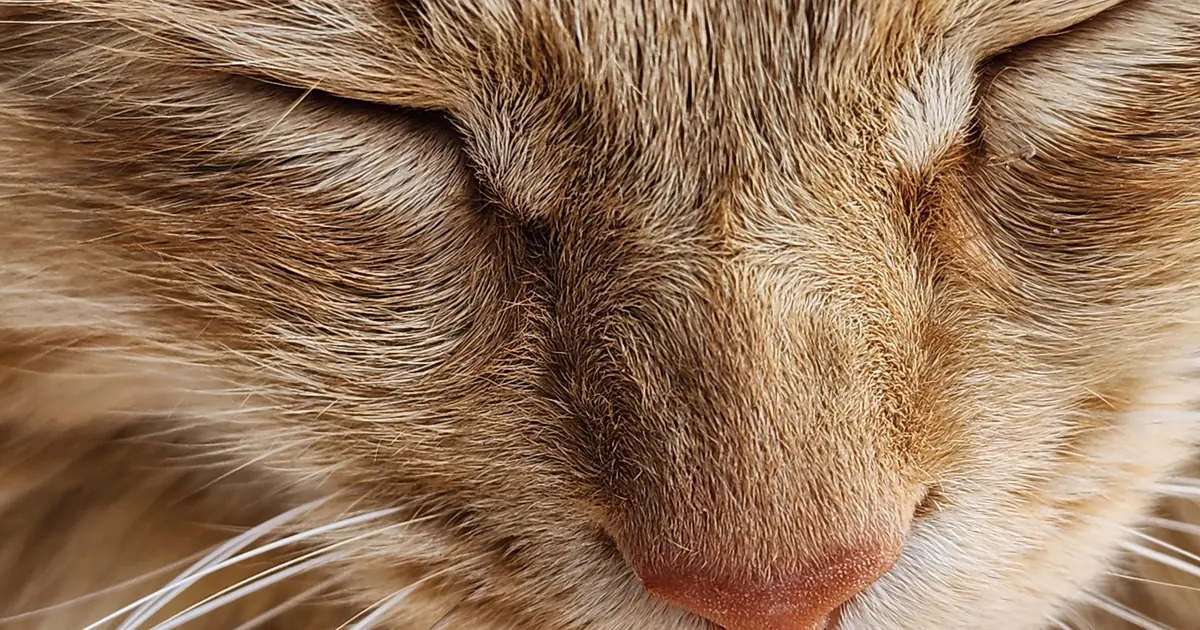
You’re scrolling through kitten photos, and one word keeps tripping you up. Is that little one a calico or a tortie? Is “tabby” a breed or a pattern? And why does your cat have that spooky M shape on her forehead?
Here’s the fun part. Once you learn the handful of coat patterns cats come in, you’ll spot them everywhere. At the shelter, on the sidewalk, in your own lap. Let’s decode what your cat is actually wearing.
- A coat pattern is how a cat’s colors are arranged; a color is the actual pigment. The two are separate but often described together.
- The main cat coat patterns are solid, tabby, tortoiseshell, calico, bicolor (tuxedo and van), colorpoint, and ticked.
- Tabby is the most common pattern in the world and has four sub-types: mackerel (stripes), classic (swirls), spotted, and ticked (no visible stripes).
- Every tabby, whatever the sub-type, wears an M-shaped mark on its forehead.
- Coat pattern and breed are different things; most patterns show up across many breeds and in mixed-breed cats too.
- About 80% of orange cats are male and nearly all calicos and torties are female, because the orange gene rides on the X chromosome.
What is a cat coat pattern, and how is it different from color?
A cat coat pattern is the way colors are arranged across the fur, like stripes, patches, or points. A coat color is the pigment itself, like black, orange, gray, or cream. Think of it this way: color is the paint, and pattern is the design you paint with it.
So a cat can be a black solid, a brown tabby, or a blue-cream tortie. The first word is usually the color, and the second is the pattern. Both are decided before your kitten is even born, written into their genes. Grooming, diet, and sunlight can shift a coat’s shade slightly, but the underlying pattern stays put for life.
Two big genetic switches do most of the work. One decides whether a cat shows tabby striping at all (the agouti gene). The other, the orange gene, sits on the X chromosome and explains why torties and calicos are almost always female. More on that below.
What are the main cat coat patterns?
The main cat coat patterns are solid, tabby, tortoiseshell, calico, bicolor, colorpoint, and ticked. Most cats you meet fit into one of these, and plenty combine two (a tabby-and-white, say, or a tortie with tabby striping called a “torbie”).
Here’s a quick reference you can come back to.
| Pattern | What it looks like | Example breeds & notes |
|---|---|---|
| Solid | One even color head to tail, no stripes or patches | Bombay, British Shorthair, Russian Blue; also called “self” |
| Tabby | Stripes, swirls, or spots plus an M on the forehead | Most common pattern worldwide; seen in nearly every breed |
| Tortoiseshell | Mottled black and orange, blended with no white | Almost always female; not a breed |
| Calico | Big patches of black, orange, and white | Almost always female; common in many breeds |
| Bicolor | White plus one other color (tuxedo, van, harlequin) | Turkish Van, Maine Coon, mixed-breeds |
| Colorpoint | Pale body with darker face, ears, paws, and tail | Siamese, Himalayan, Ragdoll, Birman |
| Ticked | No stripes; each hair banded with color, giving a speckled look | Abyssinian, Somali; a tabby sub-type |
What is a tabby cat pattern?
A tabby is any cat with a coat of stripes, swirls, spots, or bands plus a signature M-shaped mark on the forehead. Tabby is a pattern, not a breed, and it’s the most common coat pattern in cats around the world. It traces straight back to the striped coats of wild ancestors that helped cats hide.
Tabby cats also tend to have “eyeliner” markings around the eyes, striped legs and tail, and a lighter belly, often with a few spots. If you’ve ever wondered about your striped orange buddy, our guide to the orange tabby cat digs into their looks and personality. For the full breakdown, see what a tabby cat is.
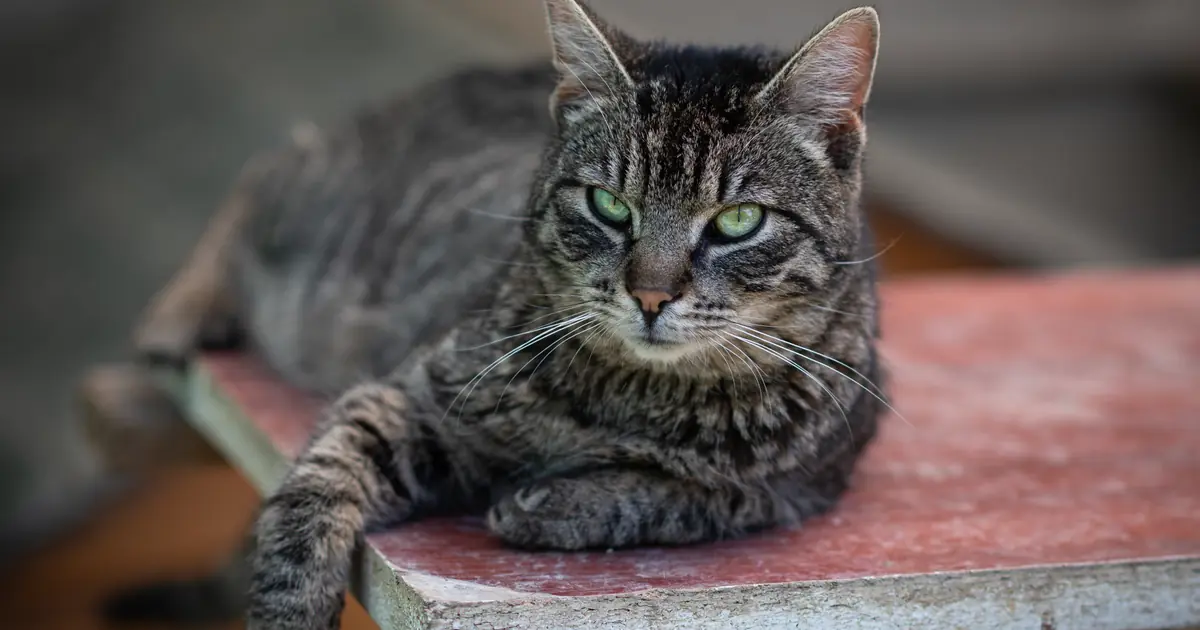
The four tabby sub-types
Tabby splits into four distinct patterns. They’re easy to tell apart once you know what to look for.
- Mackerel tabby: Narrow vertical stripes running down the sides like fish bones. This is the classic “tiger” look and the most common tabby pattern.
- Classic (blotched) tabby: Bold swirls and blotches on the sides, often with a “bullseye” or “butterfly” shape on the shoulder. Think marble, not stripes.
- Spotted tabby: Stripes broken up into spots of various sizes. Seen in Bengals, Ocicats, and plenty of household cats.
- Ticked (agouti) tabby: No visible stripes on the body at all. Each hair is banded with light and dark color, giving a warm, sandy, salt-and-pepper look. The Abyssinian is the poster cat for this one.
What’s the difference between a tortoiseshell and a calico?
A tortoiseshell has black and orange blended together with little or no white, while a calico has clearly separated patches of black, orange, and white. The simplest test: lots of white means calico, blended and almost no white means tortie.
Tortoiseshells (or “torties”) wear a swirled, mottled mix that really does look like the shell of a tortoise. The two colors marble into each other. Calicos, by contrast, show big, distinct blocks of color, usually on a bright white base. A calico can look almost like patchwork.
Both patterns are tied to the same genetics, which is why both are nearly always female. If you’re bringing one home, our calico kitten guide covers what to expect. And a tortie with tabby striping in the colored patches has its own nickname: a torbie.
What is a bicolor, tuxedo, or van pattern?
A bicolor cat is white plus one other color, arranged in patches. The name changes with how much white the cat has and where it sits. Bicolor is one of the most common patterns in mixed-breed cats.
- Tuxedo: Mostly black with a white chest, belly, and paws, like a cat dressed for a formal event. Little white “mittens” and a white bib are the giveaway.
- Van: Almost entirely white with color only on the head and tail. Named after the Turkish Van, the breed that made the look famous.
- Harlequin: Mostly white with a few large color patches scattered across the body.
- Mitted: A colored cat with white paws, like the Ragdoll and Birman.
The colored part of a bicolor can be solid, tabby, or even tortie. So you’ll meet “tabby-and-white” cats and “calico” cats (calico is really just a tortie-and-white bicolor with the colors well separated).
What is a colorpoint pattern?
A colorpoint cat has a pale body with darker color on the “points,” meaning the face, ears, paws, and tail. This look comes from a temperature-sensitive form of albinism: pigment only develops in the cooler parts of the body. It’s the pattern that makes a Siamese a Siamese.
Here’s the neat part. Colorpoint kittens are born nearly all white and darken as they grow, because the womb is warm. A cat’s cooler extremities end up darkest. That’s also why a colorpoint cat living somewhere cold can develop a darker coat over time.
Points come in colors like seal (dark brown), blue, chocolate, lilac, red (flame), and cream. You’ll see the colorpoint pattern in Siamese, Himalayan, Ragdoll, Birman, and Balinese cats, among others. A colorpoint with tabby striping in the points is called a lynx point.
What are smoke, shaded, and tipped coats?
Smoke, shaded, and tipped coats all have hairs that are colored only at the tip, with a pale or white base near the skin. The difference is simply how far down the color runs. These aren’t separate patterns so much as a special way the color sits on each hair.
- Smoke: Color covers most of the hair, with just a narrow pale band at the root. A smoke cat can look solid until it moves, then a silvery undercoat flashes through.
- Shaded: Color covers about the top quarter to half of each hair, for a shimmery, shaded effect down the back and sides.
- Tipped (chinchilla): Only the very tip of each hair carries color, giving a sparkly, frosted look over a white or silver base.
These effects show up beautifully in long-haired cats, where the fur has room to show off the color banding. Our roundup of long-haired cat breeds is full of smoke and shaded coats.
Is a coat pattern the same as a breed?
No. A coat pattern is not a breed. Tabby, tortie, calico, and tuxedo are patterns that appear across dozens of breeds and in mixed-breed cats too. “Tabby” is not a kind of cat any more than “brunette” is a kind of person.
Some breeds are strongly linked to one pattern (Siamese with colorpoint, Abyssinian with ticked tabby), because breeders selected for it. But a shelter kitten with perfect mackerel stripes usually has no pedigree at all. If you’re trying to figure out your cat’s background, patterns give hints but not proof. Our guide on how to tell what breed your cat is walks through the clues that actually matter, and a cat coat genetics overview shows just how many genes team up to make each coat.
Why are most orange cats male and most calicos female?
Most orange cats are male and nearly all calicos and tortoiseshells are female because the orange gene sits on the X chromosome. About 80% of orange cats are male. This one gene explains a lot of what you see on cats.
Male cats have one X and one Y chromosome, so a single orange gene makes them fully orange. Female cats have two X chromosomes, so they’d need the orange gene on both to be all-orange, which is less common. When a female carries orange on one X and non-orange on the other, her body randomly switches off one X in each cell as she develops. That mosaic is exactly what creates the mixed patches of a tortie or calico.
This is also why a male calico is so rare (roughly one in 3,000) and almost always sterile: he needs an unusual extra X chromosome. In 2025, researchers at Stanford Medicine finally pinned down the exact DNA change behind orange fur, confirming its link to the X chromosome. Curious how your cat sees all these colors? We break it down in what colors cats can see.
A quick note on coat patterns and your cat’s health
Coat pattern itself doesn’t make a cat healthier or sicker; it’s mostly cosmetic. A few color genes ride along with specific traits (white cats with blue eyes have a higher chance of deafness, for example), but pattern alone tells you little about health. Any sudden change in your cat’s coat, like new bald spots, dullness, or flaking, is worth a vet visit rather than a genetics lesson.
This article is educational and isn’t a substitute for veterinary advice. For trustworthy background on feline genetics and health, the Cornell Feline Health Center is a great place to start, and the VCA guide to tortoiseshell cats covers the color-and-personality question well.
Frequently asked questions about cat coat patterns
Q: How many cat coat patterns are there?
There are roughly seven main cat coat patterns: solid, tabby, tortoiseshell, calico, bicolor, colorpoint, and ticked. Tabby splits further into four sub-types (mackerel, classic, spotted, and ticked), and many cats combine two patterns, like tabby-and-white.
Q: What is the most common cat coat pattern?
Tabby is the most common cat coat pattern in the world. Its striped, swirled, or spotted look traces back to the coats of wild ancestors. Even many “solid-looking” cats carry hidden tabby genes you can spot in bright light.
Q: What does the M on a tabby cat’s forehead mean?
The M shape on a tabby’s forehead is simply part of the tabby pattern, created by the same genes that make the body stripes. Every tabby has it, in all four sub-types. Folklore ties it to various legends, but genetically it’s just where the forehead markings meet.
Q: Is a tortie the same as a calico?
No. A tortoiseshell has black and orange blended together with little or no white, while a calico has separate patches of black, orange, and white. The easiest test is the amount of white: plenty of white means calico, almost none means tortie.
Q: Can you tell a cat’s breed from its coat pattern?
Not reliably. Coat patterns like tabby, calico, and tuxedo appear across many breeds and in mixed-breed cats, so pattern alone won’t confirm a breed. Body type, head shape, and coat length give stronger clues than color and pattern do.
Q: Why is my Siamese cat’s coat getting darker?
Colorpoint cats like Siamese develop pigment in cooler parts of the body, so their coats often darken with age or in colder climates. This temperature-sensitive coloring is normal. A sudden, patchy, or flaky change, though, is worth a vet check.
Q: Are calico and tortoiseshell cats always female?
Almost always. Because the pattern needs two X chromosomes, nearly all calicos and torties are female. Male calicos happen only about once in 3,000 cats, when a male carries an extra X chromosome, and they’re usually sterile.
Q: What is a torbie cat?
A torbie is a tortoiseshell cat with tabby striping showing through the colored patches. The name blends “tortie” and “tabby.” Like torties, torbies are almost always female, and they can also carry white to become a calico-tabby mix.
Once you know these patterns, every cat you meet becomes a tiny puzzle to solve. Solid or smoke? Mackerel or classic? Tortie or calico? Learning the language of cat coat patterns turns “cute kitty” into a story written right there in the fur, and it makes describing your own cat to a vet or shelter so much easier.

Hello and welcome to The Ideal Cat!
We are some passionate cat owners from different professions. We love our cats and have a lot of experience in how to care for our pets. We are incredibly excited to share our knowledge, experience, and research with you. So you can take good care of your loving cat. We will answer most of the common questions about owning cats, taking care of them, etc. If you have any question contact with us. Thanks for visiting! Enjoy the content.
)